US Treasuries are on the brink of breaking even during a roller-coaster first half of the year.
A top risk for investors, elections may see a shift from centrist to more populist policy that could slow exports, raise inflation, and increase volatility in the global markets.
In the second half of the year, investors will likely be navigating a potential divergence in monetary policy among the major economy central banks, a more normalized U.S. interest rate regime, and an equity market that may favor quality.
US retail sales barely rose in May and prior months were revised lower, pointing to greater financial strain among consumers.
High-yield credit is experiencing strong inflows and investor confidence, potentially offering attractive returns and reduced volatility compared to other risk assets.
This third and final part of this series focuses on alternative energy sources, utility companies, and other companies related to the power grid infrastructure.
A technical trading strategy with a perfect trading record this year is signaling that it’s time to sell long-maturity Treasuries after a rally last week.
There’s a lot of bubble talk around US stocks. The market has been on fire in recent years. The S&P 500 Index has more than doubled in value since bottoming in March 2020 on Covid fears. It’s also up 14% a year since 2010, including dividends, nearly 5 percentage points a year better than its long-term annual return.
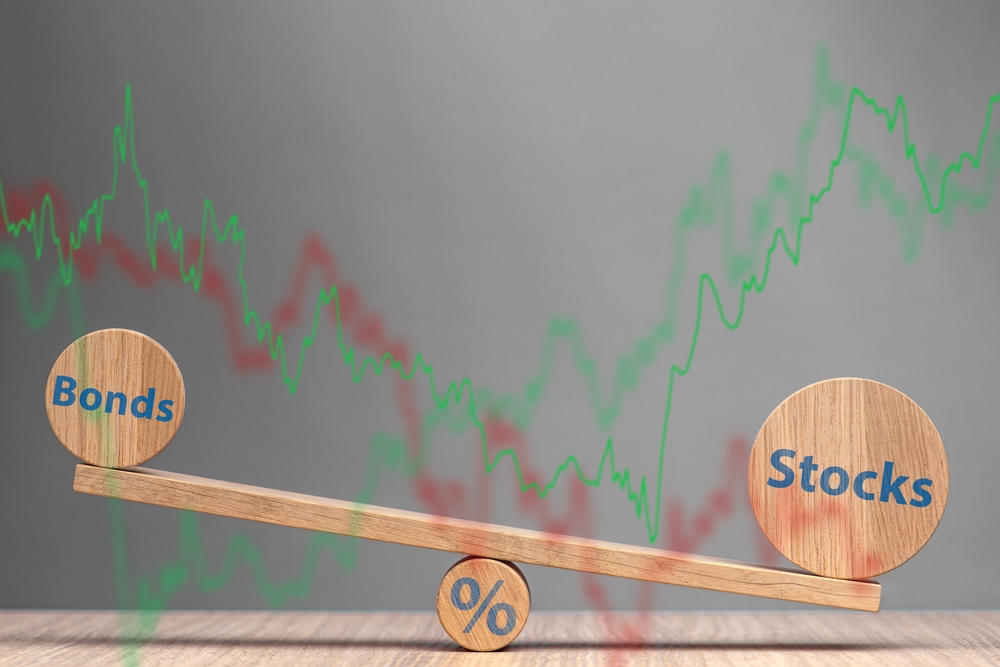
In periods of positive stock/bond correlations, the case for diversified sources of return is much clearer. With stocks and bonds now showing their strongest positive correlation in almost 30 years, the natural diversification and risk protection that a traditional 60/40 portfolio offers is open to question.
This week, the International Air Transport Association (IATA) significantly upgraded its profitability projections for airlines in 2024. The trade group now expects net profits to reach $30.5 billion, an increase from $27.4 billion in 2023.
You know I’m highly concerned about government debt in the developed world, particularly the US. I’ve said for years a crisis is coming. We’ve blown right past all our chances to avoid it. Now all we can do is imagine what the crisis will look like… and how much it will hurt.
Good news on U.S. inflation in May did not sway the Federal Reserve to signal interest rate cuts could come sooner.
The Federal Reserve’s move to signal fewer interest-rate cuts this year deepens its divergence from peers who have already begun to ease.
The further acceleration and broadening of corporate profit growth supports RBA’s bullish near-term outlook for many regions and sectors of the stock market. However, when constructing portfolios, it has paid to separate the equity asset allocation decision from the equity selection decision.
As expected, the Federal Reserve kept its policy rate unchanged at the June meeting, but left the door open to rate cuts later this year if inflation declines.
Many investors and advisors take rebalancing for granted because it’s often done behind the scenes
The updated projection shows the likelihood of one rate cut by the end of 2024.
Certain segments of the economy and stock market have experienced much stronger recoveries this year, underscoring a severe bifurcation between the "haves" and "have nots."
India’s equity markets have experienced strong growth and momentum, with rising incomes and political stability contributing to the country’s potential for accelerated growth.
I was a landlord once and it didn’t turn out how I expected. I think it mattered that I didn’t set out to be a landlord. I had bought a house in Baltimore City that I expected to live in for many years.
The investment landscape has proved remarkably resilient thus far in 2024 given several headwinds including inflation, interest rates, and the unsettled geopolitical situation. Fortunately, employment remains solid, and companies continue to deliver improved profit growth.
Wednesday is shaping up to be a doozy in the US bond market. Following the release of the consumer price index at 8:30 a.m. in Washington, investors will turn to the Federal Reserve’s policy rate decision at 2 p.m., which includes an update to policymakers’ carefully scrutinized economic projections.
A key measure of underlying US inflation stepped down for a second month in May, a pleasant surprise for Federal Reserve officials looking for signs that they can start to lower interest rates.
Looking into the second half of the year, we are optimistic that returns will be stronger, but also expect volatility to remain elevated.
As we move into the second half of 2024, let’s take a look at a familiar market dynamic that’s often misunderstood in commodity investing: Current inventory levels may be much tighter than futures curves are signaling.
The Federal Reserve’s balance sheet is one of the world’s most important security portfolios. Yet, its ongoing importance for markets and financial conditions is often underappreciated.
Bond traders who have come to terms with the prospect of higher-for-longer interest rates through 2024 are looking toward this week’s Federal Reserve meeting for clues on how to game out 2025 and beyond.
Passive quantitative tightening could be the Bank of Japan’s next step toward normalization. Here’s why.
I will never forget the first auction I witnessed. It took place during one of the many summers that I spent on a farm. The auctioneer talked exceedingly quickly, but those in the crowd seemed to understand everything he said.
There was a significant reaction in the bond market to the latest job growth figures, which exceeded expectations. The positive surprise led to a sharp 10 basis point rise in long bond yields. Interestingly, equity markets remained resilient in the face of this increase, suggesting a collective market relief that we are not heading toward a slowdown or recession.
We think today’s market landscape calls for a different mix in multi-asset income strategies.
Stronger-than-expected US May jobs data closes the door on a July Federal Reserve rate cut, Mohamed El-Erian said.
Treasury yields surged as surprise strength in the US labor market forced traders to pare back their wagers on Federal Reserve interest-rate cuts this year.
Higher coupons and interest payments can make premium municipal bonds worth the extra upfront cost.
Historically, the level of U.S. debt has had no correlation with the performance of the stock or bond markets.
Why is there so much angst among investors? The mixed economic signals may have a lot to do with it.
European value stocks offer a compelling case for short- and long-term investment opportunities, supported by strong fundamentals, attractive valuations, and favorable market conditions.
Treasury bonds are rallying, which opens the pathway for investment opportunities in three Vanguard exchange-traded funds.
Investment-grade corporate bonds aren’t doing much to thrill fixed income investors so far this year.
Positive corporate earnings and greater participation from sectors other than technology carried stocks forward.
The global economy continues to recover from pandemic aftershocks, including trade dislocations, outsize monetary and fiscal interventions, a prolonged inflation surge, and bouts of severe financial market volatility. At PIMCO’s 2024 Secular Forum, we explored how the aftereffects of those disruptions are producing some unexpectedly positive developments while introducing longer-term risks.
We connect the dots between the micro data points (what we learned during 1Q earnings season) and what we expect the forthcoming macro data will reveal about the state of the economy.
Over the past 18 months, investment grade (IG) corporate credit spreads have narrowed considerably in response to solid fundamentals and a strong economy. Given the tight spread levels, should investors reconsider the attractiveness of owning corporate bonds and instead buy Treasury securities?
A global bond rally continued, sparked by signs the world’s biggest economy is cooling, ahead of the crucial next read on the state of the US labor market.
There are many historical relationships within financial markets based on sound economic theory, which accordingly repeat cycle after cycle. High yield bonds and small cap stocks typically move in line with each other, but the two have diverged since 2022.
On the latest edition of Market Week in Review, Chief Investment Strategist for North America, Paul Eitelman, and Equity Manager Research Analyst Michelle Batjargal discussed the results of first-quarter earnings season around the globe.
Despite the falling yield spreads, investors continue to bet on rising prices in emerging markets (EM) bonds.
Our outlook on the 11 S&P 500 equity sectors.
Portfolio Manager John Lloyd discusses two important considerations for investors who feel like they may have missed the market rally.