While the overall economy is in decent shape and many financial benchmarks are near their highs, it can be easy to overlook pockets of fragility. Deep research and a disciplined portfolio construction process can help active managers identify risks early and avoid potential downside.
Getting rid of property taxes is a terrible idea. They are among the most economically efficient of taxes, meaning they don’t weigh on economic growth in the way that other taxes can.
Together with the surge in investments brought about by the CHIPS and IRA acts, plus the recent surge in AI investment, US consumers continue to be the backbone of the US economy.
For more than a century, New York City has stood as the beating heart of global capitalism. That’s why this month’s election of Zohran Mamdani, a self-described Democratic Socialist, as the city’s next mayor has sent shockwaves through America’s business and investing community.
The latest U.S. economic data continues to paint a mixed picture. Private-sector employment from payroll processor ADP showed a return to modest job growth in October following a brief contraction.
Adam Giddens used to mainly rely on screening services and social-media buzz when looking for stocks to buy. Lately, though, he’s turned his attention to a different kind of influencer: Donald Trump.
I recently penned an article on “Money Supply Growth,” which elicited a very thoughtful response from Garrett Baldwin via Substack. He argued that labeling Federal Reserve operations as “money printing” is not rhetoric, but rather a reality. He points to Ben Bernanke’s 2010 interview, where Bernanke described how the Fed marks up digital accounts.
To better understand how the AI industry is funding itself and the potential risks involved, we believe it is helpful to draw on historical context from the dot-com bubble, when similar deals were common amid a thriving technology sector.
Everywhere I go, people ask me what’s next for the economy. My answer depends on what they mean by “next.” Today I’ll review some of the alternate employment and inflation data to see where we stand. There’s a lot we know and a lot we don’t know… but for the big decisions, we probably know enough.
Last week’s economic data sent mixed signals. Consumer sentiment plummeted to a near-record low on economic anxiety, and the manufacturing sector continued its long contraction.
The age-old question in fixed income is when should I go long duration? Over the last two years, this has been an ongoing query for investors. More recently, with the Federal Reserve resuming rate cuts, it has come back on the front burner for sure.
2025 has not been just a story of U.S. resilience. The Asia-Pacific (APAC) region has weathered storms and stayed firmly on course.
After the Fed’s latest rate cut, markets are grappling with mixed signals—slowing inflation meets a still-hawkish central bank. Meanwhile, tech’s outsized gains and surging cloud investment highlight a market driven by innovation as much as policy.
With an economy exceeding $1.1 trillion and a proven record of conservative budgeting, New York City stands apart as both a global capital and a dependable municipal credit. Let’s look at 10 reasons why we believe NYC’s fiscal health and credit strength may continue.
After the first rate cut of 2025 and the prospect of more rate cuts to come, the capital markets are now wondering at what pace the U.S. Federal Reserve will institute them. For fixed income investors looking for options that balance credit quality and yield, municipal bonds should be considered.
Amid headline-grabbing AI funding rounds, managers are focusing on specialist infrastructure and supply-chain bottleneck companies with clear order-book visibility and strong pricing power. These include semiconductors and components.
In October 1996, at the last party conference before the election that would make him UK prime minister, Tony Blair tried to define the essence of New Labour. He started off by contrasting his party with the dying Conservative government, before summarizing his three priorities for power.
The ongoing U.S. government shutdown has policymakers – and investors – operating without much of the timely official data that usually inform their decisions. This could have a tangible impact on Federal Reserve policy in particular.
Investors’ certainty that the Federal Reserve would follow its recent interest-rate cut with another in December has evaporated.
Financial markets are obsessed with AI, and the broader public is aware of its looming impact on jobs and wages. Yet for the Federal Reserve, the concern has barely registered.
Though many AI-related stocks continued to struggle, including Advanced Micro Devices despite solid earnings, indexes rebounded early as a private jobs report exceeded forecasts.
It's been a minute since we’ve touched on traditional stock splits. Our last look at this type of share-price engineering came in Q2, when reverse ETF splits were happening all around us. For individual investors, when a company’s management team chooses to split its stock, it can have more impactful implications for longer-run returns.
Big tech names performed strongly last week, carrying the S&P 500 into positive territory. Fears of an AI bubble are making investors wary of the breakneck pace of capital expenditures. Amazon’s (AMZN) stellar earnings after Thursday’s close indicate the capex boom is pressing on, however.
Even with the government shutdown casting a shadow over Washington D.C., equity markets have continued their upward march, fueled by a trifecta of positive surprises: cooler-than-expected inflation, another rate cut by the Federal Reserve (Fed) and easing trade tensions.
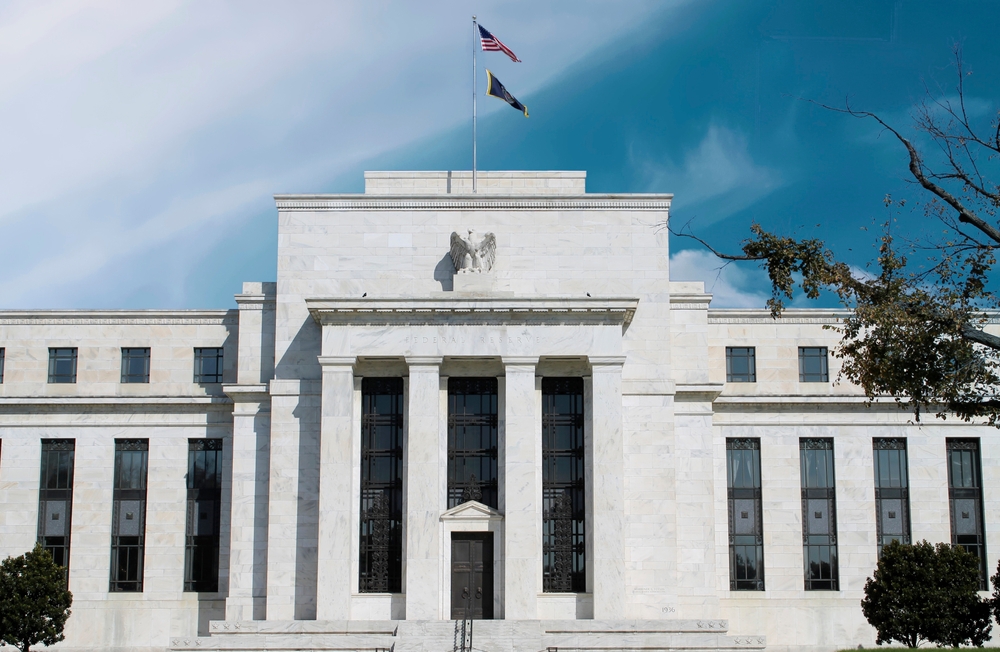
Federal Reserve Chairman Jerome Powell caught everyone's attention when he cast doubt on a December rate cut. It’s easy to see why. Standard Fed logic is simple: 2, 3, 4.
Federal Reserve Chair Jerome Powell agrees that there’s probably something to the claims of a K-shaped economy. But at last week’s press conference, he failed to note how the Fed has helped to create it — and the implications it has for monetary policy.
Amidst ongoing US policy unpredictability and signs of a softening labor market, the US economy and markets have continued to demonstrate notable resilience. A long-awaited Federal Reserve interest rate cut, and strong corporate earnings supported equity and credit markets - yet policy shifts, elevated stock valuations, and ongoing geopolitical tensions continue to pose potential headwinds.
Q3 Earnings growth continues to improve, with 64% of constituents reporting thus far, S&P 500® EPS growth for Q3 2025 accelerated to 10.7%
LPL Research reports on Fed rate cut, U.S.–China trade truce, strong earnings, and AI spending scrutiny amid narrowing market breadth and volatility risks.
This video examines the stock market's long-term behavior by looking at the inflation-adjusted S&P Composite Index's history using regression analysis with data through October 2025
The US Treasury indicated it’s not looking to boost sales of notes and bonds until well into next year, in a decision that will see the government increasingly rely on bills to fund the budget deficit.
Following this year’s impressive rally in gold (the best year for the metal since 1972) investor attention has once again turned toward its role as a long-term portfolio component.
An advisor or allocator needs to do three things: understand the goals of their client, find different ways to earn returns for taking risks, and then take the right amount of risk to meet those goals.
While many commentators have criticized Argentine President Javier Milei's draconian approach to economic reform, the results of the October legislative election show that the Argentine people would prefer short-term economic pain over a return to Peronist policies. Milei now has a clear path to finish what he started.
Classical conditioning teaches us a valuable lesson regarding the current investor dilemma. Pavlov’s research discovered a basic psychological rule: when a neutral stimulus is repeatedly paired with a reward‑stimulus, eventually it will trigger the same response even when the reward is absent.
As policy priorities evolve, Japan’s focus on “responsible fiscal expansion” could reshape bond dynamics.
Every innovation follows a lifecycle, from breakthrough to ubiquity to obsolescence. The Edison bulb once lit up the world, transforming how we lived and worked. But it was ultimately replaced by more efficient and sustainable alternatives.
Markets were taken by surprise by Federal Reserve (Fed) Chair Powell’s strong suggestion that a rate cut in December is not a certainty, as they were sure they were going to get one at December’s Federal Open Market Committee (FOMC) meeting.
October saw some strong data for bond ETFs, according to recent research, suggesting opportunities may abound in the category.
U.S. workers, particularly those in the Gen Z and millennial generations, are facing a “financial vortex” of financial pressures that are eating into their savings, including rising debt, housing, healthcare and caregiving costs.
The Halloween week Fed meeting was more trick than treat for bonds with only a mild and temporary scare for stocks. As soon as Chair Powell signaled the next cut is “not a foregone conclusion – far from it!,” the Dow swooned before recovering about half the drop, while the 10-year drifted higher.
The good news for investors is that history may be on their side. According to the Halloween effect—also known as the Halloween strategy or indicator—stocks have tended to outperform in the six-month period from November to the end of April, compared to the six months from May to the end of October.
History is absolutely clear – Capitalism is the best system ever developed (actually evolved by human experiment) to boost living standards. At the same time, Socialism has a seriously lousy record.
The term 'digital gold' is often used by cryptocurrency enthusiasts to describe Bitcoin, Ethereum, and similar assets. However, our latest research shows they behave differently in portfolios. We look at how liquidity and uncertainty drive returns, and why that matters for positioning.
The U.S. government shutdown is about to enter its second month. We did not rush to comment on it, because we didn’t think that it would have much of an economic impact. But the risk that lasting damage will be done is rising.
As global rate pressures ease and fundamentals strengthen across key economies, conditions appear increasingly favorable for EM local bonds and currencies.
For the second straight meeting, the Fed cut the federal funds rate by a quarter percent on Wednesday. In an even more aggressive move toward monetary easing, the FOMC also announced balance sheet reduction will end in December.
My series on Ray Dalio’s book raised a bunch of questions, one of which stood out above the others. To paraphrase, readers asked, 'How do we get ready for this?' It is certainly fair for you all to ask what I am personally doing to prepare for the big picture I anticipate. It’s tough to answer because the coming debt crisis could unfold in many different ways.
Gold is not immune to market cycles. It’s a volatile asset driven by shifting narratives and capital flows. If you’re buying gold today, understand what’s supporting the price, and what could shake that support loose. Treat gold as a hedge, not a core growth asset.
The federal government shutdown shut off the steady stream of economic reports relied on by investors to gauge the health of the economy and financial markets. However, the much-anticipated September Consumer Price Index (CPI) report was released last week, as it was needed to determine cost-of-living adjustments for Social Security payments.