For a technology that promises to help businesses cut costs, artificial intelligence has had a big problem with being so costly.
During each speculative run-up in asset prices – whether the dot-com bubble, the housing bubble, or more recently the rapid rise (and fall) of the stocks of electric vehicle companies – there’s typically a moment when Wall Street strategists, analysts, and investors go all-in on that theme.
On the latest edition of Market Week in Review, Investment Strategist BeiChen Lin and ESG and Active Ownership Analyst Zoe Warganz discussed key takeaways from recent central bank meetings. They also provided an update on how U.S. small cap companies are performing during second-quarter earnings season.
De Leus and Gijsels, both originating in the world of institutional brokerage identify the five principal trends affecting investments in the near future. The two take turns writing chapters so that the book is a straight man/funnyman show, with the straight man providing mostly sound, conventional analysis and the funnyman interviewing dead economists and Fed chairmen not yet born.
The Federal Reserve is between the Rock of Gibraltar and the Rocky Mountains. The data they use to explain their policy choices is in apparent transition. A self-aware analyst, seeing the conflicting data, knows that the right policy choice will only be understood in hindsight.
Treasury yields plunged below 4% this week for the first time since January on recession fears as global manufacturing activity contracted and hiring in the U.S. slowed dramatically in July.
When growth slows and rates fall, what will happen to an asset class with long-dated cash flows that are not very economically sensitive? Well, it is likely to strongly outperform. Ergo the short-term outlook for growth relative to value/small caps appear to be rosy.
On July 31, the U.S. Treasury released its most recent Quarterly Refunding Announcement which revealed its financing strategy, presenting both positive and restrictive elements for global liquidity.
The members of the Bank of England’s Monetary Policy Committee (MPC) are probably not intimately familiar with Taylor Swift’s back catalogue. If they were, Swift’s hit “Cruel Summer” may have been ringing in their ears when cutting rates today for the first time since March 2020.
While election news dominated July's headlines, small-cap stocks had their best monthly performance relative to large-cap stocks since December 2000.
In markets and economics, you sometimes have to hold two thoughts in your head simultaneously — an important lesson on a day in which the US unemployment rate unexpectedly surged to its highest in nearly three years.
Third party custodians provide a critical back-office function for RIAs – and beyond the important job of safeguarding client assets, they have more sway over operations than one might initially expect.
Canadian entrepreneur Andrew Wilkinson’s early decision to ditch a career as a journalist and teach himself web design has proved lucrative, making him the majority owner of a technology investment firm worth more than $300 million.
President Joe Biden’s withdrawal and endorsement of Vice President Kamala Harris has sent shockwaves through the political establishment, and while former President Donald Trump remains the frontrunner, the wind has certainly shifted in Harris’s favor.
The small cap rally has primarily been a de-risking event. It's unclear at this point whether it’s just a blip or the beginning of a new trend in market leadership.
Money talks, but even $23 billion didn’t convince the founders of Wiz Inc. to sell to Alphabet Inc.
The appetite for nuclear energy is growing fast. Here in the US, most adults now favor expanding our nuclear power capabilities because it’s a great alternative to fossil fuels. Unlike wind or solar, nuclear provides energy around the clock. So, why haven’t we built more nuclear power plants?
Here’s how to conduct yourself as an advisor if you want to demonstrate that you care about your clients.
On the latest edition of Market Week in Review, Director of Investment Strategies, Shailesh Kshatriya, discussed the recent strength in U.S. small cap stocks and the likelihood of a September rate cut from the Fed. He also provided an update on the latest inflation numbers from Canada and the UK.
Over the last few years, a handful of “Mega-Capitalization” (mega-market capitalization) stocks have dominated market returns. The question is whether that dominance will continue and if the same companies remain the leaders.
Experts from the third-largest ETF manager by AUM make their predictions regarding active, retail, and inheritances.
The mortgage lock-in effect ended in the Levin household shortly before my in-laws arrived from Mexico to celebrate my daughter’s birthday at our home in the Miami area. As usual, my wife and I had no place to put them, and they had to get a room at a Courtyard Marriott.
Amidst a widespread deterioration in the economic landscape, it is crucial to underscore the current detrimental roles of monetary and fiscal policy.
The latest Consumer Price Index (CPI) release has brought some much-needed respite, indicating a slowdown in inflation. Yet, underlying economic conditions suggest that this reprieve may be temporary, with potential for inflationary pressures to reassert themselves in the coming months.
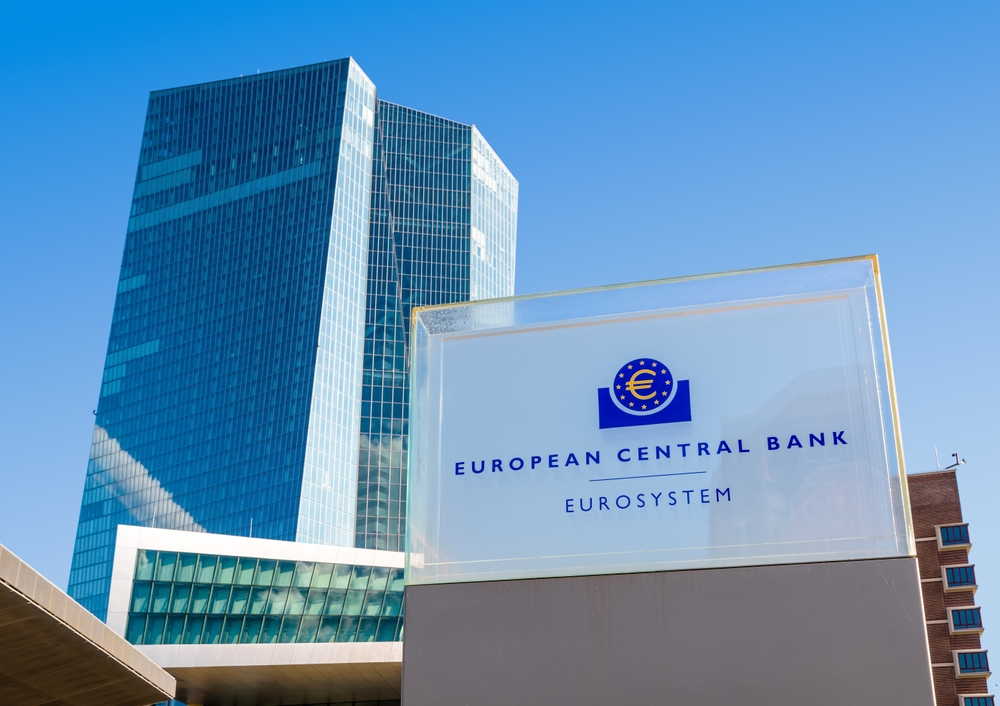
While the European Central Bank kept policy rates unchanged, the next cut is likely to be delivered soon.
On this episode of the “ETF of the Week” podcast, VettaFi’s Head of Research Todd Rosenbluth discussed the PIMCO Active Bond Exchange-Traded Fund (BOND) with Chuck Jaffe of “Money Life.” The pair talked about several topics regarding the fund to give investors a deeper understanding of the ETF overall.
Canola oil — invented in Canada 50 years ago as a healthier, shelf-stable cooking fat — may soon venture beyond the world’s kitchen cupboards to a spot in the airways.
Across Europe, ruling parties are under pressure. Bond investors should stay active and invested, in our view.
Rachel Reeves is going to need some money. The UK’s new Chancellor of the Exchequer has inherited, she says, one of the worst sets of circumstances since World War II.
Artificial intelligence is set to become a game changer for the electric power industry, notes Pavel Molchanov, Managing Director, Energy Analyst, Equity Research.
As the U.S. evolved from a goods economy to a services economy, expansionary cycles more than doubled in length. But a recent resurgence in manufacturing may be taking us back to the future.
Taiwan Semiconductor Manufacturing Co. lifted projections for 2024 revenue growth after quarterly results beat estimates, reflecting its confidence in the longevity of the global AI spending boom.
The barbarians are back at the gates. Morgan Stanley and Goldman Sachs Group Inc. are confident that their most important clients are about to get active after a long spell on the sidelines and help goose the long-awaited revival in investment banking fees.
It’s taboo in many cultures to admit you might want to have a life outside of your work, so a lot of people keep it to themselves because they don’t want to be seen as weak, or uncommitted.
At Institutional Investor, keeper of Wall Street’s version of the Oscars for financial analysts, the winner in one category this year is — nobody.
Goldman Sachs Group Inc. and Wells Fargo & Co. joined rival JPMorgan Chase & Co. in the tapping the US investment-grade market after reporting second-quarter earnings.
Diverse stakeholders shared perspectives at AB’s Advancing Retirement Income symposium.
Some state that “bears are like a ‘broken clock,’ they are right twice a day.” While it may seem true during a rising bull market, the reality is that both “bulls” and “bears” are owned by the “broken clock syndrome.”
The initiation of the excessive deficit procedure will hinder European unity.
The case for beginning to recalibrate rates in the S. is on a winning streak for getting stronger with each data print
Goldman Sachs Group Inc. and Wells Fargo & Co. are joining rival JPMorgan Chase & Co. in the tapping the US investment-grade bond market after reporting second-quarter earnings.
It’s been clear since the fall of 2022 that the housing market needed lower interest rates to fix many of its problems including a lack of affordability for buyers, the mortgage rate lock-in dynamic for homeowners, and reduced activity for companies ranging from Home Depot Inc. and Lowe’s Cos. to suppliers of building materials.
We want to repeat what we have said in the past: “One data point doesn’t a trend make.” However, the June data, after weaker than expected readings for April and May, confirm our suspicion that inflation numbers during the first quarter of the year were a fluke.
Softening inflation supports the potential for a Federal Reserve interest rate cut in coming months, but there are complexities below the surface.
No matter who wins November’s US presidential election, there’s a growing risk that Americans will be paying higher taxes next year, according to MacKay Shields LLC. That makes muni bonds an attractive shield.
Goldman Sachs Group Inc.’s trading unit powered a surge in earnings in the second quarter.
Younger investors are thinking about their investment portfolios all wrong, and it’s not entirely their fault. Ultimately, it’s up to them to recognize where the best long-term returns lie before too much precious time is wasted.
We are in the time of year when Americans pack transatlantic airliners for their European vacations. I had actually hoped to be one of them. That didn’t work out but we can still talk about events in Europe. And we probably should, because potentially major changes are happening.
As many of you are no doubt aware by now, France’s left-wing New Popular Front alliance thwarted Marine Le Pen’s National Rally party in a stunning upset, leaving the country without a clear majority in parliament.
Human nature is such that there are always some folks who put a negative spin on obviously good news.