LPL Research analyzes stock valuations, finding them fair given growth, rates, inflation, and AI-driven earnings outlook despite risks.
AI is a transformative technology with both near-term and long-term implications for the economy. For investors, while the debt-funded AI buildout has the potential to become a secular driver of risk premia, we believe any such shift would only play out through a multi-year adjustment and would not override the cyclical forces that affect markets.
Every family has a money story. It gets passed down quietly, invisibly, in the way families talk around the dinner table or on long walks together.
May’s 5.3% S&P 500 gain masked a deeply uneven market: technology surged 16% on AI spending momentum while most sectors declined, and a surprise inflation rebound flipped the Fed narrative from cuts to potential hikes.
As advisors, our role is not to solve fiscal policy; it is to ensure our clients are positioned to weather the uncertainty that comes from that gap, stay committed to their long-term plans, and not let macroeconomic anxiety drive short-term decisions they will regret.
Individual expertise matters. But in complex situations, making good decisions also depends on your financial professionals sharing information. When you support and expect their collaboration, you are no longer the communication relay.
While the mass affluent market may not be feeling the brunt of inflation woes or the rising cost of living, its financial planning is still being impacted by current economic headwinds.
Investors are about to get a read on the durability of the soaring rally in cybersecurity stocks when two of the industry’s major players report earnings in the coming days.
The announced expansion comes as the US races to provide huge amounts of electricity for AI data centers, with nuclear power emerging as one of the big winners. The Trump administration is pushing to quadruple output from nuclear plants which will require a leap in uranium fuel production to meet the challenge.
Caution has become the most expensive position on Wall Street. A hot inflation reading this week — sending the annual gauge to its highest in about three years — landed alongside fresh strikes in the Persian Gulf and enduring expectations that the Federal Reserve may need to keep policy tight.
Investors are pouring money back into municipal bonds as higher yields and the approaching summer reinvestment season draw cash into the tax-exempt market.
Geopolitical risks are still lingering in the background, but the story lately has been all about earnings. A strong 1Q26 season, paired with a steady drumbeat of upbeat management commentary, has helped push the S&P 500 to 21 record highs this year.
Businesses are racing to build the physical infrastructure that makes AI usable at scale – data centers, the graphics processing unit (GPU) hardware stack, power, and cooling.
The market continues to demonstrate remarkable resilience. Lower oil prices, easing Treasury yields, and the relentless buildout of artificial intelligence infrastructure are still providing a favorable backdrop for risk assets.
If you’re not familiar with the name Leopold Aschenbrenner, you should be. A 24-year-old wunderkind, Aschenbrenner was hired by OpenAI in 2023 to work on the company’s “superalignment” team, essentially trying to figure out how to keep AI systems safe once they become smarter than the people building them.
Economies around the world aren’t just reliant on AI investments for growth. The appreciation of AI stocks has supported spending, which is following “K-shaped” patterns. A significant correction to the valuations of tech leaders would therefore be even more likely to result in recession.
A little more than six months ago there were narratives circulating that national housing prices were in an even bigger bubble than the one twenty years ago and headed for an “inevitable” collapse. Given that national home prices dropped about 27% from peak to bottom in the last housing bust, that would be something to worry about.
The global defense industry continues to move rapidly from legacy, heavy-hardware platforms to agile, unmanned systems. Today, the Trump Administration announced that it’s pursuing funding deals for drone companies in an effort to increase domestic production in today’s defensive landscape.
Vocabulary is a power builder. Every time I use the word “hegemonic” in a conversation, I see my listeners’ eyebrows go up as if to say, “what does this guy know that I don’t?” Then again maybe they’re just signaling that I’m full of more than baked beans.
The ETF landscape includes a wide variety of innovative, intriguing funds that look to meet investor goals. From equities to fixed income, all kinds of strategies offer intriguing spins on areas like income and dividends.
J.P. Morgan Asset Management has expanded its alternative lineup with the launch of the JPMorgan Managed Futures Plus ETF (JPFP) on the Nasdaq. The actively managed fund combines a core U.S. equity allocation with a systematic managed futures strategy spanning equities, bonds, currencies, and commodities.
Closed-end funds may not be a hot topic right now, but they offer a highly compelling means to solve today's macroeconomic woes.
Goldman Sachs announced a partnership with Anthropic in early May, though you probably shouldn’t view it as just a cool innovation story. It is infrastructure in motion. When institutions like Goldman move, pay attention to what problem they believe they are solving.
Are utilities the ultimate hidden growth play? In this video, we break down why the State Street Utilities Select Sector SPDR ETF (XLU) is moving the needle for smart investors. Traditionally known as a boring, defensive sector for dividend income , utilities are experiencing massive new demand driven by the massive energy and electricity needs of Artificial Intelligence (AI) and data centers.
New York City is facing one of the most significant fiscal challenges in recent memory. The NYC Comptroller has projected a $2.2 billion budget shortfall for FY2026, growing to a $10.4 billion gap in FY2027 (Source: New York City Comptroller, January 2026). That is a two-year deficit of roughly $12.6 billion.
The essential feature of a useful alternative asset isn’t that it’s unusual or exotic, but that its returns aren’t tightly linked to the risks that already dominate the portfolio. The value of an alternative asset comes from the way it interacts with the other assets in the portfolio.
Before I recommend what to do, I want to first state what not to do. Don’t invest as if you think you know what long-term inflation will be. Will we return to the double-digit inflation of the late ‘70s and early ‘80s? The answer is: Nobody knows.
The assumption that muni equals tax-free is deeply embedded in how the asset class gets discussed and presented. But for high-net-worth clients in high-tax states, the gap between partially exempt and fully exempt is material enough to be worth a conversation.
Mentioning artificial intelligence to the graduating class of 2026 has been sure to get you booed. And why not? Fresh graduates have spent the past few years being told about the wonders of AI and watched seniors struggle to get a toehold in the labor market.
The industry is entering a more customized phase of liability-driven investing, he said. While earlier stages focused on adding duration and raising fixed-income allocations, better-funded plans are now tinkering at the margins to more precisely match their holdings with their obligations.
US stocks headed for a positive open on Monday as traders remained hopeful that Washington and Tehran would strike a peace deal, even amid a rise in oil prices.
Innovation drives productivity growth, which in turn raises the standard of living for a nation's population. Accordingly, we support the theory that AI will benefit the economy and the population. We laid this bullish case out in "The AI Economy: Looking Beyond The Façade Part I."
Equities extend gains as earnings and semiconductors lead markets higher. Consumer confidence remains subdued despite economic resilience. Inflation is easing gradually but remains above the Fed’s targey.
Recent Federal Reserve communications have turned more hawkish, reflecting concern that persistent supply-driven price pressures could begin to feed into inflation expectations. But unlike in prior cycles, today’s environment is not defined by supply shocks alone.
Ahead of next week’s May employment report, the summer jobs market is coming into focus as teenagers and students finish the school year. According to Challenger, Gray & Christmas, teen hiring from May through July is expected to total just 790,000 jobs this summer, down slightly from 801,000 last summer.
In this video, Chuck Carnevale explains the true meaning of value investing and why valuation is one of the most important concepts investors can understand. - Why Value Investing is the Safest Way to Build Wealth. Chuck argues that value investing is not simply about buying “cheap stocks,” but about making prudent, rational investments that control risk while allowing investors to fully participate in a company’s long-term growth.
Artificial intelligence (AI) poses many ethical issues that may translate into risks for consumers, companies and investors. AI regulation, which is developing unevenly across jurisdictions, adds to the uncertainty. The key for investors, in our view, is to focus on transparency and explainability.
What is unusual about today, and I mean genuinely unusual, historically unusual, is that the people building the equivalent of Newcomen's engine today know exactly (or think they do) what they are building. They are not just pumping water. They “know” the vast potential.
In the 24-hour financial news cycle, there’s much buzz surrounding the buildout of infrastructure for artificial intelligence (AI). What about infrastructure beneficial to humans? There are plenty of ETF opportunities in the sector that’s gone from defensive hedge to dynamic capital appreciation engine.
Many debates in defined contribution (DC) circles focus on fees, new asset classes, and ever more complex solutions. But the biggest improvement available to plan participants may come from something far simpler: how their fixed income is managed.
U.S. equities moved higher last week, with the S&P 500 advancing 0.9 percent – its eighth consecutive weekly gain and the longest such streak since 2023. The Russell 2000 fared even better, rising 2.7 percent.
Risk appetite remains firmly intact as optimism surrounding a potential resolution to the war with Iran continues to improve investor sentiment. The S&P 500 has now advanced for eight consecutive weeks, with price action remaining remarkably resilient throughout the recovery.
If you want a blueprint for how countries can survive this era of great power rivalry, look no further than Vietnam.
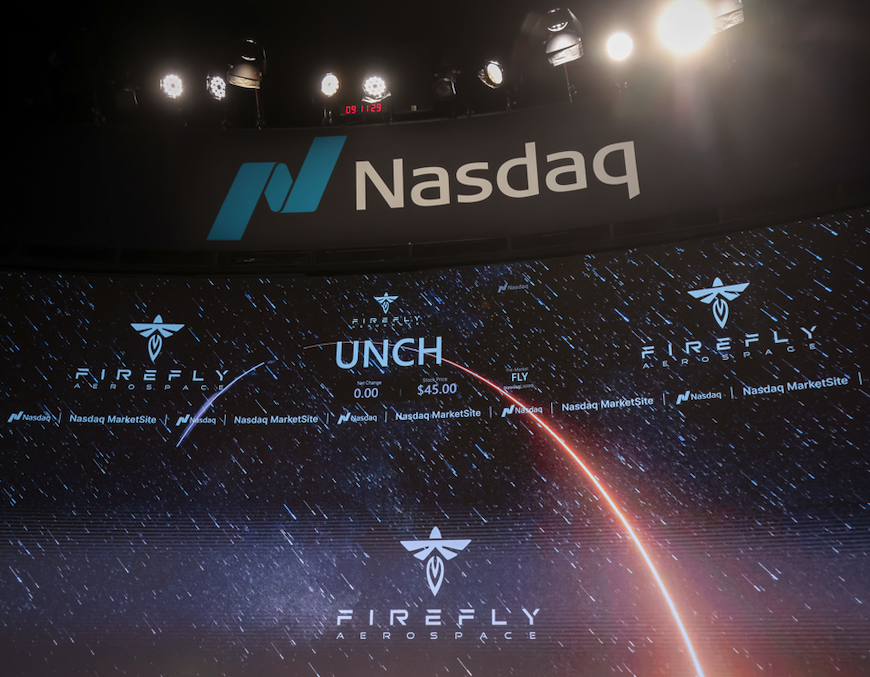
Growing excitement around the burgeoning space economy is increasingly favoring companies positioned to benefit not only from Elon Musk’s SpaceX filing for a public offering, but also from rising enthusiasm for space exploration and increased funding.
Large asset managers are rolling out a wave of actively managed emerging-market ETFs, pitching them as alternatives to benchmarks increasingly dominated by AI stocks.
May is 529 Month. As college costs rise, learn five practical ways to maximize your plan’s tax benefits, flexibility and growth potential to prepare for the future.
Commodity market trends: Commodity markets have been on an impressive, and volatile, run so far this decade, with leadership oscillating between energy and precious metals. Not surprising, after commodities’ “Lost Decade” of the 2010s, given the asset class tends to move in long capital cycles.
Equity investors are facing monumental questions about their allocation strategies in a new market regime. Market concentration has risen sharply, valuations have climbed to record highs in parts of the market and factor volatility has dominated returns.
Recent market volatility and the conflict in Iran have understandably pushed many emerging market investors to the sidelines. But periods of uncertainty have historically offered attractive entry points into emerging market debt (EMD), particularly when underlying fundamentals are improving and asset flows are likely to increase.
Since early April, U.S. stocks have rallied sharply despite an ongoing war, rising inflation fueled by soaring oil prices (near $100/barrel), higher bond yields (up 0.6 to 0.7 percentage points), and frothy valuations (21 times projected earnings vs. a historical average of 17 times for the S&P 500 Index).