Funds will begin paying out their 2023 distributions this month which could lead to a tax bill for your clients. While capital gains distributions will likely be lower this year than in recent years, interest income is expected to be higher.
Our portfolio managers field some tough questions on Matthews Asia Dividend’s performance, its positioning and what they believe are its unique strengths for investors.
Taiwan’s economic and financial decoupling from China has deepened with the near-collapse of what was once the world’s largest Chinese bond exchange-traded fund market.
Among Asia’s major economies, China has long been the benchmark against which other countries’ growth is measured. India, currently the continent’s third-largest economy behind China and Japan, appears poised to take the baton of economic growth leadership.
India is once again leading flows into US exchange-traded funds tracking emerging markets, boosting one of the most popular trades in 2023 as declining US yields and a weakening dollar turn investors toward assets in the developing world.
Our portfolio managers field some tough questions on Pacific Tiger’s performance, its positioning and what they believe are its unique strengths for investors.
Across Wall Street, analysts and investors had cheered 2023 as the year of emerging markets, only to be burned by a relentless climb in US Treasury yields. Now, as the Federal Reserve looks set to end its most aggressive monetary tightening campaign in a generation, they’re at it again.
The life story of Charlie Munger, who passed away on Tuesday at age 99, serves as a shining example of the enduring American Dream, especially now at a time when many people doubt whether the promise of a better life is still intact.
Often misunderstood, crypto has an important role to play in the alternatives sleeve of a portfolio.
At the time of the first major climate change conference, in Rio de Janeiro in 1992, China was one of the least developed nations. Its per capita income was below Haiti, Niger and Pakistan.
On this episode of the “ETF of the Week” podcast, Tom Lydon discussed the iShares MSCI EAFE Small-Cap ETF (SCZ) with Chuck Jaffe of “Money Life.” The pair talked about several topics regarding the fund to give investors a deeper understanding of the ETF overall.
CIO designate Sean Taylor gives his take on what Asia has to offer global and emerging markets investors, from growth, to diversification, to innovation.
Sam Altman will return to lead OpenAI less than five days after he was pushed out of one of the world’s most valuable startups, setting off a shock back-and-forth drama that transfixed Silicon Valley and the global AI industry.
David Dali, Head of Portfolio Strategy, provides his 12-month outlook for global equity markets.
WeLab Ltd., backed by investors including billionaire Li Ka-shing and Astra International, a unit of Jardine Matheson, is launching a digital bank in Indonesia to tap the young and fast-growing economy.
The shocking decision by Alibaba Group Holding Ltd. to cancel the spinoff of its cloud division is offering a fresh reason for investors to sell China tech stocks in an earnings season yielding mixed results.
The run-off election looks tight in Argentina, where I’m attending a Young Presidents’ Organization (YPO) event in Buenos Aires.
The recent pause in interest rate hikes by the Federal Reserve could finally signal an end to monetary policy tightening. But fixed income investors can keep on reaching for high yield opportunities with a pair of active ETFs from American Century.
Senior Investment Analyst Ashley Fritz addresses three major misconceptions around ESG investing in the EM corporate space.
The price of gold just had its best October in nearly half a century, defying tough resistance from surging Treasury yields and a strong U.S. dollar. The yellow metal rallied an incredible 7.3% last month to close at $1,983 an ounce, its strongest October since 1978, when it jumped 11.7%.
US Treasury Secretary Janet Yellen said she disagrees with Moody’s Investors Service’s shift to a negative outlook on the country’s Aaa credit rating, expressing confidence in the economy and in Treasuries as a safe asset.
A China ‘Recovery’: How important is the loss of confidence within China itself?
Higher interest rates and inflation are likely to usher in a decade of policy restraint, limited liquidity and macro volatility, pressuring equities and motivating investors to reconsider tactical asset allocation and embrace real assets.
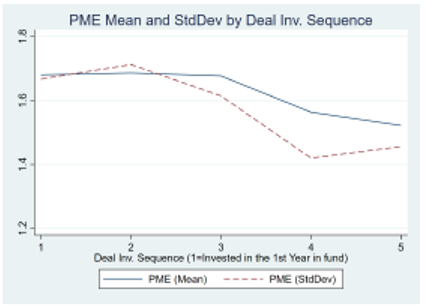
Private equity (PE) has become a staple of institutional portfolios, but its performance has often been disappointing. New research shows that the levels of specialization and portfolio diversification should be important considerations when selecting a manager to implement a PE strategy.
We’ve always intended for the unique collaboration between AllianceBernstein (AB) and Columbia University to serve the broader asset-management industry. Asset owners and managers alike are eager to explore the complex issues of climate change and its potential effect on investments and investment decision-making.
Topics discussed included the future of investment management and generational differences among investors as well as trends and technologies transforming the industry, including artificial intelligence (AI) and digital assets.
Private real estate fundraising plunged in the third quarter as higher interest rates cooled investor appetites for risk.
Credit volumes witnessed some strong highs and lows in the third quarter. Notably, July—a month where trading volumes are generally steady—saw very inconsistent flows over the month. September, meanwhile, followed historical trends with an increase in primary market supply, reflecting higher volumes in the secondary.
US stocks carry too much risk and buying Treasuries will pay off, according to M&G Plc as the $402 billion fund house navigates the brutal selloff in global markets.
Embattled debt investors like the look of 5% Treasury yields as they weigh the risk-versus-reward scales for the world’s biggest bond market.
Japanese profits have benefited from the prolonged deleveraging of Japan Inc. The reduction in debt coupled with exceptionally low interest rates has allowed cash flow to impact the bottom line.
When your system, whatever it may be, is working extremely well, we used to say it’s “firing on all 8 cylinders.” What does that mean?
Savvy investors are aware that geopolitical tensions and uncertainty can significantly influence the financial markets.
Investing in China remains challenging but that doesn’t mean there aren’t opportunities. Portfolio manager Vivek Tanneeru and Head of Portfolio Strategy David Dali highlight one approach that potentially can deliver alpha generation today while positioning for a potential upturn tomorrow.
Advisor Perspectives has announced its Venerated Voices™ awards for commentaries published in Q3 2023.
Risks remain tilted to the downside. Uncertainty about the strength and speed of monetary policy transmission and the persistence of inflation are key concerns. The adverse effects of higher interest rates could prove stronger than predicted, and greater inflation persistence would require additional policy tightening that might expose financial vulnerabilities.
For the past 18 months, Federal Reserve Chair Jerome Powell has frantically been trying to break Americans' borrow-and-spend habits. It’s critical to his fight against inflation.
Not so long ago, families, businesses and governments were effectively living in a world of free money.
After having maintained near-zero interest rates for decades, the Japanese central bank may be forced to hike rates if inflation remains persistently high. But Japan’s enormous government debt and vulnerable banking sector mean that doing so could trigger a systemic financial crisis.
Office prices in the US are due for a crash, and the commercial real estate market faces at least another nine months of declines, according to Bloomberg’s latest Markets Live Pulse survey.
The third quarter was a story of dashed hopes in emerging markets, with the unraveling of some of the most profitable trades in the asset class.
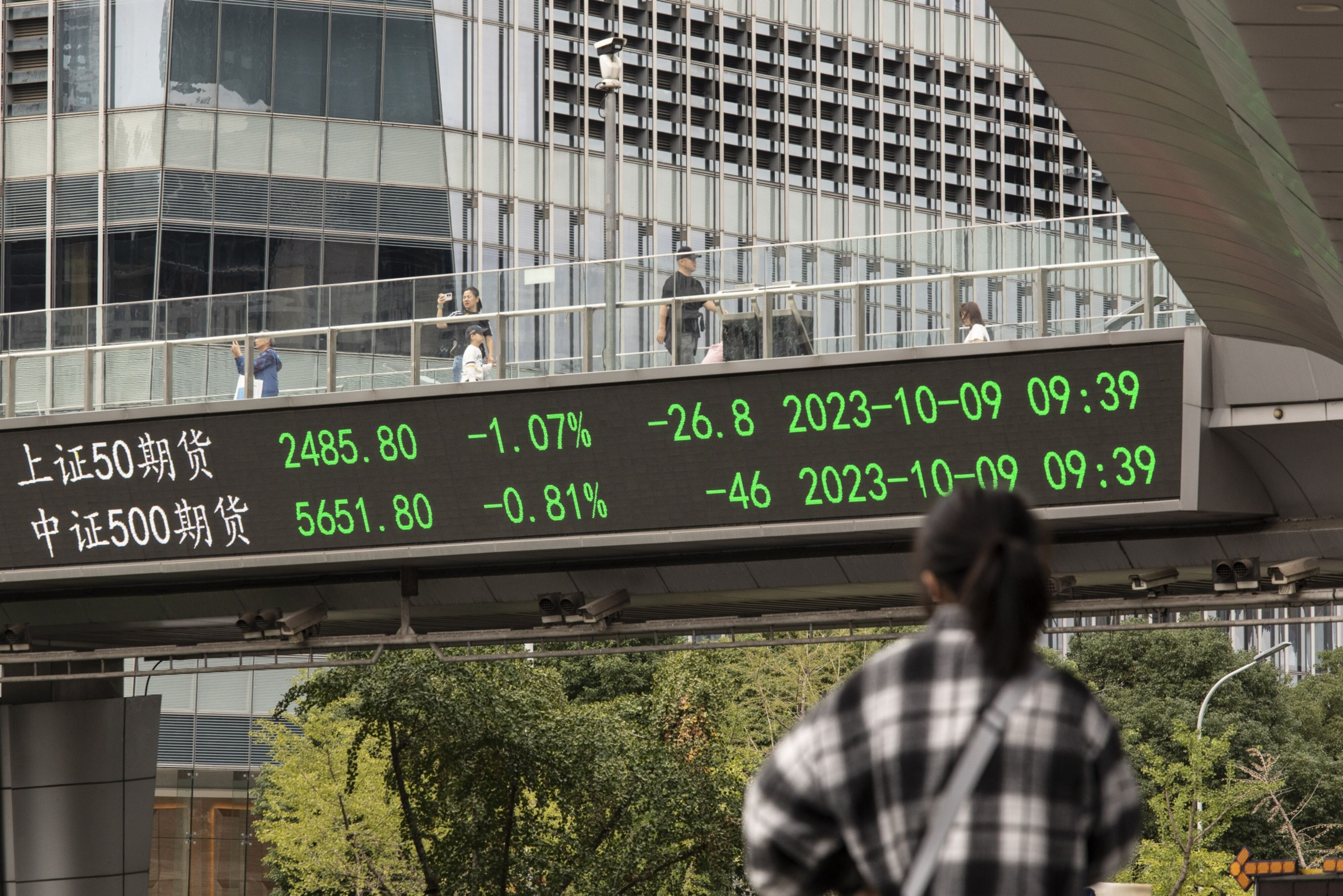
The Chinese yuan has lost nearly 6% of its value against the U.S. dollar this year, while Shanghai-listed stocks are off about 8% from their 2023 high, set back in May.
The prevailing narrative about the U.S. economy is that it’s ‘resilient’: despite rapid rate hikes, economic growth has held up and may even be accelerating.
For all the importance of China’s subpar recovery, the country's woes are notably absent from the plethora of projections and commentary that flow from the Federal Reserve these days. Judging from recent remarks, there's either no problem or nothing sufficiently grave to prod Chair Jay Powell to hint at switching gears. Give it time.
China’s goal of self-reliance will certainly rely on innovation. Right now, the second-largest economy sits firmly atop the list of the World Intellectual Property Organization (WIPO) when it comes to innovation on a global scale.
Private infrastructure offers unique investment characteristics and potential diversification benefits for portfolio construction.
Fund managers have been avoiding emerging markets (EM), especially when it comes to China. However, that doesn’t mean there aren’t opportunities that exist.
With the rapid pace of urbanization, there’s an increasing demand for efficient and sustainable power solutions, and ABB’s advancements in smart grids and renewable energy integration are pivotal in meeting the demands of this transition.
While some stocks may seem expensive, there are areas of opportunity that feature attractive valuations and growth catalysts, according to the Franklin Templeton Investment Solutions team.