The global economy is continually evolving due to inflation, interest rates, and geopolitics. How could these and other factors influence the major asset classes over the coming decade?
Long-time Kestra ecosystem firm SilverStar Wealth Management combines with existing Bluespring partner LifeBridge Financial Group, strengthening Texas-based presence
Doug Drabik discusses fixed income market conditions and offers insight for bond investors.
In recent years, “buying the dip“ and more vulgar variations have often been equated to “dumb money” or retail investors, who are presumed to always make a mistake. However, as investors, we need to rethink how we view “buying the dip” because the whole goal of investing is to “buy low and sell high.”
Diversification of portfolios using international equities can reduce volatility and enhance risk-adjusted returns, especially given recent geopolitical shifts that decrease correlations between U.S. and international markets. Despite some investor skepticism, and as we discuss below, the benefits of international diversification can be significant and should be considered in investment strategies.
Small-cap stocks tend to offer greater growth potential than their large-cap peers, but those returns have yet to materialize consistently. What will it take to turn the tide?
The Fear Trade is what most Western investors are familiar with. It’s the flight to safety during times of uncertainty, driven by concerns over inflation, interest rates, geopolitical risk and more.
Here’s the blunt truth: Many great investment strategies fail because of poor implementation. Robust capabilities in trading, transition management, overlays and currencies are critical to executing a strategy.
Investors may revisit international exposure in their portfolios amidst reduced market reactions to tariff announcements, uncertain U.S. policy and lagging U.S. stock performance.
For the first time in five months, gold-backed ETFs globally reported modest outflows in May as investors took profits.
As small business clients look toward ambitious growth, advisors have the chance to offer something foundational: a term life insurance strategy that turns ambitions into a legacy.
Stablecoins and the concept of digital money represent a significant shift from the current system. While there are many risks with digital money, there is also promise.
Three months after the Chinese artificial intelligence developer DeepSeek upended the tech world with a model that rivaled America’s best, a 28-year-old AI executive named Alexandr Wang came to Capitol Hill to tell policymakers what they needed to do to maintain US dominance.
Today we’ll continue our SIC highlight series featuring a relatively new face who is now indispensable, plus some new ones who were crowd favorites.
It would seem evident that most investors would understand that consumer spending drives economic growth, ultimately creating corporate earnings growth. Yet, despite this somewhat tautological statement, Wall Street appears to ignore this simple reality when forecasting forward earnings.
For four decades, the USA has relied on debt-financed consumption and a service-heavy economy to mask an unsustainable model.
A new line of yield-chasing crypto funds is forcing the Securities and Exchange Commission to confront unresolved gaps in its regulatory framework, just as the Trump administration eases oversight of digital assets.
In the last three months tariff news has whipped financial markets around remarkably in response to President Trump’s ever changing tariff policies. The most pronounced reactions were concentrated in the US stock market.
On the trade front, investor uncertainty eased for a short time as President Donald Trump’s “Liberation Day” tariffs seemed to lose traction. Several key developments contributed, including a 90-day tariff pause with China, the signing of a US-UK trade agreement and progress on negotiations with other partners, including Europe.
America’s holiday from history is over: Debt matters again. It is not just that the national debt is so big it cannot be ignored.
US job openings unexpectedly rose in April in a fairly broad advance and hiring picked up, indicating demand for workers remains healthy despite heightened economic uncertainty.
U.S.-Europe negotiations involve more than just tariffs.
Market leadership is shifting and the once-dominant Magnificent 7 may no longer be so magnificent. Our latest report reveals why broader opportunities are emerging across sectors and regions, with quality, value, and growth converging in unexpected places.
As investors grapple with nagging macro uncertainty, market volatility’s likely to continue. But we also see reasons for optimism — and new opportunities.
VettaFi’s Head of Research Todd Rosenbluth discussed the iShares US Thematic Rotation Active ETF (THRO) on this week’s “ETF of the Week” podcast with Chuck Jaffe of “Money Life.”
This article presents a different perspective on the question of why bond yields are rising. I focus on the difference between narratives and fundamentals.
Wall Street banks are reinforcing their calls that the dollar will weaken further, hit by interest-rate cuts, slowing economic growth and President Donald Trump’s trade and tax policies.
It doesn’t take much to understand that Ray Dalio, a hedge fund titan, is like every other human being and is prone to error. I will not dismiss Dalio entirely, as his track record of managing money at Bridgewater is nothing to be scoffed at.
House prices are falling, and it’s no longer just a Florida and Texas story. Rising inventory across the country and still reluctant buyers mean that those looking to sell face the prospect of more competition and lower prices next spring if they don’t close on a deal soon. For buyers, holding out can mean a better price.
It’s been a tough few months for believers in the currency market version of Pax Americana.
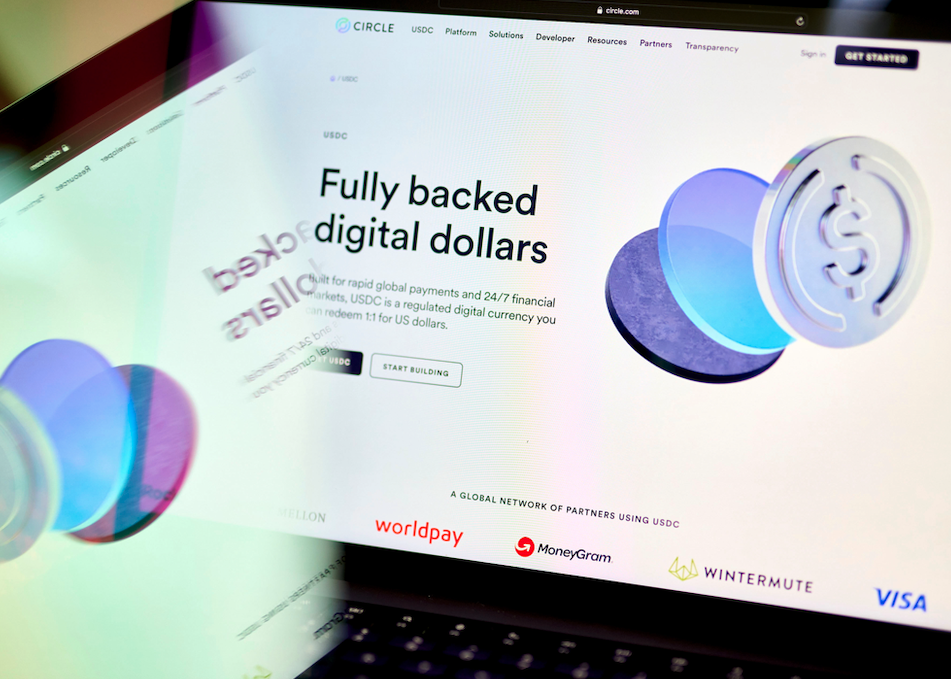
A dollar is a dollar, whether spat out by an ATM or digitally issued on the blockchain. That’s the promise of Circle Internet Group Inc., one of the biggest issuers of stablecoins designed to emulate fiat money like the greenback or the euro, primarily for the purpose of cryptocurrency trading.
Sell in May and Go Away? This old market saying tends to resurface around Memorial Day, suggesting investors should scale back their equity exposure ahead of what’s perceived as a seasonally weaker stretch for stocks.
529 plans do not earn interest like a traditional savings account. However, they offer strong growth potential through a range of investment options.
Given the uncertainty of what potentially happens next, the recent rally is an excellent opportunity to adjust portfolio risks to navigate the next leg of this market cycle.
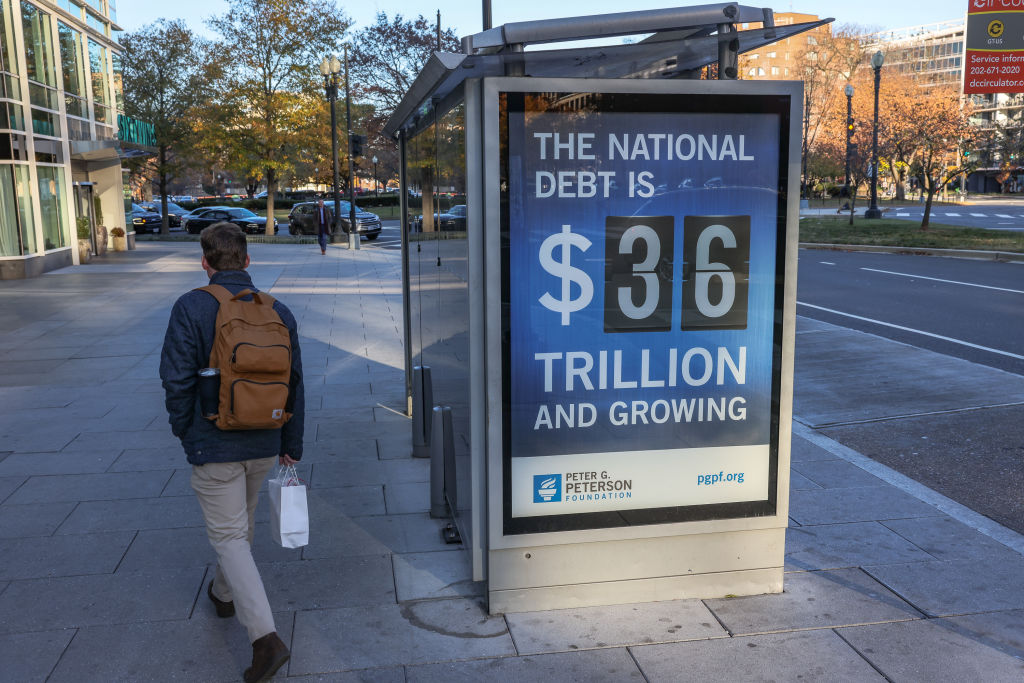
Moody’s finally downgraded US government debt on May 16th to Aa1, its second highest rating. With the US $36 trillion (and rising) in debt, it’s not hard to see why. But Moody’s was late to the party with S&P and Fitch (the other two major ratings agencies) having done so long ago.
There are plenty of reasons to be concerned about the direction of the US economy right now.
There’s a lot to like about the travel industry right now from an investment standpoint. You just have to know where to look.
Keep your market perspective in check, avoid anchoring, and focus on your investment goals rather than market volatility.
Private credit firms are seeing an opportunity to finance everything from public transit systems to local utilities as the federal government and banks pull back on funding.
Given the headwinds Target has faced this year, many advisors were not expecting to hear good news at the retailer’s latest earnings call.
Though silver has been quiet lately, it’s important to be aware of the many bullish factors that are setting the stage for a strong move higher.
Someday, the dollar will cease to be the world’s reserve currency. But don’t hold your breath waiting; there is nothing even close to being able to take its role.
As AI capabilities continue to advance, we can expect even more sophisticated financial planning tools to become accessible to the average person, potentially improving retirement outcomes for many.
Direct indexing has been in the news a lot more in recent years. Larger industry players have strategically acquired a number of providers—including Parametric. And many new entrants have entered the space, looking to build on its success.
The market narrative appears to change on a dime these days. Stocks may have staged a comeback to recoup almost all their post-“Liberation Day” losses. But the bottom line on the fixed income market hasn’t changed all that much.
As one of the world’s largest sovereign wealth funds warned this week that private equity is “very troubled” right now, a spate of recent buyout deals in Europe and the US points to a possible route out of the mire.
Best-in-class OCIO providers understand the importance of a deep relationship and will invest considerable time cultivating one.
The retailers are closing out the season in their usual fashion, but the early results have been mixed as they deal with headwinds ranging from a softening US consumer to impending tariffs.
As investors, we need to step back and examine the history of previous debt downgrades and their outcomes for the stock and bond markets. Let’s start with what Moody’s rating agency stated about its rating change.