The Federal Reserve may cut rates a couple of times by year-end, but the pace and magnitude of easing in 2026 is unclear. There are still some roadblocks to lower bond yields.
The U.S. labor market continued to show signs of cooling, with all major labor indicators pointing to a softening trend and a weak hiring environment.
Is President Trump correct in his assertion that interest rates need to come down? Let’s look at the 99-year history of capital market returns spanning 1926–2024 as our
Treasuries edged higher, extending Friday’s gains, as investors shifted their focus to key readings on inflation due later this week.
Independent central banks are a relatively recent concept.
Blackstone Inc. and State Street Investment Management are joining forces to launch an exchange-traded fund tracking European collateralized loan obligations, a move that comes as private markets seek to widen their investor base.
For decades, betting that long-term bond rates would rise was known as the widow-maker trade: It was simultaneously the most sensible and the most consistently money-losing wager an investor could make.
Doug Drabik discusses fixed income market conditions and offers insight for bond investors.
Markets rallied in August as hopes for a September Fed rate cut boosted equities, small caps, and income-oriented fixed income sectors, though risks of inflation and valuation excess remain.
Equities thrive when discount rates are low. Cheap capital inflates the present value of future cash flows, giving companies more leeway to finance growth and investors more willingness to pay higher multiples.
With an eye on mitigating rate risk, short-term bond funds have been the apple of fixed income investors’ eyes the past few years.
The housing market remains out of sync with the broader economy as affordability is depressed, but an improvement in supply and demand dynamics might be on the horizon.
Earnings results surpassed expectations for the third consecutive quarter, which drove the market's strong August performance.
Here’s how I see it going into a critical data week: the inflation gauges landed precisely on expectations while an ugly July trade gap shaves some growth from Q3, and that combination keeps the Fed on a path to cut 25 basis points at the next meeting.
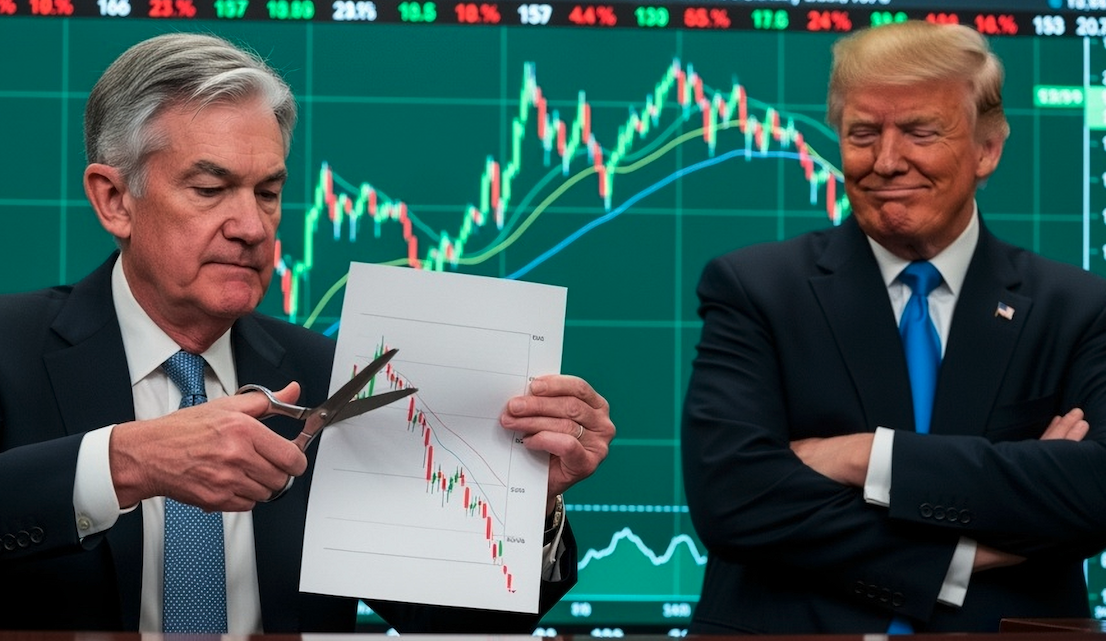
Markets surged late last week after Federal Reserve Chairman Jerome Powell suggested at Jackson Hole that the U.S. central bank may be ready to cut interest rates in September. Traders took it as a green light, while Goldman Sachs, J.P. Morgan, Barclays and others quickly pivoted their forecasts. The CME FedWatch tool now puts the odds of a September cut at nearly 90%.
In our opinion, all of these legitimate concerns are, to various degrees, already priced into financial markets. The impact of these on the ongoing stock market rally will depend on their trajectory relative to investor expectations.
Credit cards versus stablecoins is one of the less-discussed competitive battles ahead, but it’s one where traditional finance faces the most coherent threat.
For the past two years, we have been warning that the stock market is overvalued. While our capitalized profits model is simple, it is more complex than just looking at price-earnings or price-sales ratios.
US Treasuries were under pressure amid a rout in long-dated European bonds and a surging calendar of corporate debt sales as traders returned from the holiday long weekend.
The market’s attention usually seesaws between corporate fundamentals and monetary policy.
Learning to read the Fed minutes effectively can help traders understand the central bank's policy-making process, sentiment, and rate expectations, all of which can impact markets.
Last week's economic data revealed strong economic growth running up against rising prices and falling confidence.
US consumer spending rose in July by the most in four months, indicating resilient demand in the face of stubborn inflation.
When the value of the U.S. dollar declines, international developed-market bonds tend to become attractive. Here's why the bond outlook is more positive than it has been for the past decade.
The year to date has been complicated by a cloud of uncertainty as a new U.S. administration took the world economy by storm.
A full-scale implementation partner does the behind-the-scenes—but critically necessary—work of managing portfolios according to the investment objectives, risk tolerance and preferences set by an investment team. In doing so, they free up time and energy for the investment staff to focus on decision-making.
According to recent analysis from the Congressional Budget Office (CBO), tariff revenue could meaningfully impact both sides of the bond market pendulum, which on net, could be beneficial to the Treasury market.
The US economy expanded in the second quarter at a slightly faster pace than initially estimated on a pickup in business investment and an outsize boost from trade.
Bond investors are accepting the smallest compensation in years in return for taking default risk, as a potent combination of economic optimism and too much cash chasing too few securities skews costs.
Fed Chair Jerome Powell’s comments at Jackson Hole shifts the outlook for interest rates.
The prospect of lower rates could translate to falling yields, forcing investors to diversify their fixed income portfolios. One area that's been seeing renewed interest is mortgage-backed securities (MBS).
Last week was dominated by a major event in the financial world, the Jackson Hole symposium, and the subsequent reaction from the markets. Read through the major economic news form the week of August 18th - 22nd.
The U.S. dollar has experienced a notable decline in value this year relative to a broad basket of foreign currencies. This depreciation has meaningfully affected the investment returns of U.S. based investors holdings in international stocks and bonds.
Today is the day that analysts and investors have been waiting for the entire earnings season—earnings and updated Q3 guidance from NVIDIA Corp. (NVDA).
he safety record of zeppelins was relatively unimpeachable prior to the Hindenburg, and that’s why the deadly disaster so shocked the public and devastated the rigid airship industry.
Fund managers say returns on emerging-market assets are set to power ahead of their developed peers, having moved in lockstep since US President Donald Trump unleashed his tariff blitz in April.
It's never a great sign when a central bank governor says his country's predicament is a “pretty sad story.” That's how Bank of England Governor Andrew Bailey described the UK at the Federal Reserve symposium in Jackson Hole, Wyoming, last week.
Finding attractively valued stocks that can overcome evolving conditions requires a new mindset.
International stocks have outperformed the broad U.S. stock market so far this year. If the U.S. dollar continues to weaken, it could boost international returns even more.
Nick Goetze discusses fixed income market conditions and offers insight for bond investors.
As central bankers, economists, and policymakers gathered last weekend in Wyoming’s Grand Teton National Park for the 2025 Jackson Hole Economic Symposium, the Federal Reserve (Fed) found itself at a critical juncture marked by political pressures, personnel changes, and internal divisions over monetary policy direction.
Market volatility can feel like an emotional yo-yo: sudden drops, sharp rebounds, and the unsettling feeling of not knowing what’s next. Feeling anxious, unsettled, or even tempted to take swift action to protect your investments is natural. But often, the best move is the one you don’t make.
Don’t Worry, Be Happy! Heading into summer, markets faced a wave of uncertainty—from shifting tariffs and debt ceiling debates to questions around the fate of the ‘Big, Beautiful Bill.’
Chair Powell’s speech at Jackson Hole was a proper and long overdue pivot—and the markets immediately rejoiced. This was the dovish signal investors had been hoping for, and even stronger than I expected Powell to deliver.
For nearly two decades, U.S. electricity demand was flat. Between 2005 and 2020, consumption barely budged, thanks to efficiency gains in appliances and slower economic growth. Utilities planned for more of the same.
On this episode of the ETF of the Week podcast, VettaFi’s head of research Todd Rosenbluth discussed the NEOS Bitcoin High Income ETF (BTCI) with Chuck Jaffe of Money Life. The pair discussed several topics related to the fund to give investors a deeper understanding of the ETF overall.
Different clients may prefer different ways to invest in bonds. This article isn’t about identifying which fixed income vehicle offers the highest yield or lowest fee. It’s about matching strategies to real-world investor behavior.
US investors are more concentrated than they think. Franklin Mutual Series believes diversifying into local, non-US currencies yields benefits, particularly in an environment of downward US-dollar pressure.
Corporate bankruptcies hit a 14-year high in 2024, and the pace continued through the first seven months of 2025.
In economic news other than that from Jackson Hole, the week included a new record high for margin debt and more.