Trench warfare in the early 20th century has been described as long periods of boredom punctuated by moments of terror.
Victor Haghani has thought long and hard about his participation in the 1998 blowup of LTCM. His big mistake, he concluded, was investing 80% of his personal assets in the firm.
Back in the Great Financial Crisis era, someone quipped that the federal government had become a giant hedge fund with an army attached. That wasn’t far off. Various agencies and entities were absorbing all kinds of risky assets to stabilize an overleveraged system.
The life story of Charlie Munger, who passed away on Tuesday at age 99, serves as a shining example of the enduring American Dream, especially now at a time when many people doubt whether the promise of a better life is still intact.
While equity styles go in and out of favor, quality companies continue to serve clients as a core holding, resilient to economic headwinds and market drawdowns. For long-term investors searching for a durable equity solution, we believe quality is “the real McCoy"
Economic pain is likely in 2024, but that doesn’t mean stocks will struggle all year, especially if there is a continuation of the rolling recessions that have hit the economy.
Both supply and demand of workers will prevent a surge in unemployment rates.
October news on CPI inflation was all the doctor recommended and has markets spinning and repricing the Federal Reserve’s (Fed) potential path forward.
The run-off election looks tight in Argentina, where I’m attending a Young Presidents’ Organization (YPO) event in Buenos Aires.
We understand that many economists/analysts/market participants are already discounting inflation as a serious problem for the U.S. economy. Even if this seems correct on the surface, the problem is very different for those who suffer the most from higher prices – middle- and lower-income individuals.
The Northern Trust Economics team shares its outlook for U.S. growth, employment, interest rates and inflation.
In our 2024 outlook, bonds emerge as a standout asset class, offering strong prospects, resilience, diversification, and attractive valuations compared with equities.
How do I instill strong management skills in my next-level management team?
A China ‘Recovery’: How important is the loss of confidence within China itself?
Exploring federal budget data is a journey through endless rabbit holes, some of which are eerily close to Alice in Wonderland insanity. Countless variables interact in unexpected ways. Seemingly small changes can cascade into billions of dollars within a few years.
Alarm bells sounded Friday when we learned that the US unemployment rate rose to 3.9% for October, well above the 50-year low of 3.4% that it hit earlier in the year. The latest reading is still very low, so what’s with the doomsayers telling us a recession has arrived?
Everything in the world is relative, including Warren Buffett’s cash position.
In Q3, the strongest performance among factors was seen in developed ex-U.S. large cap and small cap and U.S. small cap, where Value outperformed by 4.9%, 3.3% and 3.3%, respectively. The weakest performance among factors was in U.S. small cap, where the Size factor underperformed by -2.4%.
Identifying problems is great. Identifying solutions is even better, especially when the politicians who are supposed to be solving our big problems don’t even try.
A recent survey asking economists about the probability of recession next quarter shows a retreat in expectations from a high of 47 percent at the end of 2022 to just 34 percent, according to the Philadelphia Federal Reserve.
Recently, I was asked by a client what my return expectations are for the next three years.
Forecasting economic outcomes is a challenging exercise, even under steady conditions. Geopolitical events have only added to the complexity facing economies worldwide.
The worst selloff of longer-term Treasuries in more than four decades is putting a spotlight on the market’s biggest missing buyer: the Federal Reserve.
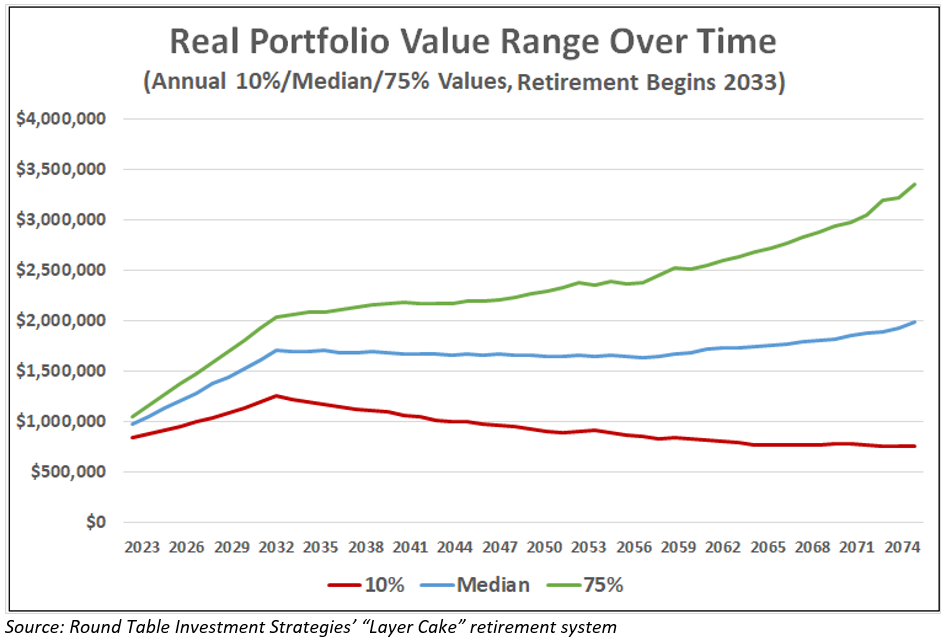
I previously discussed a method of applying long-run, risk-return insights to a goals-based approach to retirement investing. This article considers how to extend the process into the pre-retirement years.
Term premiums have been on the rise, but should investors be concerned? Stephen Dover, Head of Franklin Templeton Institute, explains what term premiums are, and why they are worth paying attention to.
The long history of business cycles illustrates that rising inflation precedes recessions. Inflation accelerations don’t just happen, they are caused.
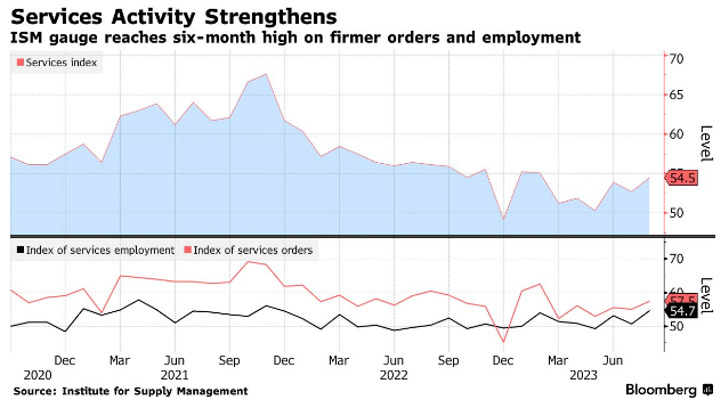
The U.S. economy’s remarkable resilience is complicating the lives of investors and the Federal Reserve. Despite war-disrupted commodity markets and one of the most aggressive monetary tightening phases in modern history, economic activity has remained strong.
We hear and read daily analysis on how inflation is coming down and that the Federal Reserve (Fed) has beaten inflation. This is probably very close to the truth from an economics point of view.
With lots of chatter in the United States around the potential for a soft landing, Jeff Schulze, Head of Economic and Market Strategy at ClearBridge Investments, shares his thoughts on the matter and the overall state of the US economy in our latest “Talking Markets” podcast.
Interest expense is a large and growing issue for both the economy and stock market, which reinforces why investors should stay up in quality amid interest-rate-driven headwinds.
As the second quarter came to a close, the Fed’s elusive soft landing appeared to be within reach. However, inflation resurfaced during the third quarter, substantially complicating the near-term economic outlook.
The spike in bond yields presents an opportunity for fixed income investors to earn capital gains and diversify portfolios.
A liquidity gap is growing as banks curtail specialty lending, providing specialty finance investors opportunities for potential better risk-adjusted returns than we’ve seen since the GFC.
In his latest memo, Howard Marks provides a follow-up to Sea Change (December 2022). He argues that the trends highlighted in the original memo collectively represent a sweeping alteration of the investment environment that calls for significant capital reallocation.
As the Federal Reserve signals it will keep interest rates higher for longer, the market appears to be reflecting the uncertainty about the path of policy going forward.
The Federal Reserve may be putting its hoped-for soft landing of the economy at risk by tacitly accepting a run-up in long-term interest rates to the highest levels since 2007.
While government shutdowns impact the economy directly and indirectly, the magnitude of the impact is determined by the length and scope of the shutdown. Some operations can continue in a “partial shutdown” scenario, and thus impact the economy differently.
Public credit markets offer high quality investments with attractive yields and downside resilience, while we see growing longer-term opportunities in private markets.
The yield on the benchmark 10-year Treasury is up 70 basis points this year, leading many to question the future direction of interest rates. Let’s look at the underlying causes of this and whether those conditions are likely to persist.
Rising real interest rates invariably trigger recessions. The residual impact of pandemic related behaviors delayed the impact in this cycle.
Fed Chair Jerome Powell’s Sept. 20 remarks represented the first time the Fed leadership has sanctioned the idea that the equilibrium policy rate has risen this year; previously, Powell repeatedly avoided taking a view.
Historically, government shutdowns have not caused a major reaction in the markets. But shutdowns can increase market volatility, and an extended shutdown could have an impact on the overall economy.
The Fed sent a strong signal that interest rates will remain higher for longer, as our Franklin Templeton Fixed Income CIO Sonal Desai has long predicted. The Fed also started to acknowledge that the natural real rate of interest is higher than it thought.
Call it another case of bad timing for Wall Street strategists. The group, historically known to have a bullish bent, spent most of this year saying US stocks would end lower in 2023. Instead, the S&P 500 Index rallied 16% in the first half.
The European Central Bank is likely at or very near its peak policy rate, but we don’t expect rate cuts in the near term.
Warren Buffett has advised investors to be fearful when others are greedy and greedy only when others are fearful. New research confirms Buffett’s admonition.
In a significant turnaround for its aviation sector, Mexico’s air safety rating was upgraded from Category 2 back to Category 1 by the Federal Aviation Administration (FAA). The upgrade could be a game-changer, offering opportunities for both Mexican airlines and their U.S. joint venture partners.
Competing narratives have emerged to describe the state of the U.S. economy.
Hear from Jeff Schulze, Head of Economic and Market Strategy at ClearBridge Investments, about the state of the US economy. Get his perspective on the Federal Reserve’s next potential moves.
The 10-year Treasury yield has climbed steadily over the past two years. But we believe fixed-income investors should be prepared for lower yields ahead.