Vanguard has forecasted that inflation will remain sticky, so the U.S. central bank will continue raising rates. But the investment giant also estimates that a recession still won’t hit the U.S. this year.
Tony Davidow, Senior Alternatives Investment Strategist, at Franklin Templeton Institute, shares some takeaways from a panel discussion on the topic.
When you step back and think about it, it is hard to believe that this hugely important retirement benefit has only been around for just over 40 years.
Dina Ting, Franklin Templeton ETFs’ Head of Global Index Portfolio Management, explores the positive trends that are making a case for holding UK equities.
Many investors are starting to look for ways to diversify their portfolios and protect their wealth. One way investors have done so in the past is through investing in gold.
The August jobs report confirms the labor market's continued slowdown, which is for now consistent with the Fed's soft-landing desires—but not without warning signs.
Most portfolios live or die based on their equity allocations. VettaFi is thrilled to announce that they will be hosting an Equity Symposium on September 21st.
Private credit lenders are just getting started in the world of consumer and asset based finance, according to Rob Camacho, Blackstone Inc.’s co-head of asset based finance within the firm’s Structured Finance Group.
August saw modest market pullbacks across the board, as investors were nervous about risk.
A staff report from the Federal Reserve Bank of New York titled “Capital Management and Wealth Inequality” comes to some remarkable Marxist conclusions.
Factory order numbers had previously been a source of positivity for the U.S. economy. The tough turn for the economy should remind investors of active ETFs’ ability to respond to a market downturn.
Back in the 1980s, President Reagan took enormous political heat (Sam Donaldson comes to mind) for being fiscally irresponsible. His offense? Presiding over a budget deficit that peaked at 5.9% of GDP in Fiscal Year 1983.
Diversifying a portfolio means spreading the investments across a variety of asset classes, industries and geographies.
When money becomes less valuable and costs rise, the money you have saved affords you exponentially less. In the short term, you may not notice the difference.
After a slow start to asset gathering, U.S.-listed equity ETFs were in vogue during the summer. At the end of August, the asset category had $165 billion of net inflows, more than $125 billion for fixed income.
Barclays Plc is trying to work out how to make the best of its payments business in its quest to increase the appeal of its shares. One option is selling a stake in the unit that handles card transactions for shopkeepers and other businesses, Bloomberg News reports.
The latest monthly employment report showed 187,000 nonfarm jobs were added in August. An industry breakdown of that number shows a gain of 151,000 service-providing jobs and a gain of 36,000 goods-producing jobs.
Seven mega-cap US-based companies – Apple, Microsoft, Amazon, Google, Nvidia, Tesla, and Meta (Facebook) – have stayed top of mind for many investors this year.
In general, portfolios can be split into growth assets and principal protecting assets. Growth assets tend to have greater risk coupled with greater income/reward.
Bond investors have been looking for an approach that delivers attractive, repeatable, uncorrelated active returns. Is their wait over?
An electronic trading revolution is finally coming to corporate bonds, years after reaching other financial markets.
Last week we changed our economic forecast because the economy has remained stronger than we expected. We delayed the start of the recession to the first quarter of 2024 rather than the last quarter of 2023.
As multi-asset income investors, we seek to help a wide range of clients meet their income needs. The benefits of an income-centric approach are especially relevant for investors as they enter retirement – and that’s especially true today. We bring that to life with two case studies.
There are differing opinions all around, but some reputable sources like Goldman Sachs are saying it’s increasingly unlikely. Yet the Fed is going to be raising rates further, from what it looks like because inflation is higher than they want.
Craig Salm, Chief Legal Officer at Grayscale, goes in-depth on the firm’s recent court victory and explains what might happen next in their quest to convert the Grayscale Bitcoin Trust (GBTC) into an ETF. Tom Lydon, Vice Chairman of VettaFi, discusses year-to-date ETF flows and current investor sentiment.
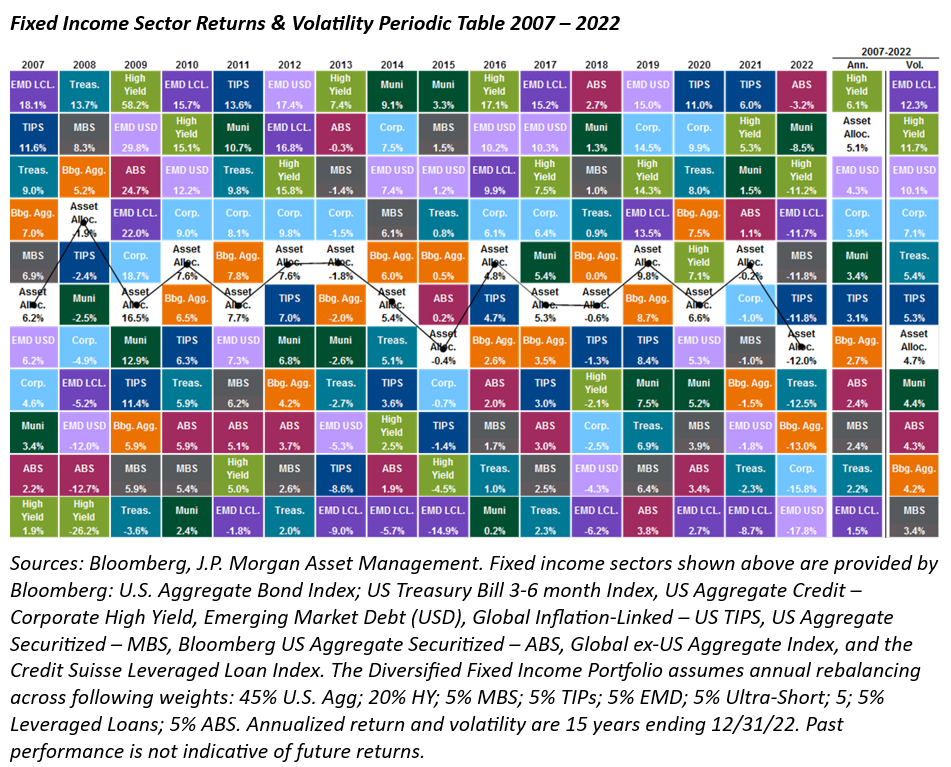
Multi-sector fixed income strategies can deliver significant benefits to investors – including yield enhancement, volatility reduction and diversification of asset-class exposures – because of managers having the freedom to make tactical shifts between fixed-income sub-sectors.
In this article, I shed light on 10 common pitfalls and provide strategies to avoid them, ultimately helping you add more value to your client relationships.
Stocks are up 18.7% year-to-date, which is good news for portfolios and 401(k)s, but did you know that most of the heavy lifting has been done by a very small number of S&P 500 stocks?
When future economic historians write of our times, the thrust will be that it was a time of transition.
Look up the word “cycle” in a dictionary, and you’ll find something like this: “A regularly recurring sequence of events.” Sounds simple, but that definition leaves a lot of ambiguity.
Investment grade bonds from select emerging market sovereigns are solid defensive bets if the US slips into recession and China’s economy worsens, according to Vanguard Asset Services.
The favorite in Argentina’s presidential election has vowed to eliminate the central bank and dollarize the economy. Which path will the country follow?
A steady stream of news helped drain enthusiasm from the equities markets through most of August, snapping a five-month growth streak at a time of the year known for cool market performance despite the swelter of its dog days.
Chief Diversity Officer Regina Curry and Franklin Templeton Head of Digital Assets Roger Bayston believe creating workplaces with intentional collaborative, inclusive, and debiasing practices can power great development environments.
Credit balances are not the only consumer indicator running high.
One of the hardest parts of planning for our loved ones with disabilities is getting started. It’s overwhelming. Thinking of who will care for your child when you or your partner cannot is not easy. While we realize no one will care for your child like you do, you need to plan for the day when you no longer can.
In this session, we talk about one tool that may help with some of the financial responsibilities for supporting your loved one while helping them stay qualified for means-tested benefits supplemental security income (SSI) and Medicaid. My guest will introduce the importance of planning ahead and maintaining eligibility for public benefits whether the family is wealthy or has limited means.
Active ETFs have had a really strong year so far in 2023, picking up advisor and investor interest. Even institutional investors have increasingly turned towards specialist, responsive management.
Adjusted earnings forecasts tend to overshadow reported earnings and add uncertainty to corporate outlooks.
The resilience of US growth, earnings and markets has been the big surprise of 2023. Stephen Dover, Head of Franklin Templeton Institute, opines on the factors at play—and whether they will last.
Given their overall credit risk versus safer government debt, corporate bonds may not get enough exposure in a retirement portfolio. However, they can serve a purpose as long as investors are aware of their nuances.
Investors looking for extra yield are driving corporate bonds to some of their tightest valuations of the year, pushing money managers including Pacific Investment Management Co. toward mortgage debt that looks much cheaper.
We believe the best way to add value is through relative positioning in sector allocations, individual security selection and along the yield curve, holding duration neutral overall. That approach, however, does not prevent us from having views on interest rates and we think bonds offer good value at current rate levels.
Sometimes things sound the same, look the same, or feel the same – but they are not. It doesn’t necessarily mean one is better or worse than another but uniquely dissimilar and serving, unlike purposes.
The Fed's asset portfolio is on an uncharted course.
Although high-yield bonds have performed well so far this year, we continue to take a cautious view.
In this quarter’s issue of Investment Ideas, our investment managers review opportunities and risks from a US perspective.
UBS Group AG faced two big questions about its emergency rescue of Credit Suisse Group AG: How much profit would it make on the bargain deal? And would the distractions or taint of taking over the failing bank hurt its own business?
Dividend Growth Stocks for Current Income and Dividend Growth General Mills (GIS) Consumer staple stocks are blue chips that are considered some of the safest dividend growth stocks you can invest in, especially for dividend growth and dividend growth of income.
Investors seeking higher yields and relatively low risk, and are willing to sacrifice liquidity, will find attractive opportunities in interval funds that invest in senior-secured, sponsored middle-market loans.
Shares of Tesla Inc. are famously among the most-volatile in the market, but one exchange-traded fund issuer reckons it can time its bets on the electric-vehicle maker to amplify gains and cushion declines.