What can breakeven inflation rates tell us about oil prices, energy stocks, and market direction? It turns out it’s a lot more than you think.
How will tighter lending standards become evident in the economy?
Pricing power and profit margins showed signs of stabilizing in the first quarter. But a survey of Loomis Sayles’ credit analysts leads us to believe the bottom in corporate fundamentals is yet to come.
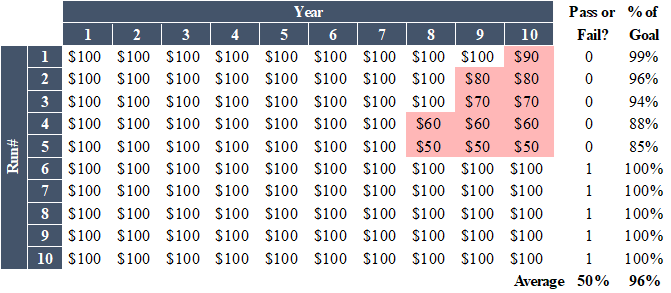
Here’s how we can improve financial planning projections to result in better forecasts, advice and guidance to households.
Bitcoin’s rebound is just the start of a rally that will take it past $50,000 next year courtesy of a process known as halving that curbs the supply of new tokens, according to projections from crypto analysts.
April is Financial Literacy month, but all that elicits from the advice industry is a collective yawn.
Investors are losing their ability to resist a stock rally that much of Wall Street is convinced is doomed.
Back before clocks went digital, you could say “a stopped clock is right twice a day” and even youngsters would know what you meant. A mechanism could be nonfunctional but occasionally correct.
Chinese economic data blew expectations out of the water this week, reflecting a strong comeback for the Asian giant as it finally emerges from the world’s most restrictive pandemic-era lockdown.
China’s economy has turned the corner, and is on a path towards a gradual, domestic demand-driven recovery. Andy Rothman outlines the reasons why China’s recovery is likely to be sustainable.
ChatGPT is the fastest growing app of all time, gaining more than 100 million users just two months after its launch in November. It allows users to have human-like conversations that include reasonable-sounding and often correct answers to all sorts of questions. Like humans, it can ask for more information and explain reasoning.
Big Tech earnings next week will offer investors a dose of reality following this year’s impressive gains in the sector that were powered by hype over artificial intelligence.
Financial volatility continues to moderate amid settling in the banking sector. Economic data in much of the world has remained positive. But a slowdown is in store. Businesses and households will have a harder time borrowing as credit conditions tighten further. Financial risks have risen.
Can central banks simultaneously provide liquidity to banks suffering sharp deposit withdrawals while also slowing money and credit creation by raising interest rates? In essence, can central banks quantitatively tighten and quantitatively ease at the same time?
Despite continued geopolitical events and a potential banking crisis, markets remained focused on the economy and central banks’ attempts to control inflation.
Consisting of 60% stocks/40% bonds, this classic investment portfolio has historically been a trusted way to generate returns and diversify investor portfolios. However, we believe the 60/40 allocation may now be working against investors.
Procter & Gamble Co. and its peers have vowed to recapture profit margins that slipped during the pandemic. Now, investors are getting a chance to gauge their progress.
This year’s top US bond managers agree that Federal Reserve interest-rate cuts are inevitable this year. The main debate they see is how deep the economic pain gets.
The value style is in the early stages of what Mutual Series believes could be a multi-year outperformance relative to growth.
Our entire financial system revolves around credit. This includes the ability to access credit for new loans, and more importantly, the refinancing of existing loans.
Start me up! This iconic Rolling Stones song keeps racing through our minds as we glance across the investing landscape. Why? Because it feels like the drivers of this turbulent market – Federal Reserve (Fed) tightening, inflation, recession worries, geopolitical fears – will never stop.
Despite media headlines, podcasts, and broadcasts suggesting “doom and gloom” lurks around the corner, investor bullishness has increased markedly since the October lows. This isn’t the first time we have discussed investor sentiment, which is often wrong at the extremes.
Thanks to the recent banking crisis, the Fed’s “dual mandate” has taken on a new meaning. The increased economic uncertainty during the first quarter drove investors towards safer assets, boosting investment grade bonds.
There are many reasons to buy and hold physical gold. The lack of counterparty risk, the diversification, and the hedge against inflation are among the top reasons to own the monetary metals.
We are at the start of the period when companies release their results for the first quarter of 2023, known as earnings season. With everything going on—inflation, rate hikes, a labor shortage, the weakness of the dollar, a pending recession, the list goes on and on...
GMO has published a new 7-Year Asset Class Forecast.
Having presided over America’s first banking crisis since 2008, Federal Reserve officials are rightly focused on reforming regulation. That said, they should keep in mind some lessons for monetary policy, too.
Disagreement is bubbling up at the Federal Reserve as dueling growth and inflation risks pull policymakers in different directions. If you think the debate seems fiery now, just wait until the third quarter, when recession may be at the nation’s doorstep.
BlackRock Inc. strategists are ditching the 60/40 portfolio in favor of public and private investments as well as tactical holdings of bonds to navigate higher interest rates.
Two brutal weeks for banks have mostly scuttled hopes in markets that a US recession can be avoided. But a close read of the cross-asset landscape still finds investors unconvinced the stress portends a genuine financial crisis.
When Bitcoin plunged from around $30,000 to below $20,000 in little more than a week last year, Three Arrows Capital co-founder Su Zhu described the tailspin as the “nail in the coffin” for his hedge fund.
At the end of 2021, the Dow Jones Industrial Average closed at 36,338, and the career scoring total of LeBron James stood about 60 points lower…
Our emerging market debt valuation metrics across all but the U.S. interest rate dimension remain unambiguously attractive. In this new, compact version of our Quarterly Valuation Update, we provide our Q1 assessment and introduce summary valuation graphics to assist in quantifying expected returns.
In his latest memo, Howard Marks discusses the significance of the Silicon Valley Bank collapse. He argues that it likely doesn’t portend a wave of banking failures but may amplify preexisting wariness among investors and lenders, leading to further credit tightening and additional pain across a range of industries and sectors.
We announced our Venerated Voices awards for commentaries published in Q1 2023.
With inflation easing around the world and many central banks nearing the end of their interest rate hikes, a growing chorus of investors say the best place for bond buyers to juice returns is in emerging markets.
The US economy is being tugged in two different directions right now. On the positive side we have the lingering effects of the massive stimulus of 2020-21, the renormalization of the service sector after COVID Lockdowns, and, as always, the entrepreneurial and innovative spirit of the American people.
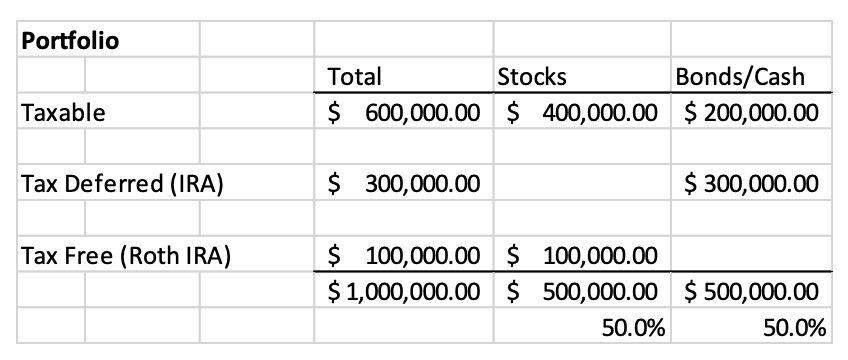
One of the toughest dilemmas I wrestle with is whether to consider future tax liabilities from unrealized gains in the portfolio and taxes from withdrawing from traditional retirement accounts.
Keto diets are a proven regimen to reduce weight and foster a healthy lifestyle. The financial equivalent – the keto annuity – will drive successful outcomes for your female clients and build a stronger practice.
Markets have been very positive this week on better-than-expected inflation numbers. The Consumer Price Index (CPI) printed a better than expected 0.1% in March with the year-over-year rate declining to 5.0% compared to a 6.0% year-over-year rate reported in February of this year.
Recession odds have climbed considerably since Jerome Powell’s testimony before Congress and the latest FOMC meeting. However, the recent failures of Silicon Valley Bank (SVB) and Credit Suisse (CS), as higher rates impact regional bank liquidity, also added to the risks.
Spotting trend changes is the key to economic forecasting. They don’t happen often. Most of the time, this year will be similar to last year. The pace varies but the overall trend continues… until it doesn’t.
It’s believed that to meet this goal, two out of every three passenger vehicles manufactured in the U.S. would need to be electric models.
What does a potential change in Federal Reserve policy mean for markets and the economy?
There was a downer vibe at the IMF/World Bank meetings this week. The World Bank Group told the international community to brace for low growth and the possibility of a lost decade. The International Monetary Fund warned of low growth and considerable downside financial risks on top of it.
Yesterday’s CPI report showed that inflation continues to slow to 5% on an annualized basis. That is a lot better than it was last year. We should be happy about this.
Just as it is getting ever-more important to anticipate changes in Fed policy, those changes are becoming more uncertain. One way to help resolve this dilemma is by explicitly incorporating political and public policy goals into the monetary policy calculus.
The Northern Trust Economics team shares its outlook for U.S. growth, employment, interest rates and inflation.
2023 has already been an eventful year, featuring a banking crisis and more Fed rate hikes. In our view, this is not a “set it and forget it” type of market – investors need to stay vigilant.
After the market selloff in 2022—a period that was particularly hard on growth stocks—we think our companies are attractively priced for the next five years, which is our baseline investment horizon.