VettaFi’s vice chairman Tom Lydon discussed the RiverFront Strategic Income Fund (RIGS)on this week’s “ETF of the Week” podcast with Chuck Jaffe of “Money Life.”t
Credit volumes witnessed some strong highs and lows in the third quarter. Notably, July—a month where trading volumes are generally steady—saw very inconsistent flows over the month. September, meanwhile, followed historical trends with an increase in primary market supply, reflecting higher volumes in the secondary.
The data science wave is here, and bond managers must adapt traditional investment processes to harness new technologies and amplify human talent.
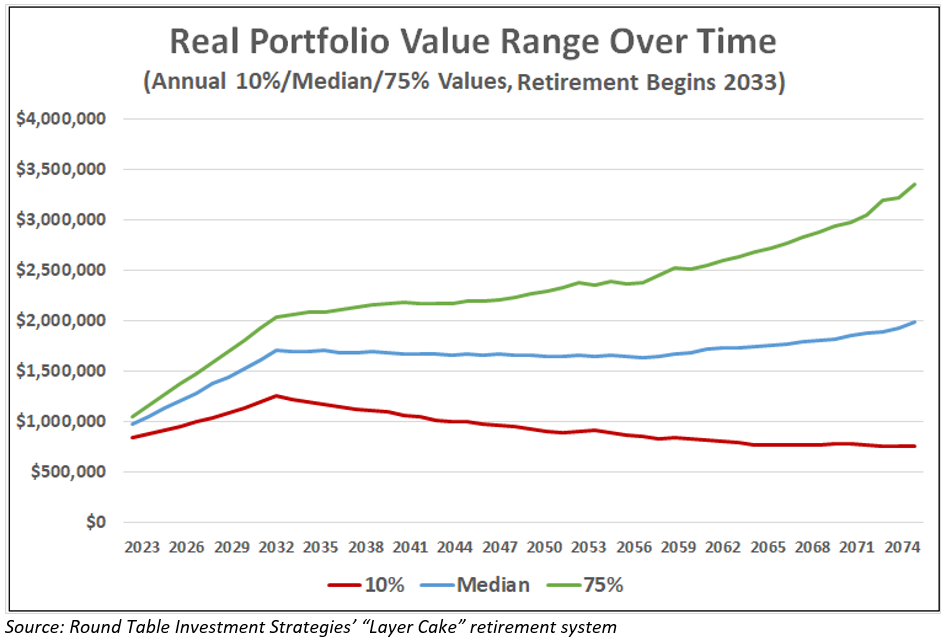
The ancient Greeks had a word κάθαρσις, which in English we now spell as “catharsis,” although it’s pronounced basically the same. It originally referred to purifying religious ceremonies, medical treatments, and so on.
Despite progress on bringing down inflation from mid-2022 highs, data from online job postings suggests that wage pressures may be reaccelerating. Beneath the surface, growing divergence in wage gains across occupation categories may be adding a layer of complexity to the outlook for labor markets.
Amazon.com Inc. Chief Executive Officer Andy Jassy gave investors much of what they wanted this earnings season: robust sales and profit growth along with a hint that the cloud division earnings machine is regaining momentum.
Credit challenges to come as the economy slows.
US consumers have kept buying these things despite high inflation and the contractionary policy of the Federal Reserve, and they deserve thanks not only for the recession that still has not come, but for the fast pace of recent economic growth.
Morgan Stanley’s incoming chief executive officer, Ted Pick, said investment banking will lead the next business cycle, and that hiring for that business will help the firm compete with rivals.
Embattled debt investors like the look of 5% Treasury yields as they weigh the risk-versus-reward scales for the world’s biggest bond market.
There are periods of time in the investing world when contradictions and disagreement among “experts” run rampant. Often, those periods tend to coincide with inflection points in cycles, although you only really know that with the benefit of hindsight, in my opinion.
Private credit is being sought—with the goals of income and capital preservation—to achieve real capital growth and drive portfolio returns among retail and institutional clients alike.
The longer the U.S. debt is left to grow, the harder it will be to correct.
Goldman Sachs Asset Management has seen strong net inflows in 2023 into its broad market equity ETFs and its income ETFs. Today, the firm expanded its exchange traded fund lineup to include two equity income ETFs.
The US economy grew at the fastest pace in nearly two years last quarter, fueled by a surge in consumer spending.
As 2023 enters the home stretch, I reflect on asset class performance for the year and discuss what my firm’s models are saying for the next 12 months.
Banks are taking a cautious approach in the investment-grade bond market amid some of the wildest swings in Treasuries in recent memory, waiting for pockets of calm to emerge as they seek to borrow before US officials can raise interest rates or tighten regulations further.
In this video, Chuck Carnevale, Co-Founder of FAST Graphs, a.k.a. will illustrate how value investing is the smart way to invest in stocks. Whether you’re investing for growth or income, value investing can be highly effective.
Higher for longer. The Federal Reserve will likely maintain higher interest rates and remain open to another rate hike. Borrowing costs for households, businesses and governments have risen with soaring rates.
Human behavior can lead to irrational investment decisions, but a well-planned low-volatility strategy may be the antidote.
There are reasons to be cautious in many markets, but low volatility and high/sustainable dividend stocks can help mitigate risk while providing income and equity exposure. The Franklin Templeton Investment Solutions Team weighs in.
The strength in consumer demand has been one of the defining characteristics of a very resilient U.S. economy and September’s retail and food services sales report confirmed that the U.S. consumer is alive and well.
A successful RIA hired a designer and spent $200,000 on a new logo as part of a project to create a new digital presence.
Municipal-bond yields at the highest in more than a decade are spurring optimism on the part of investment managers, who have been dealing with persistent fund outflows this year as the market has struggled along with the rest of fixed income.
Here are my seven keys to emerging as a leader.
The worst selloff of longer-term Treasuries in more than four decades is putting a spotlight on the market’s biggest missing buyer: the Federal Reserve.
The lockstep moves that have gripped the US stock market this month look set to end — at least for a day. A slew of big tech earnings reports sent shares in heavyweights Microsoft Corp. and Alphabet Inc. careening in opposite directions.
Investors are accustomed to getting a snapshot of the market by looking at the latest index statistics. But today, average spreads and yields for investment-grade corporate bonds are deceptive. A look under the hood reveals that intermediate-maturity corporates are a much more compelling opportunity than long-maturity ones.
High-interest rates are keeping the residential real estate market in flux. This is due to borrowing costs making prospective buyers and even sellers think twice.
We are focusing a lot of attention on fixed income at VettaFi in October. This week, we are hosting webcasts with AllianceBernstein and State Street Global Advisors.
When a prospect comes inbound, it’s easy to assume they know what they want, understand what they need, and recognize you as the one for them.
Investments in alternative energy have become unattractive due to higher interest rates, not changes in government policies, adoption or pricing of green technologies.
Bloomberg's James Seyffart offers the latest on the spot bitcoin ETF race and also discusses ether futures ETFs, spot ether ETFs, and crypto equity ETFs. VettaFi's Todd Rosenbluth highlights Vanguard's ETF success and covers a range of other topics including recent launches from Morgan Stanley and iShares.
Tony Muhlenkamp shares his notes on charitable donations and income tax deductibility.
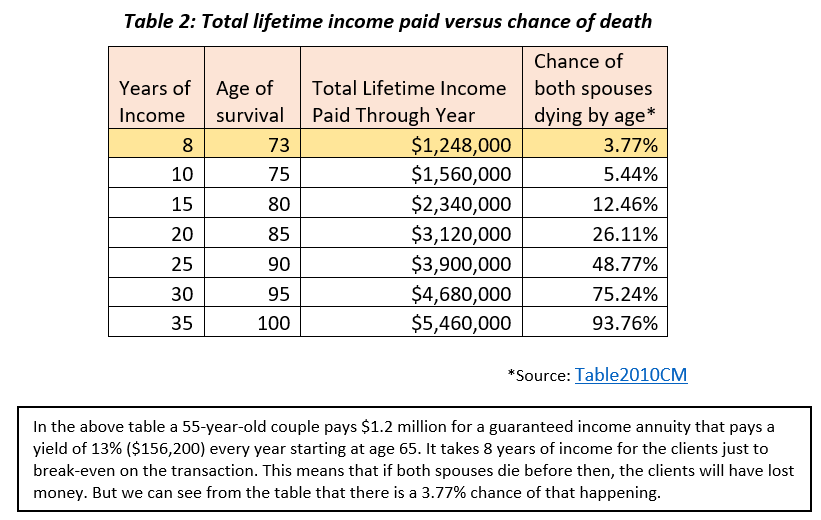
With interest rates at near 20-year highs, guaranteed lifetime income locks in those rates for the rest of one’s life, creating better retirement outcomes.
As interest rates have risen dramatically over the past year, income-oriented funds have become more attractive. With the income finally back in fixed income, advisors are searching for new opportunities to generate yield while mitigating risk in their bond investments. That’s why Madison Investments, an independently owned investment firm managing $22.9 billion in assets, recently launched its first suite of four income-oriented ETFs. The firm provides a range of investment strategies across mutual funds, managed accounts and customized investment portfolios. It added ETFs to its offerings in August. Two of the funds in its suite – the Madison Aggregate Bond ETF (NYSE: MAGG) and the Madison Short Term Strategic Income ETF (NYSE: MSTI) – seek to capitalize on the growing demand for dynamic, risk-managed fixed income strategies. My guest today will discuss how advisors can use these actively managed ETFs to get the most value out of their fixed income allocation.
Is the work you do to make a living a job, a career, or a calling? Recognizing the difference will pay great dividends in many ways.
In the month of October, gold’s price began to trend upward. This jump in the price of the precious metal comes after consecutive drops in its value since May.
A major investing mistake that investors often make is avoidable. We all realize that investing mistakes are going to be made. And there are some investing mistakes that are simply unavoidable and there’s really not much you can do about them.
Tight lending standards and rising yields, along with concern about an approaching turn in the business cycle, have put opportunistic credit in the spotlight. But what, exactly, does opportunistic credit mean? Here’s how we look at it—and what we think it may offer investors.
Discover strategies for a “higher for longer" interest rate environment and gain insights into inflation, areas of opportunity, and building a resilient fixed-income portfolio for the times ahead.
I previously discussed a method of applying long-run, risk-return insights to a goals-based approach to retirement investing. This article considers how to extend the process into the pre-retirement years.
Greater stability in US Treasuries is needed for the smooth functioning of other segments of the financial market, housing and the economy more broadly, both in America and beyond.
Many aspects of the economy are still being buffeted by the ripples from the pandemic, which makes precedents hard to apply, and should make everyone cautious as to their judgments. Housing market data is also, inevitably, reported with a lag.
A Bitcoin rally fueled by optimism about fresh demand from exchange-traded funds may have further to run if history is any guide.
Should you opt for transactional tactics that promise immediate results, or invest in transformational strategies that build a lasting business? Should you focus on short-term success or long-term sustained strategy?
It feels like Groundhog Day, with yet another challenging quarter for muni investors. The index was down about 4%, bringing year-to-date returns to –1.4% for the year. So what happened in August and September?
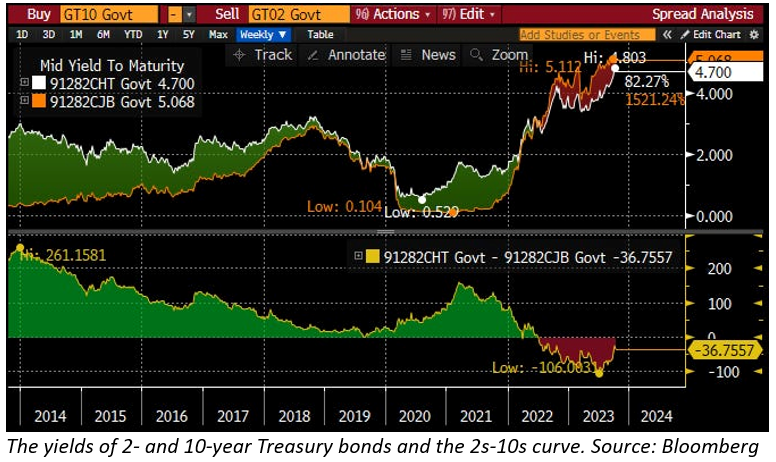
I was asked a pretty good question following an internal meeting late last week. The question started out by noting that we have been promoting going longer on the curve for a while now and then asking why we think longer-term rates will come down.
Term premiums have been on the rise, but should investors be concerned? Stephen Dover, Head of Franklin Templeton Institute, explains what term premiums are, and why they are worth paying attention to.
The debate between active and passive management has been going on for years. And while active management has faced headwinds over the past decade or so, it’s starting to reclaim dominance over passive.