Premiums and discounts are a popular metric to gauge the trading health of an exchange-traded fund (ETF). David Mann, our Head of Global ETFs Product and Capital Markets, updates his views on this metric with football (aka soccer) analogies from across the pond.
As an advocate of sound fiscal policy and a strong believer in the power of free markets, I find Argentina’s recent economic overhaul under President Javier Milei not just refreshing but essential in today’s world of bloated government spending.
As long as ETFs stay true to their original mindset of solving investor problems, growth is the only path forward. Current product development suggests that’s the most likely case.
Amit Dholakia of Franklin Mutual Series explains why some US capital goods companies may be off to the races after years of merely plodding along.
Google DeepMind has released a new version of AlphaFold, a landmark tool for predicting protein structures, that puts the artificial intelligence software on a path to make breakthroughs in biology research and bolster a business that Google’s AI chief says could be worth north of $100 billion.
Hedge fund firm Deer Park Road Management Co. is set to pounce on beaten-down prices in the residential mortgage market on expectations that the US Federal Reserve will start lowering rates later this year.
When Microsoft Corp. invested more than $10 billion for a chunk of OpenAI, scientists inside its storied research division were rankled about being shoved aside for a newer player from outside the company.
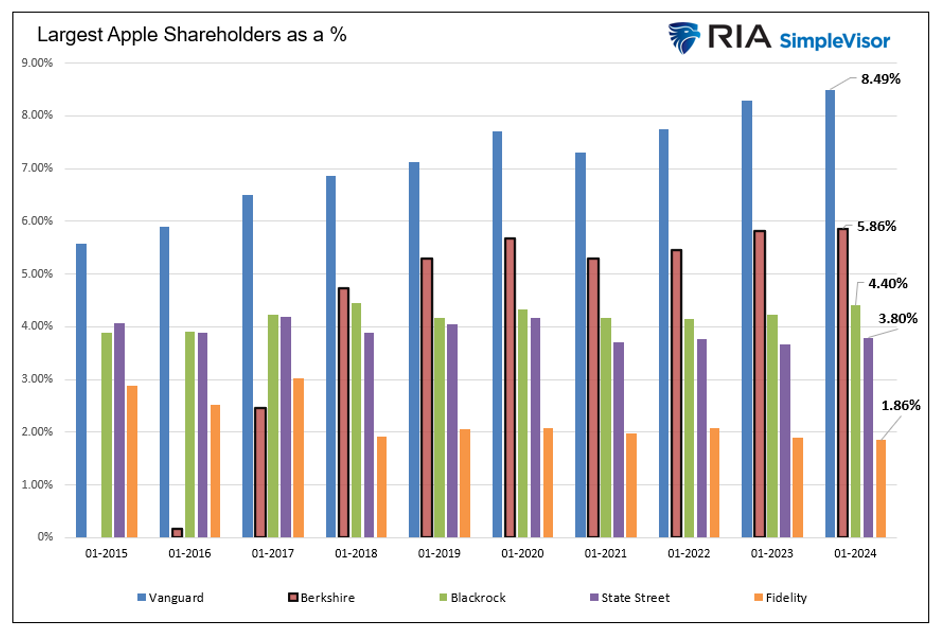
On the heels of Apple’s latest earnings report, the Wall Street Journal published an article titled “Apple is Buffett’s Best Investment,” which discusses how Apple became an oversized investment of Warren Buffett’s company, Berkshire Hathaway.
Guessing the direction of interest rates is no easier than any other tactical or market timing decision. The yield on the benchmark 10-year Treasury note is just under 3.9%. That is about 100 basis points less than it was a few months ago. Fed policy is uncertain, inflation has not been fully controlled, and fiscal deficits loom as a long-term risk for yields to go higher.
Life is full of surprises. If you don’t have a crystal ball, you can’t really predict what may come next in your life—or in the markets. That’s why we should always be prepared for any potential situation.
There is broad agreement that the US housing market needs more homes . There is also broad agreement that affordability needs to improve. But it doesn't necessarily follow that we should build more affordable homes.
Apple Inc. will deliver some of its upcoming artificial intelligence features this year via data centers equipped with its own in-house processors, part of a sweeping effort to infuse its devices with AI capabilities.
There’s a persistent mystery about Mark Zuckerberg, and it’s not the one about his new chain necklace. The chief executive officer of Meta Platforms Inc. has spent billions of dollars building powerful artificial intelligence models and is giving that technology away for free.
In this PIMCO Perspectives, we examine how the return of elevated bond yields comes at an opportune time to consider shifting out of cash.
Hong Kong's prospects are closely linked to the outlook for China.
A recap of the important drivers, along with our views on how things will play out over the rest of the year.
We think the intersection of hope and fear offers opportunity across asset classes and market segments. Tapping into it, however, requires in-depth research and a discerning eye. Waiting for a clarion bell to ring before deploying capital might leave investors a step behind.
Rather than wait for interest rate cuts, some companies are opting to simply offload debt, which could be a boon for corporate bonds.
Anshul Pradhan and Stephen Stanley both saw the current US bond market coming. They just don’t agree on where it’s going.
As the market for initial public offerings bounces back after two lifeless years, investors who’ve been impatiently waiting for their payoff are finally getting some returns.
Points of Return often argues for caution on stocks. It never argues to get out of them altogether. That’s because history demonstrates that over long time spans it’s very dangerous to be out of the market altogether.
Investors often forget that nothing in the financial markets is permanent. Regardless of the hype or castigation, what’s hot eventually becomes cold and what’s cold eventually becomes hot. While we remain very skeptical of today’s market’s heroes, we think the range of investment opportunities is historically broad, historically attractive, and a once-in-a-generation opportunity.
At the Berkshire Hathaway Annual Meeting we marked what we believe is the end of an era both for Berkshire and for the S&P 500 Index.
It seems that every few years, the term “stagflation” gets floated around to describe the current and/or prospective U.S. macro landscape.
Shifting dynamics among global economies and markets present a range of opportunities for multi-asset portfolios.
Franklin Templeton Fixed Income CIO Sonal Desai discusses why persistently loose fiscal policy, relentless price pressures and resilient economic growth may cause a problem for the US Federal Reserve—and explains the implications for bond yields.
VettaFi looks at the expected growth in US LNG export capacity and how midstream/MLPs benefit.
The TCW Group announced that two of its mutual funds have been converted into ETFs, offering focuses on growth and artificial intelligence.
VanEck’s Matthew Sigel discusses the upcoming SEC decision on their spot ether ETF filing, the debut of VanEck’s Bitcoin Trust (HODL), and the investment case for ether and bitcoin. K&L Gates’ Rich Kerr provides a unique legal perspective on the recent multi-share class structure filings, spot ether ETFs, and the UK government potentially granting equivalence to US-domiciled ETFs. VettaFi’s Todd Rosenbluth offers new polling data around the ongoing fixed income conundrum.
“I live and thrive on the core values that Cambridge has. I try to make the purpose of being a receptionist to always offer my service to any associate and financial professional. It's very meaningful to me that we can take care of our financial professionals, clients, and home office associates.” – Kay Black
“Cambridge and the financial services industry are not just about finance and investments; we're really in the people business. And so, if you have a passion and joy in serving people, then this is the place for you.” – Morae Metcalf
Don’t miss this special episode of Cambridge Stronger featuring associate recipients of the 2023 Spirit of Cambridge award, Morae Metcalf, Assistance Vice President of Human Resources, and Kay Black, Senior Receptionist. From their day-to-day duties and responsibilities to the charities that mean the most to them – Morae and Kay highlight how they represent and live by Cambridge’s core values of integrity, commitment, flexibility, and kindness. As our very first Spirit of Cambridge award associate recipients, both Morae and Kay received donations of $1,000 from Cambridge to put toward a charity of their choosing. Tune into this episode to hear which charities they chose and the reasoning behind their decision.
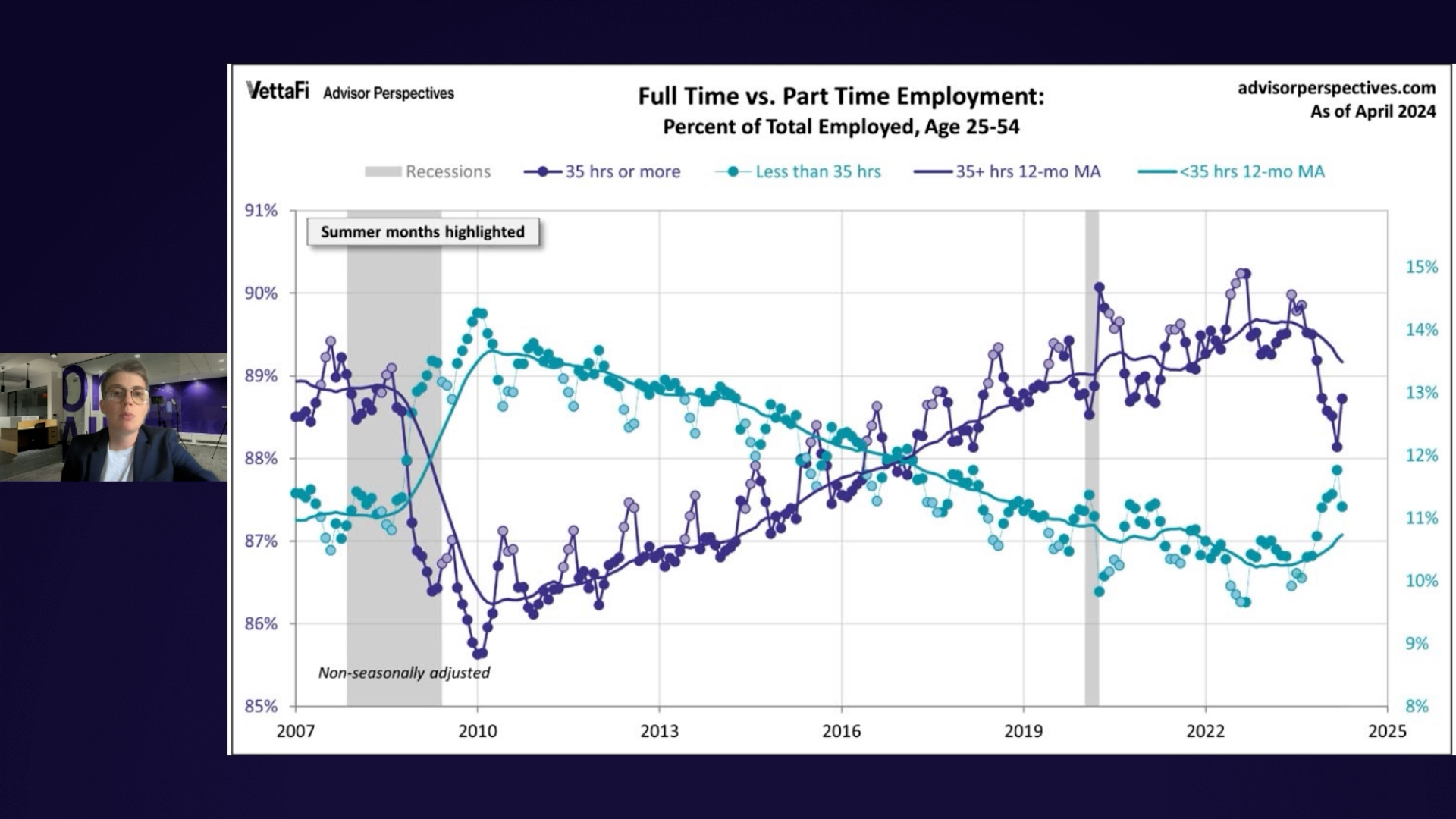
Let's take a closer look at the latest employment report numbers on full- and part-time employment. Buried near the bottom of table A-9 of the government's employment situation summary are the numbers for full- and part-time workers, with 35-or-more hours as the arbitrary divide between the two categories. The source is the monthly current population survey (CPS) of households. The focus is on total hours worked regardless of whether the hours are from a single or multiple jobs.
The idea that power is inherently corrupting has been repeatedly proven throughout history. From politics to business to religion, there are countless examples of individuals who succumb to corruption and abuse their authority.
Just as you lead a client to make the right investment choices, your web site should guide visitors towards taking a desired action, such as making a phone call, scheduling a meeting or downloading a resource.
Amazon.com Inc. plans to spend $9 billion expanding its cloud computing infrastructure in Singapore, the latest global tech company to boost investment in Southeast Asia.
The US has revoked licenses allowing Huawei Technologies Co. to buy semiconductors from Qualcomm Inc. and Intel Corp., according to people familiar with the matter, further tightening export restrictions against the Chinese telecom equipment maker.
At last weekend’s Berkshire Hathaway Inc. annual meeting, one shareholder asked Warren Buffett how his auto insurer Geico might fare in the event that autonomous-driving technology succeeds in slashing the number of accidents, as Tesla Inc.’s Elon Musk suggested it would on an earnings call last month.
As of last week, the total return of the S&P 500 was even with 3-month Treasury bill returns since the valuation peak of January 2022, more than two years ago. In our view, investors continue to “grasp at the suds of yesterday’s bubble,” ignoring extreme valuations, lopsided bullish sentiment, emerging pressure on profit margins, economic conditions at the border of recession...
Are the top 10 best performing S&P 500 stocks in 2023 good investments now in 2024?
An AI bubble may be simmering in the background, so for investors still looking for AI ETFs, it may be worth taking a discerning look around.
While much remains uncertain regarding rates, inflation, and the economy, quality stock investing proves a boon in any market environment.
Looming rate cuts can provide opportunities, but also present unique challenges. They can increase reinvestment risk and decrease returns. But tight credit spreads don’t necessarily mean poor returns.
Join the experts at State Street Global Advisors and Loomis, Sayles & Company as they unpack an active fixed income strategy built to take advantage of opportunities and thread the complicated needle of this unusual fixed income environment.
Results from the world’s biggest technology companies have brought mostly good news. There’s just one missing piece: Nvidia Corp.
They subdued stocks, claimed a chunk of foreign exchange and muscled into the commodity market. Now high-tech trading firms like Citadel Securities LLC and Jane Street are pushing deeper than ever into fixed income.
The global bond rally ignited by hopes of lower interest rates in the US will face its first big test on Tuesday, when the Treasury kicks off $125 billion of sales this week.
Outside Business Activities (OBAs) are more than just side hustles for financial advisors – they’re ethical minefields that have drawn increasing scrutiny from regulatory bodies like FINRA. Since intensifying its focus in 2018, FINRA has highlighted the importance of transparency and adherence to compliance in these endeavors in its most recent report.
Bonds investors now balance the potential risks and rewards of taking on longer duration exposures in the current environment.
The article explores why the Federal Reserve might face pressure to raise interest rates rather than lower them in 2024, contrary to conventional expectations. It delves into the current phase of the business cycle, particularly focusing on the bullish trend for commodities and its implications for inflation.
If you’re not sure what direct indexing means, you’re not alone. Even after the recent growth, direct indexing remains relatively unknown. As our compliance team never fails to remind us, you can’t invest directly in an index. So what exactly is direct indexing?
The stronger U.S. dollar is benefiting America, but creating troubles in other geographies.
Recent media coverage about how best to construct and manage portfolios has many wondering whether institutional investors are facing a paradigm shift right now.