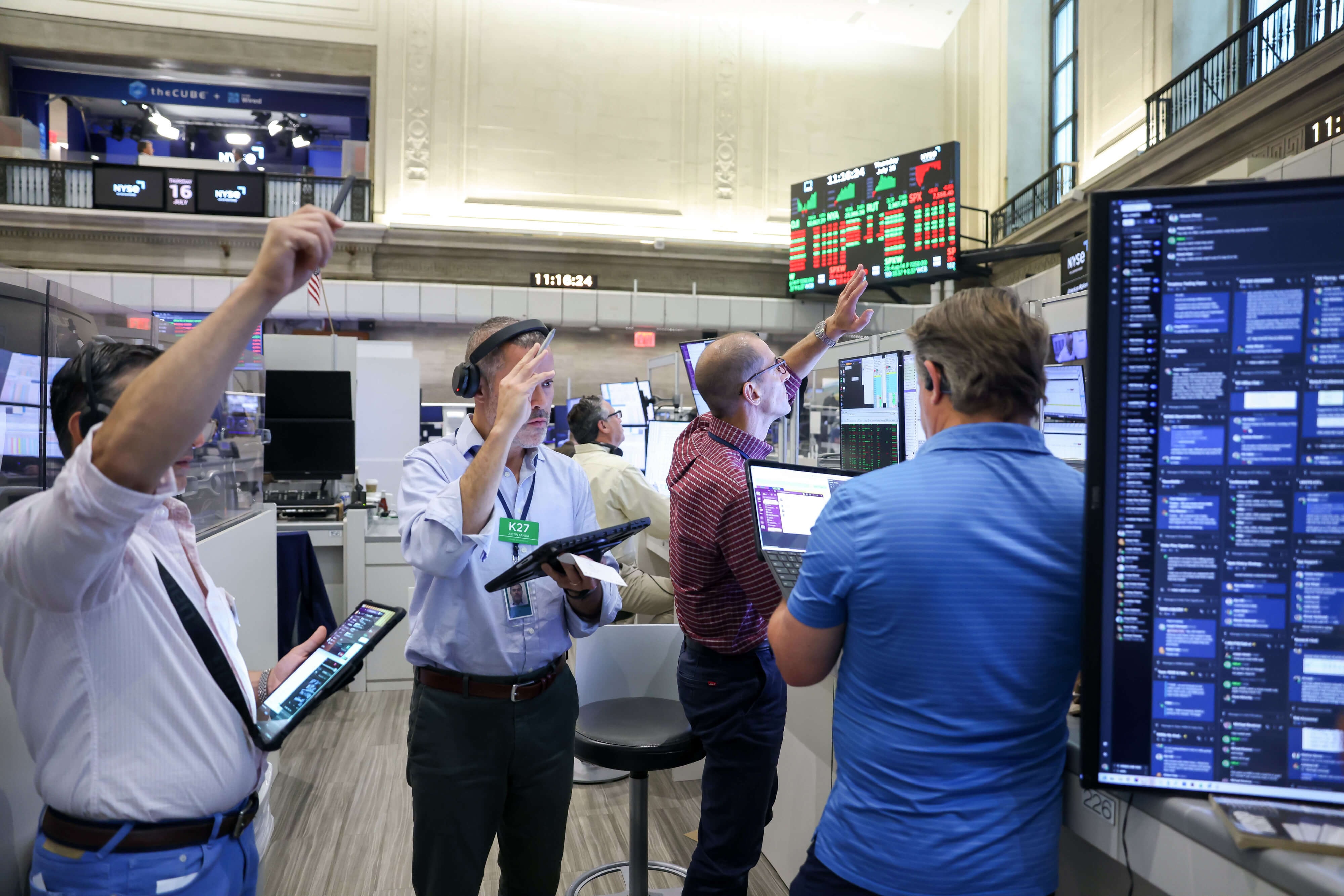
Strong economic momentum is a double-edged sword for US equity traders. Solid growth is an earnings tailwind. But let it run too hot, and it turns from blessing to curse.
Gold and silver rose on dip-buying, as traders monitored Middle East tensions for signs that higher energy costs could stoke inflation, putting pressure on the Federal Reserve to tighten policy.
When you measure home affordability today against the metric that actually governs the check you write each month, the picture flips. By that measure, buying a home may be easier now than it was for the Boomers and Gen Xers who get blamed for everything.
Financial markets were eventful this week, with key inflation reports, Federal Reserve (Fed) Chair Warsh’s first semiannual testimony to Congress, renewed Middle East tensions, and the start of earnings season all helping shape the narrative.
I really struggle to understand my utility bills. They often run to several pages, with sections describing just how difficult it is to get water from the source to your faucet, or internet service from a satellite to your home router. At the end, there is a long list of charges from a range of payors that adds up to an astronomical sum.
We’re back to reading tea leaves! Hooray! Next week the Federal Reserve will have its second meeting since Kevin Warsh officially took the helm. And, at this point, the outcome is far from certain, which is unusual given that ever since Ben Bernanke instituted “forward guidance” the market usually knew what to expect.
The second-quarter earnings season kicked off last week with a resounding statement from Wall Street, led by stellar results across the nation's six largest banking institutions.
Whenever I speak at investment conferences, I like to point out that we invest in a number of publicly traded airports. I even list them: Spain’s Aena. Aeroports de Paris. Zurich Airport. Airports of Thailand. Two of the world’s largest operators, Grupo Aeroportuario del Sureste and Grupo Aeroportuario del Pacifico, trade in Mexico.
There are several market headwinds that warrant attention, as well as a tailwind that may be large enough to keep the boat moving forward. Fully understanding the headwinds and tailwinds will help you better monitor the market barometer, allowing you to assess and adjust risk levels with more awareness going forward.
Bond traders and Federal Reserve Chairman Kevin Warsh are in agreement on a crucial point: The central bank’s fight against inflation still seems far from over.
US stocks advanced on Monday, paring last week’s slump, as chipmakers rebounded amid a deluge of earnings reports that will test whether Big Tech’s profits can match high expectations.
I’ve been writing about inflation more in recent months and quarters because inflation has become the major driver of the US macroeconomic landscape. This week, we take a deep dive into inflation and interest rates, and at the end, I talk about why I am buying gold for my grandkids.
Today, the mission of the CFP Board of Standards, a 501(c )(6) nonprofit organization, is to credential competent and ethical financial planners, uphold CFP® certification as the recognized standard, and advance the financial planning profession. The mission is no longer to benefit the public. Selling out the public dooms financial planning as a profession. That’s horrible for the vast majority of certificants that want to be held to a higher standard.
It seems to be the end of the Great Moderation Era for the U.S. economy. The Great Moderation Era—which marked most of the two decades leading up to the COVID-19 pandemic—is drifting away into what we call the new Temperamental Era.
The measurement of inflation has been getting a lot of attention lately. Some modifications are underway, with more potentially to follow.
The first half of 2026 reinforced the importance of balance, selectivity and income generation. Franklin Income Investors Chief Investment Officer Ed Perks discusses how markets have evolved, where opportunities are emerging, and why diversification remains critical heading into the second half of the year.
A handful of key economic data points dropped last week, painting a picture of an economy that is successfully downshifting from its recent inflation peaks even as consumers keep their footing.
Halfway through the year, the U.S. equity market performance is broadening. That said, market concentration remains incredibly high, while equity and bond correlations sit in positive territory — conditions that scream a call for diversification. Investors are heeding that call, many with alternatives ETFs.
A country drowning in energy shouldn't also feel like it's running out of electricity. In other words: before we ask whether America can make more things again, we should probably ask whether America can power the production.
As the forces shaping bond markets become more local, the opportunities become more global. From energy stress to fiscal policy to advances in AI, today’s defining market forces are likely to play out differently across regions, sectors and issuers.
The good news is real. The easy trade is not. Growth has held up, artificial intelligence investment is showing up in earnings and capital spending, and fixed income is offering yields that create serious cushion for portfolios.
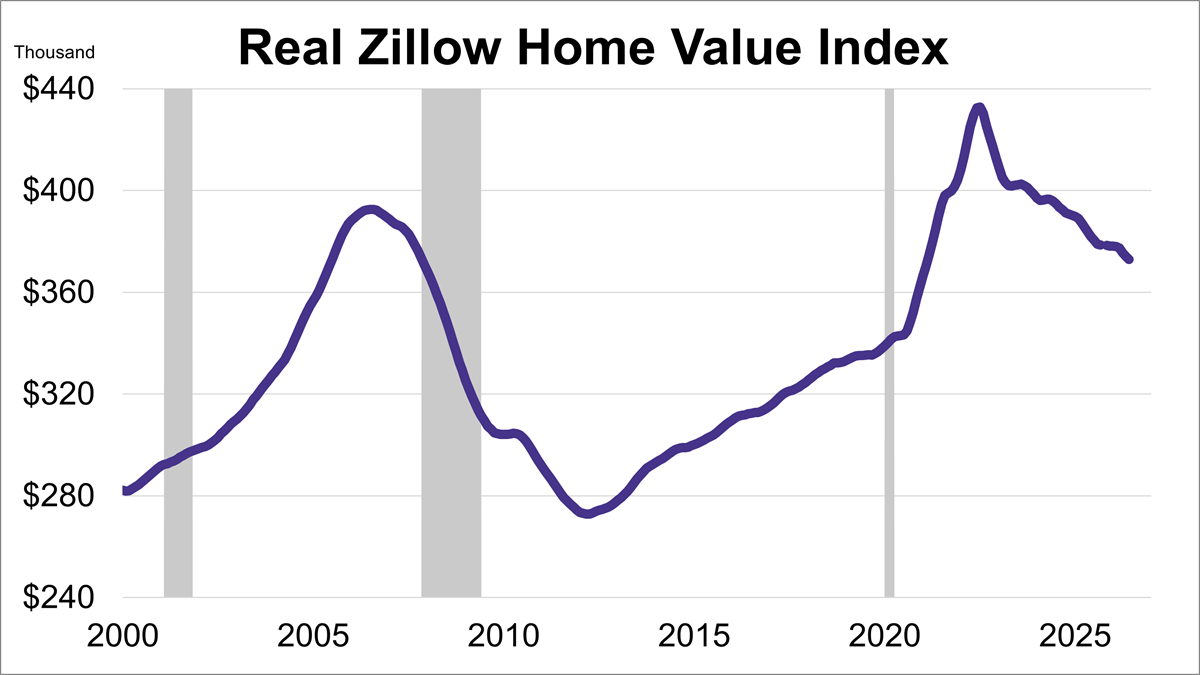
Home values fell for a second straight month in June, according to the Zillow Home Value Index. Additionally, after adjusting for inflation, real home values dropped even more sharply, hitting their lowest level in over five years.
Our baseline outlook still sees the Fed on hold through 2026 amid gradually easing price pressures. But Waller’s comments suggest that after a string of firmer Personal Consumption Expenditures (PCE) inflation prints, the Fed now places greater emphasis on responding if inflation surprises sharply to the upside or proves more persistent than expected, regardless of which factors are driving the inflation. And this raises the stakes for incoming inflation data throughout the year.
Midyear is a useful moment in investing—not because it tells us where we are going, but because it offers a clearer view of how little we truly knew at the start. Six months is often enough time for confident forecasts to meet reality, for consensus narratives to fray, and for the distinction between what sounded plausible and what proved durable to come into focus.
Gold and silver traded in a volatile fashion over the past several days as investors weighed conflicting signals from the Federal Reserve, economic data, and geopolitical developments in the Middle East.
David Solomon, decked out in full academic garb, bobbed his head happily and wagged his index finger to the beat of his own AI-generated music.
Private debt is increasingly valued for its potential to help insurers operationally and strategically: support liability matching, improve portfolio design, diversify underlying exposures and, when underwritten well, add resilient excess return.
A hawkish pivot by the Federal Reserve and resilient U.S. growth could keep the dollar strong, but its gains could be limited by any narrowing of the U.S. interest rate advantage.
Discover the top 10 most-read charts from the first half of 2026, covering historic market valuations, record margin debt, recession indicators, and global index performance.
Hoisington Investment Management Co., the bond manager known for its bullish stance on US Treasuries going back more than 30 years, has turned bearish.
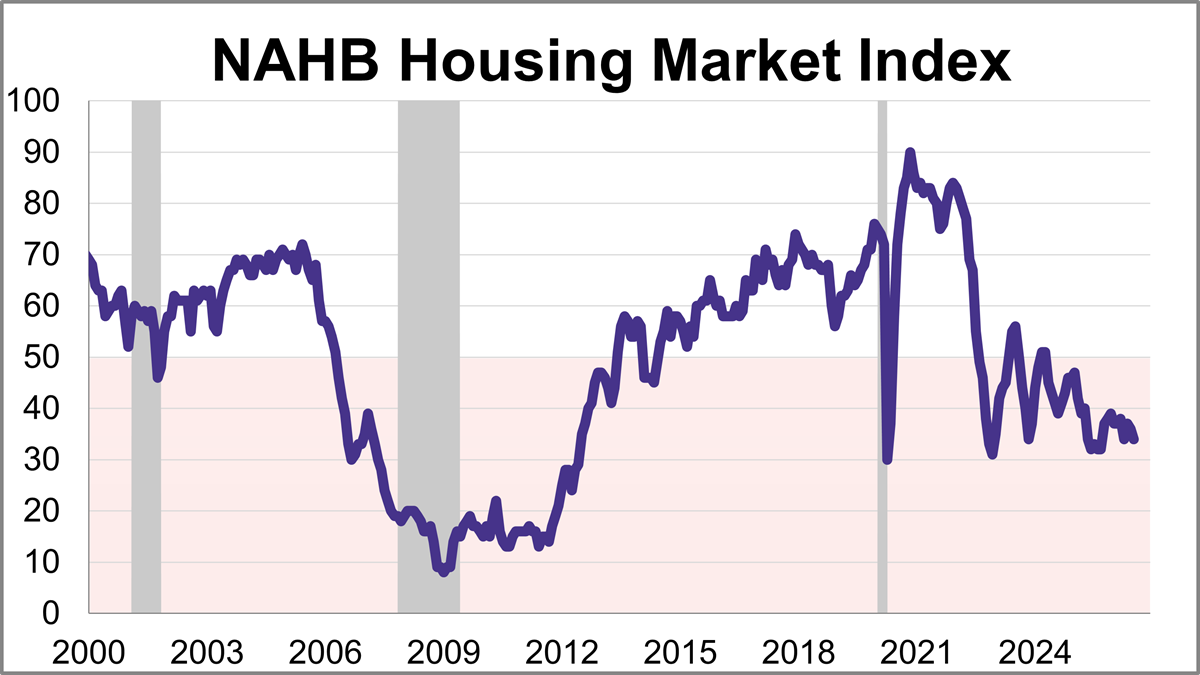
Builder confidence edged lower in July as ongoing affordability challenges continue to affect the housing market. The National Association of Home Builders (NAHB) Housing Market Index (HMI) fell 2 points from June to 34 this month, marking the 27th consecutive negative reading.
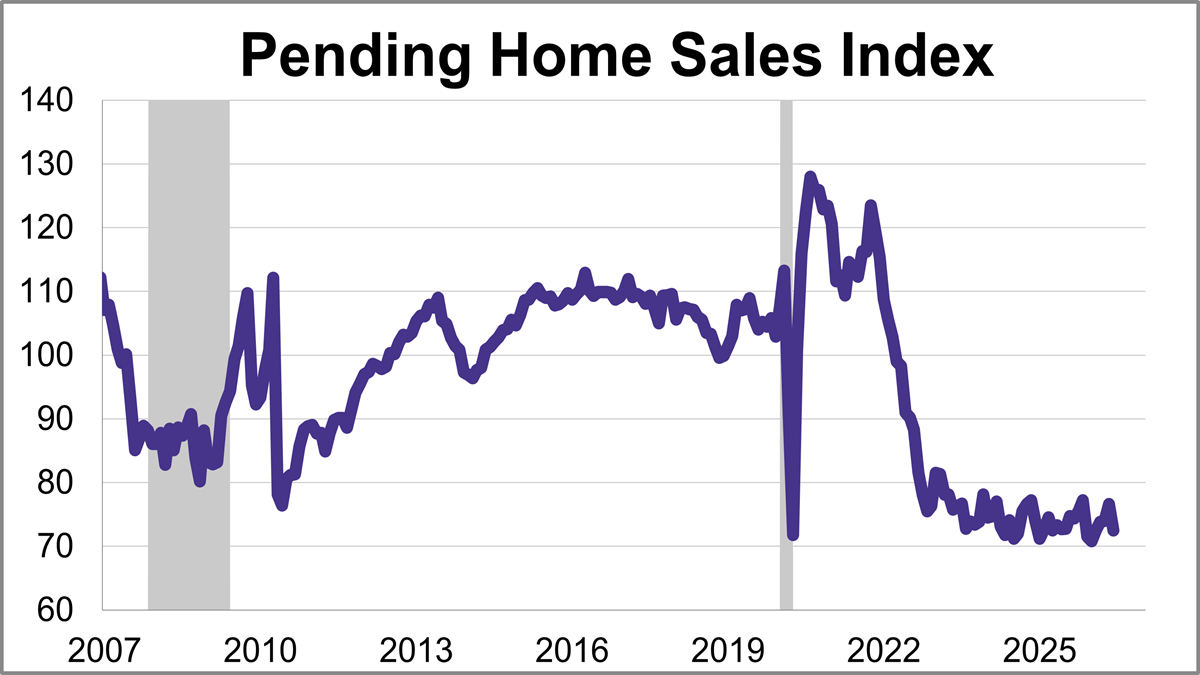
The National Association of Realtors® (NAR) pending home sales index sank 5.4% in June to 72.5, the lowest level since January.
This paper presents the case for emerging market (EM) allocations within the broader context of global investment strategy. In a period of heightened geopolitical complexity—spanning the 2026 US-Iran conflict, challenges to globalization, political transformation and ongoing great power competition—we believe the case for engaged emerging markets exposure has never been stronger.
The Q2 earnings season is off to a rollercoaster start. The big banks collectively reported strong numbers, boosted by active capital markets and another impressive set of sales & trading revenue. And it was the usual chorus of bank CEO macro commentary:
Although economic conditions did not change much between the first and second quarters, investors were far more bullish in the second quarter.
After a difficult start to the year, investor sentiment reached a low point near the end of March as concerns around inflation, geopolitics, and rising interest rates weighed on risk assets.
What were the key takeaways from last month’s numbers? Our corporate bond specialists look back at the market’s performance and provide incisive commentary to help you make sense of what drove the market—and what may be on the horizon for fixed income investors.
In the span of just two weeks, Meta Platforms Inc. has gone from a market afterthought to one of its hottest stocks, as investors finally like what Facebook’s parent is saying about its artificial intelligence plans.
Investors should consider where in the capital structure they are best compensated for risk. Equity may offer income with upside potential from active asset management, whereas debt may offer income with downside mitigation.
The first half of 2026 reinforced an important lesson for fixed income investors: Tax-loss harvesting opportunities don’t always arrive at year-end, often appearing during short periods of market dislocation when interest rates rise, new-issue supply increases or investor sentiment shifts.
The tech-heavy NASDAQ benefited from a semiconductor rebound and renewed enthusiasm for AI infrastructure names. The Dow, weighted more toward “old economy” stocks than high-growth names, captured none of last week’s gains.
LPL Research examines how sticky inflation, Fed leadership changes, and AI-driven borrowing are shaping the fixed income outlook for 2026.
The Fed's recent shift into a more hawkish mode creates concern about banking profits later this year, but second-quarter results are seen strong thanks to IPOs, mergers.
Regardless of how inflation is measured or debated, households continue to feel the cumulative effect of higher prices. The cost of goods and services have risen at a high pace over the past several years, and wage growth has not always kept pace evenly across households.
After a wild last 12 months in a technology stock boom – and more recent volatility – the question du jour, in our view, is not whether AI is transformative.
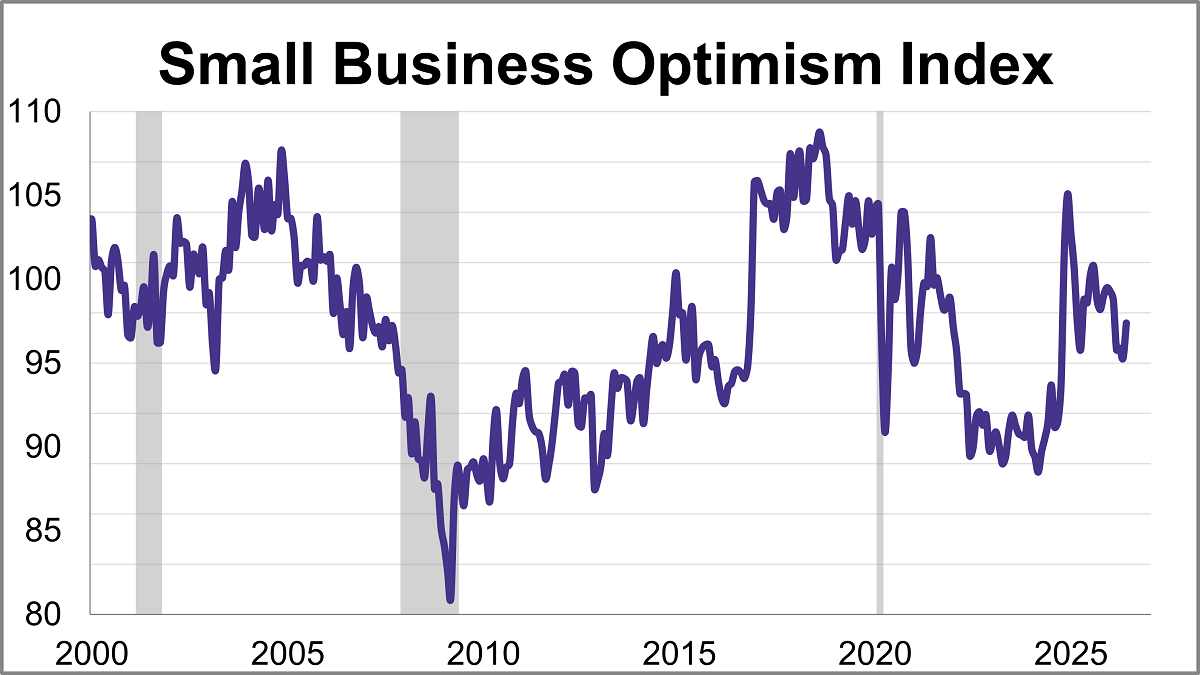
The NFIB Small Business Optimism Index rose 2.1 points to 97.4, reaching its highest level since February. However, the index remains below its historical average for a fourth straight month.
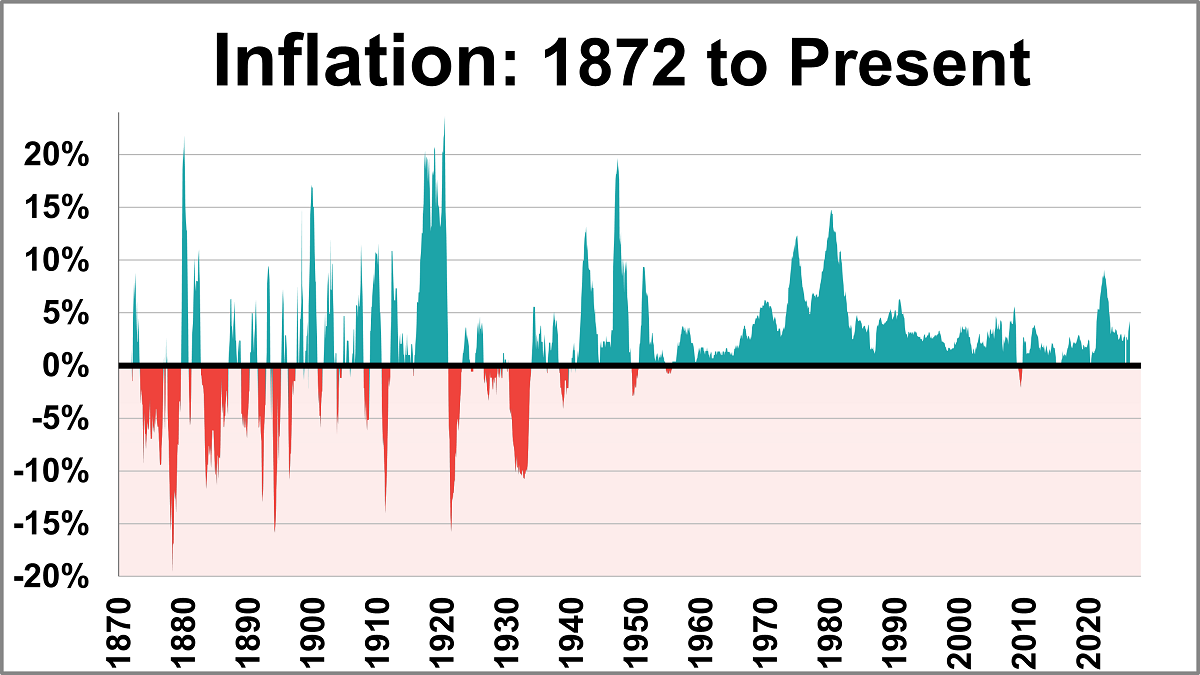
The June release of the Consumer Price Index for Urban Consumers (CPI-U) places the year-over-year inflation rate at 3.53%. This pushes inflation back below the post-WWII average of 3.72% for the first time since March. Meanwhile, this marks the fourth consecutive month that the current rate is above the 10-year moving average, which currently sits at 3.29%.
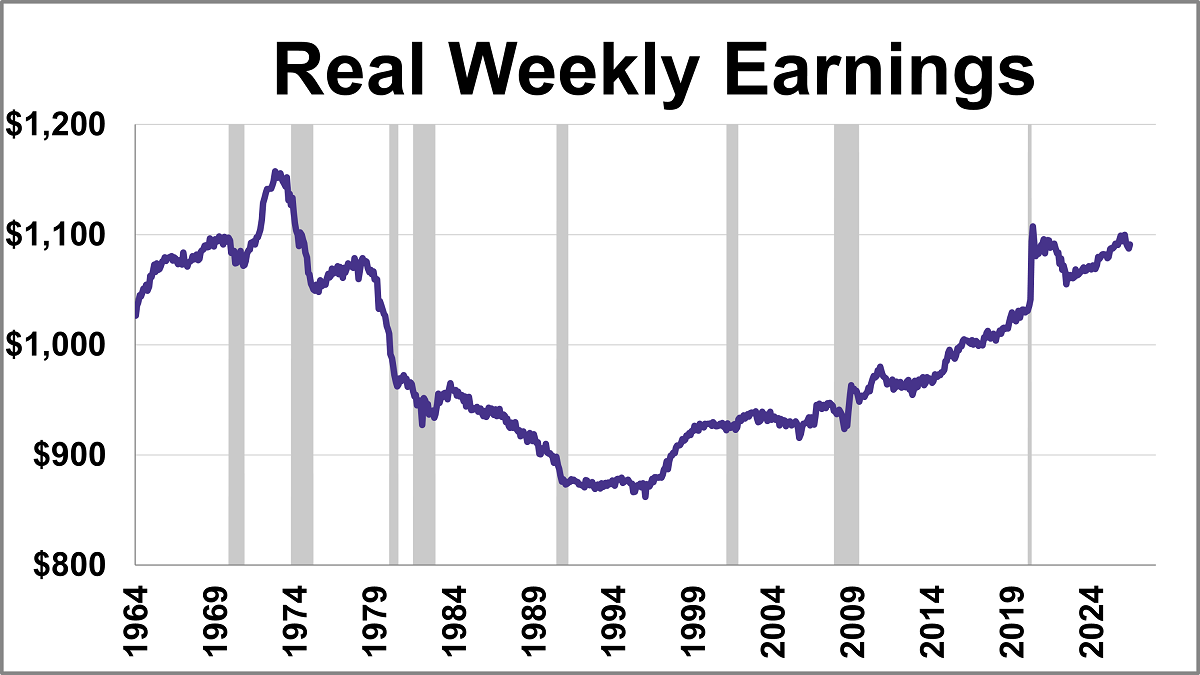
This series has been updated to include the June release of the consumer price index as the deflator and the monthly employment update. The latest hypothetical real (inflation-adjusted) annual earnings are at $54,560, down 5.7% from over 50 years ago.
The US Bureau of Labor Statistics said Tuesday that the Consumer Price Index fell 0.4% in June, bringing the inflation rate over the past 12 months down to 3.5%. That’s good but not good enough. Inflation is still too high.
A client called me last week wanting to know how to claim a $7,500 tax refund he thought he’d missed. His question was based on an email sent in early July to Social Security recipients from Frank J. Bisignano, commissioner of the Social Security Administration.