Hoisington, US Bond Bull for Decades, Turns Decidedly Bearish
Hoisington Investment Management Co., the bond manager known for its bullish stance on US Treasuries going back more than 30 years, has turned bearish.
The Austin-based asset manager’s latest quarterly report to investors — signed by founder Van R. Hoisington and chief economist Lacy Hunt — cites a “broader structural backdrop” of larger fiscal deficits and higher capital demands that “suggests that both inflation and long-term Treasury yields will trend upward.”
The outlook marks a break from views the firm held for decades, and is emblematic of a broader concern among fixed-income investors that higher and more volatile inflation is here to stay, eating into bond returns and keeping interest rates high.
Ballooning debt levels, another key concern, are leading investors to “increasingly demand a higher risk premium on Treasury securities,” according to the report. That’s creating an interest-rate environment that’s “less stable than the one that prevailed from 1990 to 2020” — a 30-year period marked by a steady decline in yields that fueled a bull market in US bonds.
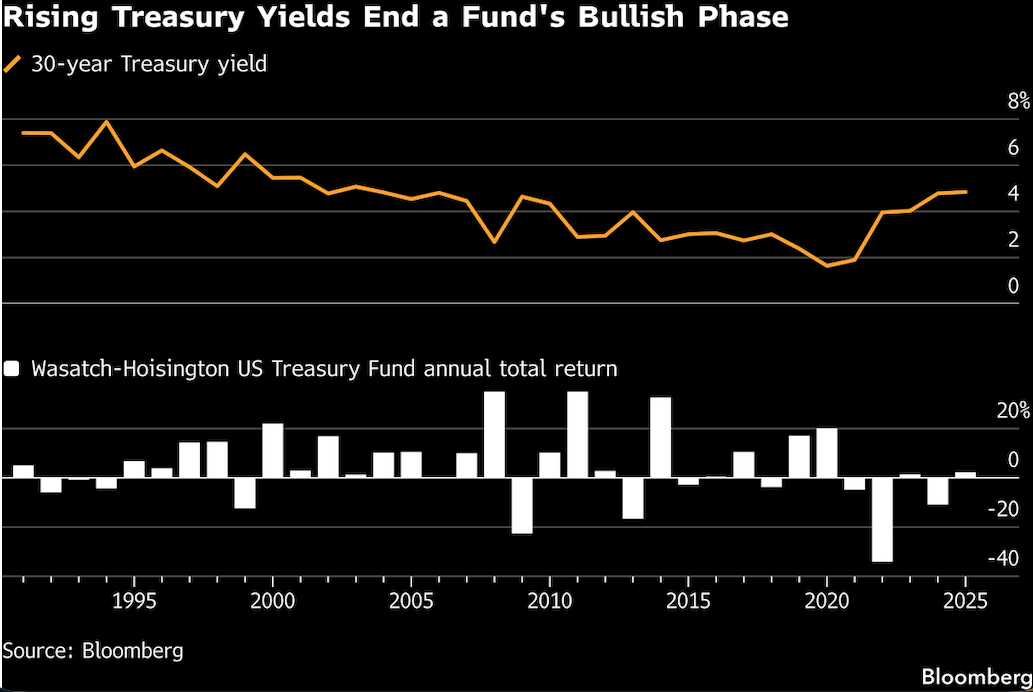
As for inflation, “the long-run equilibrium range is migrating” higher toward 3.5%-4.5%, Hoisington wrote, “with a significant risk of episodes of inflation above 5%.”
Hoisington’s shift is reflected in the fund’s regulatory filings. At the end of September, the effective duration of the fund’s holdings — a measure of price-sensitivity to changes in yield — was a whopping 20.88 years. By the end of March, the same measure was 4.7 years, and as of June 30 it was under a year. The fund’s benchmark, the Bloomberg US Aggregate Bond Index, has a duration of about six years.
The firm initiated its pivot during the first quarter, when the US attack on Iran in late February unleashed a surge in oil prices that drove up inflationary pressures and expectations. Treasury yields climbed as expectations that the Federal Reserve would raise interest rates replaced anticipation of cuts. The yield on the US 30-year bond approached 5.2% in May, the highest level since 2007, as oil prices climbed, and was around 5.12% on Thursday.











