The Federal Reserve is engaged in a well-documented battle with high inflation. So, many advisors and fixed income investors are evaluating Treasury inflation-protected securities (TIPS) and related ETFs.
Elon Musk openly endorsed the prospect of combining SpaceX with Tesla Inc. in what would be the biggest-ever corporate merger, uniting assets from electric cars to AI data centers to rocket and satellite capabilities.
A week filled with hotter inflation readings brought growing concerns about the sustainability of the pace of AI spending. Despite rising inflation, bond yields ended the week lower. While the S&P 500 Index of large-cap stocks fell 1.95 percent for the week, the decline was largely driven by its heavy weighting to technology stocks, which faltered by 6.37 percent.
Predicting the direction of interest rates is challenging enough when economic conditions are relatively stable. Add persistent inflation, a resilient economy, a cooling labor market, geopolitical uncertainty, and an expanding supply of Treasury debt, and the challenge becomes considerably greater.
The AI agent catalyst. Meta's September launch of Muse, a personal artificial intelligence (AI) agent designed to act on a user's behalf across digital workflows, crystallized the market's latest disruption narrative.
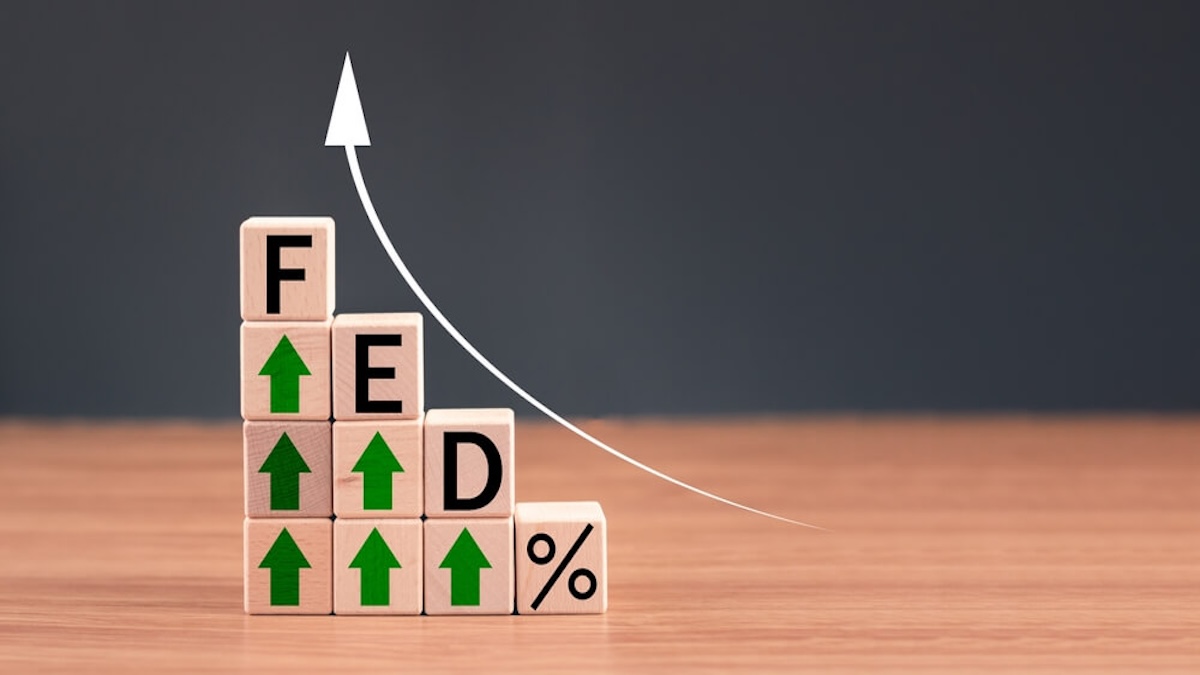
Fed rate hikes could climb further than markets expect, according to T. Rowe Price Capital Markets Strategist Tim Murray.
The US Treasury market is entering a new era. Financing government debt is becoming less about capital availability and more about the yield required to attract it.
Narratives are almost always wrong: clever stories that explain the past and say nothing about the future. One may be right. AI may become the dominant technology of the century and render much of the present economy obsolete.
The Mega Backdoor Roth may be one of the most powerful tools in a long-term 401(k) planning strategy. It can pair well with other high-earner tax strategies and belongs in any serious conversation about retirement tax diversification.
Chris Galipeau and Taylor Topousis discuss high-conviction insights that go beyond media headlines.
Fear of missing out has driven data-center developers to build as much computing capacity as possible, as swiftly as they can. But investors funding the projects are getting nervous. They’re suddenly worrying that spending on artificial-intelligence services won’t be enough to justify the trillions of dollars backing the buildout.
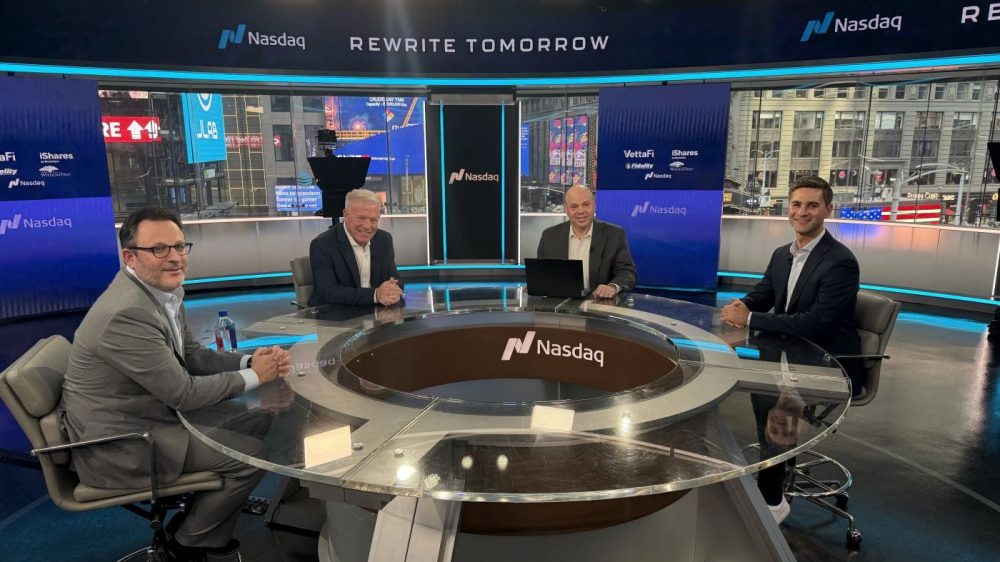
The Nasdaq-VettaFi Asset Allocation Summit this week included insights from leaders at key asset managers discussing the major decisions that advisors are facing. With costs rising and many investors at or near retirement, fixed income and income ETFs, specifically, took up a big part of the conversation. Leaders from BlackRock, WisdomTree, and Fidelity Investments all shared their views on both the fixed income outlook and the use cases for fixed income ETFs right now.
The link between AI capex and earnings carried roughly half of this year’s profit growth, and that support fades once spending stops accelerating, even at a record level. The earnings bill doesn’t arrive when the spending stops. It arrives when the spending stops growing.
Artificial intelligence (AI) and the Federal Reserve rate hike have dominated headlines recently—and investors might be wondering how these things will affect them.
On July 24, China’s Ministry of Finance and State Taxation Administration announced that putting assets into an offshore trust, and earning income through one, are taxable events. The rate is 20%, and it applies not just when assets go in but also when they earn income and when the trust is wound down.
We believe the combination of AI, robotics, space technology, and quantum computing will be primary drivers of future economic growth.
Think interest rates are peaking? If so, agency mortgage-backed securities (MBS) deserve a look. Think rates have further to climb? MBS may still earn a place in your fixed-income allocation. In this article, I weigh the pros and cons of MBS at current yields, explain what will drive future returns, and share how individual investors can gain exposure.
Join the experts at GraniteShares and VettaFi for a product due diligence session that explores why autocallables are taking center stage in the 2026 income story and how to get autocallable exposure.
Discover how strong corporate earnings, AI capex cycles, and 5%–10% fixed income yields outweigh midterm election and Fed rate uncertainties.
Many advisors first look to securitized assets for income, and for good reason. These sectors have often offered attractive spreads relative to similarly rated traditional fixed income securities. In many cases, those spreads reflect market complexity and specialized research requirements rather than simply higher credit risk.
There is a general framework to inflation, and it is older than any of us. Prices can rise because buyers are bidding for scarce goods with money they’ve actually earned. Or prices can rise because the cost of producing something has jumped for reasons unrelated to demand.
The third quarter of 2026 emphasized an increasingly divided macro regime for financial advisors and institutional allocators alike. On one end, broad market hopefulness drove steady capital deployment into broad-market beta, while on the other end, raised rate volatility and geopolitical tension forced strategic pivots across fixed income, real assets, and systematic strategies, according to BlackRock’s Q3 earnings call, released October 14.
In this commentary, we look at three themes shaping our thinking: a shift in who is leading the market, the return of income as a meaningful source of return, and an economy that, in our view, is growing steadily rather than heading toward either extreme.
Corporate bond yields are high, but spreads are low. Low spreads are supported by strong corporate fundamentals, and high yields might help offset potential price declines.
As we enter the final quarter of 2026, the investment backdrop remains constructive but increasingly differentiated. Economic growth and corporate earnings have remained resilient, while continued investment in artificial intelligence (AI) and other productivity-enhancing technologies has supported capital spending and market sentiment.
In more normal periods like today, hiring broadly matches the labor force growth, and unemployment holds steady. Labor force growth has slowed to about 0.5% a year, so payroll gains have slowed too. Payrolls rose only 29,000 in September and averaged about 45,000 a month over the past year, yet unemployment is still a low 4.2%.
Big bank earnings offered little to alter the dimming views on the sector mired in the longest losing streak since the financial crisis. The bright spot: equities trading.
We agree that the economy has appeared remarkably resilient at the aggregate level, and that modest further rate increases may not put overall growth at risk. But the more important question for portfolios is not the level of inflation; it is its sensitivity to rates.
If markets are good at one thing, it's reminding investors that stock prices don't simply go up, uninterrupted, forever. I have updated this report several times since it was initially published in 2008, and given recent market volatility, it made sense to do so again.
An income projection can provide an important starting point for year-end tax planning. Explore key 2026 tax brackets and income thresholds that may help inform planning decisions before year-end.
Learning how to value stocks starts with a question you already understand: What am I getting for the price I’m paying?
Central banks are tightening, and stocks are still within reach of their highs. The Fed hiked on September 16 for the first time since 2023, and the 10-year Treasury yield touched 5.34% this month, its highest level since 2002. Even so, the S&P 500 sits within roughly 2.5% of its record, and Japanese equities recently set fresh all-time highs.
As we round the three-quarter pole and head into the final stretch of 2026, the prevailing investment narrative has, of course, been AI, along with its pros and cons. Since March, when the Iran conflict began, there has been a secondary drumbeat that continues to get louder and louder: the narrative surrounding bond prices, interest rates, inflation, and the economy.
In light of accelerating global fragmentation and geopolitical conflict, many governments and businesses are investing in resilience. That imperative has coincided with the emergence of AI, a technology that can expand the frontier of what is possible. As a result, technology security is becoming a pillar of national economic security strategy.
Q3 was a period of transition in the bond market thanks to Federal Reserve changes, a surge of AI-driven debt issuance, and rising interest rates.
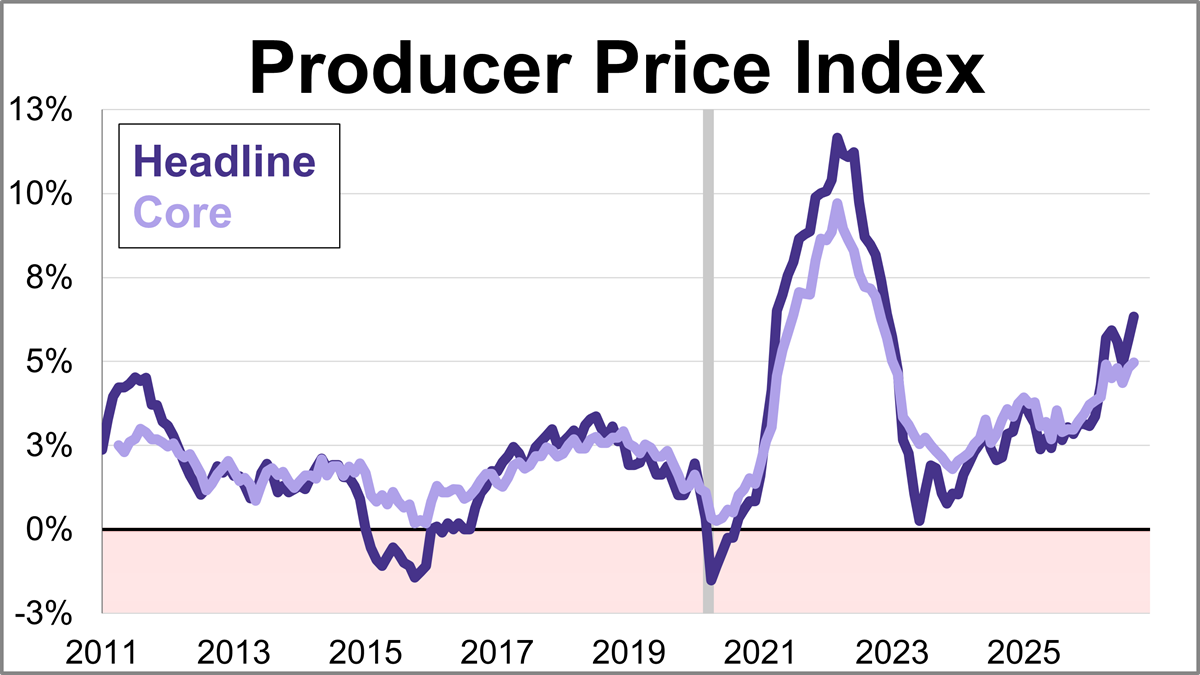
The Producer Price Index (PPI) was up 1.3% in September, better than expectations.
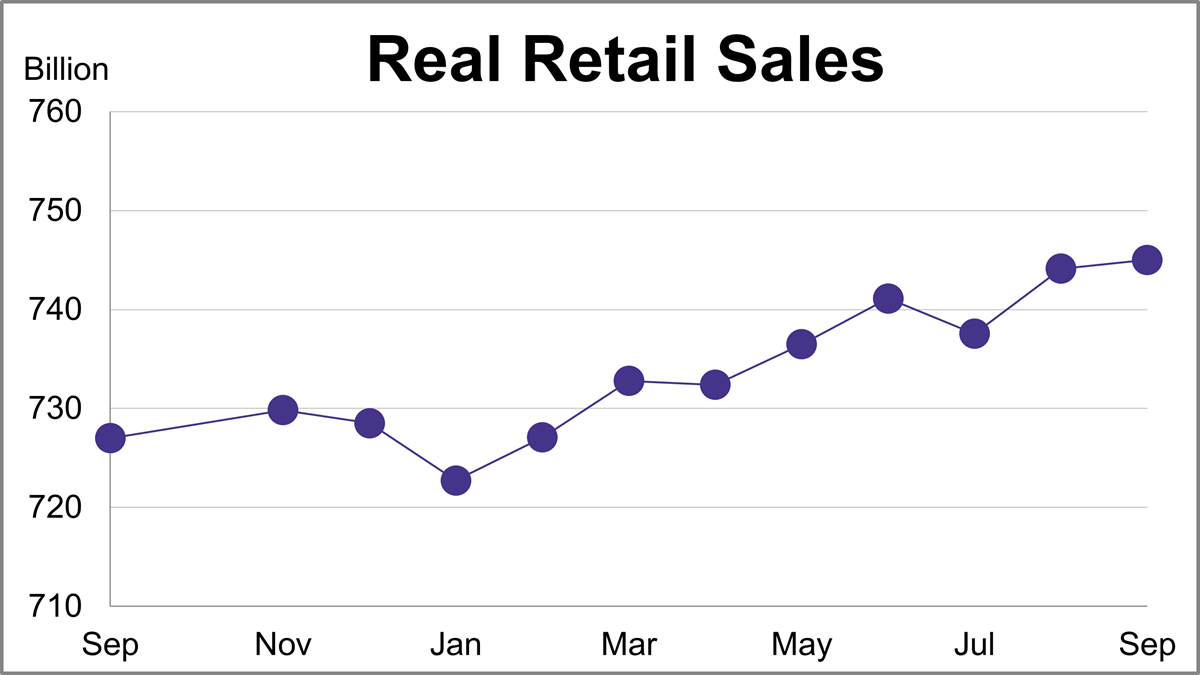
Nominal retail sales were up 0.8% month-over-month and up 6.3% year-over-year in September. After adjusting for inflation, real retail sales were up 0.1% month-over-month and up 2.5% year-over-year.
As AI in wealth management becomes more prevalent, recent research from Vanguard suggests that technology may actually increase investors’ appreciation for human expertise.
BlackRock, WisdomTree, and Fidelity Investments had representation at the recent Nasdaq VettaFi Asset Allocation summit.
Last week, the NEOS Nasdaq-100 High Income ETF (QQQI) crossed $15 billion in assets under management. This major milestone was the result of investor demand. In the first nine months of 2026, the tax-efficient options-based ETF had $7.0 billion in net inflows. With the help of the $13 billion NEOS S&P 500 High Income ETF (SPYI), NEOS has firmly established itself as a premier manager for enhanced income ETFs.
Charles Schwab Corp. reported earnings that beat estimates as retail investors continue to pile into the stock market.
An AI rendering of a 19th-century Jon Gray, complete with pitchfork, waistcoat and straw hat, flashed up behind the Blackstone Inc. president at a recent meeting with investors.
US Treasuries led a global bond rally as a selloff in artificial-intelligence shares deepened, spurring demand for haven assets.
We are often asked to predict interest rates, typically because investors hope to invest at the most opportune moment. The motivation is understandable, but the ability to consistently identify that moment is questionable. Voluminous economic data, geopolitical events, shifting monetary policies, and ever-changing economic conditions make forecasting interest rates an unrealistic exercise.
Monthly checks for nearly 72 million Americans receiving Social Security benefits will increase by 3.6% in 2027, the most in four years.
One of the hallmarks for the U.S. economy over the last few years has been its resiliency. This calendar year has been no exception as the war in the Middle East led many a market prognosticator to pencil in the potential for a recession stemming from the effects of the Middle East war.
In a week marked by continued concerns about rising interest rates, the bond market found some relief after two large Treasury auctions of 10- and 30-year securities were well received by investors. The week’s most significant development came Thursday, when questions emerged about OpenAI’s revenue. Reports suggested revenue was running at a $50 billion annual pace, well below the $70 billion investors had expected.
In this article, Russ Koesterich discusses how tech strength is hiding broader market weakness, as higher rates begin to weigh on rate-sensitive sectors.
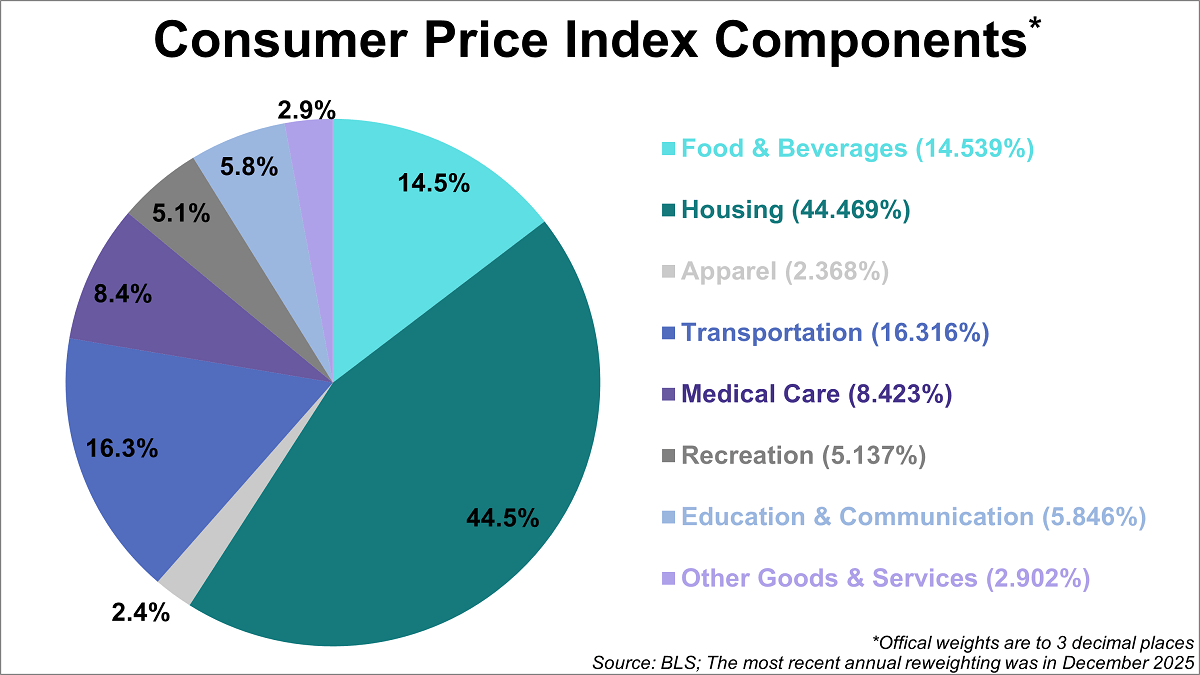
Inflation affects everything from grocery bills to rent, making the Consumer Price Index (CPI) one of the most closely watched economic indicators. The Bureau of Labor Statistics (BLS) tracks this by categorizing spending into eight categories, each weighted by its relative importance.
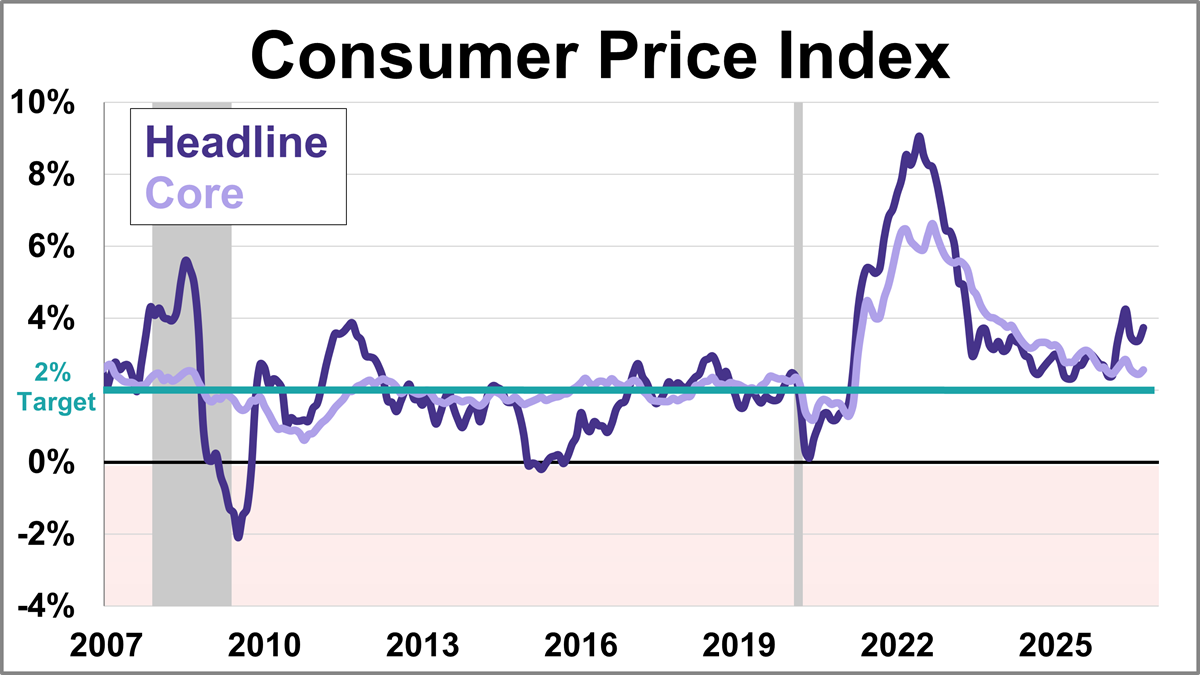
Inflation rose 3.7% year-over-year in September, climbing from August's print of 3.4%. The headline figure for the Consumer Price Index (CPI) was also higher than economist estimates of 3.6%.