November’s inflation numbers delivered good news for the Federal Reserve (Fed) even though the Consumer Price Index (CPI) was higher than what markets were expecting, with shelter costs surprising to the upside.
Although cash donations are appreciated, donating securities may be more impactful for both the charity and the donor.
When we put together economic and market outlooks, we typically focus on the near term—the next month, the next quarter, or the next year.
In October, the markets were down 10% from the July high, bond yields were touching 5%, and talk of a coming recession was rampant. What happened?
Starting portfolio yields may be a better guide to optimal spending than knowledge of future market returns.
It’s worth noting that despite the recent market advance, our own investment discipline, and even Treasury bills, have outpaced the S&P 500 and Nasdaq 100 during this period, with less volatility.
This year proved a difficult one for bonds as the Federal Reserve aggressively hiked rates for much of the year. With the rate narrative changing moving into 2024, investors moved back into bonds in a big way beginning in October, including municipal bonds.
The last three years have seen extraordinary market turbulence and ever-changing market narratives – from COVID-19 to inflation, rising interest rates to geopolitical instability.
If the last year or two have taught investors anything, it’s that alts can play a big role in portfolios. As recently as 2022, bonds struggled amid significantly low interest rates, with their role as a contrast to stocks weakened.
There's more to an overlay program than just cash equitization and systematic rebalancing. The flexibility of the program allows for several other exposure management strategies.
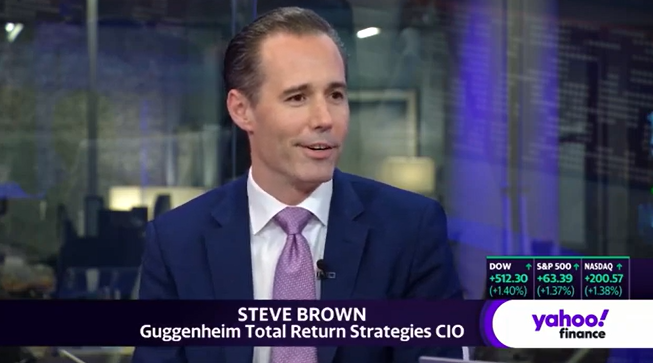
Steve Brown, Chief Investment Officer, Total Return and Macro Strategies, shares insights on Fed policy and our house view on the possible pace and size of rate cuts going forward.
If you really want to reduce the federal debt, you don’t have to convince Congress of anything. You can just write a check. The Treasury Department gladly accepts gifts from anyone so inclined.
If today were the last day of 2023, Bitcoin would have returned almost 155%, marking the best year since 2020, when it rose a phenomenal 305%.
Mutual Series sees an increasing number of investment opportunities in real assets.
While inflation isn’t yet at the 2% range that the Federal Reserve has been targeting, it’s getting there. At least, it’s getting close enough for it to ease up on the gas on raising interest rates. In fact, the Fed could pump the brakes next year.
The market anticipates a swift shift in the Fed cycle.
With stocks racing to record highs, diminishing expectations of a recession, and hopes that the Federal Reserve could potentially reduce interest rates multiple times next year, risk appetite is being reborn.
China stocks have been a source of frustration for investors this year. But there are expectations that situation will improve in 2024. The key is selectivity. That means market participants shouldn’t wager on uniformly stellar returns by China equities next year.
The ECB will pivot in 2024, but probably not as early or swiftly as markets predict.
John Baldi, Portfolio Manager at ClearBridge Investments, examines the evolving US equity income landscape and shares his strategies for generating income and growth, while also aiming to manage risk in uncertain economic and market conditions.
It’s been the year of active equity ETFs, the year of covered call ETFs, and a year when growth and quality has mattered most in the equity market. All of this is now clear from the year-to-date net inflows and fund performance records.
While the ECB is unlikely to raise rates further, we remain skeptical that it will deliver rate cuts as early as the market expects.
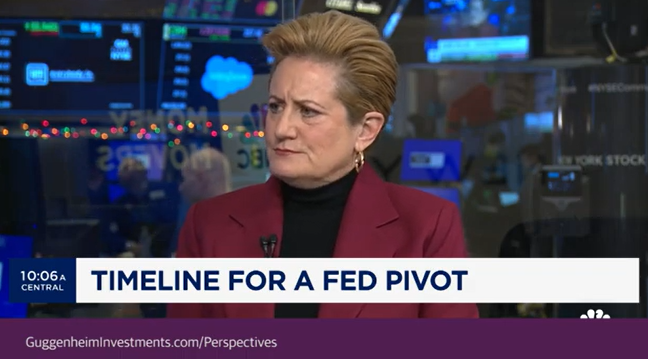
Anne Walsh, Chief Investment Officer for Guggenheim Partners Investment Management, joins CNBC to discuss Federal Reserve policy and its effect on credit markets heading into 2024.
With 2023 drawing to a close, the time has come once again to take a longer look at what next year might bring.
With the lagging effect of elevated interest rates potentially cooling the appetite of the economic growth engine that is the U.S. consumer, Global Head of Multi-Asset Adam Hetts at Janus Henderson Investors explains why he believes investors should take a defensive stance by prioritizing quality companies and cross-asset diversification.
A tentative timeline toward rate cuts in 2024 was revealed in the updated Summary of Economic Projections.
The decision to hold the federal funds rate steady was in line with expectations, but the accompanying statement and projections indicate a shift toward easing in 2024.
In this video, Chuck Carnevale, Co-Founder of FAST Graphs, a.k.a. Mr. Valuation will take a look at Utility Stocks in the Utility Sector. Chuck will discuss the characteristics of companies in this sector and what to expect from them.
With the final business of 2023 being wrapped up, the financial services community is starting to look forward to 2024. The first big event of the new year will be the Exchange 2024 conference.
Macroeconomic uncertainty remains elevated. We believe a recession in 2024 is more likely than not. Non-profit hospital systems have faced significant operational pressures, and may continue to experience challenges in the near-term.
In the latest episode of our Alternative Allocations podcast, Franklin Templeton Institute’s Tony Davidow discusses asset allocation and portfolio construction with Aaron Filbeck, Managing Director of the Chartered Alternative Investment Analyst Association.
Contrary to many Western analysts’ expectations, the shift from a unipolar to a multipolar world economy will not lead to a China-led alternative order but to global instability. Amid deepening economic fragmentation, leaders must forestall a rapid descent into chaos by strengthening the existing multilateral architecture.
Throughout most of the fourth quarter of 2023, physical gold has performed the best it has all year. According to Kitco in the last thirty days, the precious metal has seen its price increase by nearly $43.
The VettaFi Market Outlook Symposium brought together industry thought leaders and experts to help investors position for 2024.
The Federal Reserve declared victory today, projecting a soft landing as its base case in the years ahead, with more cuts in short-term rates, and with inflation gradually getting back to its 2.0% goal without a recession.
A secure lifetime income solution can seamlessly continue the “do it for me” structure that has helped DC plan participants save in their working years.
Even though the stock market, as measured by the S&P 500, looks fully valued to overvalued today, here are a baker’s dozen, 13 Consumer Staple Stocks that look attractively valued.
The growing narrative of artificial intelligence should continue as 2023 turns into 2024. One of the ongoing names to watch is chipmaker Nvidia, which should propel ETFs with exposure to the stock.
Doug Drabik discusses fixed income market conditions and offers insight for bond investors.
Bitcoin has pulled back over the past several days. But even with that retrenchment, the largest cryptocurrency is on pace for one of its best annual showings on record.
As GMO launches its first ETF, it seemed like a good time to share my thoughts on the market inefficiency that the strategy seeks to exploit – the quality anomaly.
The secular forces that held down rates for forty years have not entirely changed.
With Exchange 2024 less than three months away, I’ve started mapping out “the weird session” at the event: my 100-minute block on the “Silent Disco”-style stage.
Municipal bonds posted historic total returns of 5.90% in November. Rallying interest rates led the way, while strong demand aided outperformance versus Treasuries.
To argue that the U.S. consumer has remained resilient has become a cliché and at the same time an understatement. After a very strong increase in real incomes during the pandemic, real income growth started to slow considerably.
If the artificial intelligence (AI) theme remains hot heading into 2024, this could help push the Direxion Daily NVDA Bull 1.5X Shares (NVDU) even higher in the new year as the chipmaker expands its market share.
Value stocks are poised to deliver solid returns in what may prove to be a more unsettled year ahead, according to Mutual Series CIO Christian Correa.
The year 2008 and the subsequent Global Financial Crisis (GFC) stand as a watershed moment in the annals of our capitalist society. It was a bailout prompted by poor capital allocation, deficient risk management, and unchecked greed.
The mid-cap universe offers compelling sector diversification and opportunities to participate in the upside of the broader market, according to Dina Ting, Head of Global Index Portfolio Management.
Domestic aggregate bond strategies are on pace for decent showings this year. And there is mounting speculation that the Federal Reserve will lower interest rates next year, perhaps multiple times.