One of the primary hurdles to broader adoption of environmental, social and governance (ESG) investing principles and the related funds has been long-lacking clarity and regulatory framework covering ESG ratings and regulations.
The Fed poured cold water on a March rate cut, but the underlying message still has rates coming down—by a lot. Waiting for the starting point can be risky for investors.
Alongside great content, we’re also bringing some of the most prominent voices in finance to the stage. J.P. Morgan Asset Management’s chief global strategist Dr. David Kelly recently shared what he’s thinking about and watching in markets ahead of Exchange.
Mega-cap Tech names have been strong outperformers year-to-date. In fact, a composite of the biggest names, or MAGMAN (MSFT, APPL, GOOGL, META, AMZN, NVDA) is up 12%, while the rest of the S&P 500 is up just 2%.
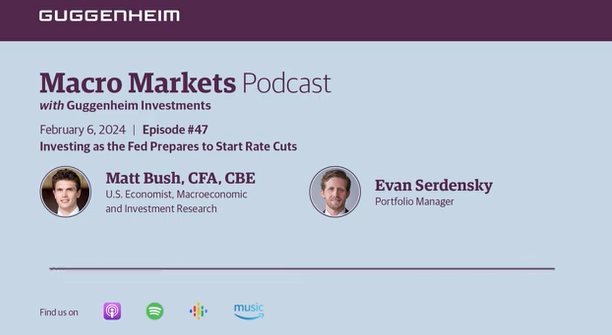
Matt Bush and Evan Serdensky share their updated outlook following the latest FOMC meeting and the January jobs report.
Foreign policy is not all that foreign. That’s a key message from Dr. Richard Haass. He is President Emeritus, Council on Foreign Relations and Senior Counselor for Centerview Partners. Dr. Haass will also be at the Exchange conference in Miami on Monday.
The end of the Federal Reserve’s rate-hiking campaign and increased transaction activity will make 2024 a year of improved transparency and credit access for commercial real estate in the U.S., according to a new research paper by Morris Chen, Director of DoubleLine Capital’s Commercial Mortgage-Backed Securities and Commercial Real Estate Debt team, and Product Specialist Phil Gioia.
With a laser focus on the future, David Mann, our Head of Global Exchange-Traded Funds (ETFs) Product and Capital Markets, shares his 2024 outlook for the ETF industry and the key trends he sees taking shape.
The recurring theme of artificial intelligence (AI) isn’t going away soon. Members of the Magnificent Seven, which include household big tech names, saw their earnings boosted along with rosier outlooks thanks to the inclusion of AI in their respective business operations.
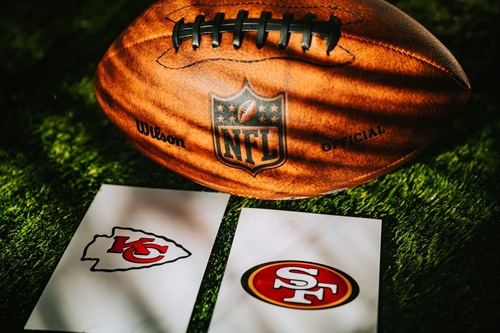
With eight seconds left on the play clock, Harrison Butker of the Kansas City Chiefs kicked a chip shot field goal that put the nail in the coffin for the Philadelphia Eagles.
A new ETF playoff champion has been crowned. Artificial Intelligence routed spot Bitcoin ETFs to claim the first-ever ETF championship.
I met with seniors from Duquesne University recently, all of them about your age. They are Finance Majors graduating in the spring and were looking for insights into investing, career advice and strategies for building successful careers.
Ten spot bitcoin exchange traded funds came to market last month, increasing access to the largest cryptocurrency for scores of advisors and investors. While that event is obviously pertinent to bitcoin itself, there are derivative beneficiaries.
U.S. Stocks were positive in January as more Goldilocks economic data fueled investor optimism. U.S. gross domestic product (GDP) came at a +3.3% for Q4 2023, much stronger than the expected 2% gain.
On the surface, there’s much to like about the job market. But when you get into the details, it’s not quite as strong and some things don’t add up.
Whether you have a family member turning 18, or someone in your life looking to build wealth from the bottom up, this primer provides a solid overview of the basic types of securities, investing strategies, and valuable lessons to help pave the path toward financial confidence.
Emerging-market equities have a bad rap. But a lost decade may have set up promising conditions for a recovery.
Your active managers are more competent than they look.
In February 2023, the Securities and Exchange Commission adopted rule amendments to shorten the standard settlement cycle to T+1 for transactions in U.S. securities including equities, corporate bonds, unit investment trusts, and exchange-traded funds.
In less than 2 weeks, advisors will flock to sunny Miami for the annual Exchange Conference. Content sessions this year offer advisors insight into growing their business models in unexpected ways, the macro and market environment of 2024, navigating the AI revolution, and more.
Janus Henderson Investors Portfolio Managers Greg Wilensky and Jeremiah Buckley discuss what they consider the three essential elements of an effective balanced strategy in the current environment.
Exchange begins on Sunday, February 11! Like any big industry event, there are things you should do in advance that will make it easier for you to take advantage of the learning and networking opportunities.
It is certainly a confusing economic environment. Jobs growth is strong yet there are constant reports of high-profile company layoffs. The yield curve is inverted suggesting a recession yet the stock market is at a record high.
After the great financial crisis, China’s appetite for commodities and technology fueled a global economic recovery.
I received an email this past week concerning George Soros’ “Theory Of Reflexivity.” It’s an interesting question, and I have previously written about the “Theory of Reflexivity.” Notably, this theory begins to resurface whenever markets become exuberant.
Instead of pivoting directly toward an easing bias, the Federal Open Market Committee opted for a wait-and-watch approach in January. Franklin Fixed Income Economist Nikhil Mohan expects rate cuts to come, but not quite as soon as or as many as markets have been anticipating.
The can has been kicked down the road several times but it feels like the end of the road is in sight.
Gross domestic product (GDP) is often considered the most important indicator of the health of an economy. But there are other measures that provide different perspectives, which can be more timely and impartial. The level of equity markets is one such indicator that provides a window into what’s going on.
To stay competitive with their peers, big tech companies will need to continue leveraging the capabilities of artificial intelligence (AI). Given this competitive landscape, an alternate play on AI could be single-stock exchange-traded funds (ETFs) in companies like Microsoft.
Read enough financial publications and one is apt to find there’s no shortage of rankings. There’s the Fortune 500 as well as rankings of companies based on customer and employee satisfaction. There are also environmental, social and governance (ESG) standards.
As I observed last month, the strongest stock market returns in the coming decade, perhaps longer, are likely to emerge during advances in the S&P 500 that attempt to catch up with the cumulative return of risk-free Treasury bills.
While focus remains on when the Fed will start cutting rates, history suggests other factors must be looked at when assessing forward stock market performance.
Markets have made themselves clear for a while: they want more rate cuts than what Federal Reserve (Fed) members seem to be willing to accept at this time.
There is no shortage of hope – and hype – about what artificial intelligence could do for productivity and economic growth in the future. But we must bear in mind that our politics have proven too dysfunctional, and our policies too misguided, to manage even the most obvious threats to our future.
Emerging-market (EM) assets were resilient in 2023, gaining ground despite conflict in the Middle East, concerns over slowing economic growth in China, and the US dollar’s strength against other regional currencies. Now, with the Fed signaling rate cuts in 2024, the news could get better.
Small businesses are a vital part of the American economy. The U.S. Small Business Administration estimates that they represent over 46% of employment and account for the majority of new job creation. Small business openings are an expression of optimism in an entrepreneur’s ability and support from their community.
GMO’s Jeremy Grantham recently shared what he’s thinking about and watching in markets ahead of Exchange.
At the Exchange conference, I will not be wearing a football jersey and looking over my Super Bowl squares. Instead, I will be on stage asking ETF experts (and my friends and fellow nerds) trivia questions in a quiz show game.
In one week, advisors will flock to sunny Miami for the annual Exchange Conference. Content sessions this year offer advisors insight into growing their business models in unexpected ways, the macro and market environment of 2024, navigating the AI revolution, and more.
Saving rates rose immensely across economies during the pandemic period. Government support programs, many designed to stimulate demand, elevated household incomes.
As the financial markets grind higher, retirement savers have consciously decided to add more to equity risk. Such was the result of a recent Bloomberg survey.
Despite analysts’ increasingly optimistic forecasts for the coming year, the risks to global growth are still tilted to the downside. In fact, recent developments in China, Europe, and the United States suggest that the world economy’s biggest challenges may lie ahead.
A period of market volatility and consolidation is likely as markets have already priced in much of the economy's good news.
The start of 2024 has been marked by record issuance in bonds both in the public and private sectors. But as fresh supply hits the bond market, prices have been dipping as of late.
While interest rates were left unchanged at the January Fed meeting as expected, there were some interesting hints about future monetary policy. Stephen Dover, Head of Franklin Templeton Institute, opines.
Through one month and a day of trading action in 2024, the Russell 200 Index is off 2.63%. That’s while large cap benchmarks are rallying. So it’s reasonable that some market participants are noncommittal regarding small caps.
Modern economies, even small ones, are unfathomably complex. The number of variables is far more than any human can comprehend or any model can track. It’s really no wonder so many forecasts are wrong.
Copper was one of only two metals that finished 2023 in the black, gold being the other metal.
Many investors limit their mandates to credits rated BBB or higher. But they could tap high-quality high yield—without adding to overall risk.
Big tech appears to be sloughing off its slow start to 2024 and tech dominance could continue if history once again proves to be correct. If that’s the case, bulls can continue riding the tech wave.