The US economy grew 2.0% in 2025 and it looks like it is growing another 2.0% this year. Real GDP grew at a 2.1% annual rate in the first quarter and, as we set out below, it looks like it grew at a 2.0% rate in the second quarter.
The market encountered its stiffest test in months last week as rising oil prices, higher bond yields, and renewed scrutiny of AI capital spending combined to pressure many of the year’s biggest winners. Easing tensions over the weekend have buoyed stocks. If the Strait of Hormuz was opened, I believe the market would be 5% to 10% higher.
As the Q2 earnings season kicks into high gear, market sentiment around the AI trade is undergoing a critical sanity check. Alphabet’s second quarter results last week served as a barometer for how Wall Street is weighing artificial intelligence investments against current profitability.
With the US-Iran conflict nearing the five-month mark, equity markets have mostly shrugged off the latest escalation. On one hand, that’s understandable – a healthy economy and record corporate profits continue to support the market’s fundamentals. But a note of caution is warranted.
Without the support of rate cuts by the Federal Reserve, it’s been a lethargic year in terms of performance by municipal bonds and the related ETFs, but that doesn’t mean advisors and fixed income investors should ignore this bond segment.
Chris Galipeau discusses high-conviction insights that go beyond media headlines.
On a recent episode of the Money Metals Podcast, host Mike Maharrey welcomed veteran market strategist Gregory T. Weldon, publisher of the Global Macro Strategy Report, for a wide-ranging discussion on precious metals, inflation, Federal Reserve policy, artificial intelligence, and global macroeconomic trends.
For many years, globalization felt like a one-way street. Supply chains stretched effortlessly across continents. Companies built “just-in-time” systems that assumed goods, data, and capital would flow smoothly around the world. Investors could buy a global index fund and feel reasonably confident that they were capturing the benefits of ever-closer integration.
Discover Aberdeen’s closed-end funds (CEFs) for high yields, illiquid assets, long-term investments, and resilient income for 2026.
If you own treasuries, you need to make two separate decisions rather than one blended bet. The liquidity sleeve holds the bill exposure and does the work people mistakenly ask the long end to do. The duration sleeve stays deliberately small, sized as recession insurance rather than as a conviction call on falling inflation.
US earnings are set to grow briskly in 2026, but much of the expected gains are being driven by expanding profit margins that may be hard to sustain. Equity investors should ask whether portfolios are exposed to businesses with durable demand and profitable reinvestment—or merely a favorable margin cycle.
The structural backdrop for U.S. inflation increasingly suggests that the long run equilibrium range is migrating from roughly 1.5–3.5% toward 3.5–4.5%, with a significant risk of episodes of inflation above 5%. An important core reason is the steady erosion of the disinflationary architecture that dominated the 1990–2020 period, even as various cyclical pressures also play a role.
The motivation for today's report comes from the growing number of articles warning about the possibility of an AI bubble. The truth is that nobody knows whether a bubble exists today in artificial intelligence or whether one may emerge in the future.
It’s becoming increasingly clear that tariff tensions between the United States and the rest of the world won’t be going away any time soon. Last Friday, the U.S. imposed a series of tariffs on 60 different trading partners, including China, Canada, and the European Union.
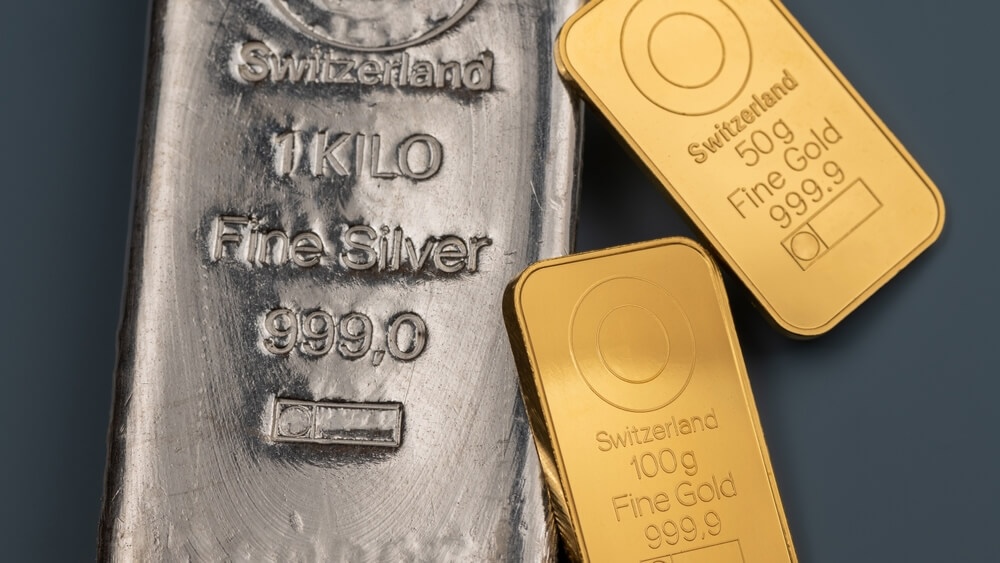
Earlier this week, I wrote that the gold-silver ratio has recently widened to around 70-1, a bullish signal for silver. But is this metric still relevant today?
On July 28, Morgan Stanley launched two new spot crypto ETFs on NYSE Arca. The Morgan Stanley Ethereum Trust (MSSE) and the Morgan Stanley Solana Trust (MSOL) provide spot price exposure to underlying ethereum (ETH) and solana (SOL), alongside additional distributions from staking yields.
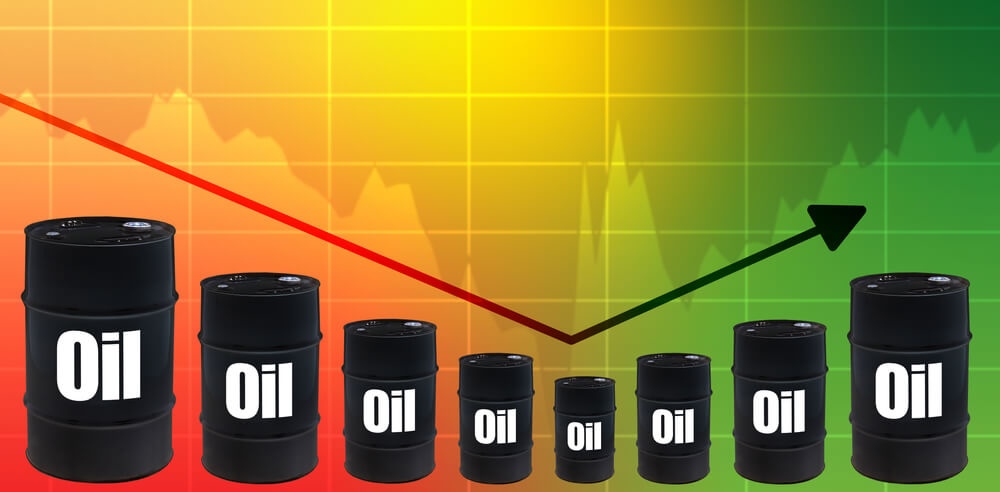
Brent crude crossed above $100 a barrel this week, all due to a 20-mile-wide stretch of water some 6,500 miles away from the U.S. Tanker traffic through the Strait of Hormuz—the Persian Gulf bottleneck that carried roughly a fifth of the world’s seaborne oil before the fighting started—has fallen to virtually zero.
As markets place a greater premium on shareholder-friendly capital allocation, companies that consistently combine buybacks with dividends may be better positioned to outperform.
I am not right as often as I would like. And feeling bad about being right occurs very, very rarely. But now is one of those times. I was not surprised when the ceasefire between the United States and Iran broke down long before it was due to expire.
As advisors face outflows to client income and one-time distributions, organic growth via client pickups can prove a useful asset, according to a recent report.
A wave of new active ETFs is reshaping the fund landscape, and advisors now need extra care when screening funds for their models.
June may have proven to be a difficult month for silver investors, but it’s likely far too soon to give up on the precious metal. To better understand this, it’s important to contextualize why silver’s price is struggling and why the metal’s long-term opportunities are still there.
The second-quarter earnings season is in full swing. So far, the results are landing in line or better than the upwardly revised Wall Street estimates. That’s the opposite of how this usually works. Analysts normally trim their forecasts as a year wears on. In 2026, they’ve done the opposite.
Oil has staged an impressive rebound this month as the conflict between the U.S. and Iran has re-escalated. The memorandum of understanding signed on June 17 created a 60-day window for negotiations, but the diplomatic opening lasted only a few weeks. Both sides subsequently accused the other of violating the peace agreement, and military operations have resumed.
In this video, Chuck Carnevale, co-founder of FAST Graphs, revisits one of investing’s most persistent concerns: how should investors prepare for the next recession or bear market? Updating an article and video he originally published in 2021, Chuck explains why he believes investors should prepare for market downturns, but not fear them.
Health care stocks came alive in the second quarter, benefiting from relatively low valuations and a late rotation away from some high-flying tech names. The sector returned 9.5% for the period, good enough to tie for fourth among the S&P 500® Index's 11 sectors.
Pensions are as healthy as they’ve been for a long while. Maintaining tried and true investment strategies has led the way to current funding levels and may support pension stability for years to come.
The equity bull market is expected to continue through the second half of 2026, supported by resilient U.S. growth, AI investment and solid earnings.
In this midyear global outlook summary, the authors revisit Vanguard’s economic and market outlooks and assess how our views have evolved since the start of the year.
The ETF market saw a push in capital away from the concentrated U.S. tech sector to defensive broad market exposure, short duration bonds, and commodities. The shift in flows is amplified by the semiconductor market pullback, interest rate uncertainty, and ongoing geopolitical tensions in the Middle East.
Emerging markets are quietly having their best decade in a generation, and most global investors still don’t own enough. The case for investing in emerging markets today is not the tired characterisation of a high growth, low valuation opportunity.
Healthcare systems across the country are facing a difficult reality. Costs are rising faster than revenues, balance sheets are under pressure, the pacing of private market allocations are harder to manage, and liquidity has become an important topic for many organizations.
It may seem premature to focus on the November US midterm elections. Polls will shift, economic data will evolve and unexpected events will reshape the political landscape in the months ahead.
Today we’ll consider the interaction between long-term interest rates, the Fed’s limited ability to influence them, inflation and the housing market. And because home prices are the biggest concern for many households, we’ll start with a look at the latest changes there. And then look at the Federal Reserve’s likely reaction.
Election season often follows a familiar script. Investors debate congressional control, speculate on policy outcomes and search for clues about what markets might do next.
The U.S. energy sector has outperformed in 2026, driven primarily by geopolitical-related supply fears, elevated oil prices, and rising demand from the AI infrastructure buildout. While broad energy funds have also surged, investors can potentially enhance exposure by targeting specific segments of the energy market.
In June, market news continued to be dominated by the Middle East conflict as frequent flare-ups in hostilities gave way to repeated ceasefire efforts and the signing of a high-level memorandum of understanding between the US and Iran.
Semiconductor exchange-traded funds have gained more than 25% this year. Intel Corporation’s (INTC) second-quarter earnings report after today’s close could test whether that rally continues.
Google searches for "can I afford a home" are at their highest level in nearly two decades. While a Google search on its own isn't proof of anything, millions of queries might be a proxy for the national vibe.
Research Affiliates and PIMCO leadership analyze key 2026 midyear market shifts, warning of elevated U.S. and AI equity valuations.
During periods of elevated market stress, including those that see pinched corporate bonds, collateralized Loan Obligations (CLOs) often outperform other corporate bond assets. Add to that, CLOs often emerge from those rough patches in strong form, delivering impressive returns a year after downturns.
Those who are familiar with Vanguard’s ETF lineup are likely well-acquainted with the Vanguard S&P 500 ETF (VOO). After all, this fund — which provides low-cost exposure to the S&P 500 — is currently the largest fund in terms of AUM.
Equity markets have shown resilience amid persistent headwinds, supported by index evolution and earnings strength
Russ Koesterich explains gold’s recent fall and lays out his argument for why investors should continue to hold a modest position in their portfolios.
It's difficult to call any stretch a calm, quiet summer week, but this one would seemingly fit the bill. Earnings from Alphabet (GOOGL), Tesla (TSLA), and IBM (IBM) are the standouts, along with a slew of cyclicals reporting Q2 results.
Electricity demand is surging all over the world. To meet this demand, vast investments in power generation need to be made, and grids need to be overhauled and expanded. Ramping up electricity generation and delivery is extremely expensive, and electricity prices have spiked up throughout much of the developed world.
Resilient earnings, improving industrial activity and the AI investment cycle should continue to support equities, according to Putnam Equity’s Shep Perkins. But the same forces driving the market higher are also making companies harder to value.
The summer has once again brought a miasma of wildfire smoke across wide stretches of the nation, leading to hazy views and slower activity. The clouds in our outlook are not merely atmospheric. A failed ceasefire and renewed conflict in the Middle East have created new reasons to worry about economic performance.
From severe wildfires in northern Ontario to record heat across Europe, extreme weather is back in the headlines. Such events are becoming more frequent and intense, and the risks associated with them are testing the limits of insurability. With our research partners at Columbia Climate School, we examine how strains on the insurance system can transmit climate-related risks through the capital markets.
Inflation remains above target, especially the Federal Reserve’s preferred core Personal Consumption Expenditures (PCE) inflation measure, as choppy data have challenged the view that disinflation will proceed smoothly.