Much of modern finance falls into one of two camps, neoclassical finance and behavioral finance. The former posits efficient markets, the latter posits the opposite.
Following a tense presidential election, equity markets roared to record highs – the S&P 500 put on its best weekly showing in over a year.
US producer prices picked up in October, fueled in part by gains in portfolio management costs and other categories that feed into the Federal Reserve’s preferred inflation gauge.
Bitcoin spiked above $93,000 for a short period as expectations of further interest-rate reductions by the Federal Reserve added to the impetus from President-elect Donald Trump’s pro-crypto stance.
Recent data, early results, and a relatively firm economy point toward possible improvement in Q3 retail earnings as Walmart, Target, and other big-box stores prepare to report.
Your fixed income strategy does not necessarily need to be adjusted based on every personnel or environmental change.
While history shows that U.S. markets tend to perform regardless of political leadership, the full impact of Trump’s policies could bring new challenges and opportunities for investors globally once he is in office.
Recent insights from Natixis Investment Managers breaks down a few fixed income risks that investors may not be aware of.
Treasuries held on to recent losses ahead of the US inflation report, with traders loading up on bets for further declines in anticipation that Donald Trump’s pledged policies will fan price increases and keep interest rates high.
A surge in Bitcoin that paused earlier Wednesday is regaining steam, sending the original cryptocurrency above $90,000 for the first time, as traders assess the remaining market impact of President-elect Donald Trump’s rhetorical support for crypto.
Last week’s developments mark one of the most pivotal weeks in recent memory.
With the outcome of the election now known, we will continue to assess how policy changes impact our broader view.
October’s market activity can be neatly summarized in a single chart: the dollar (BBDXY) was strong and U.S. stocks (the VOO ETF tracks the S&P 500 index) meaningfully outperformed international stocks (VXUS).
Republicans won the White House and Senate in the 2024 U.S. election, while vote counting continues for the House of Representatives. Here's a look at the policies that could affect markets.
Here’s our outlook on what to expect and how investors might navigate this new phase.
Microsoft, Meta, Apple, Alphabet, and Amazon all experienced fluctuations in their shares, leading to a two-week losing streak in October after five months of gains. Despite this, Financials, Communications Services, and Energy sectors remained positive. Looking ahead, we're analyzing President-elect Trump's platform and its potential implications for corporate taxes, regulations, tariffs, inflation, and economic growth.
With a "Red Sweep" in Washington likely, markets are now pricing in a more aggressive policy agenda.
VettaFi’s Todd Rosenbluth explains how the election could impact specific ETF categories and the industry overall. Baird’s Rich Lee also discusses the election’s implications for ETFs and talks market concentration risk, active ETFs, buffer products, crypto, and what to watch for in 2025.
Investors are piling into US leveraged loan ETFs, betting that President-elect Donald Trump’s policies will potentially boost inflation and push the Federal Reserve to keep interest rates higher for longer.
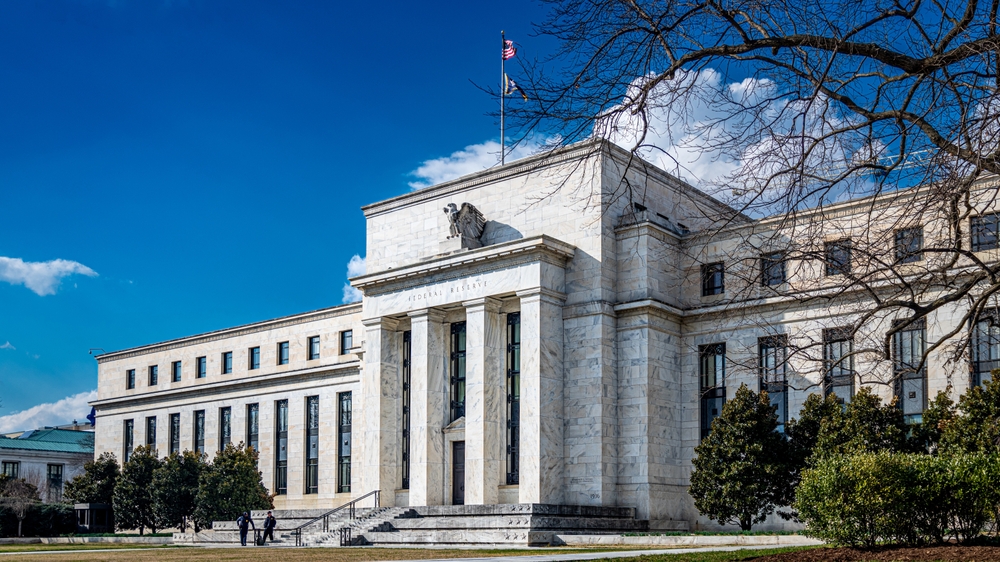
The US Federal Reserve and its chair, Jerome Powell, are rightly choosing not to act on any assumptions about what Donald Trump might do as president. That said, if he follows through on his more extreme campaign promises, they’ll struggle to contain the economic consequences — a problem that equity investors ignore at their peril.
All year, a slew of Wall Street pros have questioned the durability of an indiscriminate risk rally that has fattened stock prices by trillions of dollars, sent Bitcoin soaring, fueled a credit bonanza, and more.
With the Russell 2000 Index rallying in response to the U.S. election results—the benchmark index of small cap stocks soared by nearly 6% on Nov. 6 alone—small cap managers are re-evaluating their positioning ahead of President-elect Trump taking office in January.
The Fed cut rates by 0.25%, with limited changes to the statement, while Powell's blunt "no" response about any coming political pressure to resign was headline grabbing.
In a week with a U.S. presidential election and market volatility, the Federal Reserve cut its policy rate 25 basis points (bps) as expected. Amid this noise and the generally positive messages from recent macro data, Fed Chair Jerome Powell emphasized that downside economic risks had decreased, but the policy rate remains above neutral, suggesting that gradual cuts are still likely to come over time.
The Federal Reserve cut short-term rates by a quarter percentage point last week, like pretty much everyone expected. In addition, the Fed didn’t push back hard against market expectations of another quarter-point cut in mid-December, so unless the economic or financial news changes dramatically by then, expect a repeat at the next meeting.
The prospect of a Trump presidency has led to much debate and speculation about how markets might react. Depending on what policies are eventually passed, there are potential risks and opportunities in both the stock and bond markets.
Donald Trump will inherit, to all appearances, a solid economy when he assumes the presidency in January. After all, the stock market is at record highs, unemployment is low by historical standards and gross domestic product has been expanding at a healthy pace of around 2.5% so far this year.
The bond-market selloff unleashed by Donald Trump’s presidential victory last week ended almost as quickly as it began.
Most of the time the yield on long-term bonds exceeds that on short-term bonds, in order to compensate for the greater risk attached to long-term debt. But until recently the yield curve was inverted, with short-term rates exceeding long-term rates. This happens when investors expect interest rates to decline in the future.
In addition to better appreciating why gold is surging, our analysis will help you recognize that market narratives explaining asset price movements can be wrong, no matter how reasonable they may seem at first blush.
I went to bed “early” on election night, around 10:30 pm. We are in the five months of the year where Puerto Rico is one hour ahead of Eastern time, and nothing I was seeing made me think it would be an early night. And by that I meant 3 or 4 am.
On the latest edition of Market Week in Review, Chief Investment Strategist for North America, Paul Eitelman, discussed key watchpoints for investors in the wake of the U.S. elections. He also explained how the election results are impacting markets, and finished with an update on the latest monetary policy decisions from the U.S. Federal Reserve (Fed) and the Bank of England (BoE).
We are in a world where multiple, starkly different outcomes are possible. The decisive U.S. election outcome has stoked uncertainty about future U.S. policy.
Maslow’s hierarchy of needs was a groundbreaking concept when it appeared in 1943. American psychologist Abraham Maslow argued that certain basic needs—food, water, shelter, etc.—must be met before a person can move on to higher levels of self-worth and fulfillment.
The people have spoken. While there are still some unknowns, the contours of the American government that will be seated next January are reasonably clear.
In the report, Global Head of Fixed Income Jim Cielinski and Head of Global Short Duration Daniel Siluk believe navigating the change in rate regimes has grown more complicated for the Federal Reserve (Fed) as they must now consider the ramifications of Donald Trump’s proposed economic policies.
Here’s something that would have seemed pretty much inconceivable two years ago: According to Zillow, home prices have now risen more in New York City and its environs since the beginning of 2020 than in metropolitan Austin, Texas.
Detroit voted overwhelmingly for Vice President Kamala Harris, but investors in “Detroit” backed President-elect Donald Trump. Shares in General Motors Co. and Ford Motor Co. jumped on news of Trump’s election win, with GM reaching a new high for the year and Ford up by almost 6% on Wednesday, more than double the S&P 500 Index’s gain.
Following the September FOMC meeting’s much ballyhooed 50-basis point (bps) rate cut, the voting members scaled back and reduced the Fed Funds by 25 bps this time around.
While investors and institutions were digesting the results of Tuesday’s elections, the Fed was meeting to determine the path forward for rates. Following on the 0.5% (50 basis points) start in September, the Fed cut rates by a further 0.25% today and the markets are forecasting another cut to come in December, but the odds of that move have ticked lower.
Western economies are inching towards soft landings, and their central banks are reducing interest rates. These developments will be helpful to economies in the Asia-Pacific region as they conclude 2024 and look forward to next year. However, the outlook for China remains a central concern.
Marc Pinto, Head of Americas Equities, and Lucas Klein, Head of EMEA and Asia Pacific Equities, say a surprisingly straightforward U.S. election could provide additional momentum to U.S. stocks through the end of 2024. But it remains to be seen how policy will impact future earnings—the real driver of long-term returns.
The Federal Reserve is widely expected to lower its benchmark federal funds rate by a quarter of a percentage point on Thursday to a range of 4.5% to 4.75%. The big question is how much lower the Fed might go from there during this rate-cutting cycle. The bond market suggests it won’t be as low as some expect or as low as policymakers signaled less than two months back.
This is not a typical business cycle. We see structural forces holding inflation higher long term, keeping the Fed from cutting as much as markets expect.
The election is unlikely to influence monetary policy.
If we had to choose one indicator to watch over the next few months, it would be weekly initial jobless claims.
Investors have been married to their money market funds for the better part of the last two years.
Better than expected economic data drove interest rates higher, changing the market narrative and contributing to an equity market pullback early in the month. This unraveled expectations of further rate cuts by the Federal Reserve (Fed) and resulted in real rates moving higher. The 10-year Treasury has moved up 48 basis points, ending the month at 4.27%.
Things are looking up for bonds - learn what makes them a great addition to your portfolio right now.
When Covid-19 brought the US economy to a standstill in the spring of 2020, America’s top executives called for a “national conversation” about the need for workers to return to work, warning of an “economic catastrophe” if they didn’t.