Gold tumbled as traders digested Donald Trump’s pick of Scott Bessent as Treasury Secretary and looked toward the Federal Reserve’s next interest-rate decision.
It is important for savers to understand guaranteed and non-guaranteed options when looking at retirement solutions offered within a 401(k) plan. Our Mike Dullaghan shares the highlights and talks about the need for personalized strategies.
Treasury inflation-protected securities can help buffer a portfolio against inflation. However, it's important to understand their unique characteristics and complex nature.
Rick Raczkowski, PM, Relative Return Team, Loomis, Sayles & Company, discussed how the team views fixed income investing looking ahead.
Sticky underlying price pressures could prevent a faster return to neutral monetary policy.
The second coming of Donald Trump is unquestionably bad news for Germany.
US President-elect Donald Trump's administration will face a wary, inflation-sensitive public and a Chinese regime that is well prepared to pursue large-scale retaliation. If it is serious about introducing new tariffs, it will need to clarify its priorities and then choose among conflicting policy goals.
The post-election stock market is already giving investors a wild ride. Big individual stock selloffs, massive rallies, and a dizzying array of market narratives built on Wall Street’s best attempts to read President-elect Donald Trump’s mind.
Many of the myths and controversies surrounding the equity risk premium (ERP) are rooted in semantics: The same term is used for multiple purposes.
How does the euphoria for stocks in the days after the 1980 election contrast with today’s Trump election euphoria?
In 2025, Social Security will see a 2.5% cost-of-living adjustment. At the same time, Medicare Part B premiums and the annual deductible will increase.
U.S. policies are set for a major reshaping as full Republican control takes hold in 2025.
In January 2022, we ventured three hundred years back in time to an episode that has long been considered the classic example of mania in the early annals of market history.
In Europe, the ECB stimulates a sluggish economy while in the UK, the problem is inflation. In contrast, the US responds to stronger growth.
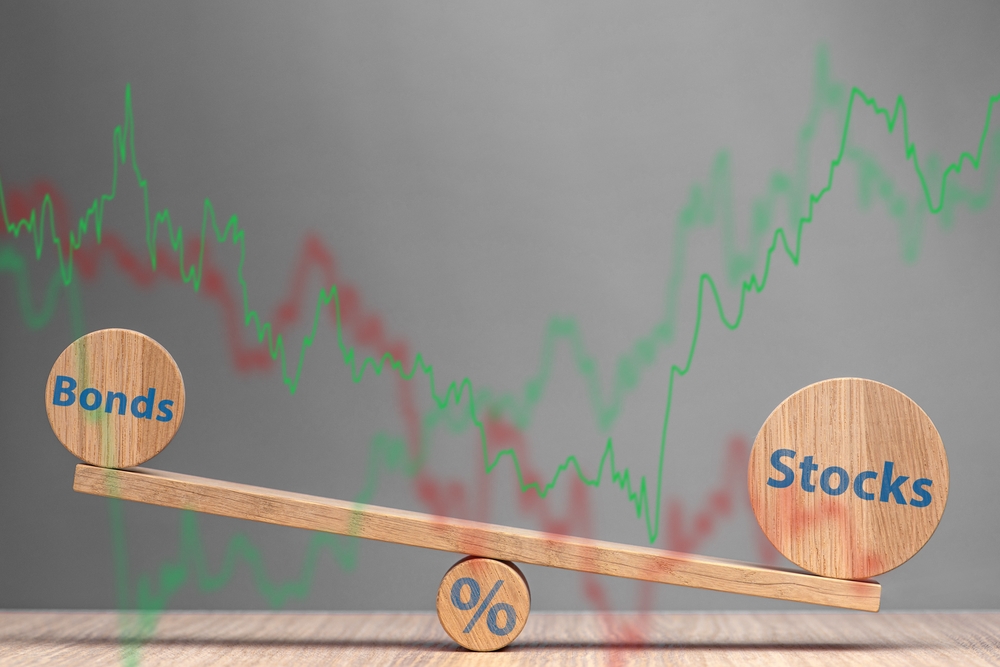
The inverse correlation between bonds and stocks has returned, broadening potential for risk-adjusted returns in multi-asset portfolios.
US banks enjoyed a sharp stock price jump on Donald Trump’s election victory; two weeks later, they’ve held onto those gains. There’s one good reason for this — and several poor ones, all to do with regulation.
Is inflation tamed? It's a key question that got lost in election coverage. It looms more than a new administration does over portfolios.
The 2024 Global Survey of Financial Advisors from Natixis revealed the ongoing hesitance of investors to move out of cash and into bonds.
We seek to capitalize on today’s attractive yields while staying mindful of economic and market uncertainties.
Chief Investment Officer Sean Taylor considers the implications of a second Trump administration for emerging markets.
We take an early look at how a new policy platform could factor into the US deficit and debt.
Paul Tudor Jones recently voiced concerns that rising U.S. deficits and debt and increasing interest rates could lead to a fiscal crisis. His perspective reflects the long-standing fear that sustained borrowing will trigger inflation, raise interest rates, and eventually overwhelm the government’s ability to manage its debt obligations.
Lost in the excitement of election week was a meeting of the Federal Reserve. At its conclusion, interest rates were lowered by another quarter-point. But where they are heading from here is a matter of increasing uncertainty.
Nouriel Roubini is seizing on Donald Trump’s inflation-threatening policy agenda to make a case for an alternative haven trade to Treasuries in a world of elevated volatility.
GMO has posted a new 7-Year Asset Class Forecast.
Wait, what? The Fed cut interest rates and bond yields went up, not down. Yes, you read that right.
The current global expansion has been characterized as one of US exceptionalism. Despite many developed market economies outperforming low expectations, the robustness of the US expansion has stood out. We believe this can continue based on differences between the US and European economies.
Balancing credit risk with interest-rate risk in a dynamically managed portfolio can be an all-weather approach.
Market reactions to a potential trade war may be less extreme than anticipated by investors, although volatility is likely during trade negotiations.
Texas Capital’s Carlos Pena highlights an industry first, the Texas Capital Government Money Market ETF (MMKT). VettaFi’s Stacey Morris takes a deep dive into the world of energy ETFs and offers a preview of the energy sector in 2025.
Federal Reserve Chair Jerome Powell says he wants to wait and see what policies the incoming Trump administration will implement before the central bank forecasts what it means for the economy.
The period from the 1960s to the 1990s defined by record-setting inflation and big swings in GDP bears a striking resemblance to the current environment.
Last week showcased the complexities driving markets and the economy, with inflation data, Federal Reserve commentary, and political developments at the forefront. While inflation metrics in the CPI came in as expected, the PPI surprised on the higher side, pushing up estimates for the Fed's preferred PCE inflation gauge.
The Federal Reserve (Fed) Chairman seems to be happy with the market’s new wisdom regarding the path of interest rates going forward.
The Q3 earnings season is coming to a close in its usual fashion, with a word from retailers. With 93% of S&P 500 companies reporting at this point, YoY S&P 500 EPS growth has settled around 5.4%, while revenue growth increased 5.5% for the quarter.
In our lifetimes, the best comparison for Trump’s election win is Ronald Reagan’s in 1980. That election, like this one, pitted big spenders and champions of government against tax cutters and critics of government.
Our model, How America Spends, has been tracking the purchasing behavior of 135 million U.S. households since 2014. This model is not a black box – it is a data file representing the spending of 135 million households on goods and services since 2014.
Last week’s selloff, which comes on the heels of what has been a generally successful earnings season for Corporate America, has investors bracing for one final test: a reading on the state of the consumer from a series of retail bellwethers who report in the coming days.
If Wall Street learned one thing during Donald Trump’s first term as president, it’s that the stock market is a way he keeps score. At various points he took credit for equities rallies, urged Americans to buy the dip, and even considered firing Federal Reserve Chairman Jerome Powell, who he blamed for a selloff.
Two weeks ago, I opened this letter by noting the election uncertainty, once over, would give way to a different uncertainty about what comes next. That’s where we are now.
With President-elect Donald Trump set to assume office in January, the U.S. military and cybersecurity sectors could experience sweeping changes, creating opportunities for investors who recognize the long-term growth potential in defense and technology.
The Northern Trust Economics team shares its outlook for U.S. growth, employment, inflation and interest rates.
Declining inflation has been a theme for the economy since mid-2022, but we still believe the road may have some curves.
The last three months have seen bursts of excitement that the Chinese government was about to open the floodgates of stimulus, followed by disappointment as follow-on announcements have lacked detail on the actual scale of measures.
Traders see an interest-rate cut next month as a coin toss as resilient economic data empowers Federal Reserve officials to take a potentially more-cautious approach to easing.
The highest Treasury yields in months — reached Friday after a batch of strong economic data cast additional doubt on whether the Federal Reserve will cut interest rates again next month — proved appealing to bond investors.
The economy played a critical role in the 2024 presidential race, creating the conditions not only for Donald Trump to trounce Kamala Harris, but also for a counter-elite to usher in a new power structure. Will the Democrats and “establishment” experts get the message?
This isn’t the same China that greeted Donald Trump after his first win in 2016. The economy, once widely believed on a course to knock the US off its perch as the preeminent commercial power, has since revealed some acute vulnerabilities that don’t seem to be going away. And the president-elect seems to be gearing up for a trade war he no longer needs to fight.
Big Tech stocks have had a relatively muted reaction to Donald Trump’s election victory, as investors parse how his second term might play out. So far, many are reserving judgment.
U.S. rate cuts of up to 200bps are anticipated by the end of 2025 but with significant further downside if recession risks materialize.