Shorter-term Treasuries gained after an unexpected ebb in US inflation last month calmed bond traders shaken by President Donald Trump’s evolving trade policy.
The month of March featured a varied mix of articles among Advisor Perspectives’ top 10 most-read list, including book reviews, analysis of current events and primers on different subjects among its ranks.
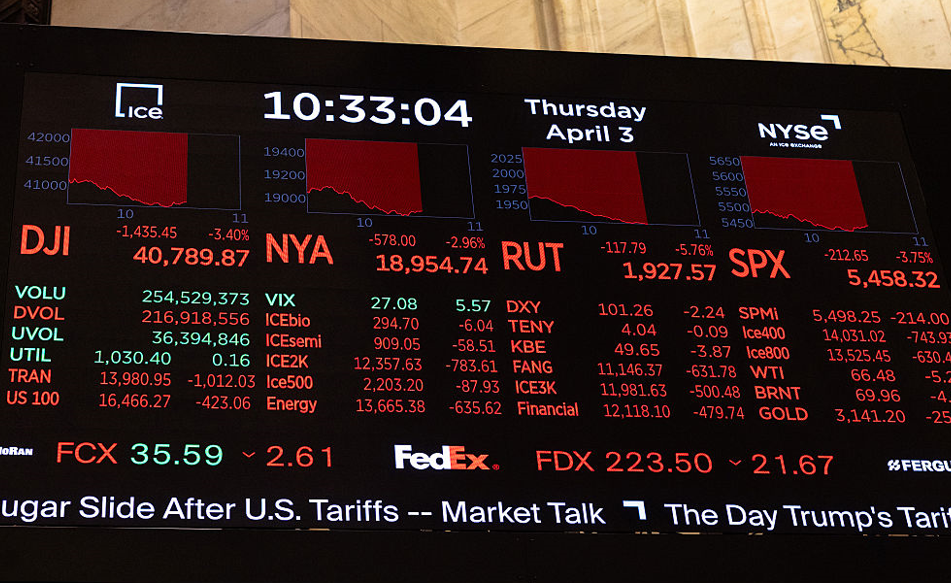
Markets were jolted last week after President Trump announced sweeping tariffs, including steep increases on China, Japan, and the EU, leading to a 10.5% drop in the S&P 500 over two days—an event seen only during major crises in the past 75 years.
A Wall Street axiom states that the stock markets lead the economy by about six months. While not a perfect predictor, the stock market reacts to investor expectations about future corporate earnings, economic activity, interest rates, and inflation.
With uncertainty in abundance, we think investors should avoid drastic moves.
How might the recently announced US trade measures translate into economic reality?
With a number of factors at play, the short-term pullback in gold will likely meet resistance to the long-term, unchanged fundamentals,
Market valuation indicators are used by investors and analysts to gauge whether markets are overvalued, undervalued, or fairly valued relative to historical norms. Here is a summary of the four market valuation indicators we update monthly.
Join the experts at SS&C ALPS Advisors for a product spotlight on their dynamic commodities strategy that could help your portfolio better navigate inflation and uncertainty.
DoubleLine Global Bond Portfolio Manager Bill Campbell shares DoubleLine’s outlook for risk markets, the U.S. Treasury curve, inflation, growth and Federal Reserve policy in light of Washington’s reciprocal tariffs and reactions of U.S. trade partners.
An enduring image from 2024 will be the capture of the SpaceX booster rocket by the Mechazilla robot arms on its return to Earth.
At the start of last week, the S&P 500 rallied three days in a row, with investors believing that the tariffs announced on Wednesday would be targeted.
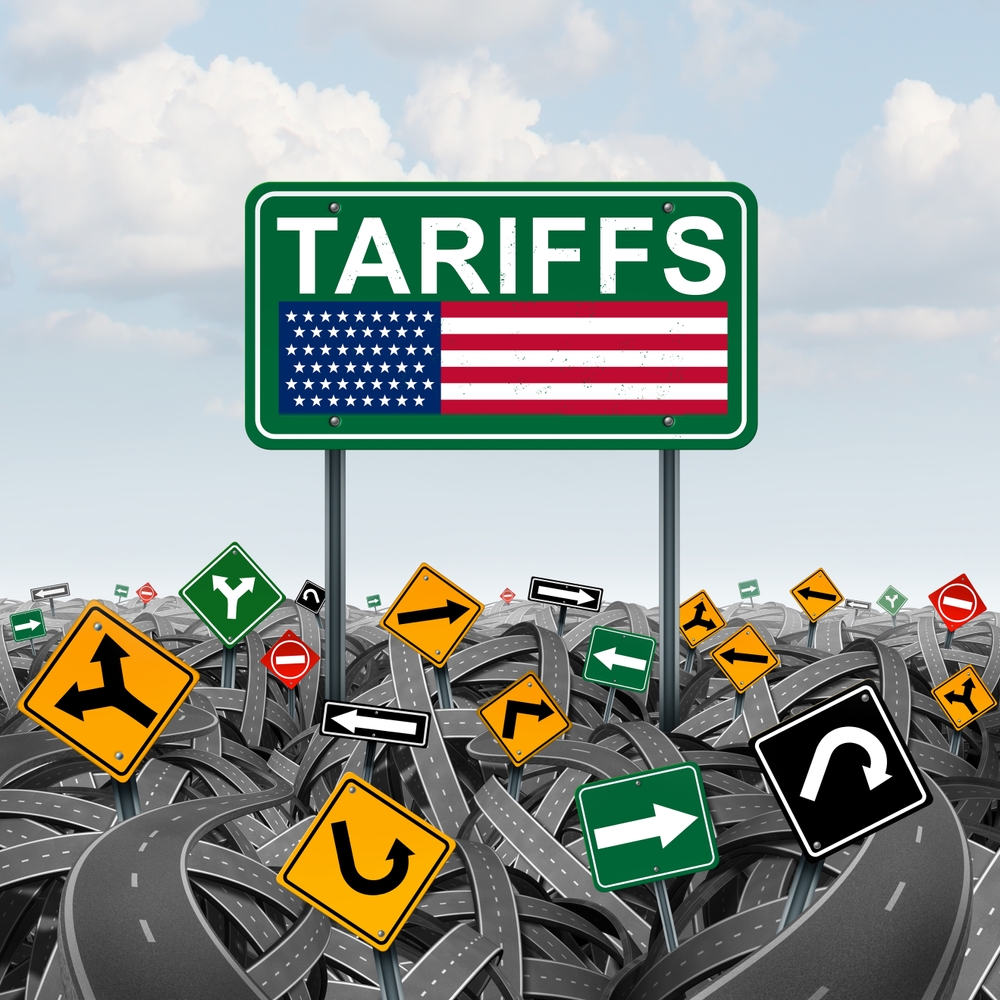
Tariff Turbulence. The President’s long-anticipated tariff announcement on April 2 has come and gone. Our hopes for some clarity, so the uncertainty weighing on confidence and the equity market could subside, were dashed after we heard the breadth and magnitude of the administration’s tariff plan.
We’re adjusting our stance in response to rising risk while maintaining a disciplined view on long-term strategy.
The recent market drawdown highlights risks of a concentrated S&P 500—and the case for diversification now.
Many of us came into the year with highly concentrated portfolios, which now were faced with changing market conditions.
US Treasuries tentatively resumed their gains on Tuesday after the wildest day for bond traders since the height of the pandemic in March 2020.
Markets faced more volatility as Trump’s aggressive tariff measures injected both economic and political uncertainty into the system.
We reexamine our macroeconomic outlook in light of newly announced tariffs, which have exceeded market expectations and prompted us to update our assumptions and analysis.
The announcement of global tariffs by President Trump has rocked markets and much is uncertain, but there are key facts for investors to keep in mind.
As investors are uncomfortably aware of, global equity markets have been in freefall since U.S. President Donald Trump’s announcement of “reciprocal tariffs” on April 2.
The international trading system is not perfect, but as we have said so many times, freer trade is better than no trade and tariffs are, typically, the worst solution to trade issues between countries.
Moving forward, investors may want to keep investment-grade options close with a few from Vanguard to consider.
Like a crossword puzzle, President Trump has been bombarding the media with clues about his economic policy. Given the importance of inflation and interest rates to the economy and the financial markets, it's worth assessing his clues and formulating some answers about what Trump may be up to.
President Donald Trump and his economic team dismissed investors’ fears of inflation and recession, offering no apologies for the market turmoil sparked by sweeping global tariffs and defiantly insisting a boom is on the horizon.
Traders boosted expectations for the Federal Reserve to cut interest rates this year — and raised the specter of a reduction before the central bank’s next meeting — as the US administration’s tariffs ignite fears of a global recession.
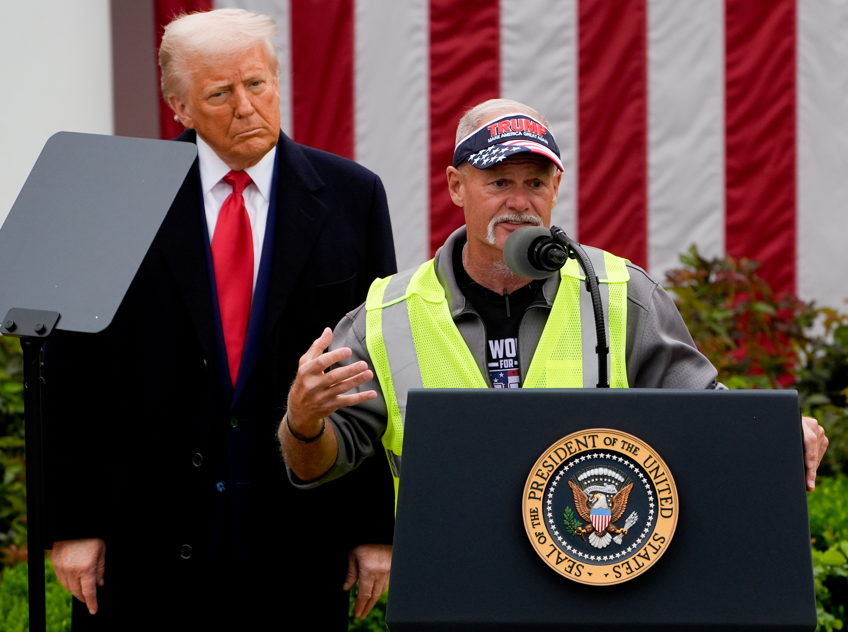
President Donald Trump has said his reciprocal tariff policy was meant to stand up for the American worker, whom he portrayed as the victim of a decades-long shift toward unfettered globalization.
Good news: Tariffs will not make the world end. American businesses will do what they do best, which is adapt. While the probability of a recession has increased, we always get through it and the best businesses thrive. Unless directly affected by tariffs, don’t change your personal plans that much.
Last week's economic landscape was dramatically reshaped by President Trump's announcement of sweeping tariff policies on what he declared "Liberation Day." His announcement triggered a historic sell-off in the stock market.
Global markets are in freefall in response to President Donald Trump’s universal 10% tariff on all goods being imported into the U.S., with as many as 60 countries facing “reciprocal” tariffs on top of that.
The 10% across-the-board (ad valorem) tariff and specific reciprocal tariffs on most U.S. trading partners went well beyond what most were expecting.
The incremental tariffs were bolder than market expectations and ushered in new uncertainty.
The tariff chaos continues … but the economy remains intact. For now.
The early days of the Trump administration have brought sweeping tariff announcements. While the situation is fluid, the direction is clear: trade restrictions are likely to increase, with China as a primary target.
U.S. stocks underperformed in the first quarter of 2025, hit by a double whammy from intensifying policy uncertainty and a U-turn in select mega cap stocks.
We examine the April 2 tariff announcement from President Trump, outlining key proposals and the potential implications for trade and market sentiment.
In the report, Fixed Income Portfolio Managers John Lloyd and Greg Wilensky discuss how fixed income markets are responding to Trump’s sweeping tariffs and the implications for investors.
As volatility rises, staying invested is a strategic priority for capturing long-term return potential in a broadening market.
The stock market faces severe downside risk ahead, and the U.S. is constrained in the unsystematic monetary and fiscal expansion that both amplified that bubble and fueled record but wholly impermanent corporate profit margins. Meanwhile, the U.S. economy now faces an imminent recession, and if we fail to be vigilant, we, once united Americans, risk losing what is far greater and more valuable than money.
In the report, Fixed income portfolio managers Brent Olson and Tim Winstone reflect on the initial credit market response to President Trump’s tariffs.
Traders boosted their bets on Federal Reserve interest-rate cuts this year and US Treasuries rallied as a solid report on American jobs failed to calm markets.
President Donald Trump’s new reciprocal tariff policy is straightforwardly bad for the US economy and markets. The only conceivable reason that the S&P 500 Index was down just 4% on Thursday is that investors still don’t believe it will stick. Unfortunately, there’s no quick way out of this quagmire.
Investors crushed the stocks of consumer discretionary companies on Thursday in response to President Donald Trump’s tariff announcement, making little distinction between home goods companies such as Williams-Sonoma Inc., apparel names including Nike Inc. or restaurants such as Cheesecake Factory Inc.
The combination of slowing economic growth and stubborn inflation, combined with uncertainty about U.S. tariff policy, is keeping investors cautious.
To summarize the market action of March of 2025: U.S. stocks (SPX) did poorly, international stocks (especially Europe, VGK) did well in dollar terms, and gold (IAU) did spectacularly well. The main culprit appears to market concerns about the Trump administration’s tariff policies.
Adam Hetts, Global Head of Multi-Asset & Portfolio Manager, and Oliver Blackbourn, Portfolio Manager, give their thoughts on how US President Trump’s ‘Liberation Day’ tariffs have reshaped global trade dynamics, emphasising the benefits of diversification at a time of heightened uncertainty about the prospects for growth.
U.S. ETFs saw record first quarter flows this year, bringing in $296 billion during the first three months of 2025.
Bond traders ramped up bets on interest-rate cuts from the Federal Reserve amid concern that Donald Trump’s trade war will backfire on the US economy, sending the yield on benchmark Treasuries toward the closely-watched 4% level.
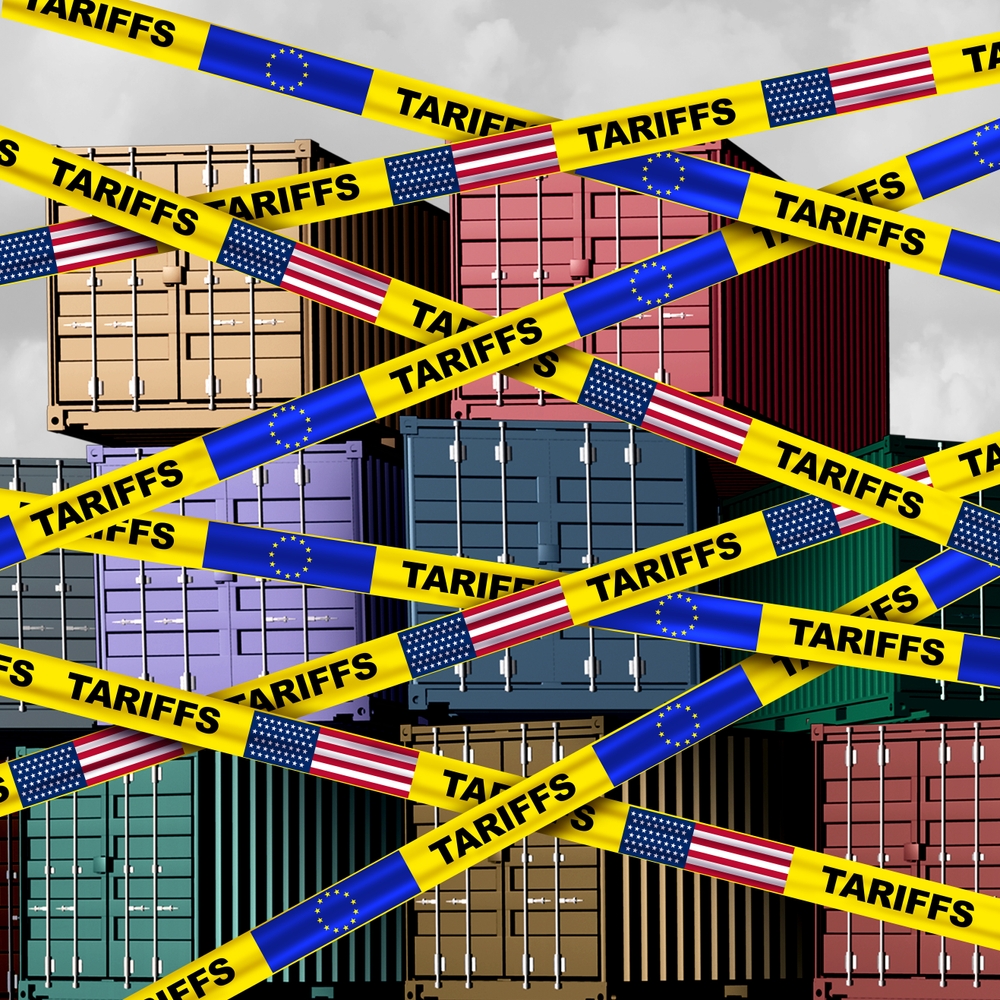
President Donald Trump imposed the steepest American tariffs in a century as he steps up his campaign to reshape the global economy, sparking threats of retaliation and a selloff in markets around the world.
Market volatility is likely to rise as investors digest the president's plans.