Shorter-term Treasuries gained after an unexpected ebb in US inflation last month calmed bond traders shaken by President Donald Trump’s evolving trade policy.
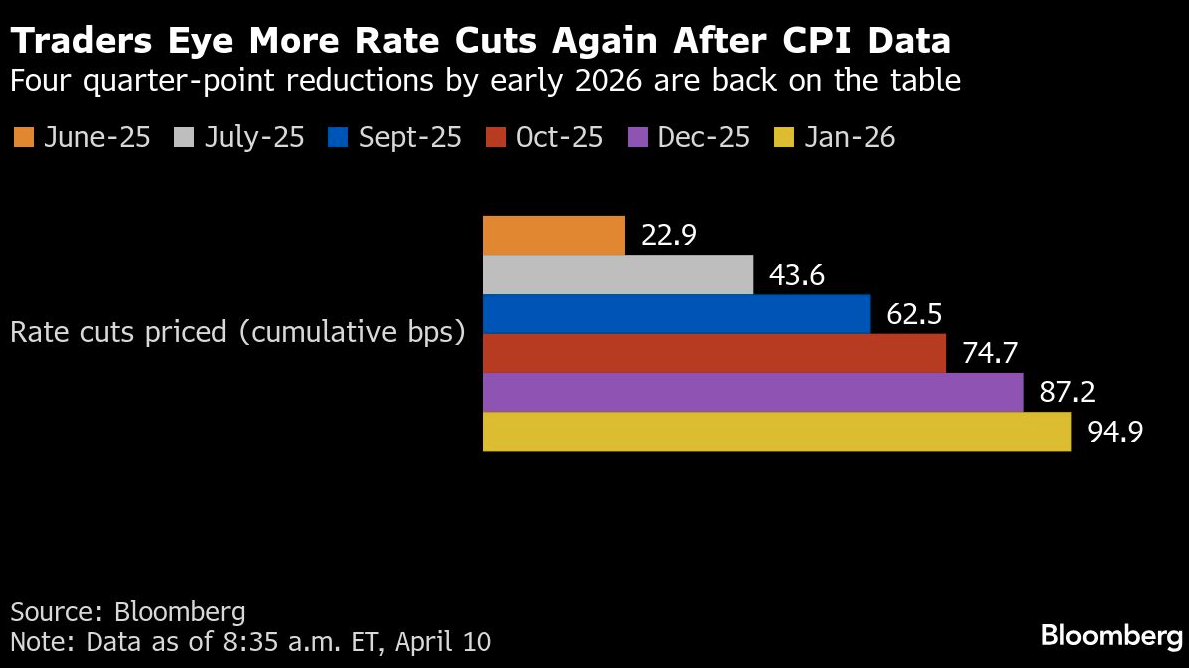
The advance on Thursday lowered yields on two-year Treasuries — the most sensitive to the Federal Reserve’s monetary policy — by as much as 10 basis points to 3.8%. Traders priced in expectations for three interest-rate cuts in the remainder of 2025, with a chance of a fourth, after data showed underlying inflation cooled broadly ahead of Trump’s early-April tariff announcement.
The data did little however, to stem the declines in longer-dated Treasuries, with 30-year yields higher by several basis points ahead of a $22 billion auction of those bonds at 1 p.m. New York time.
Treasuries have been battered this week as Trump’s trade policy eroded appetite for US assets, prompting questions about whether the nation’s debt remains the world’s favored haven. Signs that investors were unwinding leveraged bond bets only added to the selling, sending long-term yields soaring.
“The downside surprise in inflation should be fairly encouraging to the rates market,” Gennadiy Goldberg, head of US interest rates strategy at TD Securities. Still, “the reaction may be brief as the market waits for more news on trade.”

The auction may clarify the extent of demand destruction for Treasury’s longest-maturity debt.
While a sale of 10-year debt a day prior was met with good demand, allaying concerns that tariffs would curb foreign demand for US bonds, this week’s surge in Treasury market volatility may pose a bigger problem for 30-year bonds, where there have been more signs of liquidity erosion.
To Kathy Jones, chief fixed income strategist at Charles Schwab, while US inflation data was positive news for bonds at the moment, “it probably doesn’t reflect the impact of tariffs or the tariff scare yet.”
Trump’s unveiling of sweeping tariffs on April 2 sent the bond market rallying as investors fretted that the US economy will end up worse off from a trade war.
But a 90-day pause on most higher “reciprocal” levies announced Wednesday spurred steep gains for stocks and a surge in short-term yields across much of the developed world as traders greeted the reprieve by scaling back bets on interest-rate cuts.
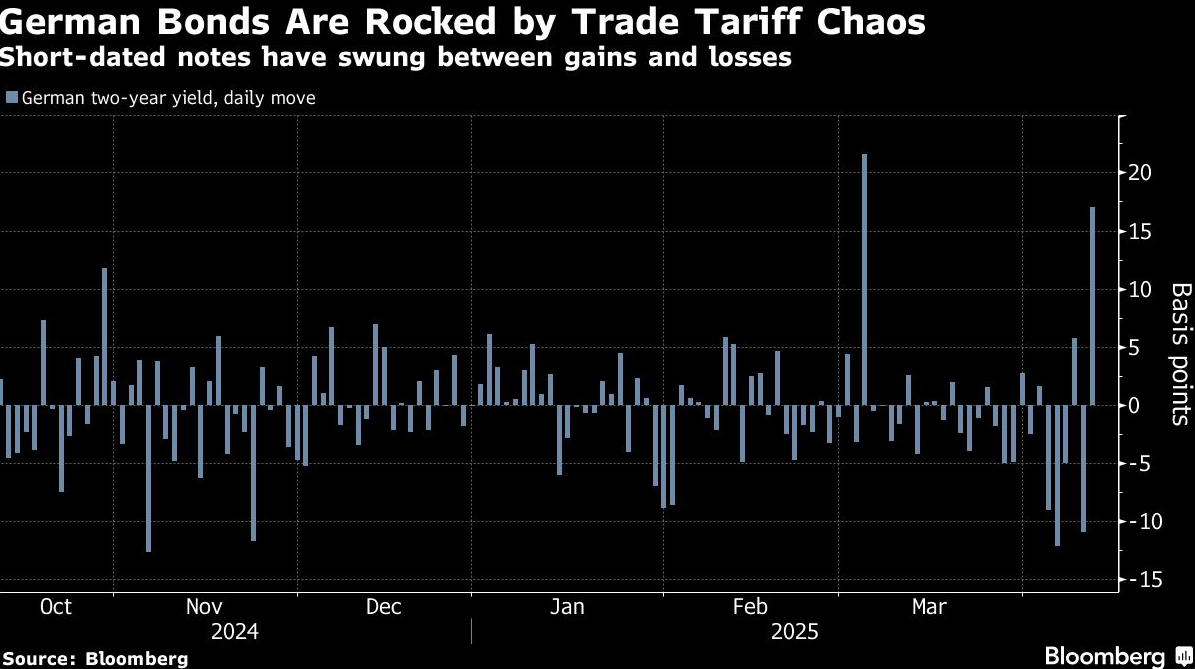
The yield on the German two-year note soared nearly 20 basis points before paring on expectations that the European Central Bank will need to ease less. In the UK, bonds rallied after borrowing costs hit their highest since 1998 this week.
“Bonds are signaling that the pause is significant, yet not much has fundamentally changed,” ING rates strategists led by Padhraic Garvey wrote in a note published Thursday. “Markets will not easily forget these episodes with wide market swings and thus the demand for safe assets should remain elevated.”
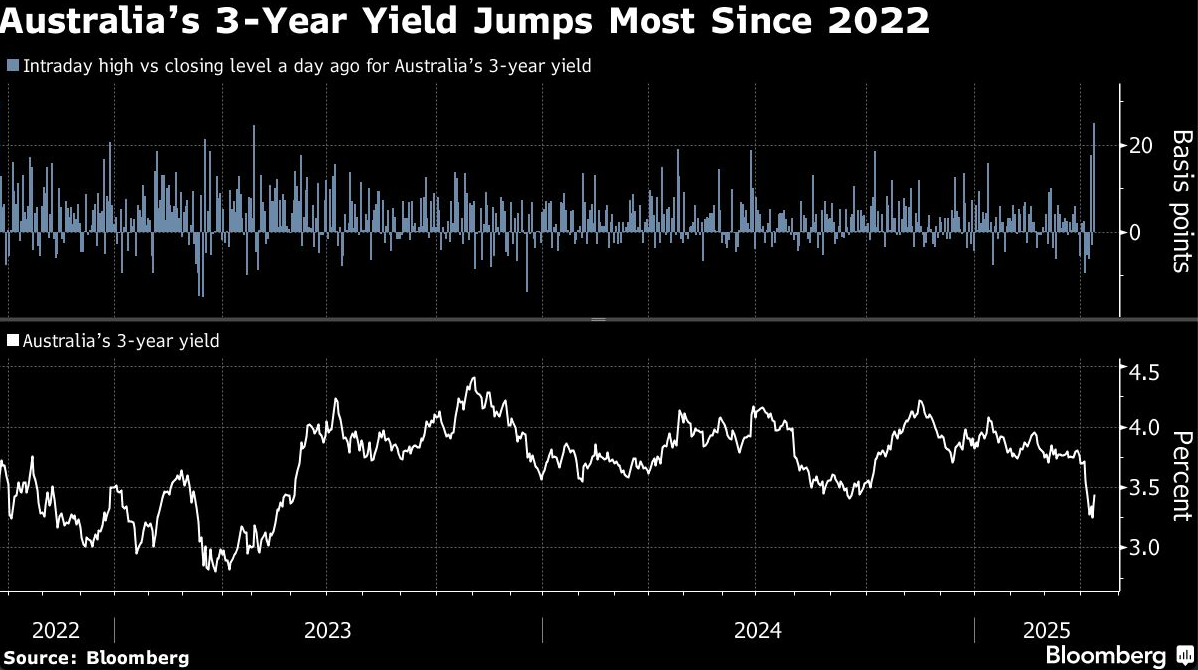
In Asian trading, Australia’s three-year bond yields surged Thursday by the most since September 2022. Japan was an outlier, with its longer-end bonds facing the most selling pressure: 10-year JGB yields rose 13 basis points to 1.40% at one point.
Traders are now bracing for a period of prolonged negotiations that could weigh on markets for months.
The recent moves in the Treasury market have fueled speculation among traders about who has been selling. Some investors are worried about a blowup of the basis trade, where hedge funds profit from the difference between futures and spot prices, others about an implosion of trades in interest-rate swaps. Another theory is that central banks are cutting their holdings of Treasury debt.
And amid the on-again, off-again whiplash of Trump’s tariffs, investors are facing the increasingly complicated task of trying to figure out how shifts in global trade will impact the twin levers of growth and inflation — both important drivers of rate expectations.
“This period of instability will continue for the next couple of weeks,” said Tsutomu Soma, a bond trader at Monex Inc. in Tokyo. “No one knows what shape these tariffs are ultimately going to take and everyone’s looking at US yields to trade — so brace for more chaos ahead.”
A message from Advisor Perspectives and VettaFi: To learn more about this and other topics, check out some of our webcasts.
Bloomberg News provided this article. For more articles like this please visit
bloomberg.com.
Read more articles by