Anthropic PBC’s IPO is casting a long shadow over companies’ US listing plans, as they try to find room for their deals to grab attention after the Sept. 7 Labor Day holiday.
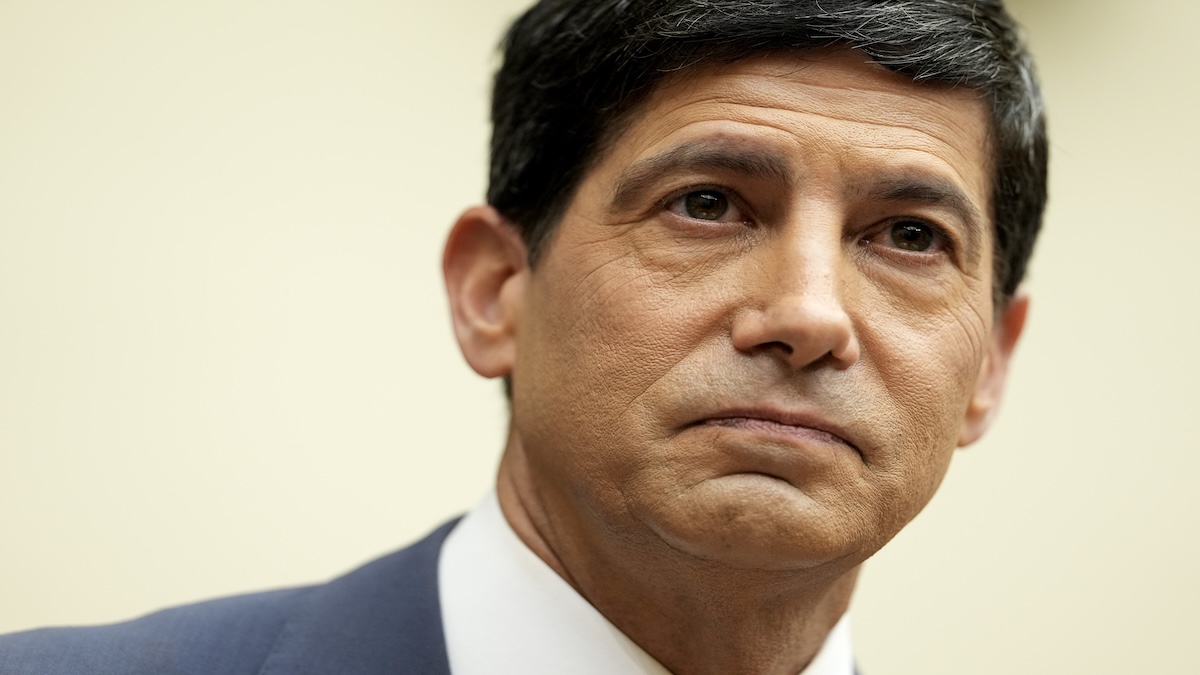
For the first time in his three months on the job, Federal Reserve Chair Kevin Warsh said the right things. In his keynote speech Friday at the Federal Reserve Bank of Kansas City’s annual central banking event in Jackson Hole, Warsh acknowledged that inflation was elevated and widespread, and had been been so for “far too long.”
Even more so than usual, Hollywood’s future is uncertain. For decades the Los Angeles economy revolved around the film industry, but now more movies and shows are filmed elsewhere, driven or lured away by high expenses or tax incentives.
Bond investors at firms including ABN AMRO Investment Solutions and Brandywine Global Investment Management are voicing skepticism about mounting speculation that Federal Reserve Chairman Kevin Warsh is poised to raise interest rates.
A weaker U.S. dollar cycle is boosting the appeal of emerging market debt, creating a compelling case for investors seeking income and diversification at an opportune time for the asset class.
In an ambitious and much-anticipated Jackson Hole speech, Federal Reserve Chairman Kevin Warsh made the most market-moving news when he stated clearly that unless “underlying inflation is moving to our objective, clearly and at sufficient speed … we have work to do.”
The term “backfire” originally referred to the intentional burning of underbrush when there is a wildfire on the horizon, to keep a bad situation from turning worse. Over time, however, backfire has come to mean an action that makes a bad situation worse.
We think it’s time for investors to consider moving from a short-duration bias toward core (plus) bond portfolios. Valuations have become more attractive across fixed income, with all-in yields approaching compelling levels. We share our views on when and why.
This week, our Portfolio Manager Olga Bezrokov sees tentative signs of improvement emerging in Europe, although she cautions that the recovery remains uneven across countries and sectors.
A chorus of investors is urging Federal Reserve Chairman Kevin Warsh to express a strong determination to deal with high inflation to boost the long end of the Treasury market.
When a driver sees an unfamiliar light on the dashboard, the hope is that it’s a false positive that will go away on its own. But a persistent warning must be addressed before it becomes a bigger problem. The global economy is moving forward with several warning lights flashing, and those signals are becoming harder to ignore.
For an asset often designated as a store of value, gold volatility has been especially apparent this year. After starting off the year with a high-paced record-setting run that lifted the metal to nearly $5,600 an ounce, including a 13% rally in January alone, momentum quickly faded as tensions with Iran ratcheted higher.
Most residents of rich, Western countries have relatively high earnings, but many also feel they can’t afford a reasonable lifestyle. Americans, for example, are getting richer but also more unhappy. Meanwhile Eastern Europeans, not generally known for their cheery disposition, are most satisfied with their comparatively lower income.
In markets that have faced multiple sources of uncertainty this year, small-cap stocks have quietly moved to the front of the pack. Unlike the S&P 500, where performance has been heavily influenced by changing AI narratives, smaller companies have seen earnings improve across a broader set of sectors that are more closely tied to the overall US economy.
Markets are largely reducing expectations for a near-term U.S. Federal Reserve (Fed) rate hike, and we agree. July’s weak jobs report, the underwhelming retail sales report, and continued softening of the monthly inflation figures give the Fed room to stay patient in the coming months.
Investors who focus only on tomorrow’s gold price may miss the larger purpose of owning precious metals. Gold and silver are not merely vehicles for chasing a rally. They are tools for preserving purchasing power during periods of fiscal and monetary instability.
Kevin Warsh’s inauspicious start as chairman of the Federal Reserve has guaranteed that his speech on Friday at the central bank’s annual Jackson Hole conference will command rapt attention. He might wish it were otherwise: Investors demanding clear answers to their many questions are almost certain to come away disappointed.
High indebtedness has prompted a call for France to cancel part of its public liabilities. Ideas spread, so expect similarly unorthodox demands elsewhere as governments grapple with high debt, while political disruptors air increasingly unconventional policies. All those roads, however, lead to more inflation and the debauchment of financial assets.
On Wednesday, August 26, 2026, Northern Trust Asset Management expanded its suite of distributing ladder ETFs with the launch of eight new funds. The newly launched ETFs offer additional target maturity options for Northern Trust’s existing strategies.
A blockbuster outlook from chip darling Nvidia Corp. is providing a boost to tech stocks and lifting key equity indexes Thursday morning, adding to investor optimism about the AI cycle.
Last week, the U.S. Treasury Department surprised the bond market by announcing that it would at least double selected long-end bond buybacks.
The bond market rarely dominates the financial headlines. But with a light economic data release schedule and earnings season largely in the rearview mirror, the bond market took center stage last week.
Trade talks between Canada and the U.S. fell apart on Saturday, resulting in the Section 338 tariffs on a subset of Canadian goods taking effect. In response, Canada has pledged to implement
U.S. labor force participation is declining due to an aging population, slowing immigration, and other factors. This could impact economic growth and earnings moving forward.
Earnings have built a strong foundation. As we wrote earlier this month, earnings have provided a strong foundation for stocks this year. With second quarter earnings growth for the S&P 500 on track to exceed 30% (excluding private investment mark-ups) and analysts continuing to raise estimates, it's safe to say this season strengthened the fundamental case for equities.
In choppy waters, many novice ship passengers will experience sea sickness. The only sure remedy is to wait it out. Symptoms will pass, as will the rough waters.
The most durable assumption in global investing is also the most outdated: that the United States is fundamentally a consumption story and China is fundamentally a capital-expenditure story.
The US economy expanded at an unrevised 1.5% pace in the second quarter, though underlying details showed stronger consumer spending and business investment than initially reported.
Equity markets stumbled this week despite an economic backdrop that continues to show signs of broadening. While concerns about consumer strain are mounting, those worries have so far been offset by ongoing strength in business investment, particularly spending tied to artificial intelligence (AI).
Markets continue to hold up remarkably well as we move through the traditionally difficult second half of August, but the risks beneath the surface have shifted. Commodity prices are rising, money growth remains stronger than I would like, and long-term interest rates are again testing important levels.
James Carville, Bill Clinton’s chief political advisor, once quipped that if he could be reincarnated he wanted to come back as the bond market because “You can intimidate everybody.”
Interest rates are moving higher, and the forces behind the move appear to be persistent inflation and an economy that continues to grow more strongly than many anticipated. Economic growth is generally advantageous, and moderate inflation is a normal feature of a healthy economy.
We think the gap between women’s confidence and ability underscores that effective plan communications must educate, engage and empower participants across the board. Women may worry more, but they’re clearly knowledgeable and forward-thinking—qualities that can be reinforced. Men may register more confidence but could still use refreshers on financial basics.
Macro strategists and global portfolio managers have their hands full on this final week of August. As we said recently, this is no time to mail it in before Labor Day in the U.S. And for equity traders and bottom-up analysts, NVIDIA (NVDA) writes the storyline in the sessions ahead. The world's most valuable company reports Q2 results after the bell on Wednesday.
I wrote several years ago that the only thing you can count on the stock market to do is fluctuate, and that the wisest response is usually to do nothing. Looking less often will not change your return. It will make you far less likely to damage the return you already have.
Kevin Warsh’s first major speech as chairman of the Federal Reserve has become an unexpected trial of his slimmed-down communications style.
US stocks advanced on Tuesday as technology names rallied and investors continued to prepare for Nvidia Corp. earnings and the Jackson Hole Symposium.
Treasuries gained as a decline in crude oil eased inflation concerns and the pressure on Treasury Secretary Scott Bessent, who has been moving to halt a months-long selloff that pushed the longest-dated yields to the highest in almost two decades.
Yields on 30-year US bonds broke 5% last week, a level not seen since before the Great Financial Crisis. The Treasury Department bought bonds in an attempt to lower yields. It worked — for a day, then bond yields went back up. Meanwhile, in a not-exactly-unrelated development, the US national debt just passed $40 trillion.
Chris Galipeau discusses high-conviction insights that go beyond media headlines.
Without a doubt, the number-one story in the financial markets of late has been the run-up in longer-dated Treasury (UST) yields. Indeed, headlines in both traditional and social media have centered on the fact that bond yields are now at levels not seen in nearly 20 years, or the time period right before the Financial Crisis hit in 2007.
The 30-year U.S. Treasury yield has touched roughly 5.3% in the past week, a level not seen in nearly two decades. Global counterparts in Europe, the U.K., and Japan have climbed to similar heights.
For the past five weeks, markets have been focused on a steady stream of corporate earnings, supported by upbeat management commentary and another quarter of strong results. But with second quarter 2026 earnings season nearing its end, investors' attention is shifting back to the macro backdrop.
Something strange has been happening in America lately. The Wall Street Journal says this is the summer when the U.S. became “a nation of Luddites.” The Economist calls it “the Summer of Ludd.”
US stocks traded lower before the bell on Monday as investors prepared for a busy week of economic data and important earnings from Nvidia Corp.
The debt problem is real. It just isn’t a bomb. As we’ve written before, the debt and deficit problem isn’t what you think. It’s a tax on future growth, collected slowly, and normal interest rates are simply the price of money doing its job, not the crisis the headlines keep selling.
The minutes from the most recent Federal Open Market Committee (FOMC) meeting, released this week, revealed a committee that remained broadly hawkish. Policymakers continued to characterize inflation as elevated and emphasized that upside inflation risks persist.
To some, the debate over inflation targeting is largely an academic exercise. But its outcome will have direct consequences for the paths of global interest rates and global markets. Some background on how we arrived at this juncture, and where we might go from here, follows.
In the early weeks of Kevin Warsh’s start as chair of the U.S. Federal Reserve, there has been renewed focus on how “underlying” inflation should be measured to guide decisions on interest rates.
Artificial intelligence is the topic of the day. It seems everyone has an opinion but not much actual factual knowledge. I’ve been dragging emails and research into my AI folder for a very long time. Today (and next week) I review those emails, as we are going to look at the reasons there is so much opposition to AI data centers.