The balance of risks to the Federal Reserve’s dual mandate (price stability and maximum employment) prompted the central bank to lower its policy rate in September in an effort to bolster the economy and employment.
In 2006, Andrew Fire and Craig Mello shared the Nobel Prize in Physiology or Medicine for their discovery of RNA interference (RNAi), which they published in 1998. Since then, the potential of a technology capable of silencing disease-causing genes has been a very attractive proposition.
As a result of the One Big Beautiful Bill Act, the lifetime exclusion for gifts and estates will increase permanently to $15 million next year with annual inflation adjustments to follow.
Doug Drabik discusses fixed income market conditions and offers insight for bond investors.
Fixed Income Portfolio Managers Brent Olson and Tom Ross consider current credit spread levels and offer reasons why they could remain rangebound for some time.
Markets surged to record highs in 3Q 2025 as the Fed’s first rate cut reignited optimism, with AI-driven market growth and broader participation leading gains, but a cooling labor market and fiscal uncertainty set the tone for a more selective, year-end investment positioning in 4Q
Labor markets are not keeping pace with young adult populations.
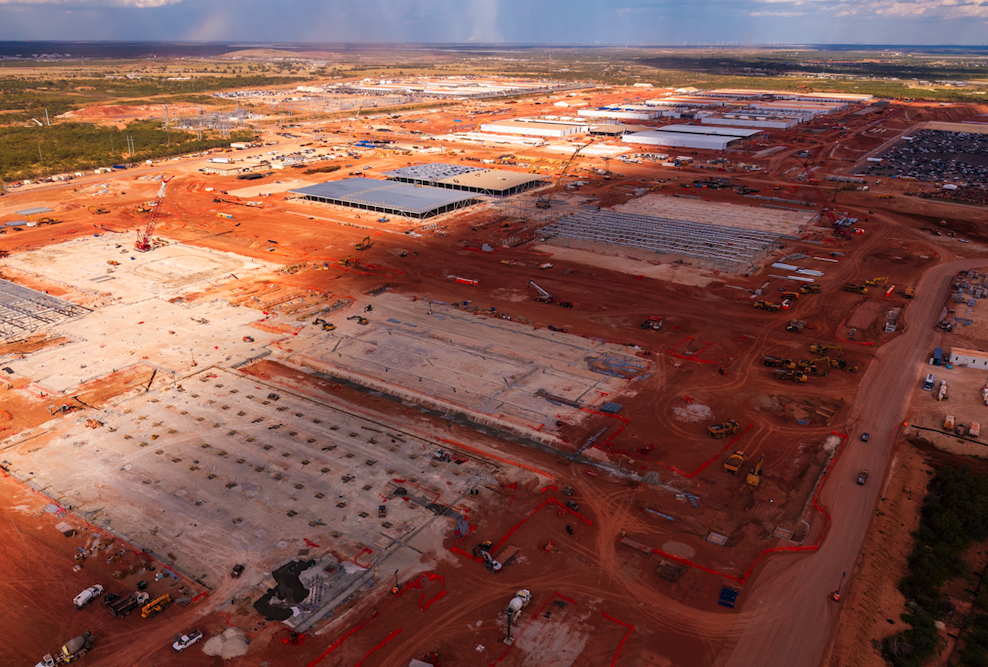
In big news for the energy infrastructure space, Targa Resources Corp. (TRGP) has announced significant new investments in its Permian Basin operations. The announcement includes a new natural gas liquids (NGL) pipeline and incremental natural gas infrastructure.
On this episode of the “ETF of the Week” podcast, VettaFi’s Head of Research, Todd Rosenbluth, discusses the Calamos Laddered S&P 500 Structured Alt Protection ETF (CPSL) with Chuck Jaffe of Money Life. The pair discusses several topics related to the fund to give investors a deeper understanding of the ETF.
If you are searching for professional retirement and financial guidance, the most important thing is working with professional people who understand your needs and can help you in achieving your specific goals. How might you determine compatibility?
Inflation is a quiet seeping in the background that you may not notice today. Yet over years it can drain value from your retirement reservoir. The fix doesn’t require a full remodel, just regular maintenance. What kind of maintenance does it take to prevent inflation leakage? Here are a few suggestions.
Many investors have turned to MLPs over the years for their income, which makes the outlook for distributions a perennial focus for investors. With MLP yields currently elevated relative to long-term averages and a flattish near-term outlook for U.S. energy production, the distribution outlook is particularly topical.
A trio of money managers want to sell exchange-traded funds that amp up swings in Tesla, Bitcoin and other assets to a rarely seen degree, setting the stage for another test of regulators’ tolerance for ultra-risky offerings.
The extra yield investors demand to own dollar bonds of emerging market sovereigns rather than US Treasuries has shrunk to the least in seven years — and the rally is set to run further.
Investors are excited about OpenAI’s expansion driving big gains in technology stocks, but a rising number of Wall Street pros fear that the wild pops that add tens of billions of dollars in value in mere minutes are signaling an unhealthy market reminiscent of the dot-com era.
Three things to watch this month from Franklin Templeton Emerging Markets Equity: China's Golden Week, tariffs on India and the likelihood of a year-end market rally.
We believe corporate America will follow up an outstanding second quarter earnings season with another good one in the third quarter.
With the global economy proving more resilient than expected, we upgrade equities to overweight.
Defined contribution (DC) plans form the backbone of retirement security for millions of Americans. And while stocks often steal the spotlight for their growth potential, bonds play a crucial role in managing risk, providing diversification, and delivering reliable income—especially as participants approach retirement.
Like AI stocks, precious metals look overbought; but unlike AI stocks, they’re structurally underinvested. As such, I believe they deserve another look.
It will depend on how long the budget stalemate drags out, but from a historical perspective, the impact of government shutdowns has been relatively short-lived and contained.
Over the next decade, almost every rich country will have to face fiscal reality. All have expanded their welfare state to serve not only the needy but also the middle class, with expensive pensions, health care and worker benefits.
Some political commentators believe Stephen Miran is a pawn of President Trump, aiming solely to lower interest rates, regardless of whether such action is justified. But, regardless of your political views, set aside your own perspectives for a moment and consider Miran’s views on the economy and monetary policy.
If speaking of “win-win solutions” is a naïve surrender to Chinese propaganda, then virtually everything that isn’t an expression of bellicosity toward China also is. But of course, those like Pottinger and Fishman who believe that bellicosity toward China is the only way to defend the U.S. against it are falling into the trap of the “security dilemma.”
Electricity demand is on the rise globally thanks to electrification, adoption of electric vehicles, wider use of air conditioning, and the rise of AI-related data centers.
The stock market as we know it is on the brink of a transformation.
Over the past three years, the economic conversation has been a “promised recession.” If you read the headlines, tracked economist surveys, or even listened to Wall Street strategists, you would have assumed a downturn was imminent. And yet, here we are, late into 2025, and the U.S. economy is still standing.
Government shutdowns are not unprecedented. Although some volatility is possible, historically, there has been no clear relationship between U.S. government shutdowns and market returns.
In the absence of primary government indicators, policymakers and investors alike must turn to private sector releases to find clarity. These secondary reports paint a picture of a cooling labor market and an increasingly cautious consumer.
In this article, Russ Koesterich discusses how September, typically a month that exhibits seasonal market weakness, is showing surprising strength.
Vanguard announced the debut of a new low-cost, emerging markets (EM) exchange-traded fund (ETF) — the Vanguard Emerging Markets ex-China ETF (VEXC). EM assets have been garnering increased investor attention this year and could see additional interest with the prospect of more interest rate cuts to come.
From harvesting pollen for industrial use to commercially available drone delivery to osmotic power plants—Franklin Equity Group’s Matt Moberg highlights some of the most exciting innovations in the latest “Innovation Insights Quarterly.”
Powering intelligence: the molecules, metals, and markets behind AI.
With the third quarter (Q3) behind us, we decided to conduct a deep dive into the key factors that shaped Q3 performance. Below, we’ve highlighted what we believe to be 10 of the key takeaways.
The U.S. government bought shares of Intel and other companies and made a deal with Nvidia for some of its revenue. What does this mean for investors and for those firms?
Debt is a curse that can also be a blessing, depending on how the borrower uses it. Sadly, human nature seemingly ensures we often use debt unproductively—and not just as individuals. Governments have their own special way of using debt to buy benefits (and votes?) today that future generations will pay for.
Private credit managers have proven their prowess in fundraising, but are falling short on dealmaking. With mountains of cash waiting to be deployed, they are latching onto the artificial intelligence data center boom, hoping to stay relevant as banks reclaim their dominant position in corporate lending.
Should the US Federal Reserve keep cutting interest rates? Markets certainly think it will: Futures prices suggest the federal funds rate will fall to about 3% by the end of 2026, from just above 4% now.
Overfunded pension plans don't have to die—they can live on in a 401(k) plan.
Most people buy into the adage that two heads are better than one — except when it comes to the very top of corporations.
There’s good news and bad news on the housing front: The buyers’ strike of the past three years is finally working, but the path to better affordability looks painful for many of those trying to sell a home, the construction industry and, ultimately, the US economy.
Over the past six years, Occidental Petroleum Corp. has morphed from being a large oil company with a reputation for discipline to an even larger oil company well on its way to becoming a business school case study in the perils of hubris.
With bond strategies offering a compelling use case for the moment, advisors may want to consider approaches to build out their portfolios.
Given the current market environment, should investors include China, the top economy in emerging markets (EM), or simply avoid it?
Pharmaceutical stocks are poised to cap off their best week in 16 years as a drug-pricing and tariff deal with the US government helped ease an overhang that’s been weighing on the sector for most of the year.
DoubleLine Capital says the popular strategy of betting on a steeper Treasury yield curve has plenty of room to run with the political gridlock in Washington only lending support to the trend.
Locking in attractive bond yields can support long-term returns, especially as central banks cut interest rates and tariff effects pose risk to global economic growth and inflation.
Central banks are walking a tightrope, carefully fine-tuning their next moves as they face lingering inflation and subdued growth.
Despite inflation remaining a concern, the Federal Reserve (Fed) cut interest rates in response to weakening jobs numbers. This allowed small-cap equity performance to lead a month that was generally positive across sectors, cap sizes and asset classes.
September’s rate cut may be exciting for many investors’ equities holdings, but those same investors may feel less excited about the income on offer from bonds going forward. Falling rates, of course, lead to falling yields in numerous debt securities and offerings.