For the savvy private wealth investor, portfolio diversity is key to success. Investing in infrastructure is one option that can help you both optimize your portfolio and make a positive and meaningful impact on your local community.
VettaFi’s vice chairman Tom Lydon discussed the iShares MSCI USA Quality Factor ETF (QUAL) on this week’s “ETF of the Week” podcast with Chuck Jaffe of “Money Life.”
Known as “onsemi” for short, this Knowledge Leader is a global leader in intelligent power and sensing solutions for industries ranging from automotive to industrial, and from 5G & cloud power to medical solutions.
There has been lots of speculation lately regarding China’s economic “decline” or potential economic “perils,” so much so that newspaper articles about the coming demise of China’s miracle economic growth over the previous decades continue to take (our) time away from other, perhaps, more important topics.
Even though past performance doesn’t guarantee future results, investors should prepare for continued market volatility this month.
Launches of emerging-market equity funds that exclude China have already reached a record annual high in 2023, as investor concerns grow over weak returns as well as the risks of investing in the nation.
Diversifying a portfolio means spreading the investments across a variety of asset classes, industries and geographies.
In general, portfolios can be split into growth assets and principal protecting assets. Growth assets tend to have greater risk coupled with greater income/reward.
I lost my dad, Alfred Munro Flaxington, this past weekend.
Market making in digital tokens used to be a font of outsized profitability. The picture today is very different as costs jump and investors avoid a crypto sector scarred by a $2 trillion rout.
The BRICS’ invitation to six more nations to join their group is an important initiative promoting greater global influence for major EM countries.
Things are not exactly going China’s way these days. One incident after the other has led to a virtual collapse of international investments in China, but that could potentially be the more benign outcome of the ongoing Chinese debt crisis.
Artificial intelligence (AI) has been top-of-mind for investors for much of 2023, fueling a strong rally in the S&P 500. While it may take time for AI to have a similar impact on small cap stocks, we share the market’s enthusiasm and believe AI has the potential to become one of the most disruptive secular growth trends ever.
There’s no clearer way to say it. Leave these garbage phrases out of your marketing.
When future economic historians write of our times, the thrust will be that it was a time of transition.
Advisors can capitalize on the expected transfer of wealth between generations, the expected wave of retirements among older advisors, and referrals from other professionals.
While the S&P 500 delivered solid performance this summer, we remain cautious in the near term given the Index remains modestly above our year-end target of 4,400.
Although high-yield bonds have performed well so far this year, we continue to take a cautious view.
In China’s current economic travails, US and other Group of Seven nations increasingly see evidence of deep-seated structural problems that ultimately will strengthen the West’s hand against a weakening geopolitical competitor.
Artificial intelligence is one of the top investment themes this year and is the new megatrend likely to last for at least the next decade. BlackRock’s Jay Jacobs and Global X’s Pedro Palandrani joined VettaFi’s head of research, Todd Rosenbluth, to discuss AI investing and companies to look to in the coming years at the recent AI Symposium hosted by VettaFi.
Several key economic indicators are released every week offering valuable insights into the overall health of the U.S. economy. Policymakers and advisors closely monitor economic indicators to understand recession risk and the direction of interest rates because the data can ultimately impact business decisions and financial markets.
The world’s most powerful central bankers have vowed in unison to keep interest rates higher for longer if necessary to tame inflation.
So-called “finfluencers” are preying on naïve investors, promising unrealistic returns while generating excessive commissions for themselves. Their bait is an indexed-universal life (IUL) policy. Read this to avoid making a costly mistake.
Applying planning expertise is a very complicated art form, a skill that is acquired over time, but which can be accelerated if there were a way to capture many of things that soon-to-be-retired advisors have learned through years of practice.
Like Samuel Beckett’s titular character Godot, we are still waiting the all-but-certain U.S. recession. It may yet happen, but it’s wise to understand why forecasters were so grossly incorrect.
At its annual summit in Johannesburg this week, the bloc of five emerging countries—Brazil, Russia, India, China and South Africa—announced plans to expand for the first time since 2010.
Today we continue our study of the historical cycles suggesting a major crisis is in our near-term (5‒8 years) future. We don’t know the precise timing or nature of the crisis, but the patterns indicate one is coming and could be severe.
Many advisors are now providing customized wealth management services to their clients and their families, often across multiple generations.
Federal Reserve Chair Jerome Powell signaled the US central bank is prepared to raise interest rates further if needed and keep borrowing costs high until inflation is on a convincing path toward the Fed’s 2% target.
If this is what a bad year for the dollar looks like, I'll take it. Widespread predictions of a significant retreat after a bumper 2022 haven't come to pass.
This weekly update tracks some of the largest cryptocurrencies by market share: bitcoin and ether. We’ve also included XRP, as it was one of the largest cryptocurrencies when this article began.
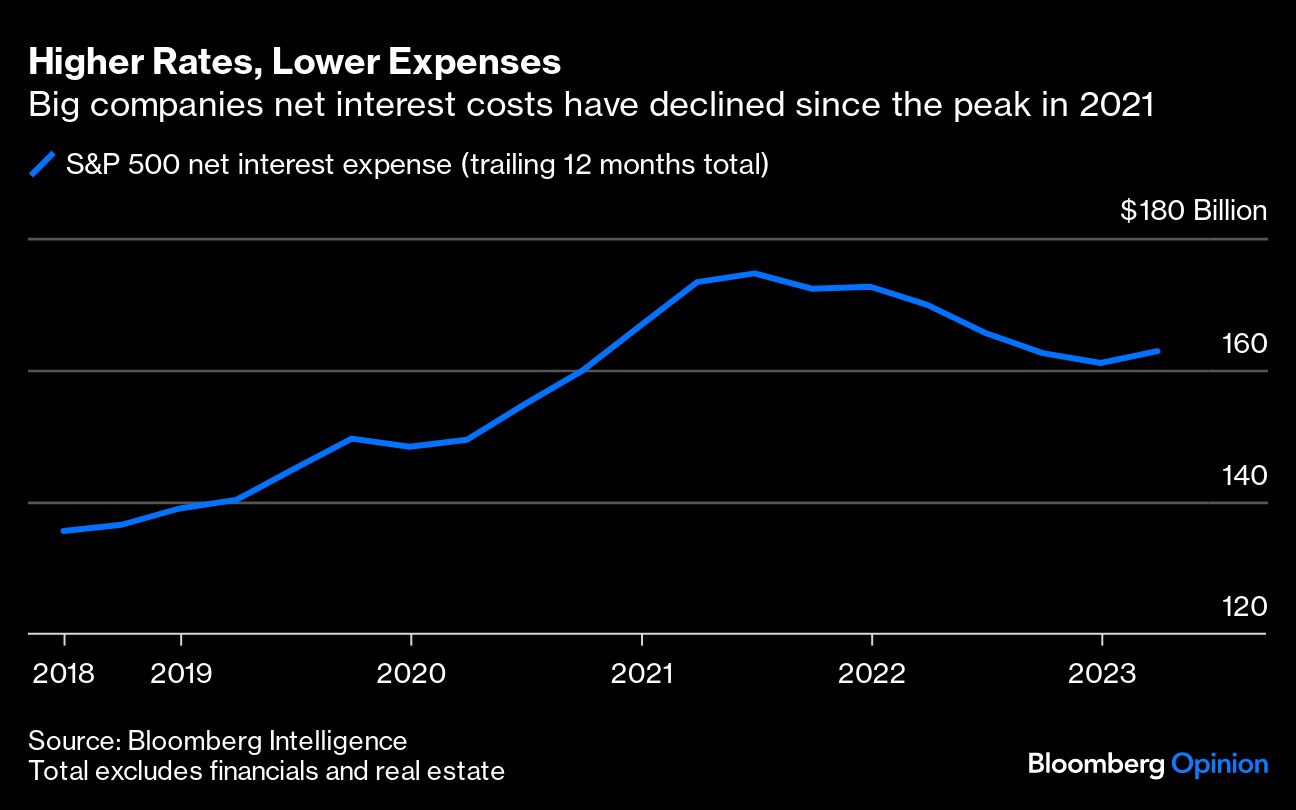
Until recently, I thought rising interest rates were — on balance — bad for businesses. In fact, many big companies are benefiting from the fastest rate-hiking cycle in decades, at least in purely financial terms.
Investors are finally showing signs of losing their antipathy toward commodities.
As the demand for faster, smaller, and more efficient electronic devices grows, so does the need for advanced semiconductor manufacturing techniques. Traditional methods have their limitations, and ASML’s mission revolves around transcending these boundaries.
Supply chains are realigning, to China's dismay.
Cognitive biases can be as detrimental as they are universal, and the curse of knowledge is no different.
Since the beginning of 2022, the media has regularly warned a recession is coming.
What’s going on with the markets and the economy? Long-term Treasury yields are up substantially since last Fall while the stock market, after a big rally, has stumbled so far this month. Meanwhile, the real economy appears to continue to chug along – even accelerating!
Paul O’Neill, a former US Treasury secretary, said that if America ever dropped the strong-dollar policy, he would hire a brass band at Yankee Stadium to mark the proclamation.
If they’d been offered today’s economy a year ago – with inflation downgraded from emergency to mere headache, still-low unemployment, and growth that’s slowed without stalling – the world’s top central bankers would’ve taken it like a shot.
We are now a few years past the onset of the COVID pandemic, and we've had a chance to think about some of its changes in the wealth management business. Even if we wish certain things hadn't changed, we must acknowledge that they have – and adapt accordingly.
We expect inflation and rates to remain higher than the last decade. We favor tech within growth and cyclicals within value.
European banks are rightly being criticized for failing to pass on interest-rate increases to customers. But is it any wonder they’re so unafraid of losing business? Compared to their US counterparts, European financial institutions often face less competition from alternative cash-like investments.
How do you cultivate a successful referral program?
Commodities stand to benefit from underinvestment and the clean energy transition.
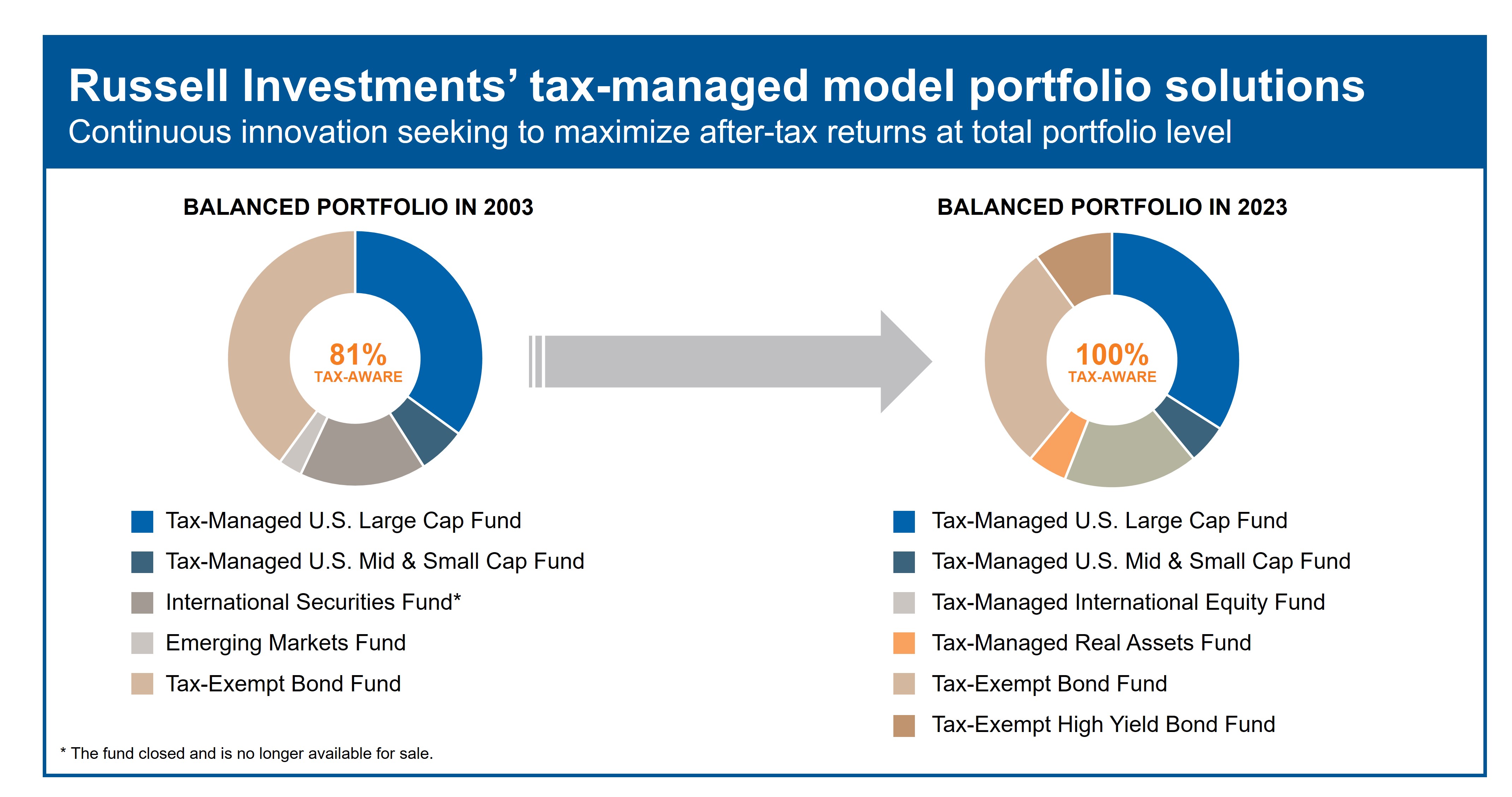
Advisors are using tax-managed products for tax-sensitive clients. In this interview, we learn how tax-managed products maximize the after-tax returns for investors to help them get to their goals with greater certainty.
Where have all the publicly held companies gone? As companies increasingly choose to remain private, new opportunities emerge for investors.
As businesses worldwide adopt technology, the innovation of AI may result in market leadership changes, global economic growth, and investor opportunities.
Since World War II, the US Dollar (USD) has served as the world’s preeminent ‘reserve currency’ – the means of exchange for most of the rest of the world to do business.