Although the Fed does focus on its dual mandate of employment and inflation, there is no question that the primary focus right now is on the employment side of the equation, especially given the recent stalling out in new job creation.
As expected, the Federal Reserve cut its short-term interest rate, citing concerns about slowing job growth. Where Fed policy goes from here is less clear.
The U.S. Federal Reserve today implemented an interest rate cut of 25 basis points. The question remains: Just how aggressive will they be the rest of the year and beyond? That may cause anxiety for fixed income investors who have long been accustomed to higher yields in an environment of persistent, sticky inflation.
Wall Street took profits in high flying technology stocks on Wednesday, rotating into cheaper corners of the market after the Federal Reserve delivered a widely expected interest rate cut under what Chair Jerome Powell described as an “unusual” situation of emerging labor-market weakness while inflation remains elevated.
In our last discussion, we spent some time reviewing the use of tariffs in the 19th century. Since contemporary discussions of tariffs usually begin and end with the Smoot-Hawley Tariff Act of 1930, there is a tendency to view tariffs myopically through the lens of the Great Depression.
Cuts are in store, but decisions will be weighed carefully.
The path ahead for the Fed remains complicated as it balances the need to support a softening labor market without stoking inflation. This video highlights the major economic news from the week of September 8th - 12th.
Last week's economic data presented a challenging picture for the U.S. economy with key inflation reports delivering conflicting signals and a timely labor market indicator added to the narrative of a softening labor market. Read through the major economic news from the week of September 8th - 12th.
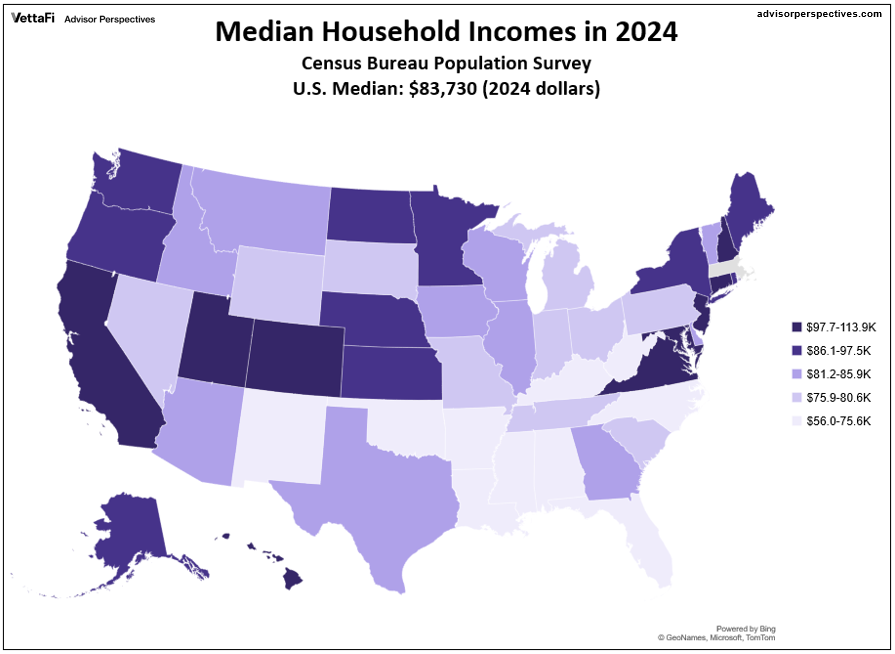
The median US income in 2024 was $83,730, up from $22,420 in 1984 — a 274% rise over the 40-year time frame. However, if we adjust for inflation chained in 2024 dollars, the 1984 median is $60.420 and the increase drops to 39%.
What a year it’s been for gold investing! As we approach the end of the third quarter, gold prices are up nearly 40% year-to-date, triggering upward forecast revisions by big firms, and attracting investor dollars on its way up.
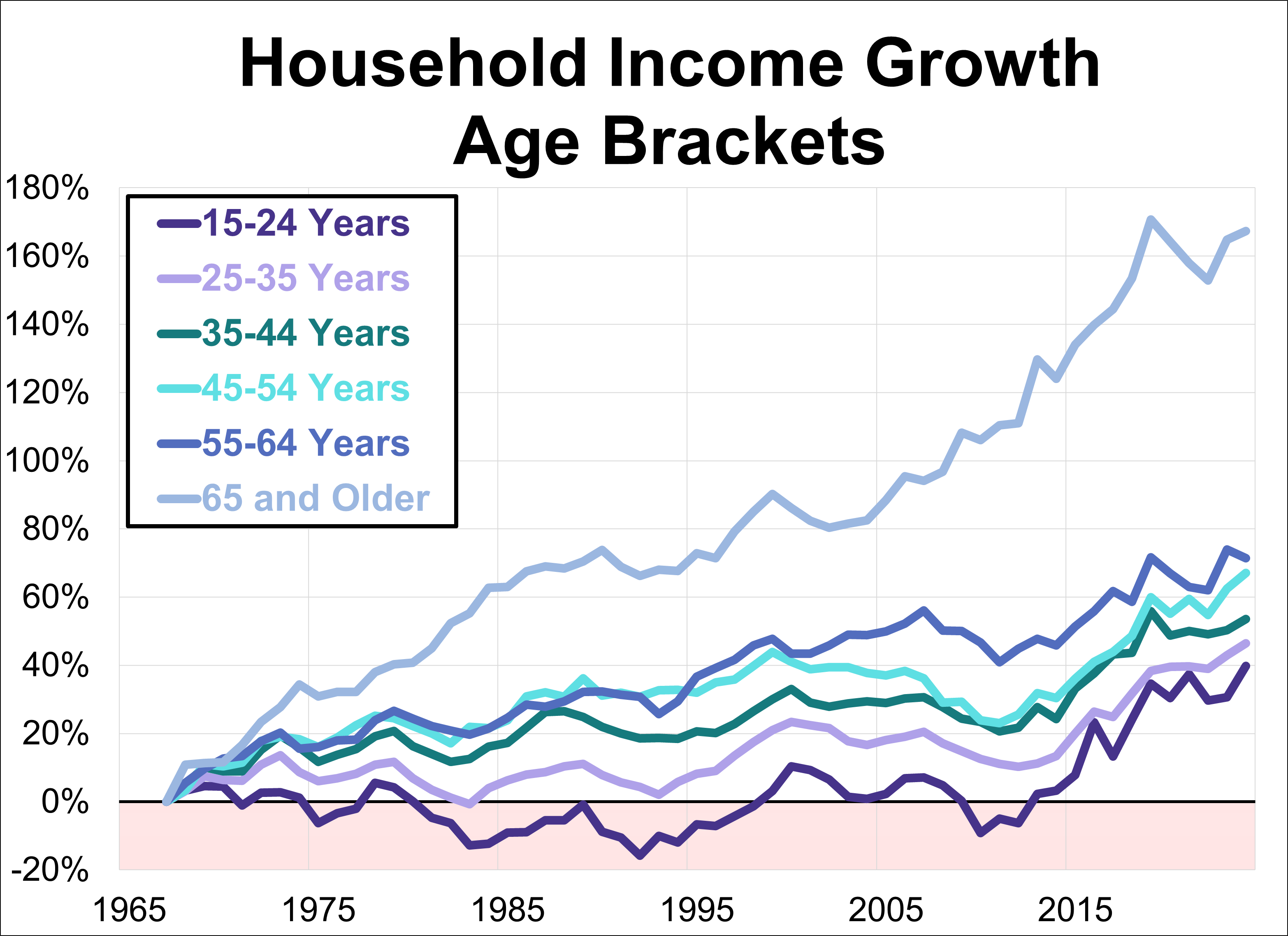
Our commentary on household income distribution offers some fascinating insights into average U.S. household incomes, but misses the implications of age for income. In this update, we examine household income with a focus on age bracket.
Bloomberg’s gauge of the dollar approached its lowest level since March 2022 ahead of the Federal Reserve decision, where policymakers are expected to resume cutting interest rates to prop up a weakening labor market.
Federal Reserve officials are expected to backstop a faltering US labor market by lowering interest rates Wednesday, marking a shift after worries about tariff-induced inflation kept them on hold all year.
Mortgage bond reinvestment could be the Federal Reserve’s most effective and immediate tool to unlock the housing market – without even touching interest rates.
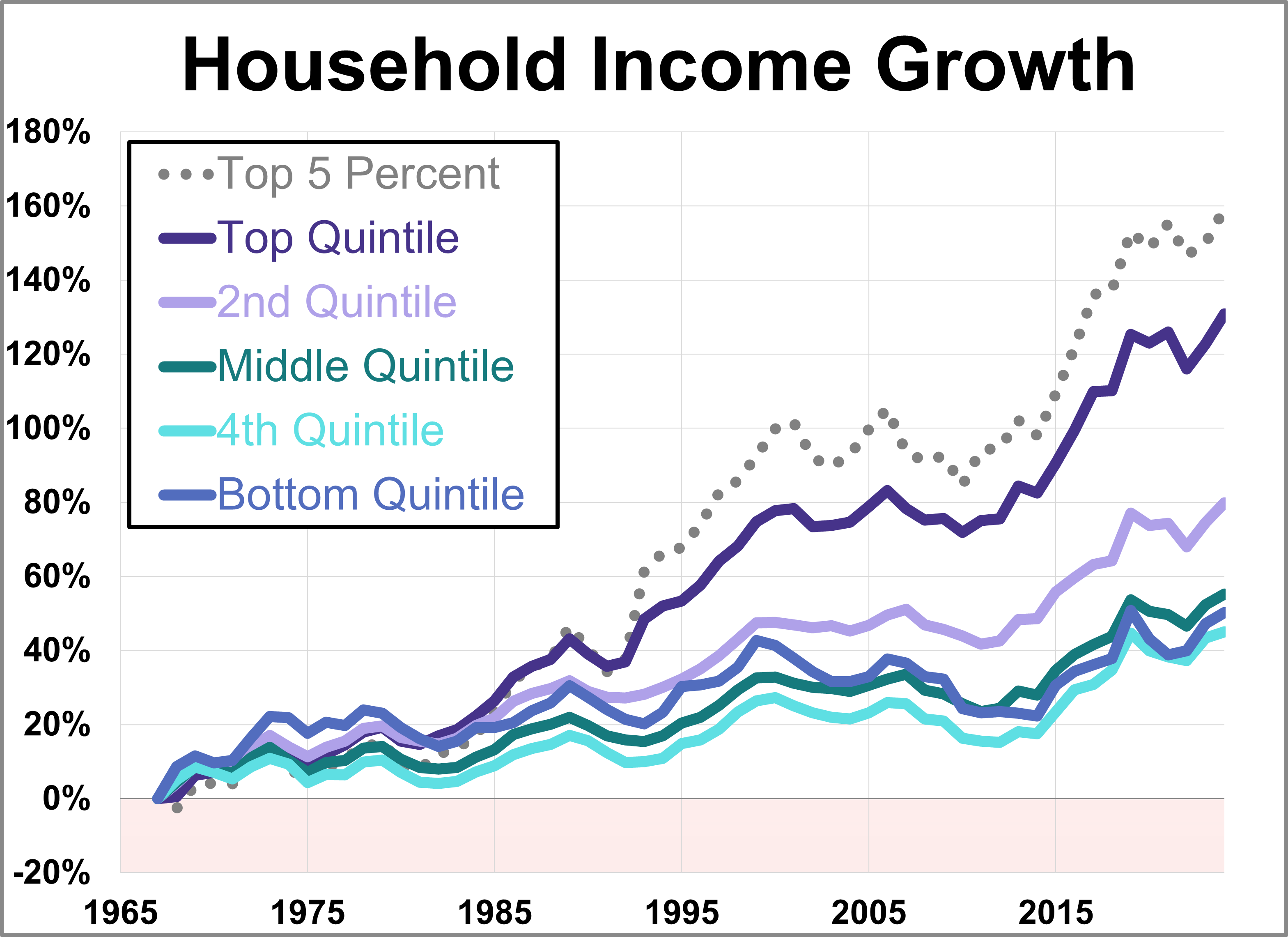
The Census Bureau recently released its annual report on household income data for 2024. The mean (average) household income for the middle quintile rose 4.5% to $84,390. Let's take a closer look at the quintile averages, which date back to 1967, along with the statistics for the top 5%.
Global bond markets have sold off recently due to uncertainty surrounding key political changes most notably in France and Japan.
The late-summer calm in financial markets shows an undercurrent of optimism. Stocks have been on a tear, with the S&P 500 rebounding strongly to notch roughly 18% gains for the year, while overseas equities are up even more.
The U.S. economy in late 2025 presents a complex but increasingly coherent picture. Labor market dynamics, trade policy uncertainty, and evolving monetary conditions are each contributing to a recalibration of the economic landscape.
In a year that has seen foreign equities ETFs stand out so strongly, emerging markets may be somewhat underrated. Broad, global equities strategies — especially those that exclude U.S. firms — have done very well as investors have looked abroad to diversify.
Wall Street traders gearing up for the Federal Reserve decision refrained from making big bets as they awaited clues on the path of rates that will shape the outlook for markets over the next few months.
On this week’s edition of Market Week in Review, Pierre Dongo-Soria, principal investment strategist for EMEA, unpacked what the latest economic data from the United States could mean for interest rate cuts.
With the Federal Open Market Committee (FOMC) meeting on the horizon, we’ve taken a closer look at recent economic developments to better understand the landscape Federal Reserve (Fed) officials will be navigating during the two-day meeting, which begins September 16.
Gold mining equities are having a blockbuster 2025. Prices for the precious metal have hit one all-time high after another, and the miners who pull it from the ground are rewarding investors with some of the best returns in the market today.
For investors who want some chaos protection, something in their portfolio that’s not correlated to U.S. or developed market stocks and bonds, a managed futures strategy could be the ticket.
Last week’s data sharpened the focus on the pivotal Fed meeting this week. I expect a 25-basis point cut, with real potential for dissents on both sides. Markets are actively gaming out a larger move, but the bar for 50 is still high and would likely require a notably weak retail sales print.
We steer our financial course through life, choosing how much to spend and how to invest what’s left, periodically updating our choices as circumstances evolve. This is the essence of financial planning: specifying in advance a desired spending and investment policy conditional on relevant aspects of our life, varying investment opportunities, and our preferences for the benefits derived from our wealth.
Clients work a lifetime for financial freedom. Once retirement comes, they often have a large nest egg to spend. However, there can also be a huge fear of spending the portfolio down.
Gold rose near a record high as traders geared up for an anticipated easing of the US Federal Reserve’s monetary policy this week and looked for clues on further rate cuts this year.
A key question for investors this week is whether Federal Reserve officials push back against market bets on a series of interest-rate cuts extending into next year.
Despite the slowdown, the Federal Reserve remains hesitant. Chair Powell noted softening labor conditions at Jackson Hole and suggested the door is open to rate cuts. But no concrete shift in policy has occurred.
No one wants to be a party pooper. It drives away friends and makes you generally unpopular. But if you are a monetary policymaker, ending the party before it gets too wild is quite literally your job.
Since the first rate cut of this cycle in August of 2024, the S&P 500 has risen by roughly 16%, broadly in line with historical performance during prior expansionary easing episodes.
A Federal Reserve rate cut won't necessarily lower longer-term bond yields or mortgage rates.
Last week's economic data presented a challenging picture for the U.S. economy with key inflation reports delivering conflicting signals and a timely labor market indicator added to the narrative of a softening labor market.
In a recent LinkedIn newsletter, we highlighted how mid-caps have historically delivered a compelling mix of growth and resilience, the "sweet spot" between innovation and maturity.
Investor and consumer surveys indicate that confidence is stabilizing following the initial tariff agreements, and consumers’ spending and income remain robust.
A key theme dominating global financial markets in recent weeks has been the general upward pressure on sovereign bond yields, particularly at the long end of government bond market curves.
It is certainly possible for the Federal Reserve, as the biggest player on the block, to lower money market rates over the course of the next few meetings. However, if it turns out to have been orchestrated out of political expediency rather than as stimulation for a weak economy, inflation will result. We saw a similar movie in August 1971.
Every time the mainstream declares price inflation dead and buried, new data comes out and rains on the funeral.
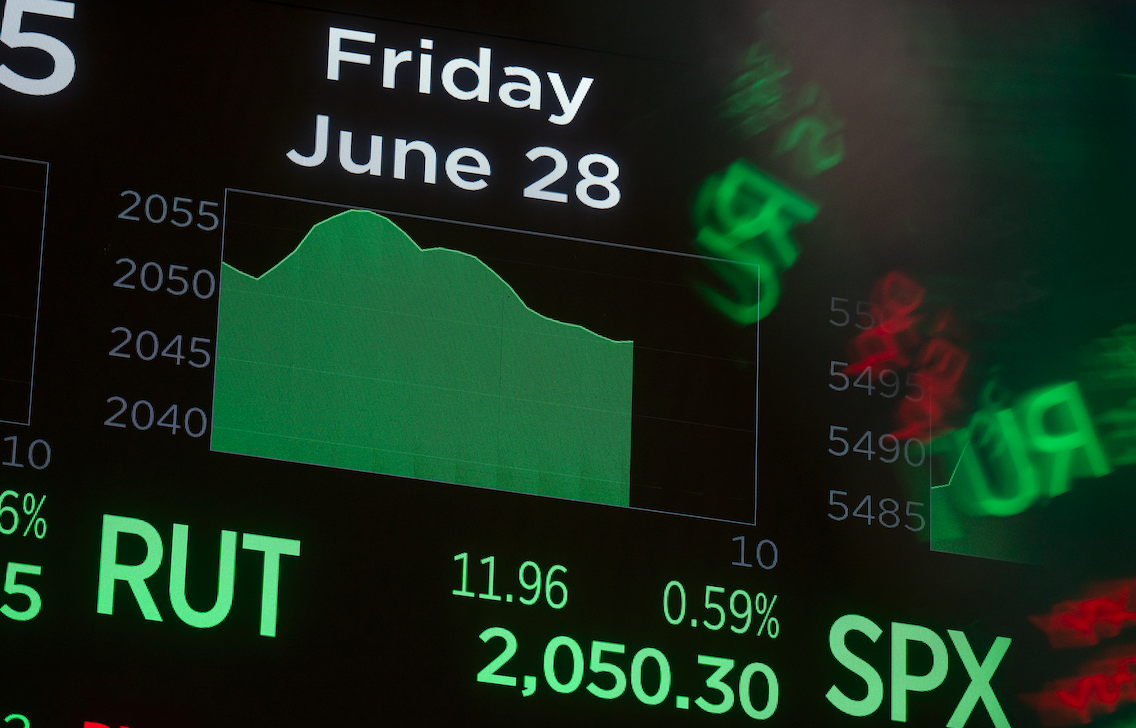
The Russell 2000, home to some of the riskiest stocks on the market, has been on a tear — and a spate of Wall Street strategists say the rally is just getting started.
Companies are moving some of the excess cash on their books into longer-term securities, betting that rate cuts from the Federal Reserve will make these holdings more lucrative.
In the latest Money Metals Midweek Memo, host Mike Maharrey analyzed the ongoing bull markets in gold and silver, highlighting record highs, historical ratios, supply deficits, and why silver may now be poised for an even stronger run than gold.
US stocks climbed on Thursday, posting fresh records amid hopes that an in-line inflation report will push the Federal Reserve to cut interest rates next week.
Treasuries rose as traders latched onto fresh signs that the US labor market is softening, bolstering their outlook for how much the Federal Reserve might cut interest rates in the coming months.
With just a week remaining until the highly anticipated September Federal Open Market Committee (FOMC) meeting, Wednesday’s wholesale inflation print and Thursday’s consumer inflation results for August are the last major hurdles lying between the expected resumption of the FOMC easing cycle.
A look inside why more Americans are turning to lifetime income.
While equity markets are buoyant worldwide, emerging markets stocks and bonds are the only assets that merit an 'overweight' allocation.
Last week's employment update seems likely to prompt a shift in the Federal Reserve's monetary policy. The August jobs report revealed a significant slowdown, with Nonfarm Payrolls (NFP) increasing by only 22,000, well below the 75,000 expectation from economists surveyed by Dow Jones.
We’ve received many client questions about seasonality in stocks, and specifically about the ‘September Effect’. This is the theory that investors should sell their stocks after Labor Day to avoid autumn volatility.
Assets under management (AUM) by ETFs globally closed at another month-end peak and is now just 6 percent below the all-time high reached during the pandemic.