With equity markets reaching new heights, the market’s expectation that the US Federal Reserve will cut rates to head off a labor-market slowdown is itself creating a policy challenge for the central bank.
With the global economy proving more resilient than expected, we upgrade equities to overweight.
Markets digested a quiet jobs Friday without the official payrolls report, but the signal from the other indicators was clear enough: the labor market is slowing at the margin but not falling off a cliff.
Like AI stocks, precious metals look overbought; but unlike AI stocks, they’re structurally underinvested. As such, I believe they deserve another look.
It will depend on how long the budget stalemate drags out, but from a historical perspective, the impact of government shutdowns has been relatively short-lived and contained.
Over the next decade, almost every rich country will have to face fiscal reality. All have expanded their welfare state to serve not only the needy but also the middle class, with expensive pensions, health care and worker benefits.
Some political commentators believe Stephen Miran is a pawn of President Trump, aiming solely to lower interest rates, regardless of whether such action is justified. But, regardless of your political views, set aside your own perspectives for a moment and consider Miran’s views on the economy and monetary policy.
In this article, I will discuss the process financial advisors can follow to help their clients determine how much they should initially set aside for LTC and how to periodically monitor whether the amount their clients have set aside (the reserve) continues to be sufficient in the future.
Over the past three years, the economic conversation has been a “promised recession.” If you read the headlines, tracked economist surveys, or even listened to Wall Street strategists, you would have assumed a downturn was imminent. And yet, here we are, late into 2025, and the U.S. economy is still standing.
In the absence of primary government indicators, policymakers and investors alike must turn to private sector releases to find clarity. These secondary reports paint a picture of a cooling labor market and an increasingly cautious consumer.
Powering intelligence: the molecules, metals, and markets behind AI.
With the third quarter (Q3) behind us, we decided to conduct a deep dive into the key factors that shaped Q3 performance. Below, we’ve highlighted what we believe to be 10 of the key takeaways.
Debt is a curse that can also be a blessing, depending on how the borrower uses it. Sadly, human nature seemingly ensures we often use debt unproductively—and not just as individuals. Governments have their own special way of using debt to buy benefits (and votes?) today that future generations will pay for.
As of midnight Tuesday, the U.S. government shut down, as lawmakers couldn’t reach an agreement on a short-term bill to continue funding government expenditures. Currently, none of the 12 appropriations bills have been passed.
Should the US Federal Reserve keep cutting interest rates? Markets certainly think it will: Futures prices suggest the federal funds rate will fall to about 3% by the end of 2026, from just above 4% now.
How the shutdown may impact the Federal Reserve, the economy, stocks and bond yields.
DoubleLine Capital says the popular strategy of betting on a steeper Treasury yield curve has plenty of room to run with the political gridlock in Washington only lending support to the trend.
Locking in attractive bond yields can support long-term returns, especially as central banks cut interest rates and tariff effects pose risk to global economic growth and inflation.
Central banks are walking a tightrope, carefully fine-tuning their next moves as they face lingering inflation and subdued growth.
Despite inflation remaining a concern, the Federal Reserve (Fed) cut interest rates in response to weakening jobs numbers. This allowed small-cap equity performance to lead a month that was generally positive across sectors, cap sizes and asset classes.
Fall is here, making now an ideal time to address your year-end financial goals and begin mapping out new goals for the year ahead. Sequoia’s Special Needs Financial Planning team is a comprehensive financial planning partner, ready to support you on multiple fronts.
There has been a lot of controversy around the Trump administration’s policy toward the Federal Reserve recently. What is less obvious to most investors is what they’re aiming to accomplish. Trump continues to talk about getting rates lower, and this has been echoed in other parts of the administration as well.
Social Security is a key component of a comprehensive retirement income plan. As a result, making the right decisions around claiming benefits is critical for long-term success in retirement. Married couples in particular need to think carefully about how to best access benefits based on their individual needs and circumstances.
In the coming week, several Federal Reserve officials will speak following the recent decision to resume rate cuts.
Last week, my colleague wrote about Anchoring Bias, a psychological phenomenon that attaches a particular price or specific yield level to a bond.
LPL Research analyzes recent market performance as Fed expectations, strong economic data, government shutdown concerns and more continue to have an impact.
Nomi Prins brings rare credibility to these conversations. She holds a PhD in international strategic studies with a specialization in political economy, and her career spans some of the most powerful financial institutions in the world.
In this video, Chuck Carnevale, co-founder of FAST Graphs, dives deep into Comcast (CMCSA) to evaluate whether today’s low stock price represents risk or opportunity.
Oil prices are notoriously difficult to forecast. Production can be volatile, and the global oil supply chain is complex.
Inflation gave markets exactly what they wanted last week—no surprises.
Consumption spending surprised to the upside once again in August, something we had already seen from last week’s release of retail and food services sales during the same month.
While it may seem that way at extremes, momentum tends to exhaust, and reversals or corrections become more probable. The RSI gives us a real-time gauge of when a trend may be vulnerable to a pullback or turn.
The latest read on the US labor market will be out this Friday, October 3, when the Bureau of Labor Statistics releases September nonfarm payrolls, unemployment, average hourly earnings and other metrics.
The Fed's extraordinary stimulus since the pandemic has fueled one of the broadest waves of speculation in history, from expensive equity valuations, historically tight credit spreads, and the ongoing bubble in cryptocurrencies, all pointing to excess liquidity.
Even as rate cuts occupy center stage in the 24-hour financial news cycle, surprise inflation could strike anytime. In the current macro environment, inflation could stem from the constant wildcard of tariff policy.
Get ready each week with high-conviction insights that go beyond media headlines.
As expected, the Federal Reserve cut its policy rate on Sept. 17 by a quarter of a percentage point. Officials had signaled the move in advance and Chair Jerome Powell explained the reasoning well enough.
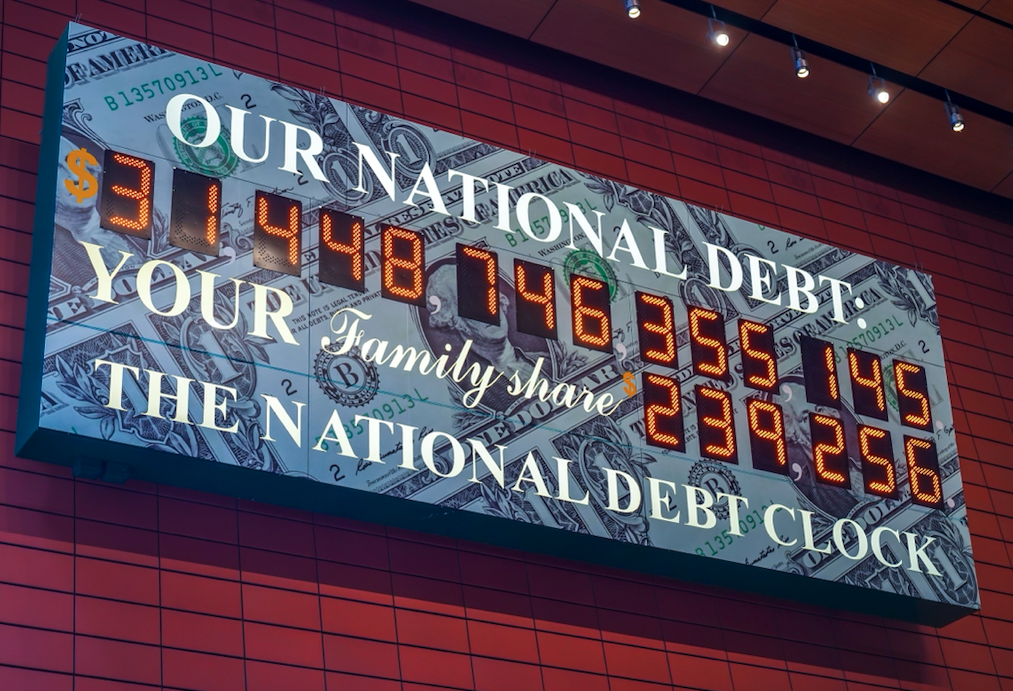
My reasons are simple. The debt pile is unfathomably massive, and it’s accelerating. Fiscal imbalances are widening, and monetary policy is being constrained. The Fed can’t raise rates aggressively without bankrupting the government, but it also can’t make deep cuts without tanking the dollar.
Federal Reserve Chairman Jerome Powell and his fellow central bankers are stuck between a rock and a hard place – and he knows it.
Some Wall Street pundits believe that the recent Fed rate cut makes its policy too accommodative, and they also argue that the Fed is creating a “Goldilocks” scenario for the stock market. To better gauge where policy lies on the accommodative to restrictive spectrum, it's critical to compare the policy to current economic growth and inflation rates.
Many advisors avoid allocating to inflation-protecting equities, fearing the age-old rule that protection comes at a price. However, my recent research with my colleagues Giovanni Bruno and Ben Luyten at Scientific Beta suggests this industry-wide fear is unfounded: Inflation-hedging stocks perform just as well as their inflation-sensitive peers.
I take Jerome Powell at his word when he says that he and his colleagues at the Federal Reserve are determined to get inflation back to its 2% target.
Too little attention was paid at the start of the decade to the likely hangover from a heady cocktail of cutting interest rates close to zero and increased bond buying via quantitative easing — at the same time as governments delivered a bucketload of fiscal stimulus.
There’s small change and big change. The small ones are notable: recessions, market crashes, etc. You’ll see several in your lifetime. The greater changes tend to be technology-driven: the Industrial Revolution, the internet, and now maybe artificial intelligence, robotics, and what I’ve called the Age of Transformation.
While the market is betting on an economic revival to support current valuation levels, the real economy is suggesting things are slowing down. Notably, the evidence isn’t coming from obscure corners. It’s showing up in the indicators designed to give us a heads-up before a storm arrives.
BLS and ADP jobs reports often diverge, creating mixed signals. Traders need to know why this happens, and how to use these reports to spot risks, opportunities, and mispricing.
Last week’s economic data presented a sharp contradiction between a resilient U.S. economy and increasingly concerned American households.
Investors are increasingly confident that the U.S. Federal Reserve will cut interest rates several times through mid-2026, signaling a more aggressive easing cycle.
The Federal Reserve (Fed) delivered a highly anticipated 0.25% interest rate cut during its September 16-17 Federal Open Market Committee (FOMC) meeting.
Precious and industrial metals have experienced volatility in recent weeks: gold has surged past $3,700 to reach a new all-time high, silver has climbed to $44 per ounce (its highest level since 2011), and platinum is trading at multiyear highs.