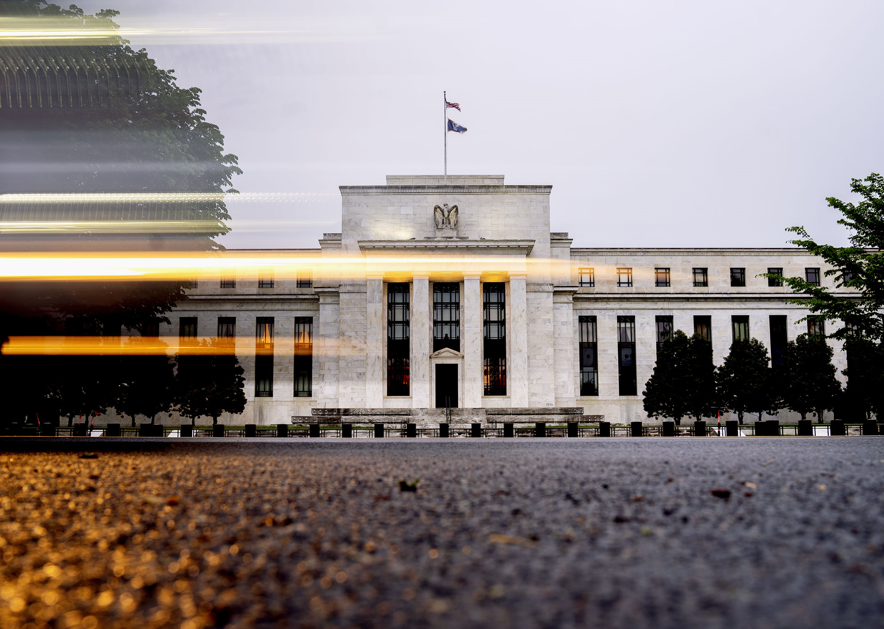
Bond traders ramped up bets on interest-rate cuts from the Federal Reserve amid concern that Donald Trump’s trade war will backfire on the US economy, sending the yield on benchmark Treasuries toward the closely-watched 4% level.
President Donald Trump imposed the steepest American tariffs in a century as he steps up his campaign to reshape the global economy, sparking threats of retaliation and a selloff in markets around the world.
Market volatility is likely to rise as investors digest the president's plans.
Turbulence is expected to continue until markets gain more clarity.
2025 has been marked by U.S. tariff news, geopolitical tensions and market volatility. Recent comments by Treasury Secretary Scott Bessent and President Donald Trump seem to confirm that the “Trump put” of his first presidential term is no longer in place.
Since mid-January, a new political regime in Washington has shaken the geopolitical landscape and global markets. In this volatile environment, bonds have performed well, resuming their traditional role as ballast against falling stock prices and attracting strong demand from investors.
Stocks are mixed around midday after seeing some mid-morning buying as investors position ahead of tomorrow's "Liberation Day".
Investors often debate the merits of value versus growth investing, but when it comes to developed international equities, the conversation isn't static; it moves in cycles.
The last time the dollar needed policy intervention was in 1985. The dollar was ascendant, and that put American exports at a disadvantage.
The world has entered a period of geopolitical uncertainty, with the U.S. now at the center of the storm.
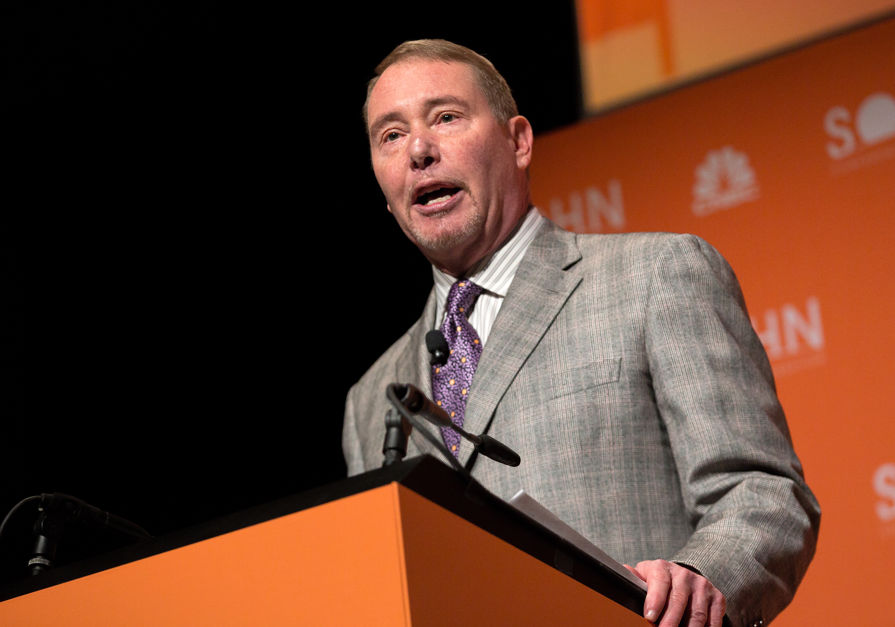
A duo of emerging-market bond veterans at Jeffrey Gundlach’s DoubleLine Capital is taking no chances as Donald Trump rolls out his trade agenda.
Investors are fretting that a year-long rally in global credit is papering over the risk that US policy uncertainty tips the world’s largest economy into a recession.
Amid a market correction and heightened policy, inflation and growth concerns, valuations are back in the spotlight.
In the current installment of The Roundup, Oaktree experts explore various investment risks and opportunities, including the heightened demand for mezzanine financing, potential entry points for special situations investors, the limited competition for unrated asset-backed finance investments, and the growing need for specialized life sciences lenders.
During the ten years prior to COVID, PCE inflation, the Fed’s preferred measure, averaged about 1.5% per year. Jerome Powell said it was too low and he wanted inflation to “average” 2% over time.
Economic activity hit a soft patch in the first quarter—whether it was fueled by the big pullback in confidence or one-off factors such as cold weather, a harsh flu season and an acceleration of imports ahead of pre- announced tariffs, our economist expects the slowdown will prove short-lived.
Last week's economic reports painted a stark picture of rising inflationary pressures and plummeting consumer confidence.
Uncertainty dominates the day, with market volatility sparking investor questions not seen in years. With this in mind, we’ve put together a concise cheat sheet covering key topics on everyone’s radar.
From New York to London and Hong Kong, investors are cutting back risk ahead of next week’s tariff announcements, while keeping cash ready to pounce the moment opportunities arise.
Long-maturity Treasury yields reached the highest levels in a month Thursday as investors demand compensation for the risk that tariffs will spur US inflation.
As the first quarter comes to a close, there is one word that has become the new go-to term to describe the investment backdrop: uncertainty.
When you grow up with a father who worked in the brokerage business, you hear a lot of stories.
VettaFi examines free cash flow yields for midstream MLPs and corporations using 2025 estimates and compares with energy and the S&P 500.
Since May 2020, inflation (CPI) has gone from a low of 0.1% to a high of 9.1% and back to 2.8%. It is no wonder why any investor might at least pause in this period of uncertainty.
The parallels between the AI narrative driving the current market and the dot-com bubble of a quarter century ago raise important concerns for investors.
Last year was a record for S&P 500® stock buybacks, led by the now “Lag 7” companies, though the SPX buyback yield dropped to a 2-year low.
In 2024, the S&P 500 delivered a total return of 25%, while gold finished the year up 27%. This marks the first time in recent financial history in which gold and stocks achieved gains exceeding 25% within the same calendar year.
As policy uncertainty grows, we consider how tariffs and other government actions might impact inflation, interest rates, and market sentiment.
The stock market sell-off appears to be signaling a recession. However, we believe the bond market disagrees.
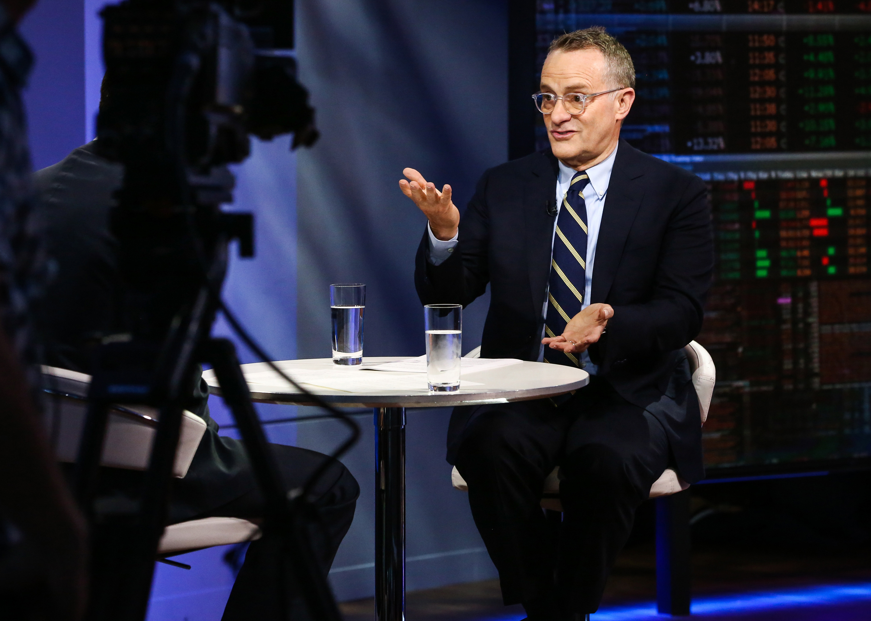
The world is a risky place, and high-yield debt spreads to safe US Treasury securities are close to historic levels of stinginess, signaling complacency in markets — at least on the surface. But legendary investor Howard Marks says that’s the wrong way to look at it and long-term investors should consider allocations to credit.
Whenever political questions arise, we always encourage a broader view: politicians don’t control the economy, and policy changes rarely move markets. But the past month has raised serious questions over that assertion.
Emerging markets offer the potential for long-term diversified investment returns but they can endure challenging periods of volatility and uncertainty. Head of Portfolio Strategy David Dali maps out the issues to consider when constructing and managing a portfolio for emerging markets.
The theme among so many writers seems to be “vibe shift.” And indeed, there is a concern the economy is slowing and may even be in a recession.
Last week's economic landscape was marked by pockets of resilience amid growing concerns and heightened uncertainty. Retail sales offered a mixed bag.
Investment-grade floating-rate notes prices tend to be more stable than their fixed-rate counterparts, so they may be worth considering during periods of volatility.
On the latest edition of Market Week in Review, Director and Global Head of Solutions Strategy, Van Luu, discussed the latest rate decisions from key central banks. He also talked about fiscal reform in Germany and reviewed recent U.S. market performance.
US Treasuries consolidated gains in a choppy trading session with markets remaining confident that policymakers at the Federal Reserve are still on a path toward lower interest rates.
The US stock market is on edge. The S&P 500’s recent 10% correction has investors worried, though a highly uncertain policy environment and an unusually top-heavy market obscure just what is spooking stocks.
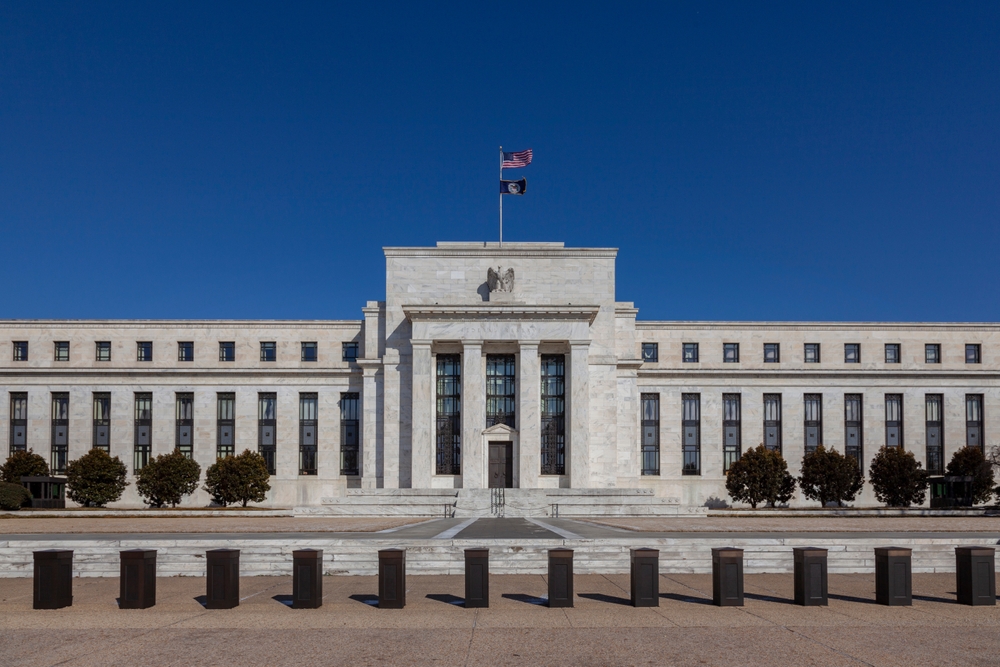
The Fed held the federal funds rate steady and signaled two rate cuts this year, despite expecting inflation to remain elevated.
Recession fears have risen sharply of late as economic soft data have rolled over, upping the risk that hard data start to catch down.
Bond investors will look for Federal Reserve Chair Jerome Powell to hit just the right notes in his Wednesday remarks to keep up the momentum behind a rally in the $29 trillion Treasury market.
One of the textbook drivers of alpha is an information edge. Having more information, advanced ways to use that information, and the ability to react to it before anyone else has been a massive advantage throughout the history of markets.
Several indicators used by fixed income investors to measure value have recently taken a positive turn, potentially flashing an entry-point opportunity for investors with money to put to work.
Last week’s economic data was plagued by uncertainty. A brief respite in inflation pressures was overshadowed by sentiment concerns.
Keep calm and carry on. Recent weeks have seen financial markets rattled by swirling news headlines, tariff whiplash, and rising economic uncertainty.
Unpredictable U.S. tariff policy has heightened concerns about a potential U.S. economic recession.
One thing we have seen underscored in 2025 is that the bond market can change its mind very quickly, particularly as it relates to policy emanating from Washington, D.C. Following President Trump’s election win, the dominant theme in the U.S. Treasury (UST) arena was that his Administration’s policies would lead to higher budget deficits, increasing UST supply and, ultimately, higher rates for maturities like the 10-Year yield.
News related to tariffs, DOGE, geopolitical unrest, NVIDIA earnings, and more significantly impacted U.S. stock markets recently, with the S&P 500 retreating over 2.5% during the second half of February. There are signs that meaningful structural shifts are taking place in the market.
The 60/40 portfolio, where 60% is invested in stocks and 40% in bonds, is the initial starting point for many portfolios. The exact asset mix is often adjusted based on an investor’s time horizon, risk tolerance, and financial goals, but the simple, proportional stock-bond combination is what is often considered a “balanced” portfolio.
It was inevitable. Certain pieces of the market roared to insane valuations last year. Investors poured money into the markets and speculated stocks would keep rising forever. But, sentiment has shifted.