Yield spreads are critical to understanding market sentiment and predicting potential stock market downturns. While yield spreads have widened, they remain well below the long-term averages. However, if recession risks increase due to tariffs, sentiment, or illiquidity, those yield spreads will widen further.
Credit investors are looking to pounce on new opportunities resulting from the wild swings in global financial markets triggered by the US-China trade war.
After starting the year on a high note with the S&P 500 index of U.S. Large Cap stocks posting an all-time high on February 19th, equities retreated during the second half of the quarter, officially falling into correction territory (down 10 percent) on March 13.
Spending cuts, tariffs and recession risk—Jan van Eck’s latest outlook breaks down what to watch and why he’s focused on gold, bitcoin, semiconductors and India.
Taxpayers plan to use their tax refunds for essentials and debt repayment, as well as savings strategies. Bill Cass shares ideas and strategies to consider this year.
After several weeks of steep selloffs, the major averages roared back on Wednesday as the Trump administration announced a 90-day pause on its reciprocal tariffs.
To understand the origin of the free-trade excesses that created record trade deficits and set in motion President Donald Trump’s tariff storm, consider the so-called de minimis exemption.
Markets were jolted last week after President Trump announced sweeping tariffs, including steep increases on China, Japan, and the EU, leading to a 10.5% drop in the S&P 500 over two days—an event seen only during major crises in the past 75 years.
The fifth edition of our annual “Voice of the American Workplace” survey, conducted by The Harris Poll on behalf of Franklin Templeton, includes the perspectives of both employers and workers. The 2025 survey found US workers are prioritizing work-life balance and their mental health. Employers are listening and strengthening their focus on improving benefits and communication. In this piece, our Jacque Reardon shares findings from the survey and potential implications for employers.
A Wall Street axiom states that the stock markets lead the economy by about six months. While not a perfect predictor, the stock market reacts to investor expectations about future corporate earnings, economic activity, interest rates, and inflation.
Callable bonds make up a large share of the bond market—and introduce one more variable into the bond-investing process.
This article provides information on the history and more recent developments of trust law and the corporate trustee industry. This information will help advisors to make informed decisions on clients’ generational planning choices, and to attract and retain assets.
Many people who are not interested in seeing anything about their own behavior that is causing a problem. They either have over-developed egos, or a lack of confidence so deep it is threatening to find an area of opportunity for change.
Last week’s employment report offered what may be the last clear picture of the US job market before President Donald Trump’s tariff shock. Overall, it looked pretty healthy, with a 4.2% unemployment rate, 80.4% of the prime-age population employed and 1.9 million nonfarm payroll jobs added over the past 12 months.
An enduring image from 2024 will be the capture of the SpaceX booster rocket by the Mechazilla robot arms on its return to Earth.
While there are no absolute winners in a trade war, there may be relative winners in the global stock market for investors to consider.
At the start of last week, the S&P 500 rallied three days in a row, with investors believing that the tariffs announced on Wednesday would be targeted.
Many of us came into the year with highly concentrated portfolios, which now were faced with changing market conditions.
The book’s title derives from the author’s criticism of young, self-absorbed Silicon Valley types unconcerned by the public good — the “hollow republic” — as opposed to those focused on the commonwealth, the “technological republic.”
Even the best financial plans sometimes hit an unexpected sour note: an investment seemingly doesn’t work out, an emergency expense appears to throw off a budget, or an impulsive splurge leaves us with a case of buyer’s remorse. When this happens, we need to improvise as we respond to the financial twists and turns.
As investors are uncomfortably aware of, global equity markets have been in freefall since U.S. President Donald Trump’s announcement of “reciprocal tariffs” on April 2.
Last week, we noted that “nothing good happens below the 200-DMA,” and the tariff-induced market crash this past week confirmed that statement. However, we also noted that over the last 30 years, previous failures at the 200-DMA have also often been buying opportunities.
Like a crossword puzzle, President Trump has been bombarding the media with clues about his economic policy. Given the importance of inflation and interest rates to the economy and the financial markets, it's worth assessing his clues and formulating some answers about what Trump may be up to.
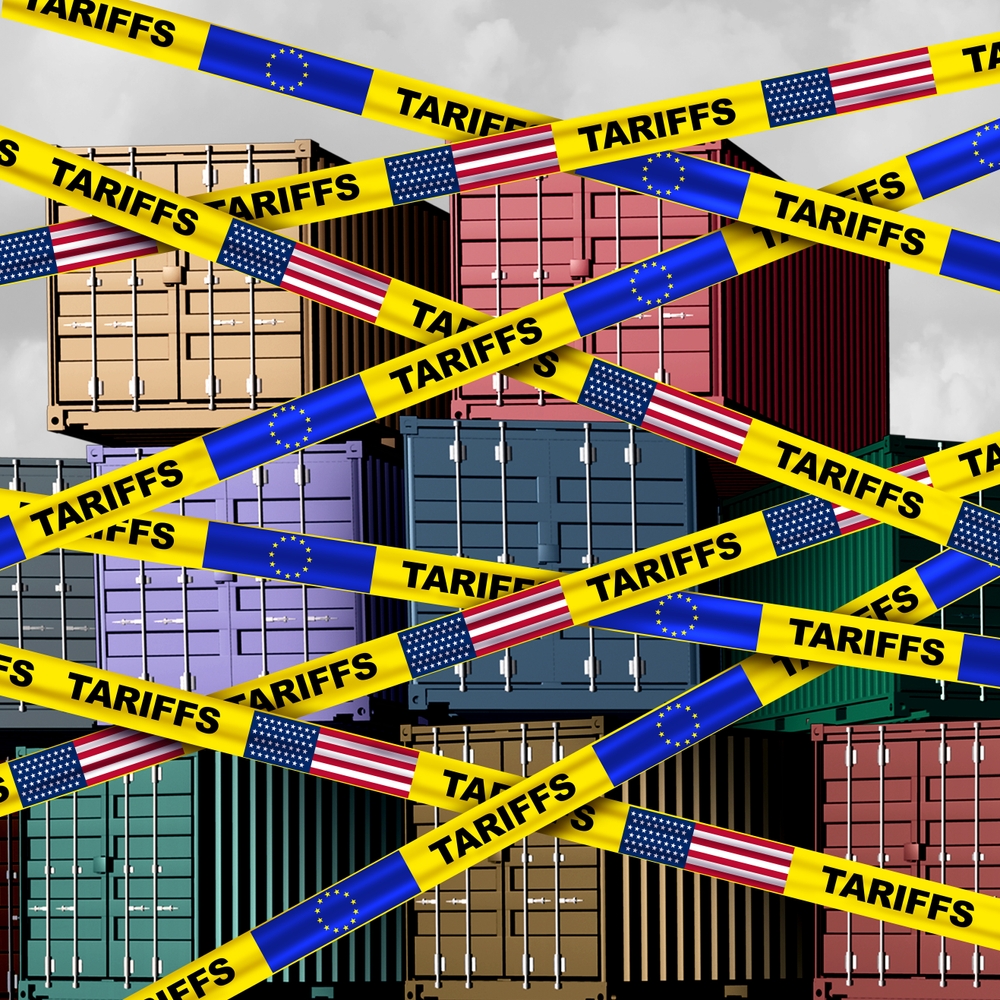
Global markets are in freefall in response to President Donald Trump’s universal 10% tariff on all goods being imported into the U.S., with as many as 60 countries facing “reciprocal” tariffs on top of that.
The 10% across-the-board (ad valorem) tariff and specific reciprocal tariffs on most U.S. trading partners went well beyond what most were expecting.
On the latest edition of Market Week in Review, Director and Senior Investment Strategist Alex Cousley discussed the details of the Trump administration’s tariff plan and the market’s reaction.
To most people, black gold means oil, the substance that helped build the modern world while causing the climate crisis. But a new treasure on the market is getting prospectors excited, not least for the role it could play in fixing the problem fossil fuels created.
In the report, Fixed income portfolio managers Brent Olson and Tim Winstone reflect on the initial credit market response to President Trump’s tariffs.
Adam Hetts, Global Head of Multi-Asset & Portfolio Manager, and Oliver Blackbourn, Portfolio Manager, give their thoughts on how US President Trump’s ‘Liberation Day’ tariffs have reshaped global trade dynamics, emphasising the benefits of diversification at a time of heightened uncertainty about the prospects for growth.
With nearly half of the bond market now outside of the Agg, a number of opportunities exist for those seeking exposure beyond the benchmark.
The tiny German village of Rehden, halfway between Hamburg and Frankfurt, is the unlikely ground zero for the next phase of the European energy crisis.
Two of the most common estate planning tools to use are a Will and a Revocable Trust. Both essentially perform the same purpose, ensuring your wishes are fulfilled, but they do so in different ways. Understanding their differences can save your family from unnecessary probate, costs, and stress.
Goldman Sachs Group Inc. is expanding its private equity offering to wealthy individuals across Wall Street and beyond, in the latest sign of investment firms gradually broadening access to the much sought-after private markets.
The world has entered a period of geopolitical uncertainty, with the U.S. now at the center of the storm.
Investors are fretting that a year-long rally in global credit is papering over the risk that US policy uncertainty tips the world’s largest economy into a recession.
Investors just can’t get enough of ETFs, and issuers are more than happy to oblige. Through the middle of last week—still with a handful of days left in the quarter—208 new U.S. ETFs were launched in Q1, according to Wall Street Horizon data.
Following the latest Federal Reserve meeting, there was a massive surge in media headlines stating “stagflation.” The media’s stagflation panic is unsurprising as it elicits memories of the late 1970s during the Arab oil embargo.
We call upon an expert for the latest on foreign exchange markets.
CNBC Senior Markets Correspondent Bob Pisani and Research Affiliates Founder and Chairman Rob Arnott talked value at Exchange.
In a recent piece, I analyzed the construction of downside-protected strategies. Here, I propose a measure of the relative attractiveness of these strategies over time and examine their historical performance.
This article explores the GDPNow and Nowcast models to understand the recent forecast divergences. A better understanding of the two models helps us appreciate the current state of the economy and, therefore, better estimate the first quarter GDP.
The US stock market is about to conclude its worst quarter compared to the rest of the world since the 1980s.
On the latest edition of Market Week in Review, Senior Investment Strategist and Head of Canadian Strategy, BeiChen Lin, discussed the latest tariff developments. He also revealed key watchpoints for upcoming U.S. and Canadian employment reports and finished with a preview of U.S. first-quarter earnings season.
Longtime Investor Alert readers have often seen me say that government policy is a precursor to change. What this means is that, when policymakers act—whether through subsidies, sanctions, tariffs or regulations—markets can sometimes respond swiftly and dramatically. We’re seeing that play out right now in real time, especially in the copper market.
EQT AB has raised €21.5 billion ($23.2 billion) for its latest infrastructure fund — a sum a top executive for the Swedish investment firm says underscores how the energy sector’s funding needs trump an uncertain market for deals.
The world’s largest asset manager is betting big on a growing breed of derivatives-powered ETFs that’s shaking up the art of active portfolio management.
One is known as the Oracle of Omaha, the other as Superman. Warren Buffett and Li Ka-shing are the two most revered investors in the West and East.
Portfolio Managers John Kerschner, Nick Childs, and Jessica Shill discuss the AAA CLO ETF landscape and highlight the most important considerations for investors.
When you grow up with a father who worked in the brokerage business, you hear a lot of stories.
VettaFi examines free cash flow yields for midstream MLPs and corporations using 2025 estimates and compares with energy and the S&P 500.