What a week this was! On Tuesday, I participated on a panel at the Bitcoin Conference in Las Vegas, where I discussed why Bitcoin miners have a head start in the race for AI compute.
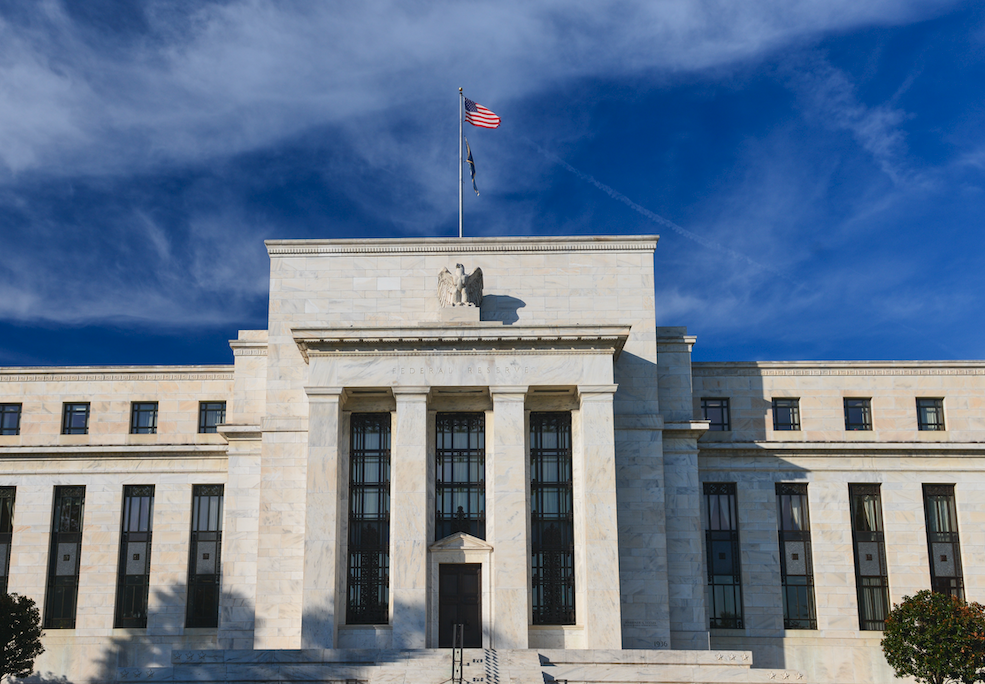
The Federal Reserve held rates steady as expected last week, but the real story was the shift in tone inside the Committee. Three dissents in favor of moving to a neutral bias are highly unusual, and I do not recall seeing dissents on a bias in this way before.
The world’s biggest technology companies posted strong earnings last week, showing that the artificial intelligence boom is alive and well. But in the stock market, investors are getting more granular as they try to divvy up the winners and losers in the AI trade.
Robots are coming to the economy. It is inevitable, really, and there is nothing that will stop it. At some point in the not-so-distant future, robots will infiltrate every aspect of our lives, from office work and manufacturing to service work and trade skills, and even your home. Here are some numbers for you.
We’re going to explore what happened at the Fed, and what changes we can expect. Let’s just say it’s not what some are predicting, at least in my humble opinion. Inflation is sadly a growing problem. And that complicates Kevin Warsh’s coming tenure as Fed chair.
Automotive enthusiasts have coined the phrase malaise era to describe U.S. vehicles made from roughly 1973 to the early 1980s. New emissions and safety standards, plus high gasoline prices following the 1973 oil crisis, permanently reshaped the market.
The part of the bond ETF complex that’s growing fastest isn’t that part. It’s the active and outcome-oriented funds — multisector strategies, flexible income vehicles, securitized credit funds, options-overlay products — that charge 0.30 to 1 percentage point and promise more yield, less duration, or both. And the marketing pitch behind them quietly elides something important.
Like Treasuries and Treasury Inflation-Protection Securities (TIPS), municipal bonds betrayed their normally docile reputations in March as the conflict in Iran stirred increased volatility for normally subdued corners of the bond market.
The U.S. economy ended April with mixed signals: steady interest rates and high Fed dissent met persistent, energy-driven inflation. Despite these hurdles, accelerated Q1 growth and rising consumer confidence provided a buffer against ongoing global instability.
April showed us just how sensitive markets can be to a small number of powerful forces: energy prices, inflation and geopolitical risk. The conflict in the Middle East dominated headlines, with a ceasefire helping to steady markets even as energy prices remained elevated.
Although sentiment remains sensitive to headlines around the Strait of Hormuz and energy markets, Franklin Templeton’s Emerging Markets Debt team sees an asset class that has shown it can absorb shocks, even as renewed geopolitical flare-ups or a broader risk-off episode could still test markets.
Core aggregate benchmarks remain the bedrock of many fixed income portfolios but advisors are increasingly looking to income alternatives.
Global risks have tilted against both growth and price stability. The ceasefire in the Middle East has brought a measure of calm to financial markets, but it has not resolved the underlying economic shock. With the Strait of Hormuz effectively shut, supply constraints continue to ripple through energy markets and are increasingly spilling over into downstream sectors.
The stock market would love to see nothing more than the labor market holding up. Time and again, we find monetary policy having a beautiful, lagged effect in the jobless claims series. We are of the view that the cumulative 175 basis points of Fed rate cuts that hit the market in 2024 and 2025 is exactly what the labor market needs in 2026-2027. We will soon find out if manufacturing employment continued to mend in April.
The sharp rebound from the March lows has pushed most major equity indexes back to record highs. This upside momentum has been fueled in part by signs of de-escalation with Iran and growing expectations that the Strait of Hormuz could reopen soon.
Where should advisors and investors be looking to find the best opportunities in fixed income? Given the current macroeconomic picture, now is certainly a good time to consider shifting one’s fixed-income portfolio.
Markets and observers weren’t surprised when the Federal Reserve held its policy rate steady at the April meeting. More notable, in our view, were the three dissents by voting participants who did not support keeping the implicit easing bias in the policy statement’s forward guidance language.
Geopolitics – beyond the Fed’s control – have added to economic uncertainty and cloud the outlook as Fed Chair nominee Kevin Warsh (who this morning won the backing of the Senate Banking Committee and will now head to the Senate for final confirmation) looks almost certain to take the reins in just over two weeks.
As widely expected amid rising oil, rates will remain 3.5% to 3.75%. However, four policymakers dissented. And Fed Chair Powell will stay as governor after his chairmanship ends.
In a recent (unscientific) Franklin Templeton social media poll, we asked investors what they felt was the biggest risk to the global economy over the next 12 months. Nearly half (45%) of respondents highlighted high oil prices as their greatest fear factor.
As multi-asset income investors, we seek to help a wide range of clients meet their income needs. The benefits of an income-centric approach are especially relevant for investors as they enter retirement – and that’s especially true today. We bring that to life with two case studies.
Inflation-adjusted gross domestic product increased an annualized 2% in the first quarter after the longest-ever federal government shutdown limited growth in the closing months of 2025, according to an initial estimate issued Thursday by the Bureau of Economic Analysis.
Treasury Inflation-Protected Securities, or TIPS, can help buffer a portfolio against inflation. However, it's important to understand their unique characteristics and complex nature.
Reaching age milestones triggers critical financial and tax-planning actions. This guide explores how specific ages impact decisions regarding Medicare, Social Security, charitable giving and retirement withdrawals, helping you navigate these milestones to optimize your long-term wealth strategy.
Now and then, advisors need to get a sense of how Americans of all ages approach retirement planning. Back in March, Fidelity Investments released its 2026 State of Retirement Planning Study. The report took a deep dive into how different age groups of Americans are viewing retirement preparations.
For the third consecutive policy gathering, the Federal Open Market Committee (FOMC) decided to remain ‘on hold,’ keeping the fed funds trading range at 3.50%–3.75%. This result was largely expected by the markets. Unfortunately for the Fed, the policymakers are in a challenging position of juggling incoming economic and inflation data as well as the uncertainties emanating from the Middle East war.
The U.S. stock market hit a record high on January 27, 2026, as investors prepared for additional Fed rate cuts, fiscal stimulus, and fading inflation.
For much of the past few years, US Treasuries have failed to serve their traditional role as a sure-fire refuge from global market meltdowns.
Hyperliquid, the decentralized crypto exchange that has emerged as one of the most active trading venues in digital assets, is proposing to add prediction markets to its platform — a direct challenge to Kalshi and Polymarket as the fast-growing sector draws new competitors.
A quarterly report providing an in-depth analysis of the global economic landscape, key drivers and insights into fixed-income markets for investors.
Here’s where I want to start, because this is the point that almost every government debt analysis, including the article we’re responding to, completely ignores. Government debt doesn’t disappear into a void. By definition, if the Government borrows capital from someone, that capital must flow somewhere.
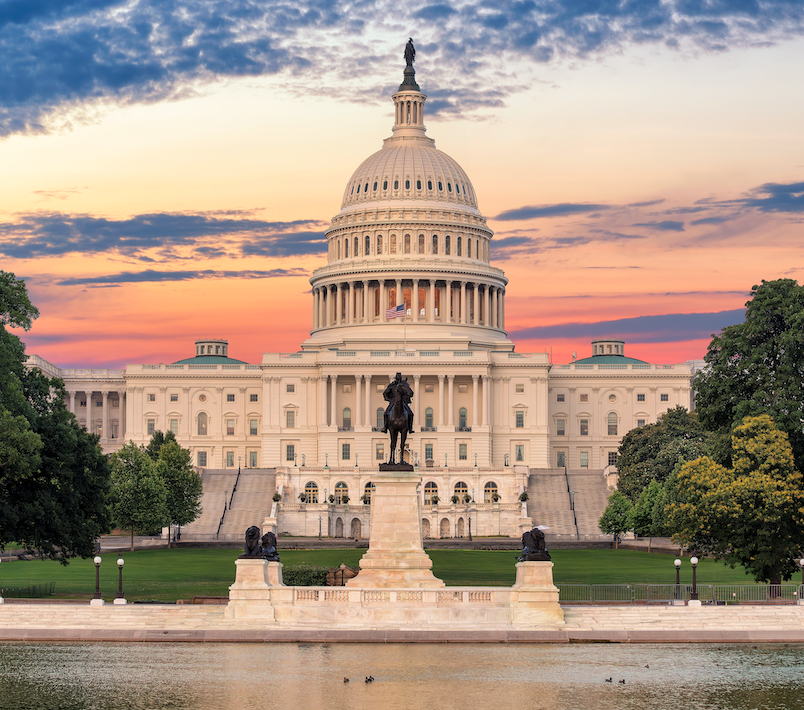
The Department of Justice drops probe into Fed Chair Jerome Powell, Kevin Warsh's confirmation moves forward, and Department of Homeland Security funding is back in the spotlight.
On Friday, the Department of Justice announced it was dropping its investigation of the current Federal Reserve Chair Jerome Powell. Senator Thom Tillis was effectively blocking the nomination process from moving forward while the Department of Justice investigation of Powell was ongoing.
Global Head of Securitised Products John Kerschner and Portfolio Manager Ian Bettney from Janus Henderson’s Global Securitised Team examine how CLOs and other securitised credit have weathered recent volatility, and why selectivity and active management remain central to capturing opportunities across the market.
With the proverbial ceasefire negotiation can kicked down the road for the second time in a week, the U.S. and Iran remain in a stalemate over the Strait of Hormuz.
The defining feature of a Ponzi scheme is that it persuades investors to pay for future cash flows that, at least in part, don’t actually exist, while creating the impression that those cash flows imply an attractive return on the price investors pay. If we look carefully at the record valuation extremes in the equity market, and the wildly elevated profit margins that investors appear to view as permanent, we can already see the potential for difficult, even tragic outcomes for investors.
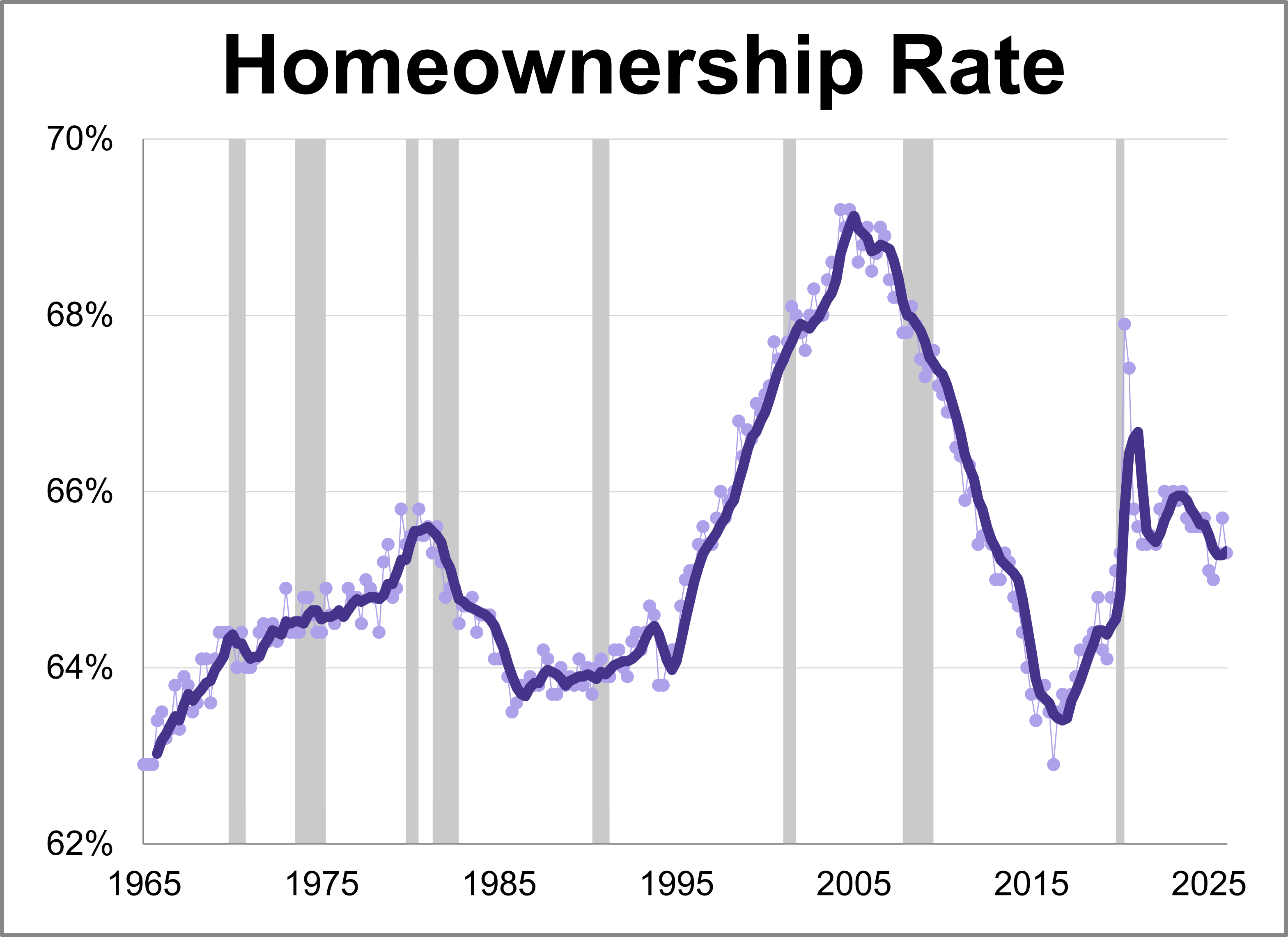
The Census Bureau released its latest quarterly report for Q1 2026 showing the latest homeownership rate is at 65.3%.
The Iran conflict has turned energy markets into a moving target, with oil prices adjusting as expectations around Strait of Hormuz supply risk shift.
In elevated financial markets, risk is rarely eliminated. It is usually only relocated. During the run-up to the 2008 financial crisis, mortgage risk did not disappear. It was transformed, repackaged, and spread across the system in ways that made it appear safer than it was.
The “American Industrial Renaissance” is an investment theme investors and allocators alike have probably been pitched several times, or at the very least heard about. Supply chains for manufactured goods have evolved to become more complex, while U.S. manufacturing employment as a share of total employment has steadily declined, leaving policy makers to grapple with the ramifications of a shrinking manufacturing base.
For all the chatter about Artificial Intelligence lifting economic growth, GDP isn’t showing it yet. We are projecting that real GDP grew at a 2.0% annual rate in the first quarter, matching the average annualized pace of growth since the peak back in late 2007, right before the Financial Panic and so-called Great Recession. In other words, mediocre growth.
Economic data released last week continued to highlight the same tension investors have been grappling with for months: moderating growth, inflation that remains “stuck” near 3 percent, and interest rates that remain the key swing factor for markets.
Markets continue to ebb and flow with every headline out of Iran and the Strait of Hormuz, but the most important message from the markets is resilience. Earnings season is off to a very strong start, with roughly a 75% beat rate, and the AI investment cycle continues to provide a powerful tailwind for equities.
Many people seem surprised by the US stock market’s resilience during the Iran war. I’m not one of them, and I don’t see the war becoming a significant threat to the market, even if it drags on.
It’s the big story so far in 2026. Alongside AI, geopolitical market volatility is creating dislocations for investors to target. While some are more immediate and some are longer term, the ETF wrapper offers strategies that can attack all kinds of sectors. In corporate bonds, for example, growing volatility could create opportunities.
Despite the turbulence, the global LCC market remains an enormous force. Four of the world’s 10 largest airlines—Ryanair, Southwest, IndiGo and easyJet—operate on a low-cost model. The broader budget travel market is projected to exceed $315 billion by 2028, according to Statista.
The Middle East war has entered a fragile ceasefire, offering tentative relief to energy and financial markets. Oil prices have eased and volatility has subsided, feeding hopes that the worst disruptions may be passing.
It’s tax season, and we’ve been reading a lot about taxes — and strategies for mitigating them. In this note, we’ll take a close look at one such strategy, known as leveraged long/short direct index tax-loss harvesting (LSDI), and explain how investors being pitched the strategy can assess whether it’s right for them.
If the first quarter of 2026 taught us anything, it's that markets are dynamic and that the factors shaping them extend well beyond corporate fundamentals. The road ahead presents a wider range of outcomes than investors have faced in some time. The outlook remains fluid and highly dependent on how several key factors evolve.
The world’s most important central banks will potentially hand investors fresh reasons to sell government bonds this week as policymakers find themselves forced to confront the risk of a war-driven inflation shock.