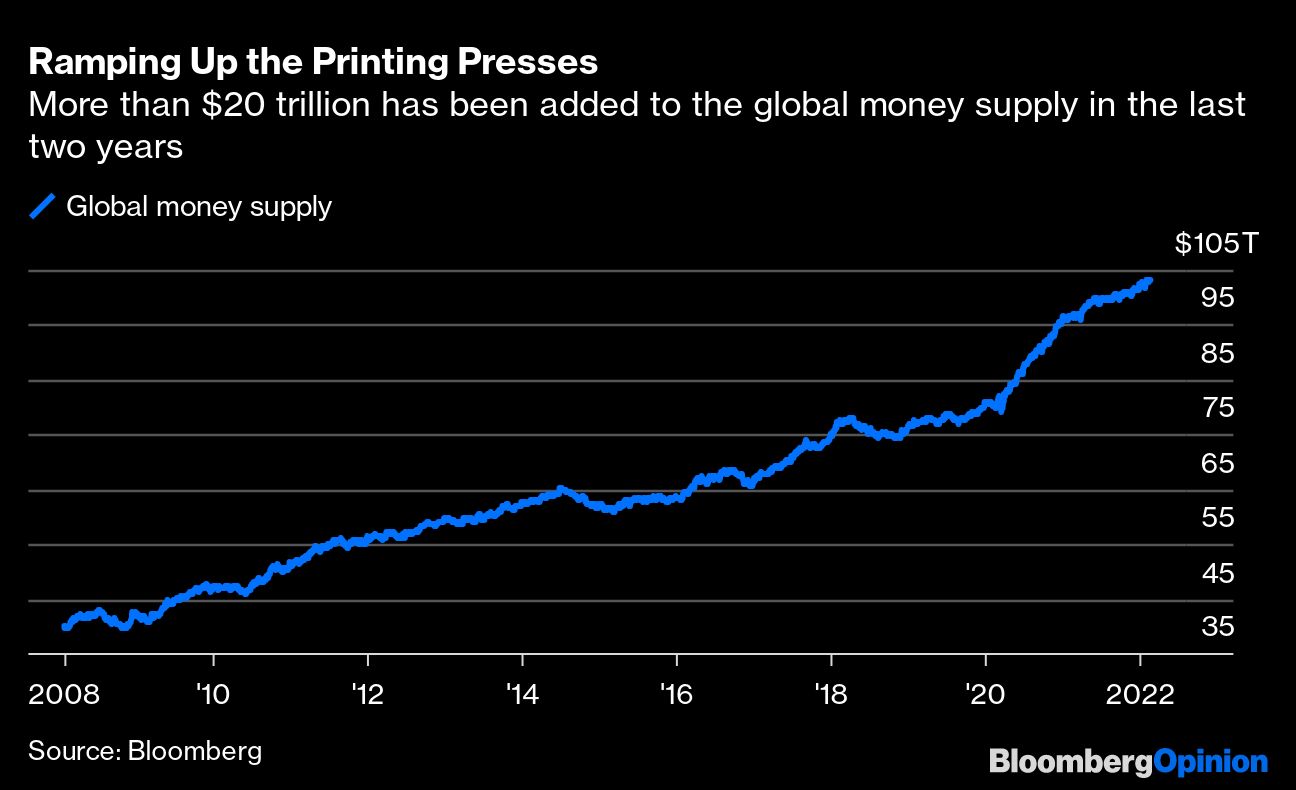
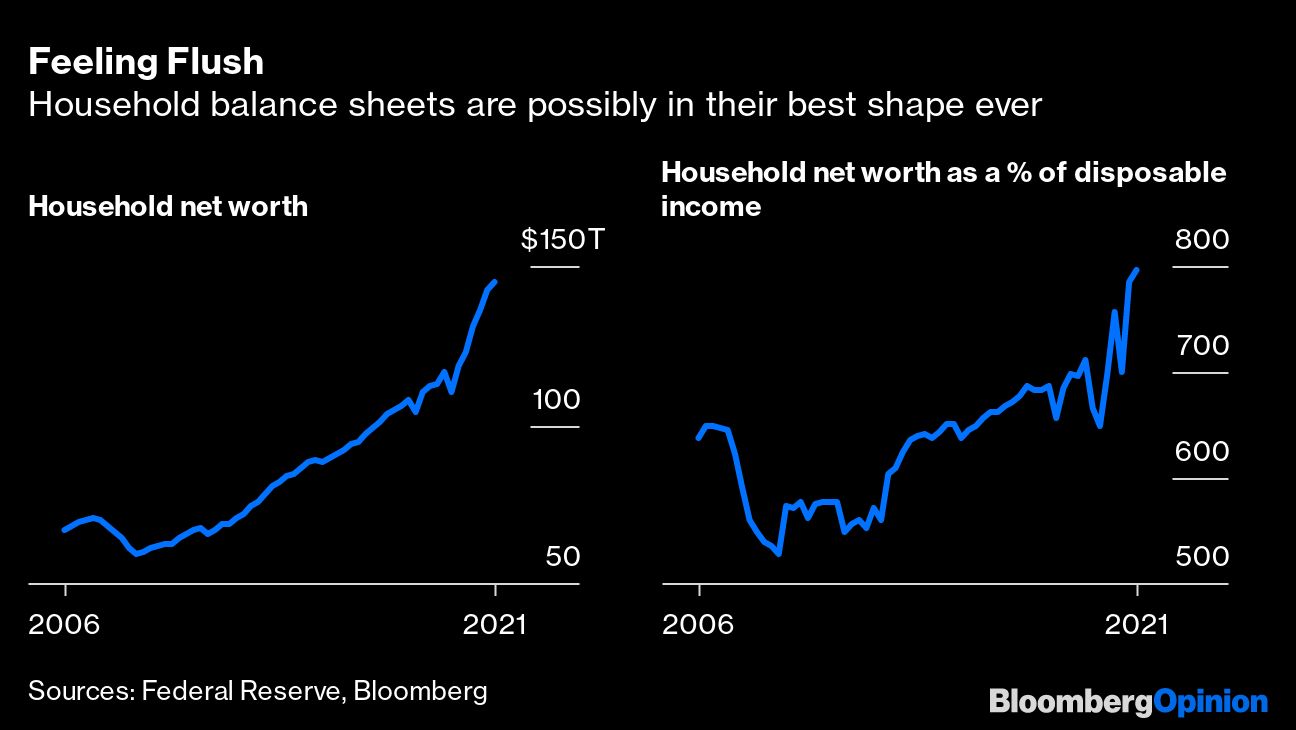
The Federal Reserve, European Central Bank and others have created so much money to go along with unprecedented support from governments to combat the Covid-19 pandemic that the world is awash in liquidity.
Chief Economist Scott Brown discusses the latest market data.
Inflation in the housing market will continue to build.
U.S. home mortgage lenders have spent much of the last two years hiring. Now they might have to spend the coming months laying workers off.
As U.S. businesses and consumers weather the highest inflation in four decades, some firms are already betting those cost increases will be around for longer than many economists are predicting.
When it comes to investment returns, most people, including those who work in financial markets, only consider nominal numbers. For example, they look at the price of the S&P 500 Index now, where it was a year ago and work out what the total return was including dividends in that period.
Jasmin and Ryan recently exchanged ideas about trading apps and new software that can help educate investors about key investment principles.
As a recovering workaholic who loves what I do, it is essential to understand what drove that condition and the costs it incurred for me and my family.
Advisors can choose from five approaches to meet their clients’ income needs in retirement, each with its own merits and drawbacks. Those strategies attempt to solve for a central goal – ensuring that clients don’t run out of money – a risk that is illustrated by my wife’s catering business.
Neglecting non-financial assets, such as Social Security and pensions, will misstate the risk in a retired (or near retired) client’s asset allocation strategy.
Advisors make seven predictably irrational mistakes when it comes to bonds, depleting their clients’ wealth and standard of living.
Since the initial publication of research documenting active share, its advocates have clung to the belief that the metric could identify funds that would outperform. But the academic evidence has all but disproven that thesis.
Unlike fiat currency, Bitcoin is decentralized and cannot be controlled by any central bank or politician, making it a powerful peer-to-peer payment network. Why else are some lawmakers and bureaucrats so eager to regulate or outright ban it?
Review the latest Weekly Headings by CIO Larry Adam.
Advisors who reject bucketing strategies because they won’t invest as many as five years of assets in low-yielding securities are exposing clients to risks that threaten their standard of living in retirement.
Economic stagnation arrives as expected as the “Sugar Rush" of liquidity continues to fade from the system.
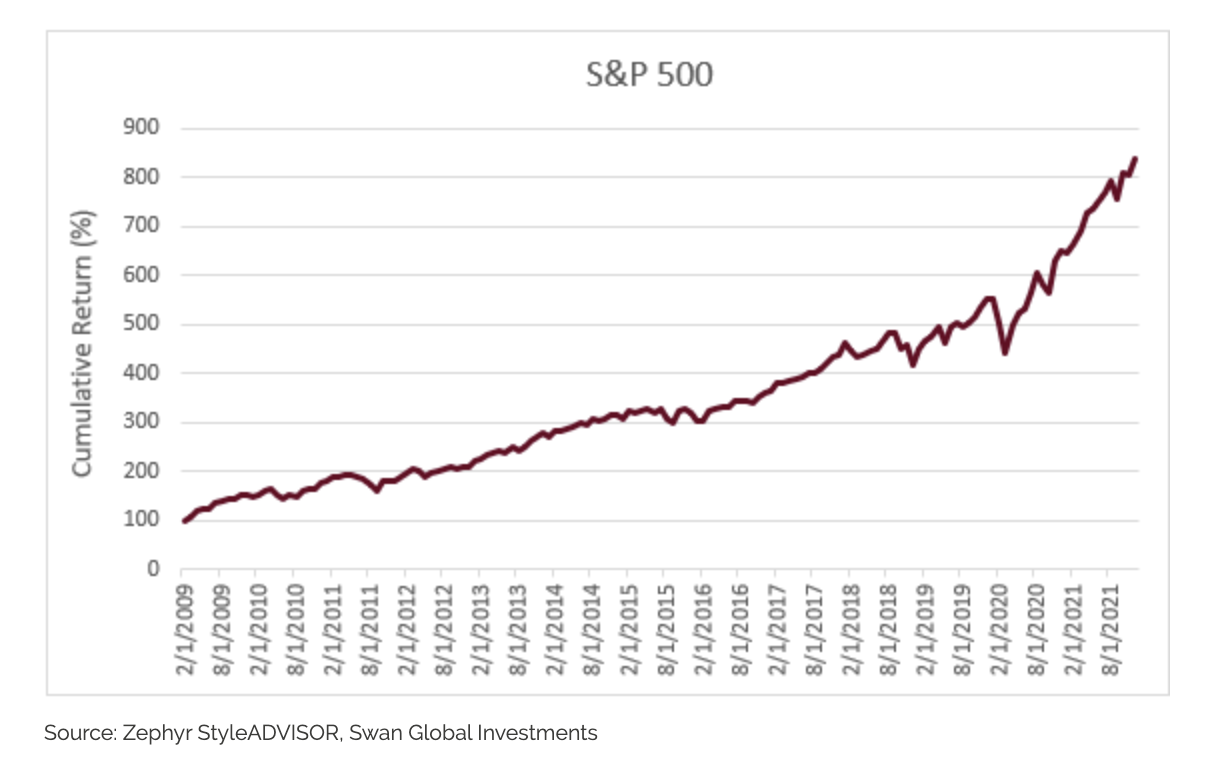
After a third quarter where large capitalization US equities were barely up and global equities were down, both came roaring back in the fourth quarter of 2021.
Given the dominance of inflation in today's capital markets discussion, it should be no surprise to anyone watching this video that one of the most common questions I get is, “How do I inflation-protect my portfolio?” And that's what we're going to focus on today: what to think about when you're thinking about inflation protection.
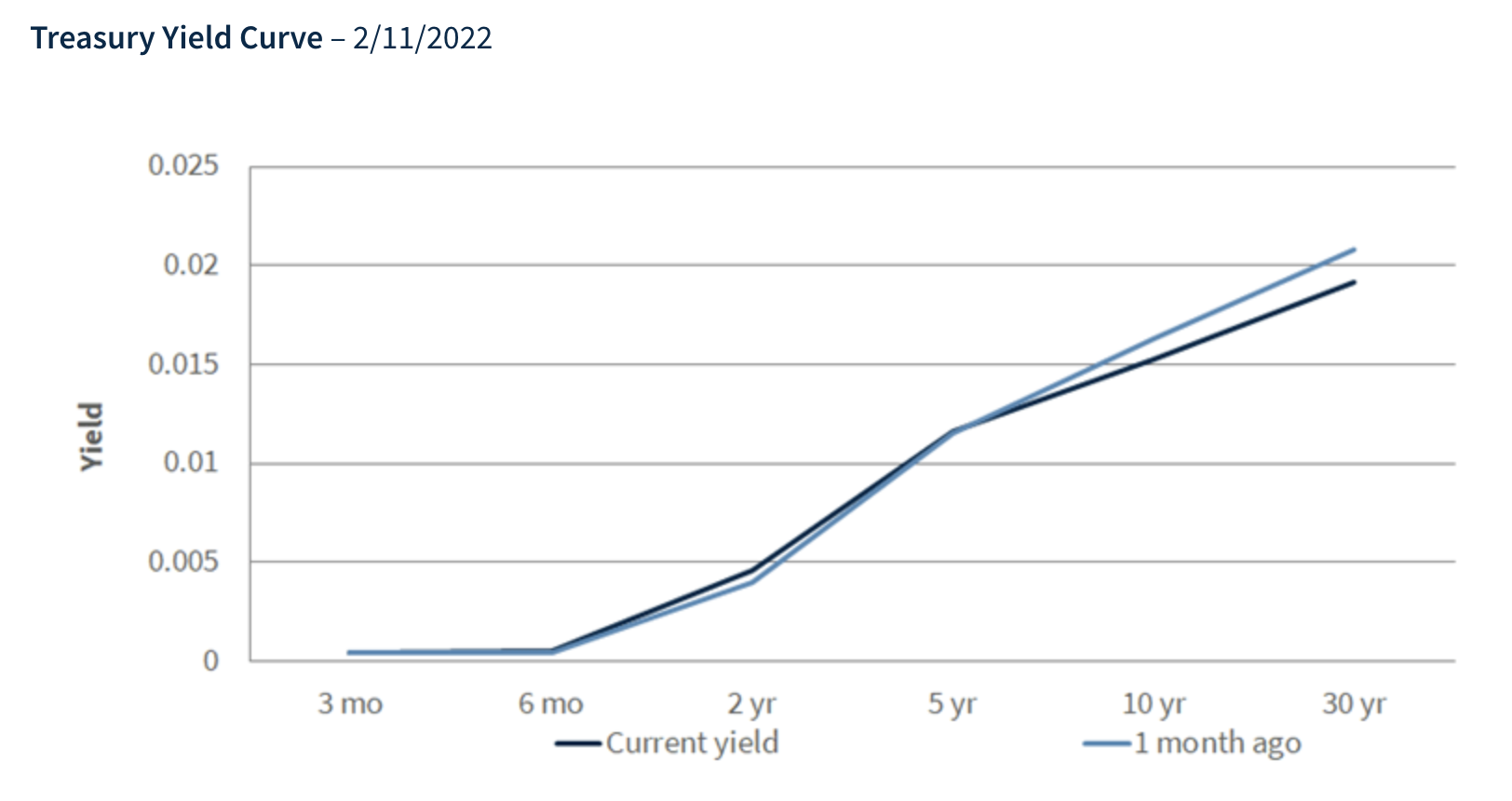
Most analysts expected some action on interest rates from the U.S. Federal Reserve in 2022 — but maybe not the five rate hikes they’re now pricing in. Inflation was clearly driving upwards, but we’re seeing much higher, more consistent price increases.
Investors gauging the likely size of the Federal Reserve’s interest-rate hike in March and plans for shrinking a balance sheet now at a record $8.9 trillion will get fresh clues on Wednesday.
When the going gets tough in the U.S., the tough go shopping. The Commerce Department said Wednesday that retail sales surged 3.8% in January, the most in 10 months and well above the 2% median estimate of economists surveyed by Bloomberg.
As tensions between Russia and Ukraine mount, so too does market volatility.
With many mutual funds converting into exchange-traded funds (ETFs), the combination of ETF trading and net asset value is garnering more attention.
This is the 10th in a series of 11 videos where I will cover each of the 11 sectors looking for value.
Stephen Dover shares insights on investing in fixed income in a rising-rate environment with Walter Kilcullen, Head of US High Yield for Western Asset Management, and Reema Agarwal, Head of Floating Rate Debt for Franklin Templeton Fixed Income.
We all love alliteration (hence, Rich’s favorite term to describe the Fed is “lily-livered”) but when it comes to the “Powell Put” or the “Powell Pivot,” we think investors need to understand the facts and intentions of the Federal Reserve before accepting a saying just because it rolls smoothly off the tongue.
No, we did not run out of titles.
It has been a tumultuous start to the year for crypto markets to say the least.
A crash to Earth for growth stocks and cryptocurrencies is one thing, but a sharp decline in mainstream bond mutual funds could spell enormous trouble. Signs are emerging of the beginnings of a potential downward spiral in these funds, which could ultimately lead to redemption halts and subsequent panic by retail investors.
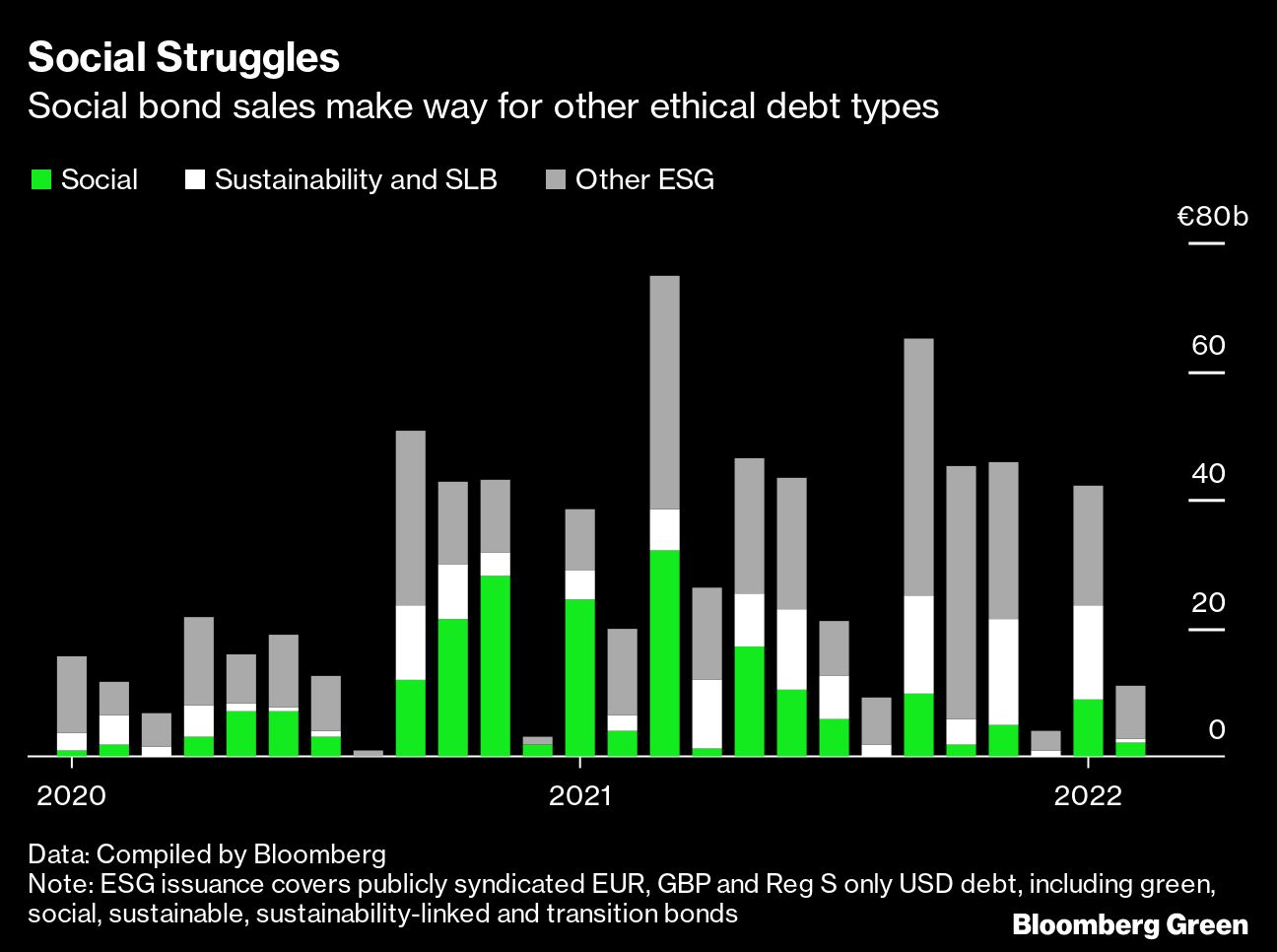
Governments that had propped up Covid-ravaged economies by issuing social bonds are now turning their attention to longer-term climate goals, while companies are keen for increased flexibility when spending proceeds from sales of environmental, social and governance (ESG) debt. That’s crimping the flow of social notes that typically fund specific projects such as job creation or affordable housing.
Some deficit hawks acknowledged that the U.S. was in a period of extraordinarily low interest rates. But they warned that this phenomenon could reverse itself at any time. What they misunderstood is the effect that the response to secular stagnation would have on the overall economy in the short term.
Some observers assume I tell everyone that they should go down the RIA path. That is not the case.
With inflation running at multi-decade highs, major central banks get ready to tighten monetary policy.
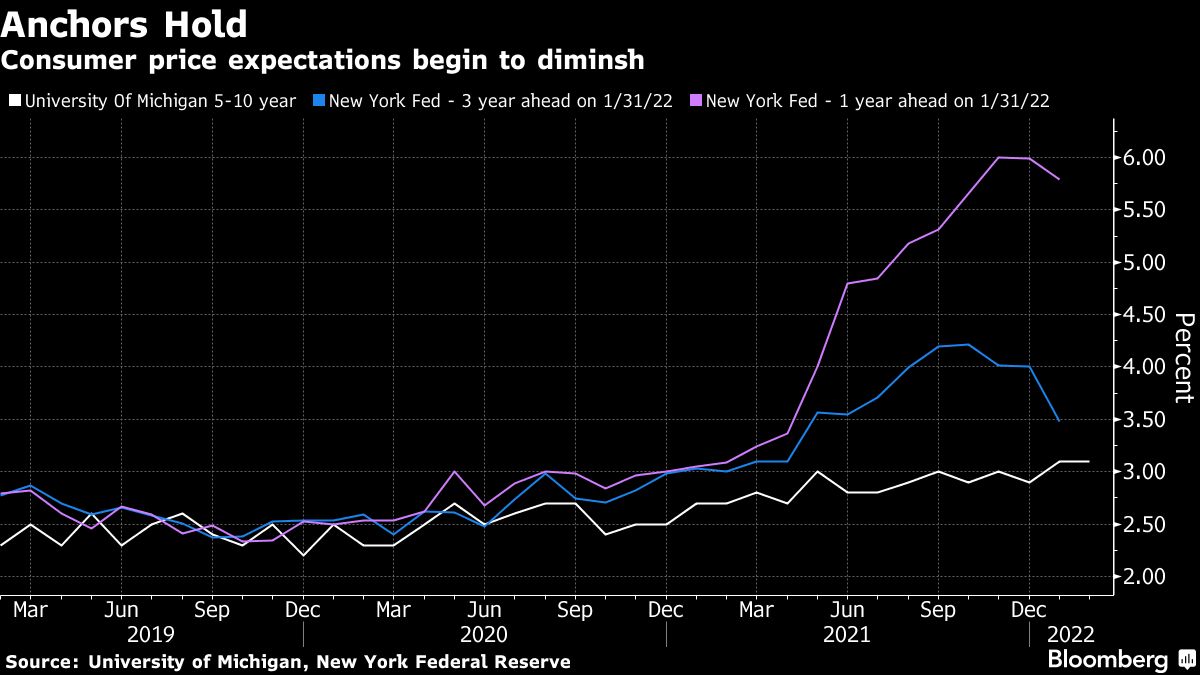
Last week, the Labor Department published data that showed consumer price rose 7.5% in January from a year earlier, the biggest increase in decades. Persisting high inflation has led has led the central bank to pivot toward a tighter monetary stance to help cool off prices.
Rental prices for single-family homes grew an average of 7.8% in 2021, an all-time high, according to the most recent data available from CoreLogic Inc. In December, U.S. home rents jumped 12% year over year for the month, with Miami leading the way with a 35.7% increase.
New advisors face an uphill battle. Building your clientele from scratch and producing results for your firm – all while trying to learn the business – is tough. In fact, 80 to 90% fail in the first three years.
As uncertainty pervades the markets, we are positioning defensively, increasing liquidity and remaining nimble in an effort to generate income amid bouts of heightened volatility.
William Vaughan, Research Analyst at Brandywine Global outlines why – in the wake of COP26 – it may be prudent for investors to embrace ESG laggards, rather than restrict investments, and prioritize active engagement with them on their response to climate change, GHG emissions and other difficult issues.
For an ambitious, career-ladder climber, what sort of person makes the best mate? The human heart is not known for being coldly calculating, but pretend, for a moment, that it could be. What personality traits should be preferred?
Those nearing or in retirement are worried about what higher-than-expected inflation will mean. Here are a few things to consider to temper their anxiety.
Are many of the recent problems in the world – from income and wealth inequality to China-U.S. hostility – the result of the structural overvaluation of the dollar and its reserve-currency status?
If everything goes according to plan, travel and tourism could contribute $2 trillion to the U.S. economy in 2022, compared to $1.87 trillion in the year before the start of the pandemic.
Near-zero, zero, and below-zero interest rates changed the incentive calculations and decisions from what they were a mere 30 years ago. You can’t look at policies or almost anything else prior to the early 2000s as a standard for today. The incentives of low interest rates have literally screwed (that’s a technical economic term) things up.
The term “value” is being grossly misapplied.
In recent weeks, it has felt like the U.S. stock market slips a gear every so often, dropping sharply as investors search for traction in uncertain terrain.
Why is it so hard to accept that speculative bubbles can burst?
The Federal Reserve signaling a shift in monetary policy is causing a shift in the markets that have run hot on many years of stimulus and low rates.
As we examine the municipal bond “board” at the start this new year, it looks to us to be a more challenging one than a year ago. More like chess than checkers. Winning will likely require a more complex, multi-faceted strategy than in 2021.