For new investors, the world of finance can appear daunting. But among the sea of investment options, Treasury bonds (often just called “Treasuries”) are a pillar of stability and reliability.
A return to the Great Moderation Era looks unlikely, which might lead to an increasingly volatile—and somewhat unfamiliar—inflationary, economic, and geopolitical landscape.
In arguably quiet fashion, active managers are performing admirably in 2023. An impressive percentage of active equity and fixed income funds beat their benchmarks in the first half of the year.
The term “Bond Vigilantes” is a nostalgic twist on an old-west theme. In the nineteenth century, the American West formed self-appointed groups, or committees, to seize the duties of law enforcement and judicial authority in situations when citizens found law enforcement lacking or inadequate.
The U.S. Census Bureau and the Department of Housing and Urban Development published their August findings for new residential housing starts and building permits. Over the long haul, the two series offer a compelling study of trends in residential real estate. Here is an overlay of the two series since the 1959 inception of the starts and permits data, which was tracked beginning a year later.
Rather than reacting to financial challenges and opportunities as they arise, local entrepreneurs are embracing new perspectives on change management by preparing for change beforehand.
Have you ever wondered why your closing ratio on seminar attendees rarely exceeds 40%?
What if we stop thinking of prospects who don’t commit as “tire-kickers,” and instead view them as potential clients we lost?
There’s an invisible force driving the most popular options trade of the year — one that gives Wall Street pros and day traders alike the power to turn a $1 investment into a $1,000 stock bet.
Now seems like a good time to talk about wrappers and which ones are best for different situations. How do you decide whether to use an ETF, a mutual fund, or something else?
When markets are in a rising tide, all boats (aka stocks) can benefit. When the waters are choppier, active equity selection aims to identify the sounder vessels. Tony DeSpirito reviews five reasons why he believes the new environment is setting up to favor an active approach.
Confidence is returning to the bond markets and one sign is corporations’ willingness to start taking on debt again with new issuance.
Markets are convinced that the Federal Reserve (Fed) is going to pause its interest rate campaign after it finalizes its Federal Open Market Committee (FOMC) meeting on Wednesday, September 20.
Despite substantial growth and huge advancements in public policy support, clean energy has had an abysmal stretch in the stock market the last two and a half years.
VettaFi’s Dave Nadig covers the launch of the first ETF holding 0DTE options, along with IPOs in ETFs, flows, and stories to watch moving forward. Astoria’s John Davi spotlights their recently launched U.S. Quality Kings ETF (ROE) and discusses current model portfolio positioning. Fort Washington Investment Advisors’ Laura Mayfield explains the management process behind two Touchstone ETFs, including their Securitized Income ETF (TSEC).
Here’s how I apply behavioral finance to help clients to think differently about their investing.
Credit Research Analysts Greg Schantz and Julian Wellesley dive into why they favor European banks vs US banks and why they see a potential opportunity in Yankee bank bonds.
Playing Shakespeare’s King Lear is the crowning ambition for some actors, but in 2023 we’re seeing superstar hedge fund managers Daniel Och and Ray Dalio trying out for the role in real life.
Amid signs the bond market has bought into the Federal Reserve keeping interest rates higher for longer, a cohort of investors is placing bets on the economy hitting a wall — and a sharp policy reversal in short order.
Stock-market strategists who were largely wrong about this year’s rally are finally starting to come to face their mistake, raising year-end targets for the S&P 500 Index.
Federal Reserve policymakers’ updated forecasts for their benchmark interest rate, due Wednesday, are looming as a key potential decider for a US Treasuries market at risk of a third straight year of losses.
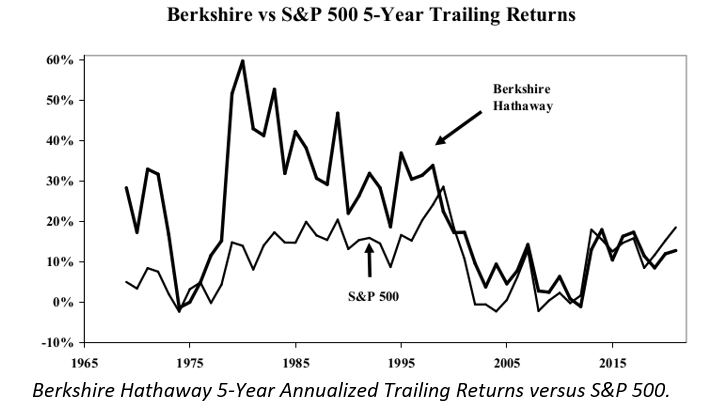
If someone’s good enough to regularly trounce the market, they don’t want your money.
In a significant turnaround for its aviation sector, Mexico’s air safety rating was upgraded from Category 2 back to Category 1 by the Federal Aviation Administration (FAA). The upgrade could be a game-changer, offering opportunities for both Mexican airlines and their U.S. joint venture partners.
Competing narratives have emerged to describe the state of the U.S. economy.
As the artificial intelligence (AI) investment thesis continues evolving, one benefit accrued by investors will be that it becomes easier to identify winners and losers.
With actively managed ETFs, advisors and clients are willing to pay a premium relative to investing in an index-based approach. However, they want to be rewarded. In 2023, VettaFi is seeing this occur and is eager to share more about some of these active equity ETF strategies.
Today, I am going to do something that I've never done. I am going to start a two-part series describing what is in my personal portfolio and why. Let me start by offering two caveats: This letter is in the “do as I say and not as I do” category.
Bitcoin, the largest cryptocurrency by market value, is mired in a slump. The decision in the Greyscale case stoked optimism that the SEC will eventually, finally approve spot bitcoin ETFs. Still, the bitcoin slump has erased all of the upside generated by the court ruling.
AI, with its data analysis and predictive power, can revolutionize investing. However, humans remain a crucial part of the process. Franklin Templeton Investment Solutions provides use cases into how different investors can harness AI to achieve their desired outcomes and workflows.
Bearish China traders have had the upper hand for most of the year. Still, easing deflation could give bulls a glimmer of hope.
Hear from Jeff Schulze, Head of Economic and Market Strategy at ClearBridge Investments, about the state of the US economy. Get his perspective on the Federal Reserve’s next potential moves.
A host of Wall Street funds have minted profits riding the recent crypto fever after Grayscale Investments LLC snagged a big win over America’s top financial watchdog in its bid to create a US Bitcoin ETF.
Some investment trends seem obvious — people are watching more streaming movies, consumers like shopping online, and more people are buying electric cars. So why don’t these ETFs always work?
Although US bond yields are well above their lows of the past decade, it’s always a good idea to think globally.
Federal Reserve Chairman Jerome Powell and his colleagues are likely to shy away from signaling that they’re done raising interest rates when they meet next week.
Municipals posted negative total returns amid rising interest rates. Issuance exceeded tempered expectations, while demand waned as performance struggled.
Last week the World Gold Council reported that central banks continued to add to their global gold reserves during the month of July. The World Gold Council also highlighted that China, Poland and Turkey were among the countries that were the largest buyers of gold during the month.
Watching the new Tom Wolfe documentary, Radical Wolfe, I was reminded of the key role the author and journalist played in the development of quantitative finance.
All week, stock traders have shrugged off everything from hot inflation data in the US to another recession-threatening hike in interest rates over in Europe.
For a lesson in the pitfalls of market timing, consider the Dow Jones Industrial Average, whose refusal of admission to Alphabet Inc. and Amazon.com Inc. has gone from a blessing to a curse in the space of a year.
Touchstone Investments now has six actively managed ETFs. It seeks to bring its “distinctively active” mutual fund approach to meet advisors where they are focused.
How long will the Federal Reserve continue quantitative tightening (QT)? How large will its balance sheet be when QT ends? These important questions impact financial market liquidity, the anchor of asset values. We assess the likely path of QT in the years ahead.
VettaFi’s Equity Symposium is just over a week away and will provide advisors with free access to some of the most important thought leaders in the investment space.
Video games may be fun to play, but are they also recession proof? Will avid gamers continue to play no matter how bad the economy gets? We explore that question with equity analyst Nathan Meyer, who covers the fast-growing video games industry for Capital Group.
The labor movement is having a moment. In a tight employment market, there is money to be had — or profits to be more generously shared — and workers have gotten some big wins recently. Even reality TV stars and NFL running backs are getting into it.
Expectations of central-bank interventions are helping to steady emerging-market currencies, even as traders adjust to a higher-for-longer regime for developed market interest rates.
This year’s hottest options trade has found its way into the $7.4 trillion ETF arena for the first time, in the latest push by the financial industry to tap booming demand for stock investments with an income stream.
Recently, some clarity emerged on Nvidia (NASDAQ: NVDA) and Taiwan Semiconductor (NYSE: TSM) — two of the most important names in the semiconductor industry.
A wide range of possible outcomes, a multitude of negative earners, and significantly less Wall Street coverage are just a few of the reasons investors in the small-cap universe should consider active managers who could steer them toward better results.
ETFs are the instrument of choice for millions of investors in the U.S. Through a single trade and for a relatively low price, an investor gains broad exposure to a market, sector or niche.