The US bond-market selloff resumed Monday, driving 10-year yields to a 16-year high, as the persistently resilient economy has investors positioning for interest rates to remain elevated even after the Federal Reserve winds up its hikes.
The government has issued an eye-watering $1 trillion in Treasury bills since the debt ceiling was suspended in early June. So far, the market hasn’t batted an eye.
The role of the human psychological cycle in driving stock and bond prices is well understood and pre-dates behavioural economics. There are elements that suggest we may be going through another period of ‘irrational exuberance’ as several long-term investors seem stuck in the mindset that ‘There Is No Alternative’ (TINA) to US equities.
We have heard lots of commentary on the student loan repayment issues facing almost 44.5 million Americans. Some of these commentaries are correct but there are others that miss the mark.
The Northern Trust Economics team shares its outlook for U.S. growth, employment, interest rates and inflation.
Over the past 12-24 months of rate hikes, short-term and ultra-short-term bond ETFs have served income-seeking investors well. But as interest rates continue to rise, exposures farther out on the curve have begun to offer attractive yields, too.
Recent data and policy developments have fallen firmly in the soft-landing camp, and market performance has reflected this shift. Notwithstanding recent stronger-than-expected economic activity, we continue to believe a downturn is in the pipeline.
Convinced a recession in the US was near, some of the world’s most prominent money managers loaded up on government bonds this year in a bold bet that would atone for the punishing losses suffered in 2022.
ETFs are investments that can hold: bonds, stocks, gold bullion and cryptocurrencies. Canadian ETFs track a wide range of different asset classes via indexes. Most ETFs are tied to index products, including both equity or fixed income funds.
While economic growth drives corporate earnings, remember that the S&P 500 is not a replica of the U.S. economy.
Government bonds or stocks? If you were picking an asset class to outperform over the next 18-24 months, which would you choose?
Progress toward a sustainable world would be hamstrung without the backing of global banks and their sponsorship of green and sustainable bonds.
While some economists may argue that secular stagnation is to blame for China’s economic slowdown, concerns about sustained slower growth are overblown. If the country falls into a recession, it would constitute the next turn of the debt supercycle that began in the US in 2008 and moved to Europe in 2010.
We expect inflation and rates to remain higher than the last decade. We favor tech within growth and cyclicals within value.
The advisor of the future needs to embrace a new value proposition, according to John Kutz, Head of Workplace Retirement Distribution at Franklin Templeton. This means moving beyond the “three F’s” and taking a more holistic approach to changing client needs.
Monetary and fiscal policy are typically thought of as independent tools that central banks and governments use to manage the economy.
With so much uncertainty remaining around the Fed’s rate cycle and the potential for recession, many investors are beginning to look toward international equity markets for the means to build income. Yields continue to look attractive for international dividend ETFs, in particular.
It’s curious: Even as America’s economic trends are improving, Americans’ economic anxieties are worsening — including those of many who have no apparent reason to be worried. Not only are there are polls and statistics that illustrate the point, but there are also anecdotes, lots of anecdotes.
Christian Correa, Chief Investment Officer of Franklin Mutual Series, discusses his team’s top three themes for the back half of 2023: a less-gloomy US macroeconomic outlook, real asset investment and Japan’s rising sun.
Foreign stocks are again competitive with their domestic counterparts. Here are four ways to gain exposure.
U.S. corporate earnings have stagnated for a year, but Q2 beat a low bar. Expectations of improving margins look rosy. We stay selective in equities.
Here are the top five mistakes advisors make in client meetings.
It is a radical suggestion, no doubt, but some analysts predict that AI might enable the US economy to achieve an annual growth rate of 30%.
JPMorgan Chase & Co. and Western Asset Management are among those saying this month’s jump in bond yields represents a buying opportunity, given central banks are getting close to the end of their rate-hike cycles.
Commodities stand to benefit from underinvestment and the clean energy transition.
It’s been an interesting first half of the year. Markets performed very well in the face of continued Fed tightening, calls for an imminent recession, a regional banking crisis, debt ceiling debate, and drama around an 11th-hour deal to avoid a default on U.S. debt.
While money market assets have risen in recent years, returns have historically lagged behind a diversified portfolio.
Young workers are struggling to find jobs, despite labor shortages.
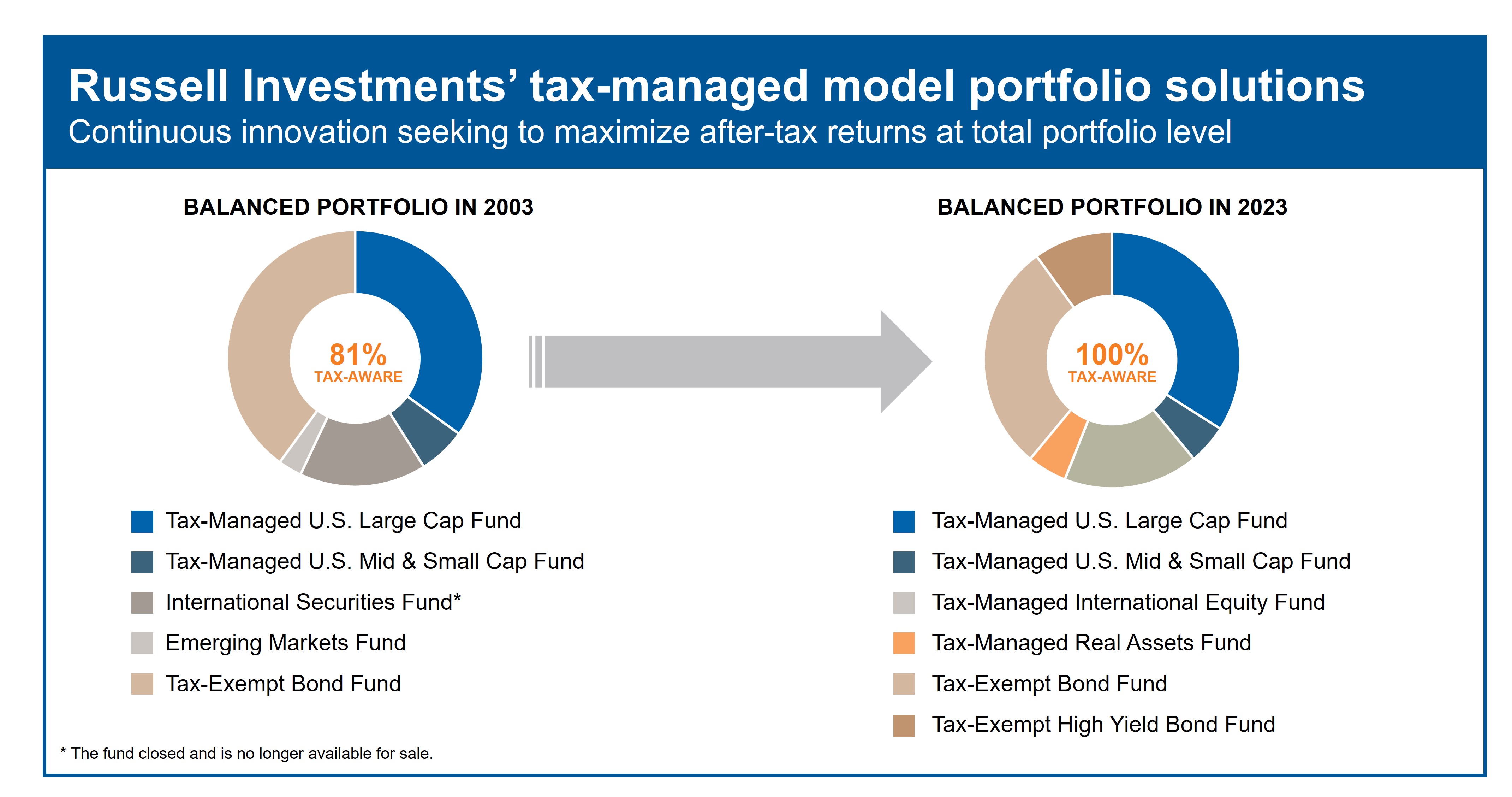
Advisors are using tax-managed products for tax-sensitive clients. In this interview, we learn how tax-managed products maximize the after-tax returns for investors to help them get to their goals with greater certainty.
The Agg is supposed to be to bonds what the S&P 500 Index is to equities. But it is an insufficient gauge for measuring the bond universe.
Investors have access to multiple personalized indexing products, a key benefit of which is to allow for tax-loss harvesting (TLH). I analyze when TLH works and how helpful it is to returns.
As businesses worldwide adopt technology, the innovation of AI may result in market leadership changes, global economic growth, and investor opportunities.
The yield on the 10-year note ended August 11, 2023, at 4.16%, the two-year note ended at 4.89%, and the 30-year at 4.24%.
Since World War II, the US Dollar (USD) has served as the world’s preeminent ‘reserve currency’ – the means of exchange for most of the rest of the world to do business.
We maintain a neutral-duration posture overall. We prefer an up-in-quality bias and have become increasingly selective in non-investment grades.
A cruder version of the above phrase, “Mess Around and Find Out”, has gained popularity in the American vocabulary. Politicians keep messing around with the creditworthiness of the nation’s sovereign debt. On August 1st, they found out.
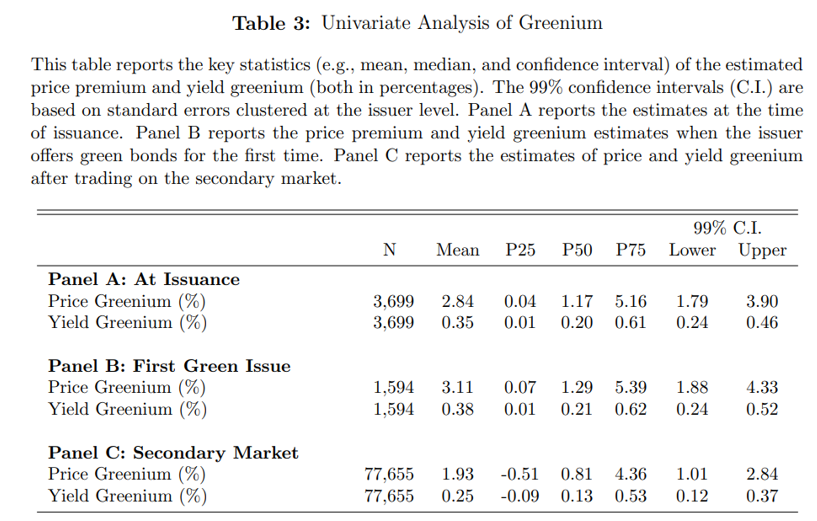
I’ve written previously about how positive (“green”) ESG metrics have increased the prices of stocks, reducing their expected returns. New research examines a similar effect in bonds, where a “greenium” (lower yield on green bonds versus non-green equivalents) reduces returns for investors.
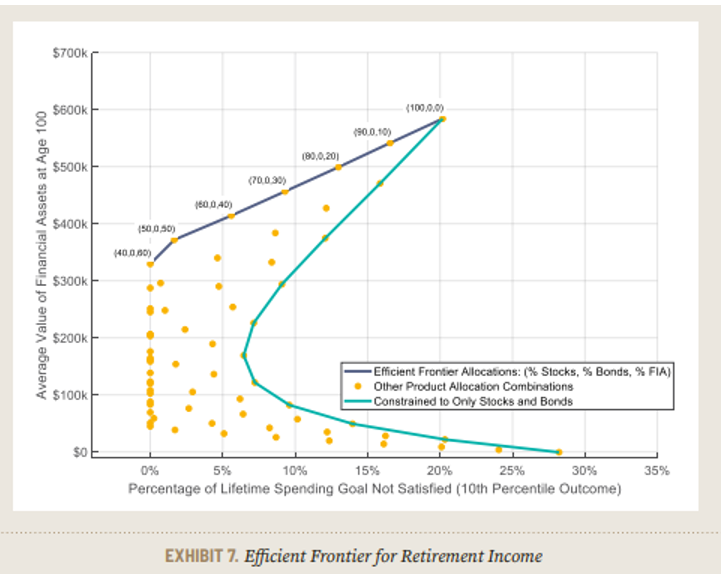
When adjusting for more realistic assumptions and considering the fact that the insurance company can change return caps and that inflation is both an unknown and deep risk, an FIA, along with most annuities, is not on the efficient frontier in either accumulation or decumulation phases.
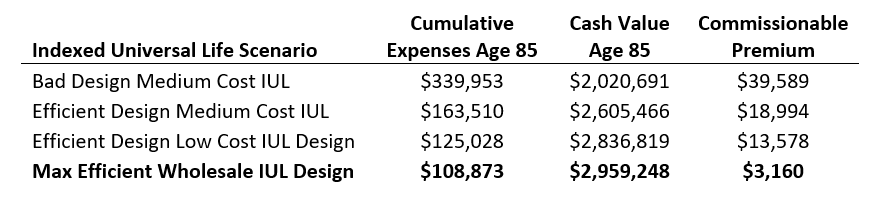
IUL is a popular investment, thanks to aggressive marketing. Before your clients succumb to high-pressure sales tactics, here’s a cautionary tale based on another lifetime purchase decision – buying an engagement ring.
The old playbook of selling emerging-market bonds when Treasury yields spike is being upended by the positive dynamics favoring developing-nation debt.
Across Wall Street, there’s growing relief that the Federal Reserve — at long last — may be done raising interest rates. But that doesn’t mean turbulence in the bond market will soon become a thing of the past.
Given the current economic backdrop, where can investment opportunities be found, particularly within the fixed income asset class? Head of Franklin Templeton Institute Stephen Dover shares his key takeaways from a panel discussion that he moderated with fixed income experts within the company.
Will the economy roll into a formal recession, or is a recovery underway? It's a close call.
Today we’ll continue reviewing Neil Howe’s magisterial new book, The Fourth Turning Is Here, focusing on the Millennial Generation’s important role in the coming crisis. Then we’ll think about what the crisis may look like. Finally—because I always try to look on the bright side—we’ll consider what Neil expects in the “First Turning” that will follow.
A team of scientists claimed to have created a breakthrough material that could superconduct electricity at room temperatures and ambient pressure. But then people started trying to replicate the experiment.
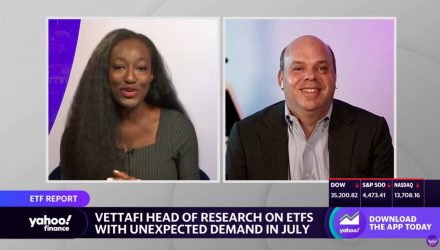
VettaFi head of research Todd Rosenbluth appeared on Yahoo! Finance to discuss ETFs with unexpected demand — including AI-focused ETFs.
David Dali, Head of Portfolio Strategy, provides his 12-month outlook for global equity markets.
For the better part of the last century, the largest companies in the world were those that produced physical property – traditional transportation machines, the energy that powered them, or the capital that financed them.
Franklin Templeton’s Head of Digital Asset & Investor Advisory Services Sandy Kaul has a wealth of experience in the financial industry and a vision for the future in the digital asset space. She finds the trend toward democratizing new investment frontiers exciting. Learn more about Sandy in this Q&A.
All of a sudden, the short-volatility trade is back on Wall Street as billions of dollars pour into options-selling ETFs like never before.