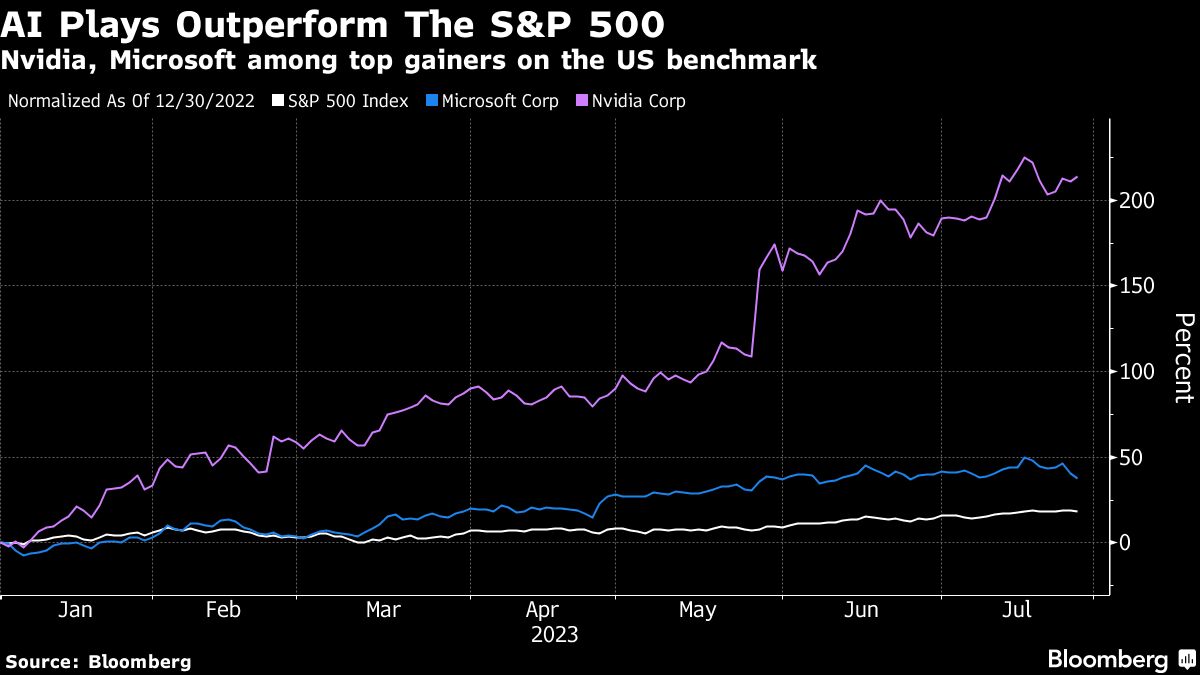
The frenzy over artificial intelligence-linked stocks has gone too far but won’t die down just yet, according to Bank of America Corp. strategists led by Michael Hartnett.
Key US inflation measures continued to cool and consumer spending picked up in June, adding to momentum in the economy ahead of the third quarter.
Sixteen months after the Federal Reserve began its most aggressive rate-hike cycle in decades, markets are breathing a sigh of relief that the central bank — at long last — may finally be done.
Municipal exchange-traded funds, still a relatively new and small part of the $4 trillion state and local debt market, have seen growth stall dramatically after record inflows last year as the shift away from mutual funds slowed.
Don’t fear the Fed’s 25-basis-point rate hike on Wednesday, according to Jeremy Siegel. Given the strength of the economy and low unemployment, he said stocks can withstand higher rates.
UK gilts rally after headline and core inflation numbers surprise to the downside.
Equity markets have rallied since October, but the Franklin Templeton Investment Solutions team thinks markets have run ahead of both current and expected growth. Learn why—and what it may mean for investors.
In a unanimous decision, Federal Reserve policymakers raised the federal funds rate to 5.5%, the highest point since 2001.
Monetary and fiscal indicators continued to tighten significantly in the second quarter pointing towards a material slowdown in the U.S. economy.
Mortgage rates are the highest they’ve been in over 30 years, keeping home affordability in unprecedented territory. However, mortgage rates above 7% aren’t the only factor keeping home prices high.
Yields on 10-year Treasuries may fall as much as 150 basis points before the end of next year as the Federal Reserve cuts interest rates to bolster a slowing US economy, according to Jupiter Asset Management.
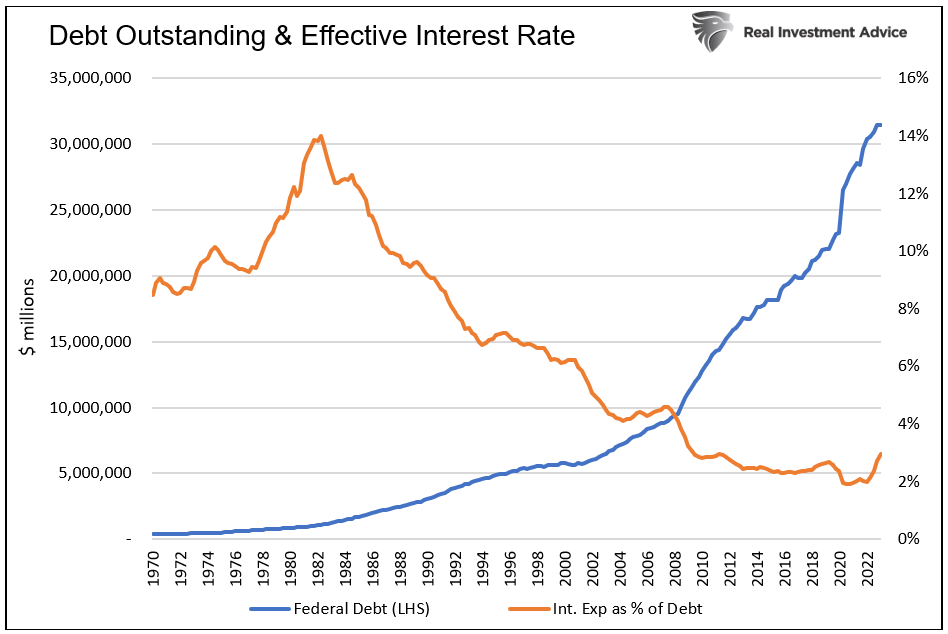
The Fed and government can ill afford to maintain today’s interest rates.
In what was a brutal 2022 for investors, there was at least one sure-fire, money-making proposition for much of the year.
Our emerging market debt valuation metrics across all but the U.S. interest rate dimension remain unambiguously attractive. In our Quarterly Valuation Update, we provide our Q2 assessment.
Central banks are set to hike policy rates this week. Markets expect rate cuts to soon follow due to cooling inflation, whereas we see central banks holding tight.
A favorable inflation report is just one step in a long journey.
While caution in some areas of the commodities space may be prudent, there are also reasons for optimism, according to Fred Fromm, portfolio manager, of Franklin Equity Group. He offers his mid-year outlook and potential investment opportunities.
Howard Marks’ classic investing book The Most Important Thing has more nuggets of wisdom than I can count, but my personal favorites are his reflections on the futility of forecasting.
From China comes a discouraging new language. Leaders described their faltering economy as showing a “wavy pattern” with “bumps during progress.” Put politely, the message is that the country won't provide the lift for the global economy that was widely anticipated six months ago.
Signs of abating inflation have lifted the spirits of investors, the White House and the general public this month. While a welcome relief, inflation tends to be a lagging rather than a leading economic indicator.
The likeliest outcome of Wednesday’s Federal Reserve announcement is also one that is apt to lift stocks, JPMorgan Chase & Co.’s trading desk says.
There is a particular “setup” that we’ve historically found to be associated with abrupt “air pockets” and “free falls” in the S&P 500. It combines hostile conditions in all three features most central to our investment discipline: rich valuations, unfavorable market internals, and extreme overextension.
High-quality fixed-income assets may offer the best return potential in more than a decade along with diversification benefits as a likely recession approaches.
With inflation falling and growth slowly grinding lower, time is running out on many global central bank tightening cycles – especially for the Federal Reserve (Fed) that meets next week.
Investors should consider diversifying their credit exposure with asset-backed lending strategies, which offer a fixed income allocation, a potential inflation hedge, and downside protection with collateralized assets.
The Fed needs to resolve this disagreement — by making clear that it’s committed to getting inflation all the way back down to the 2% target.
Last year’s plunge in the S&P 500 made uber bear Mike Wilson the most celebrated stock forecaster on Wall Street. It’s a role he has failed to reprise in 2023.
Commodity ETFs have seen a significant dip in financial advisors' interest and YTD flows in 2023.
The Northern Trust Economics team shares its outlook for U.S. growth, employment, interest rates and inflation.
Before you say “not me” to Matthews’ jewel of introspection, you should know that at some point(s) in your life you probably did – want to be someone else. So did I. As a matter of fact, since my early 20’s I’ve always dreamed of being a rock star.
No one should be popping champagne when they see Thursday’s GDP report. The good news is that it won’t be negative.
One of the unforeseen side effects of the current travel boom has been flight delays, mostly because of staff shortages, and this has raised the issue of pilot retirements.
Pulak Prasad is a successful investor in the Indian market, where he grew up. But he is also an amateur evolutionary biologist. His new book illustrates a powerful – and often money-making – link between the disciplines of investing and evolution.
I sense a growing middle-of-the-road regulatory consensus on cryptocurrencies. It splits the difference between “crypto is a Ponzi scheme to defraud investors and enable criminals,” on the one hand, and “crypto solves ancient financial problems and will usher in an era of prosperity and freedom,” on the other.
It made sense at the time. Jerome Powell was waging war on inflation. The bond market was flashing dire warnings. Practically everyone saw a recession coming.
Listen to Wall Street’s top economists and you’ll hear the same message again and again: The risk of a recession is fading fast. And yet, in the bond market, the traditional warning that a downturn is near — an inversion of the yield curve — keeps getting louder.
Money market allocations hedged investors from tumbling equity markets last year and for the first time in a long time, generated considerable interest income. While cash-like investments offer liquidity and risk management, they do have some drawbacks. What other options do investors have?
Target-date funds, which make up over half of total 401(k) assets, are not following investment theory, exposing investors to excessive risk.
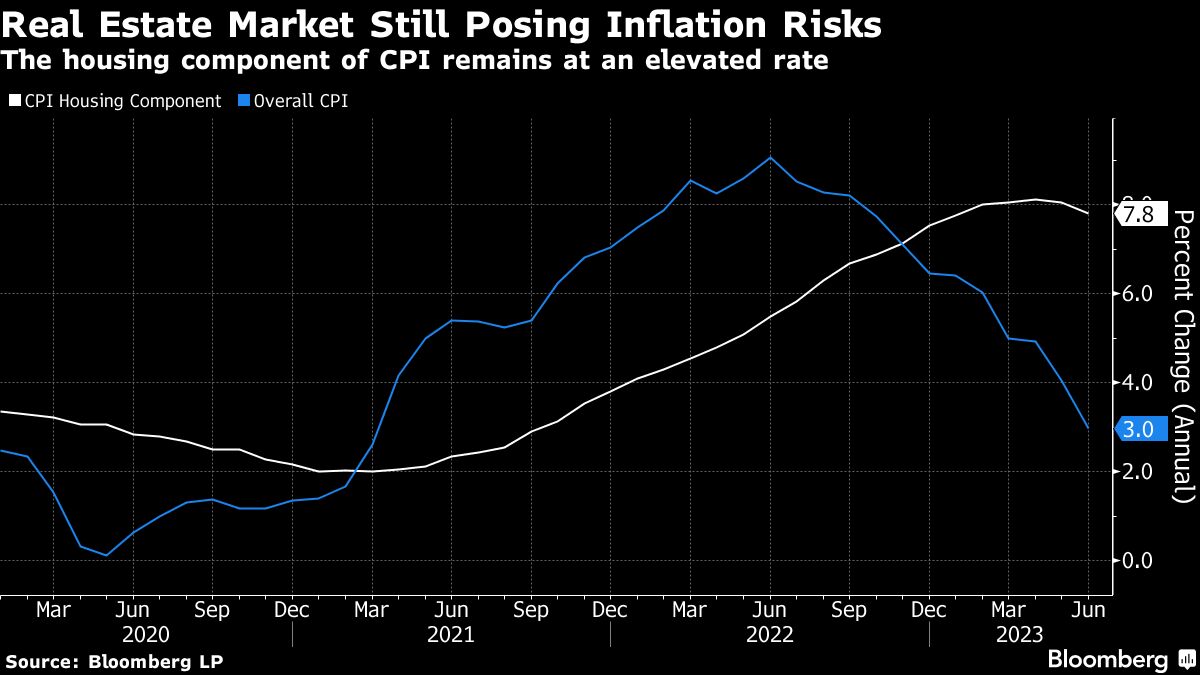
Housing is by far the biggest expense for most American households. Any inflation analysis that ignores housing misses not only the elephant in the room, but the room itself.
So far in 2023, equity markets have shrugged off banking stress, recession risk, and monetary tightening in favor of a more optimistic view. While risks remain, alternative data suggests that inflation may fall faster than expected as the economy remains relatively healthy.
The Sovereign Debt Wave is at a historic peak and appears set to continue growing. With higher inflation and reduced liquidity, some countries will be able to continue to issue debt easily, while some will not.
Despite persistent inflation and elevated short-term interest rates, the economy appears to be holding up well, and we believe the Fed may deliver the “soft landing” it has been trying to engineer.
An advisor’s greatest contribution to an investor’s bottom line is their guidance through volatile markets.
Economic indicators are released every week to help provide insight into the overall health of the U.S. economy. In this article, we examine indicators from the past week, such as inflation, that shed light on both inflationary trends and sentiment within the market.
Head of Franklin Templeton Institute Stephen Dover recently moderated a panel of our leading economists and asked this key question: What’s in store for investors in the second half? Here’s a quick take on their answers.
Global corporate bond returns just hit their highest level this year on bets that the inflation crisis is coming to an end. Some investors say this may be as good as it gets, with dangers lurking in credit markets for the second half.
China’s ultra-long government bonds are seeing heated demand as the economy’s dire outlook and expectations for modest stimulus drive bets for further gains.
The Chinese economy’s current travails illustrate the growth challenges facing many other countries around the world. By re-engineering ineffective growth models and improving domestic economic management, developed and developing countries can avoid falling into the growth trap China now finds itself in.
After stubborn U.S. inflation in the first half of 2023 kept the Federal Reserve raising rates, June’s softer inflation report suggests July may mark the end of the hiking cycle.
Corporate profits are being challenged by market forces, diminishing pricing power.