The markets never fail to keep us guessing, but this year has shown even more evidence that predicting markets is a fool's game. What's in store for 2024? We have some ideas...
The Federal Reserve’s asset purchase program, known as quantitative easing, has twice helped save the US economy — first during the financial crisis and then again with the Covid-19 pandemic.
The US 30-year yield climbed to its highest level so far this year Wednesday after poor demand for an auction of five-year notes, a week before the Treasury is expected to announce a heavier borrowing schedule for the February-to-April period.
Implications for credit investors.
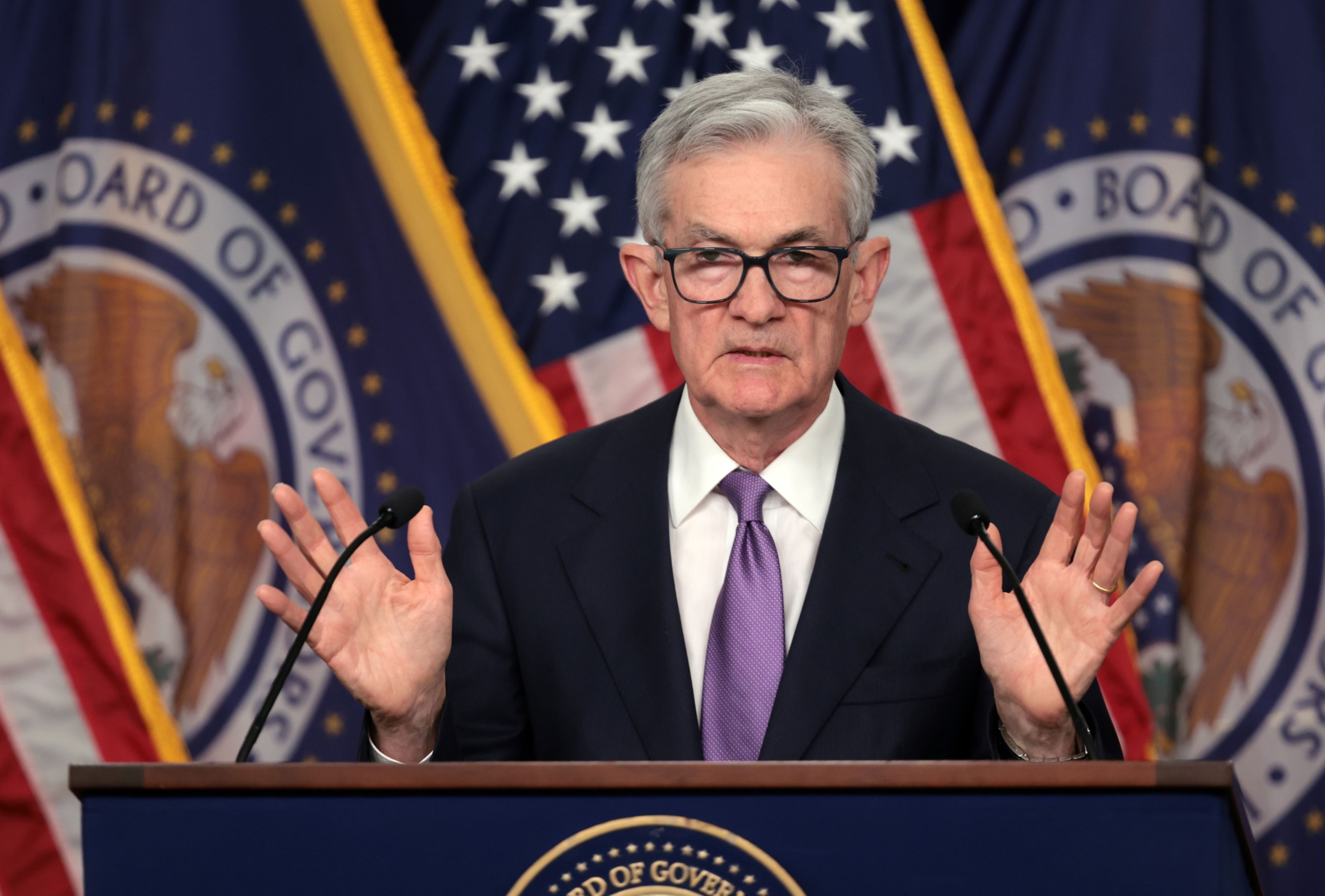
The Federal Reserve is expected to make interest rate cuts this year. But representatives from the U.S. central bank are sending the message that the cuts won’t be coming soon.
While the S&P 500's all-time high hasn't been accompanied by other parts of the market (notably, small caps), further gains are possible if breadth firms up.
Improve your income potential with a tactical, unconstrained strategy that sources opportunities across geographies and asset classes. BlackRock Multi-Asset Income Fund takes a risk-first approach while seeking to deliver a consistently attractive yield.
Bank loan income may decline if the Federal Reserve cuts interest rates. That doesn't mean investors should avoid them altogether, but it's important to understand the risks.
Financial advisors are gearing up for a successful year and preparing for client reviews. We offer four actionable ideas and practices to help advisors address some key concerns many investors are having about the year ahead.
Investor sentiment toward China has soured after a tough year for the economy and stock market. But the painful economic transition is also creating real opportunity.
After initial optimism at the start of 2023 spurred strong performance, munis subsequently struggled as the Fed continued its tightening policy, raising fed fund rates to 5.25%−5.50%, before pausing in September.
January 2024 is likely to be remembered for the strong launch of 10 new spot bitcoin ETFs and the uplisting of the Grayscale Bitcoin ETF (GBTC).
Jim Bianco, President of Bianco Research Advisors, explains the index behind the WisdomTree Bianco Total Return Fund (WTBN) and offers perspective on interest rates and credit risk. VettaFi’s Zeno Mercer discusses the latest around artificial intelligence, including valuations of companies involved in the space and considerations when gaining exposure through ETFs. Academy Asset Management’s Seth Rosenthal spotlights the Academy Veteran Impact ETF (VETZ).
Strategies that aim to generate income are plentiful in today’s markets, but strategies that consider tax implications and total return performance in addition to income generation are not as common.
That’s why more advisors are turning to options-based income strategies, which has caused rapid growth in this segment of the ETF market, but not all options are created equally.
We invite you to join pioneers in the options-based ETF space from NEOS Investments for a discussion on options-based income ETFs, their role in portfolios, and how to cut through the noise in this growing area of the ETF market.
It’s a seller’s market for infrastructure asset managers. Conventional and alternative investment firms are falling over themselves to expand in this lucrative area, and M&A is the easiest way for them to leapfrog the competition.
First-time encounters make a huge difference in how consumers view our profession.
The negative side of the strong increase in mortgage rates has fallen on those who did not have a home before the start of the increase in rates and on the ability of those Americans to purchase a home.
Roundhill Investments announced the launch of the Roundhill Bitcoin Covered Call Strategy ETF (YBTC) on the Cboe BZX today. The actively managed YBTC is the first bitcoin covered call strategy ETF to list in the U.S.
Here’s a look at how a new legislative provision may be an opportunity to help jump-start retirement savings for children while saving for college at the same time.
Institutional investors may want to consider an allocation to Quality equities as well as a sufficient allocation to government bonds.
While capital markets are expecting rate cuts to come this year, the pace at which they occur and when certainly comes into question. While the Fed continues to mull rates, fixed income investors can consider three specific ETFs from Vanguard to get more yield.
With Americans living longer and deferring retirement for lots of reasons, the retirement planning landscape is changing. Employers are not offering pensions, and the age to maximize Social Security benefits is increasing. All these factors make planning for retirement income crucial. I explore this in depth with Matt DiGangi.
VettaFi’s Head of Research Todd Rosenbluth discussed the ETF of the Week: Bitwise Bitcoin ETF (BITB) on this week’s “ETF of the Week” podcast with Chuck Jaffe of “Money Life.”
After years of regulatory tinkering, Washington is now forcing through the most rigorous overhaul of the world’s biggest bond market in decades.
In what was supposed to be the “year of fixed income,” 2023 proved to be an OK year, but not a generational one. As we shift gears into 2024, spreads are tight, rates are low, and the market is pricing in a whopping six interest rate cuts before year-end.
As the profession steers away from the traditional transaction-based approach to a paradigm more focused on deep personal relationships and comprehensive planning and advice, keep in mind the following considerations to provide exponential value in 2024.
One topic that hasn’t been discussed enough is that the loss of welfare from underspending is likely much higher than from choosing a fee method.
After two years of fighting inflation amid fears of recession, markets and policy makers appear unified in their sanguine outlook. While interest rate increases designed to slow economies may well be nearing an end, markets are never without risk.
The race for the White House intensified this week as Donald Trump won the Iowa caucus with 51% of the vote, handily beating rivals Ron DeSantis and Nikki Haley. Results from the online prediction market PredictIt now show that Trump has become the betting favorite to win November’s general election.
The surge in small-cap stock performance in the final weeks of 2023 may signal a long-awaited turnaround for smaller companies that have lagged large-cap peers for a decade, according to Head of Global Index Portfolio Management Dina Ting.
Initiate the year with direct indexing, encompassing tax planning, personalized investing strategies, rejuvenating sidelined cash, and navigating concentrated stock positions or financial windfalls.
I’m a big fan of ETF product development, but sometimes the choices can be overwhelming. For example, on our ETF Database platform there are approximately 90 ETFs offering high yield bond exposure.
Factors are long run drivers of portfolio risk and returns. Having strategic allocations to factors may increase a portfolio’s expected return.
Stronger-than-expected growth, concerns about the U.S. government's fiscal outlook and the Federal Reserve's (Fed's) pledge to keep interest rates higher for longer drove yields to levels not seen in decades.
Treasury yields rose on Wednesday following stronger-than-expected retail sales and encouraging remarks from a Federal Reserve member.
Bond traders are growing convinced that US Treasury yields are on the brink of returning to the way they’ve traded for most of their existence — it’s the how, why and when of the normalization that keeps financial markets bouncing around.
Tax-loss harvesting is an essential tax-management strategy that can benefit a broad range of taxable investors – even those who many not think they have to worry about investment taxes.
We did an internal survey among our associates, attempting to get a feel for their views on various economic and fixed income topics. Any survey result concerning the future can net inexact results but nonetheless reveal general sentiment. Attitude, outlook, and opinions can help shape the market.
The Fed’s balance sheet could stabilize this year, but details are unclear.
The election outcome is unlikely to change the status quo for the Taiwan Strait, U.S.-China relations, or global markets which have seemed to price in geopolitical risk.
Emerging markets bonds issuance is already reaching record highs early in 2024. The Financial Times reported that EM debt issuance is already at $50 billion, opening opportunities in EM bond ETFs.
The Federal Reserve has fueled market conviction that the good old days of extremely low interest rates and abundant liquidity are soon to return. Our Franklin Templeton Fixed Income CIO Sonal Desai sees this reaction as an excess of dovish enthusiasm that sets the stage for more volatility.
In 2023, the Federal budget deficit exceeded private and foreign saving, resulting in only the eighth year since 1929 with negative net national saving (to be referred to as NNNS).
“The current fiscal path is unsustainable”. This stark warning comes from the US Treasury Department’s Bureau of the Fiscal Service’s fiscal year-end projections1. Based on current appropriations and tax law, these projections display steadily rising federal spending and flat tax receipts, as a percentage of GDP.
Bond traders abandoned wagers that the Federal Reserve will cut interest rates in March, pushing swap rates to levels consistent with only about 50% odds of a quarter-point reduction in the federal funds target during the first quarter.
Why we believe small companies present key opportunities to tap into the heart of innovation and expansion in emerging markets.
Economic data has provided encouragement for both stock market bulls and bears.
The market has taken a one-sided view on inflation and the Fed's reaction to it, even though other very plausible explanations exist. This illustrates both the power of narrative and the vulnerability of the current consensus.
Markets in 2023 kept investors on the edge of their seats. Groundbreaking technological advancements, mega-popstars being blamed for summertime inflation, and a December Fed pivot were just a few of the plot twists.
The long-awaited spot bitcoin ETFs are trading after a decade of waiting. So now the ETF and advisor community has some available brain capacity to look forward. In a month, many will be in Miami, Florida to kick off the Exchange conference. I can’t wait.