Our immense progress in improving society’s standard of living over the last several centuries was possible because of advances in the discovery and production of energy. To assume that will continue is a grave error.
The growth of the federal deficit in the post-COVID era, coupled with the political unwillingness to increase taxes, foretells higher-than-historical inflation rates, according to new research.
Private equity firms that spent hundreds of billions of dollars on acquisitions at the top of the market risk a nasty hangover.
The world’s biggest bond market has clawed its way back after spending chunks of 2023 underwater. Now many US debt watchers see the pathway clearing for a real revival.
Food prices illustrate several challenges of containing inflation.
As I wrote this blog, the S&P 500 index is up roughly 17% year-to-date. Most likely, your portfolio isn’t. This is a common frustration among many investors in the market this year in particular.
The 2023 holiday season is officially upon us. Happy Black Friday and Cyber Monday to those who observe!
It’s the major casualty of November’s sizzling stock rally: Investor caution.
Treasury investors are turning increasingly skeptical the Federal Reserve will deliver a soft landing for the US economy next year, elevating concern of a looming recession over the risks posed by inflation and a swelling budget deficit.
US short-term inflation expectations climbed to a seven-month high in November and longer-run price views remained at levels not seen since 2011.
Federal Reserve policymakers at their most recent meeting united around a strategy to “proceed carefully” on future interest-rate moves and base any further tightening on progress toward their inflation goal.
Every time interest rates go up there is a flurry of demand for a product that has been around at least since the Roman Empire — annuities. The insurance industry has already seen rapid growth in annuity sales since 2021 and if rates remain at or move above current levels, demand seems poised to explode.
Now that we’re about to enter the Christmas shopping season, expect even more focus than usual on the consumer over the next several weeks.
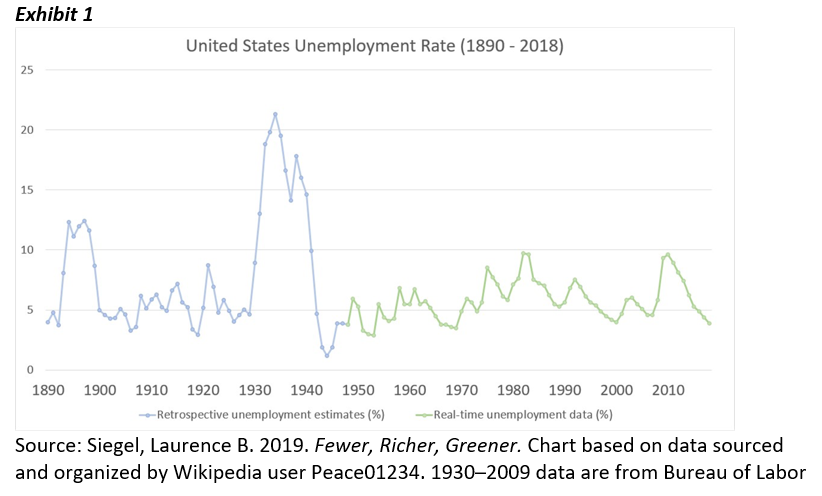
Both supply and demand of workers will prevent a surge in unemployment rates.
While the fall in inflation is welcome, the impact of higher interest rates on mortgage borrowers still has some way to play out. The reduction in inflation will help DB members that are drawing on their pension. Pension trustees should consider their investment strategy and support members with their retirement planning.
CIO designate Sean Taylor gives his take on what Asia has to offer global and emerging markets investors, from growth, to diversification, to innovation.
Doug Drabik discusses fixed income market conditions and offers insight for bond investors.
October news on CPI inflation was all the doctor recommended and has markets spinning and repricing the Federal Reserve’s (Fed) potential path forward.
Taxes can have a significant and ongoing impact on an investment portfolio. Advisors can help their clients minimize that impact with a tax-smart approach. Advisors can prepare for capital gains season now, and potentially maximize their clients’ after-tax returns.
Year to date, the Russell 2000’s scant 1% gain is dwarfed by the S&P 500’s 18% gain. But that could be changing. After dominating much of 2023, large-caps could potentially step aside for small-caps to take the majority of gains.
GMO has published a new 7-Year Asset Class Forecast
The latest inflation report, showing that price increases slowed in October, suggests that the US just might get the “immaculate disinflation” that everyone is hoping for: Inflation will fall to its pre-pandemic levels and remain there, and the US will avoid a recession. Allow me to make the pessimist’s case that we are not out of the woods yet.
For investors stashing record sums in cash, US bond managers overseeing a combined $2.5 trillion have a bit of advice: It’s time to put that money to work.
The Age of AI (And Our Human Future), by Henry Kissinger, Eric Schmidt, and Daniel Huttenlocher, is keenly relevant.
David Dali, Head of Portfolio Strategy, provides his 12-month outlook for global equity markets.
Today's uncertain economic climate is putting particular pressure on four market segments. Here's what to watch out for in the months ahead.
For the better part of two years, investors have been primed with hope of a “Fed pivot” that will presumably restore easy monetary policy and supportive conditions for the financial markets.
Investors should embrace a genuine long-term perspective, extending their time horizons to at least 20 to 30 years. The traditional notion of long-term investing (five to 10 years) may fall short of realizing the full benefits of long-term strategies.
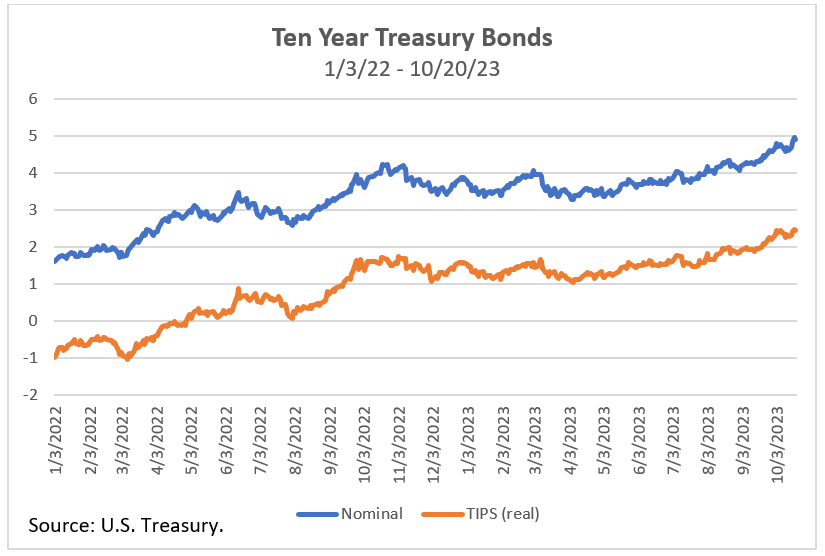
Let’s examine what the bond market is telling us about inflation and a solution that will pay you and your clients to insure for the possibility of continued high, long-term inflation.
Picking the “right” stock is akin to betting on a game; not only must one pick the right team (beta), but also by how much (alpha).
There was a time, not so long ago when the Federal Reserve said very little about its policies; its leaders did their utmost to obfuscate rather than clarify. Those days are long gone.
The deflationistas have been working themselves into a tizzy since Walmart Inc. Chief Executive Officer Doug McMillon warned of a period of declining prices at the big-box retailer in the months to come.
Are you an “investor” or a “speculator?”
The Treasury market’s nascent rally is facing its next big test: a bond auction that will help gauge whether investors are confident 2023’s selloff is over once and for all.
The powerful rally in small-cap stocks looks like yet another false start rather than a lasting recovery.
Following the surge in inflation, the most aggressive Fed tightening cycle since the 1980s and multi-decade lows in business and consumer confidence, calls for a U.S. recession have been prevalent all year.
Is the Federal Reserve nearing the end of its rate-hiking cycle? The U.S. central bank is giving investors mixed messages. The Fed has recently paused its rate hikes and said it would keep interest rates between 5.25% and 5.5%.
U.S. inflation cooled more than expected, and bond markets rallied, but the Fed is likely to remain in a long pause.
The savage sell-off that hit Treasuries in prior months was driven by concerns a buyers’ strike had hit the $26 trillion bond market. It’s now confirmed: at least one set of investors headed for the exits back in September.
Though inflation continues to cool, there remains a potentially longer road ahead to get to the Fed’s desired 2%. In an environment of uncertainty and elevated inflation, the inclusion of managed futures in a portfolio made a significant difference in the last few years as modeled by DBi recently.
Investors should offload risky assets after recent gains as technical and macroeconomic headwinds are building, according to Bank of America Corp.’s Michael Hartnett.
The federal government starts a new fiscal year every October 1. In a rational world, Congress would fulfill its responsibilities by passing bills before that date to authorize spending in the various agencies and programs.
The run-off election looks tight in Argentina, where I’m attending a Young Presidents’ Organization (YPO) event in Buenos Aires.
Now that there’s a growing consensus that the Federal Reserve is done raising interest rates — a shift I predicted last month — it’s time to ponder when policymakers will consider cutting rates and by how much.
Confounding market and economic signals persist as the year’s end draws near. In a year punctuated by heightened uncertainty as investors attempted to navigate a confluence of risk factors, stock and bond correlations proved a significant challenge to traditional portfolios.
With news that inflation cooled significantly in October, rate hikes from the Fed may now be over. Consumer prices were flat in October, rising just 3.2% from 2022. That rise came in even slower than the year-over-year rise measured in September.
Inflation is edging back toward pre-pandemic rates in the US, but rent inflation still has a long way to go. To put it into numbers, the all-items consumer price index was just 3.2% higher in October than a year earlier, but the rent of primary residence index was up 7.2%.
Just a week after Brazil’s Nu Holdings Ltd announced a yield of 15% on its high-yield savings accounts in Mexico, Argentina’s Ualá is raising its own by three percentage points to 15%.
The S&P 500 Index will keep rallying next year and should come close to its record high hit in early 2022, say strategists at Goldman Sachs Group Inc., becoming the latest Wall Street bank to come out with a bullish call.
We understand that many economists/analysts/market participants are already discounting inflation as a serious problem for the U.S. economy. Even if this seems correct on the surface, the problem is very different for those who suffer the most from higher prices – middle- and lower-income individuals.