The dearth of homes for sale has underpinned the housing market’s surprising resilience and may further lift home prices despite reduced affordability.
Trench warfare in the early 20th century has been described as long periods of boredom punctuated by moments of terror.
I previously discussed a slate of recessionary indicators with high correlations to recessionary onsets. However, as we head into 2024, many Wall Street economists predict a “soft landing” or “no recession” outcome for the economy.
In November, Treasury rates dropped, and risk assets rallied. The market expects continuing drops in inflation and slower, but not disastrous, growth. The data support the market's sanguine assessment.
Across Wall Street, analysts and investors had cheered 2023 as the year of emerging markets, only to be burned by a relentless climb in US Treasury yields. Now, as the Federal Reserve looks set to end its most aggressive monetary tightening campaign in a generation, they’re at it again.
US stocks are headed for a rocky end to the year after rallying in November as bond yields fluctuate, according to Morgan Stanley’s Michael Wilson.
A torrid bond market rally shows traders are convinced the Federal Reserve’s rate-rising cycle is over. The debate now turns to when central bankers start cutting, and by how much.
Victor Haghani has thought long and hard about his participation in the 1998 blowup of LTCM. His big mistake, he concluded, was investing 80% of his personal assets in the firm.
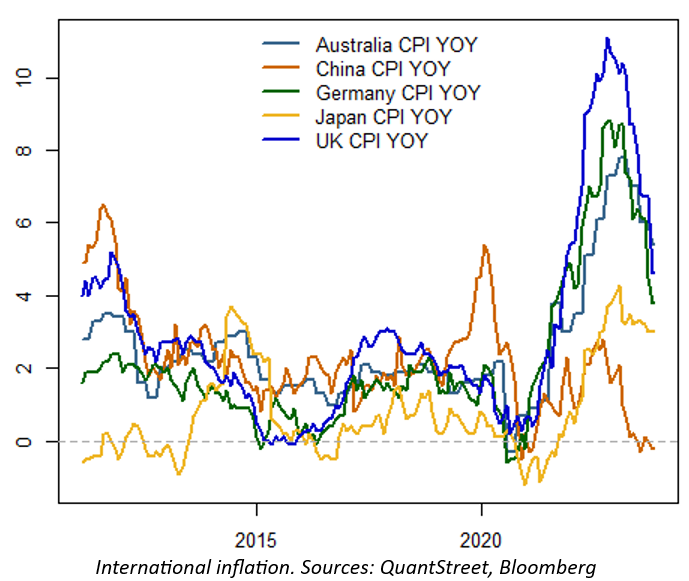
Inflation is a touchy subject, and given there are many ways to analyze it, investors should take note of the nuances that exist within the data.
Back in the Great Financial Crisis era, someone quipped that the federal government had become a giant hedge fund with an army attached. That wasn’t far off. Various agencies and entities were absorbing all kinds of risky assets to stabilize an overleveraged system.
The life story of Charlie Munger, who passed away on Tuesday at age 99, serves as a shining example of the enduring American Dream, especially now at a time when many people doubt whether the promise of a better life is still intact.
In a turnaround from last year, there is renewed interest in the fixed income asset class as yields have risen. Ed Perks, CIO of Franklin Income Investors, shares his analysis of recent macro developments and where he sees opportunities for income.
Recent labor agreements in the auto and airline industries spotlight the profitability conundrum facing US companies—and equity investors.
Franklin Templeton recently hosted due diligence meetings with financial advisors where Tony Davidow, Senior Alternatives Investment Strategist, led discussions focused on alternative investments.
In a year in which little has gone right in the US bond market, November turned out to be a month for the record books.
Federal Reserve Chair Jerome Powell pushed back against Wall Street’s growing expectations of interest-rate cuts in the first half of 2024, saying the committee will move cautiously with borrowing costs at a 22-year high but retain the option to hike further.
Once again, larger deficits and higher debt-to-GDP ratios in rich countries have become fodder for fiscal hawks and bond vigilantes to warn of a looming crisis that will demand a return to austerity. But the case for such pessimism has no logical or historical basis.
November will be etched in the memories of investors as a remarkable month.
Economic conditions now are quite different from the 1970’s and still disinflationary.
Risk premiums on US investment-grade corporate bonds have narrowed to the tightest level in nearly two years on expectations that the Federal Reserve has reached the peak of its monetary-tightening cycle.
The likes of consumer resiliency based on the earliest readings on Black Friday sales and the degree to which the Artificial Intelligence theme continues support the idiosyncratic tendencies of the markets concentrated in the Magnificent 7.
Equities have an important role to play in a diversified allocation today, to help hedge against inflation and to navigate a lower-growth environment.
The main point under contention this year will be the phase-out of fossil fuels and the limited progress achieved so far. As more businesses make net-zero commitments, there is mounting pressure for greater government support through policies and incentives.
The last time the municipal bond market rallied so much, it was Paul Volcker — and not Jerome Powell — who was winning a war on inflation.
As a rush of Wall Street strategists call for all-time highs in US stocks in the year ahead, JPMorgan Chase & Co. stands apart, releasing the gloomiest forecast so far among its peers.
There is broad agreement that economic damages will increase with warming, but there is substantial disagreement on the magnitude of these damages.
The article explores the current state of the bull market, offering insights from Pring Turner Capital. The author discusses indicators supporting optimism for a second leg of the bull market, citing economic, monetary, and technical factors.
The unhappiness of American consumers despite rapid job and economic growth in the past few years is a hotly debated topic. Is it inflation? High borrowing costs for homes and automobiles? Crowded airports and packed airplanes?
Now that inflation is finally decelerating, regulators are increasingly turning their focus to financial stability.
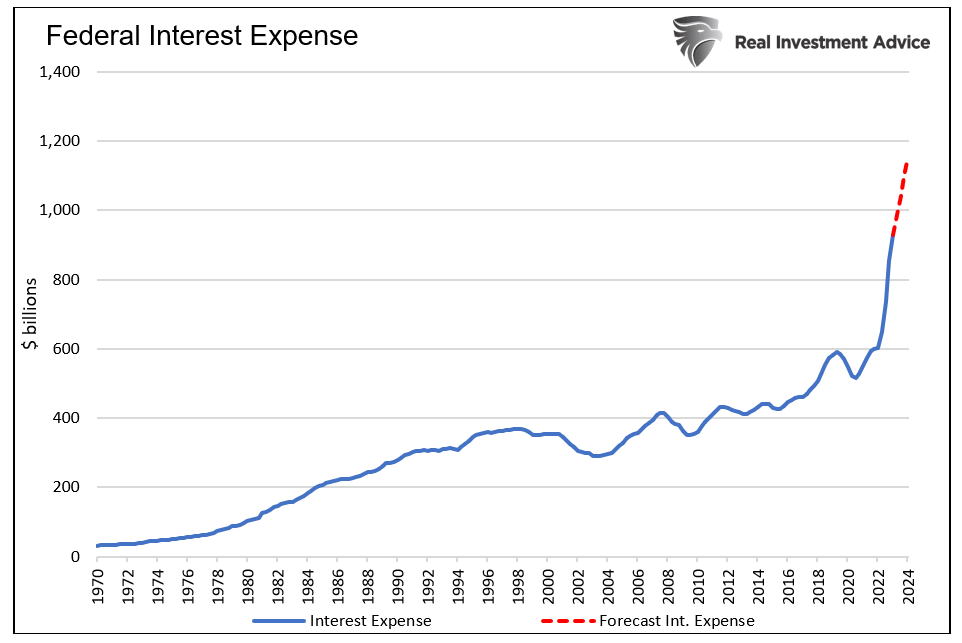
The problem is not a deficit or a debt-issuance problem. It's an interest rate problem.
Let’s go back four decades and consider a few key indicators of wellbeing.
The US economy grew at an even faster pace in the third quarter than originally estimated, reflecting upward revisions to business investment and government spending.
Global bonds are soaring at the fastest pace since the 2008 financial crisis.
Bitcoin climbed back above $38,000 on Tuesday amid optimism the US central bank may be closer to lowering borrowing costs if inflation continues to decline.
Commodities entered 2023 behind a strong performance in 2022. For investors revisiting their portfolios ahead of 2024, it may be worth assessing the commodities outlook. From energy to precious metals, commodities can add meaningful diversification to a portfolio.
Economic pain is likely in 2024, but that doesn’t mean stocks will struggle all year, especially if there is a continuation of the rolling recessions that have hit the economy.
What were the big ETF trends of 2023? David Mann, Global Head of ETF Product & Capital Markets, reviews some of his predictions for this year—and how they panned out.
BMW AG Chief Executive Officer Oliver Zipse was incredulous when asked this month whether the German premium carmaker would respond to a brutal price war in electric vehicles by cutting production.
Javier Milei was elected president of Argentina on the strength of a radical promise: that he would replace the highly inflationary Argentine peso with the stable US dollar.
At the time of the first major climate change conference, in Rio de Janeiro in 1992, China was one of the least developed nations. Its per capita income was below Haiti, Niger and Pakistan.
The pandemic upended many of the things we thought we knew about the economy. Even now, economists struggle to answer such fundamental questions as whether Americans are better off financially.
The recent sharp pullback in volatility as year-end approaches creates hedging opportunities given the cloudy outlook for equities, according to Goldman Sachs Group Inc. strategists.
Brooks Friederich is a little-known figure in the world of investment advisory, even among the Wall Street cognoscenti. Yet every year, the 39-year-old — and his Berwyn, Pennsylvania-based employer Envestnet — helps steer billions of dollars into tailor-made strategies for financial advisers, part of what’s known as the model-portfolio boom.
A robust growth backdrop, a key input for cross-asset positioning, benefited from pent-up demand and an accommodative fiscal policy stance.
As banks pull back from many types of lending, demand for capital is outpacing supply, providing the best potential opportunities in private credit since the GFC.
Don’t look now, but markets are once again getting excited about the prospect of potential rate cuts. Following months defined by rising rates, investors are looking forward to inflation cooling sufficiently for the Fed to finally cut.
While Treasury inflation-protected securities (TIPS) may seem complex and daunting, it’s important to dive into their intricacies. After all, their current yields present an enticing opportunity and a compelling alternative to conventional Treasury bonds.
When Argentina entered the 20th Century, its prospects looked bright. On a per person basis, its economy was on par with Canada and Sweden and about two-thirds of the United States.
On this episode of the “ETF of the Week” podcast, Tom Lydon discussed the iShares MSCI EAFE Small-Cap ETF (SCZ) with Chuck Jaffe of “Money Life.” The pair talked about several topics regarding the fund to give investors a deeper understanding of the ETF overall.
How can RIAs avoid missing the mark when it comes to private market investments?