At the Berkshire Hathaway Annual Meeting we marked what we believe is the end of an era both for Berkshire and for the S&P 500 Index.
It seems that every few years, the term “stagflation” gets floated around to describe the current and/or prospective U.S. macro landscape.
So much happened in the spring of 2020 that it’s easy to forget we were on track for a recession just before COVID hit. QI Research founder Danielle DiMartino Booth mentioned this during her presentation with Lacy Hunt at our Strategic Investment Conference.
It can be easy to overthink the markets and it is human nature to try to out-guess, out-maneuver, or out-smart the average, but perhaps we can step back and simplify what seems to be occurring.
Shifting dynamics among global economies and markets present a range of opportunities for multi-asset portfolios.
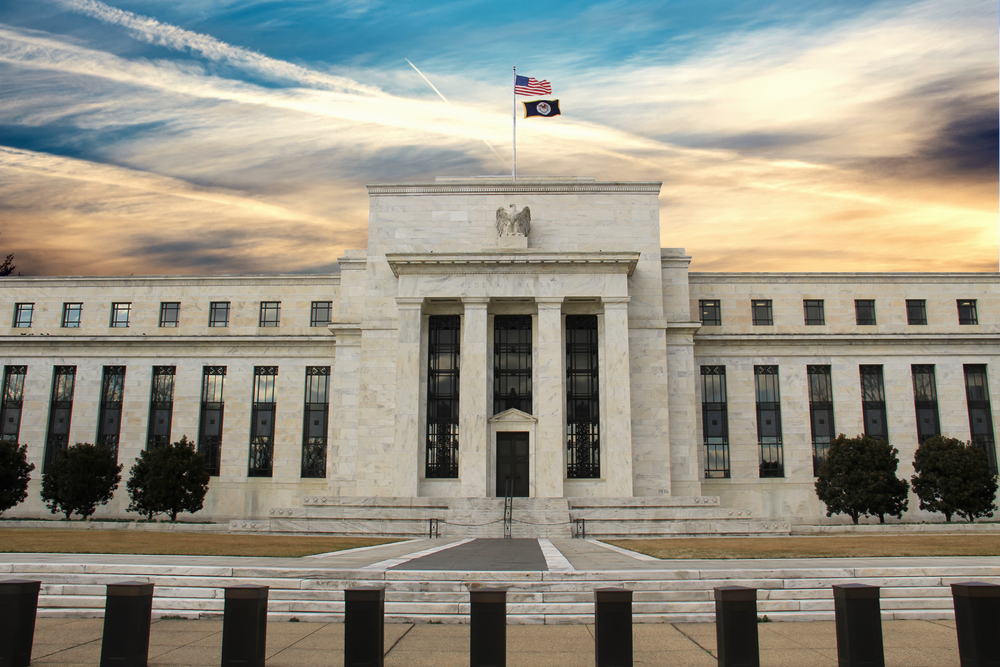
Franklin Templeton Fixed Income CIO Sonal Desai discusses why persistently loose fiscal policy, relentless price pressures and resilient economic growth may cause a problem for the US Federal Reserve—and explains the implications for bond yields.
VanEck’s Matthew Sigel discusses the upcoming SEC decision on their spot ether ETF filing, the debut of VanEck’s Bitcoin Trust (HODL), and the investment case for ether and bitcoin. K&L Gates’ Rich Kerr provides a unique legal perspective on the recent multi-share class structure filings, spot ether ETFs, and the UK government potentially granting equivalence to US-domiciled ETFs. VettaFi’s Todd Rosenbluth offers new polling data around the ongoing fixed income conundrum.
Investors’ hopes for rate cuts this year have faded. The past quarter’s economic data showed that the inflation battle is not over; whether the Fed eases now depends on the data, a point Jerome Powell and the Federal Reserve have repeated ad nauseam.
At last weekend’s Berkshire Hathaway Inc. annual meeting, one shareholder asked Warren Buffett how his auto insurer Geico might fare in the event that autonomous-driving technology succeeds in slashing the number of accidents, as Tesla Inc.’s Elon Musk suggested it would on an earnings call last month.
As of last week, the total return of the S&P 500 was even with 3-month Treasury bill returns since the valuation peak of January 2022, more than two years ago. In our view, investors continue to “grasp at the suds of yesterday’s bubble,” ignoring extreme valuations, lopsided bullish sentiment, emerging pressure on profit margins, economic conditions at the border of recession...
Over the last two weeks, the bullish sentiment index has reversed from extreme greed to fear. The composite net bullish sentiment index, comprised of professional and retail investors, fell from 38.15 to 9.9 in two weeks.
From the end of March until the end of April, the market had a serious rethink about the path of monetary policy for the rest of 2024.
If the financial markets have a religion, we think we know what it is: a deep and abiding faith in the ability of an omniscient Federal Reserve to ride to the rescue if and when the economic weather turns bad.
The FOMC has enough factors to consider without adding politics to the mix.
While much remains uncertain regarding rates, inflation, and the economy, quality stock investing proves a boon in any market environment.
The global bond rally ignited by hopes of lower interest rates in the US will face its first big test on Tuesday, when the Treasury kicks off $125 billion of sales this week.
The housing market is a big worry for Democrats as we move closer to US elections in November. It’s one of the primary reasons measures of consumer confidence remain depressed as a combination of high prices and high mortgage rates keep homes out of reach for many.
The breeze of this earnings season has been near perfect. First-quarter earnings, now published by 80% plus of the S&P 500’s members, put the index’s profits on course for their strongest growth since the second quarter of 2022, when higher inflation and higher rates began to bite.
When each of my children was born, I had their application for a 529 college fund filled out, mailed, and funded with the first $100 before they were released from the hospital.
The article explores why the Federal Reserve might face pressure to raise interest rates rather than lower them in 2024, contrary to conventional expectations. It delves into the current phase of the business cycle, particularly focusing on the bullish trend for commodities and its implications for inflation.
The markets rightly experienced a significant relief last week. Stay up to date on last week’s Fed meeting with the latest commentary from Professor Siegel.
Despite the reacceleration of inflation and enduring labor market strength, the Fed remains focused on downside risks.
If you’re not sure what direct indexing means, you’re not alone. Even after the recent growth, direct indexing remains relatively unknown. As our compliance team never fails to remind us, you can’t invest directly in an index. So what exactly is direct indexing?
The stronger U.S. dollar is benefiting America, but creating troubles in other geographies.
Although there were no huge surprises coming out of the recent Fed meeting, it may have provided hints on what the FOMC is thinking about future monetary policy changes. Franklin Templeton Institute analyzes the Fed’s statement and press conference.
We try not to react to just one data point because, as we have always said, “a data point doesn’t a trend make.” Furthermore, we don’t know if this is just a one-time event or if it is the start of something more.
For the first time in nearly a generation, fixed income is living up to its name.
An April rout in emerging-market bonds and currencies has some former bulls turning negative on the outlook for the asset class.
Gross was famous for squeezing out extra yield using corporate bonds, mortgages, derivatives and other instruments.
Among all economic indicators, some of the most closely watched are those surrounding the labor market. They provide insight into the health of the economy. But they also impact individuals’ lives and play a central role in government policy decisions.
There are attractive investment opportunities in private credit against a backdrop of a U.S. economy that continues to outpace the eurozone and the U.K.
With continued economic growth and elevated inflation levels, the Fed keeps delaying interest-rate cuts. The Franklin Templeton Investment Solutions team provides a historical analysis to make sense of the Fed rate cycle and what it implies for multi-asset investors.
As non-profit investors set their investment and spending policies, it is important to consider their organizational circumstances during a market shock.
I’m entering my annual post-SIC decompression period. I say that only half-jokingly. The last two weeks were my version of a dive deep into the sea, where you see shocking things and endure crushing pressure. The weeks of preparation are fun, but the sheer volume of information creates its own kind of pressure. You don’t just shift back into normal life after that.
We saw a dovish slant to Powell’s remarks at yesterday’s press conference, with no rate hikes in sight.
I had the opportunity this week to speak at the London AIM Summit, where presenters and attendees were cautiously optimistic about the economy.
Markets started the year anticipating several U.S. Federal Reserve (Fed) rate cuts in 2024, but by the end of the first quarter, a continued string of stronger-than-anticipated economic data readings led to a significant dialing-down of expectations.
The Federal Reserve just wrapped up another policy meeting, and markets continue to push back their expectations of a first rate cut.
The Federal Reserve is looking for more confidence that inflation is headed back towards its 2% target before commencing with rate cuts.
With yields at current levels, bond funds can lock in longer term yields, offer price appreciation potential and overall serve as a hedge against a possible hard landing. Though elevated cash balances worked during the Fed’s hiking cycle, we believe now is an opportunity for clients to consider adding duration given the potential for a Fed pause.
Those that argue for lower rates have to counter the inexorable upward climb in Treasury supply and the likely Sisyphean decline in bond prices. Total Return is dead. Don’t let them sell you a bond fund.
As the Federal Reserve acknowledges a setback in its inflation fight, one question looms large: Why hasn’t the economy slowed the way policymakers expected?
April’s sell-off isn’t dissuading investors from taking a closer look at adding bonds to their portfolio. The price dip is giving prospective bond investors a chance to take action on higher yields now before the U.S. Federal Reserve eventually cuts rates.
Inflation and interest rate hikes have not been kind to REITs and the funds that own them. However, their low valuations could indicate an opportunity for investors.
As expected, the Federal Reserve kept its policy rate unchanged at the May meeting, but left the door open to rate cuts later this year if inflation declines.
The S&P 500 experienced its first 5% pullback since October 2023, but the long-term outlook remains positive.
In an op-ed for the Washington Post on November 5, 2010, Ben Bernanke did a victory lap, praising the Fed’s efforts in stemming the financial crisis. In the article, he discusses how QE and other Fed policies eased financial conditions, bolstering investor confidence.
TIPS offer inflation protection, but at the cost of higher volatility and lower returns in bad times (when inflation is low). TIPS behave somewhere between corporate bonds and nominal Treasuries.
The prospect of higher-for-longer interest rates is weighing on crypto, underlined by deepening Bitcoin losses after the token’s worst monthly drop since the collapse of Sam Bankman-Fried’s FTX empire in November 2022.
Federal Reserve Chair Jerome Powell kept hopes alive for an interest-rate cut this year while acknowledging that a burst of inflation has reduced policymakers’ confidence that price pressures are ebbing.