The final week of January saw a stark divergence between official policy and the American consumer's outlook. While the Federal Reserve maintained a "solid" view of economic growth, the public’s mood plummeted to a decade-low as sticky amid sticky wholesale inflation.
Top strategists joined VettaFi on January 29 to provide data-backed forecasts on the trajectory of global interest rates, persistent inflationary pressures, and the resilience of corporate earnings. Advisors came away from the event with the tools needed to mitigate risks stemming from sudden regime shifts while capturing alpha in a fragmented market.
A sharp productivity jump shows firms doing more with fewer workers. But the upside surprise also highlights growing risks about how these gains affect the workforce.
In our view, 2025 reinforced a familiar conclusion that tax management remains as relevant as ever, even though tax policy may no longer be a moving target.
For years now, advisors and investors alike have been pouring significant attention — and inflows — into the broad spectrum of fixed income ETFs.
VettaFi recently sat down with Morten Paulsen, head of research for robotics & machinery at CLSA, to discuss the transition of physical AI into a tech-driven industrial up-cycle. Paulsen projects that persistent U.S. labor shortages will drive domestic robot shipments toward a historical high of 40,000 units in 2026.
As political pressure on the Federal Reserve intensifies and markets ponder the nomination of a new Chair, understanding this chain of risk is increasingly important for investors. Equity valuations are heavily affected by expectations for long-term cash flows, along with the interest rates and risk-premiums that drive how much investors are willing to pay for those future dollars.
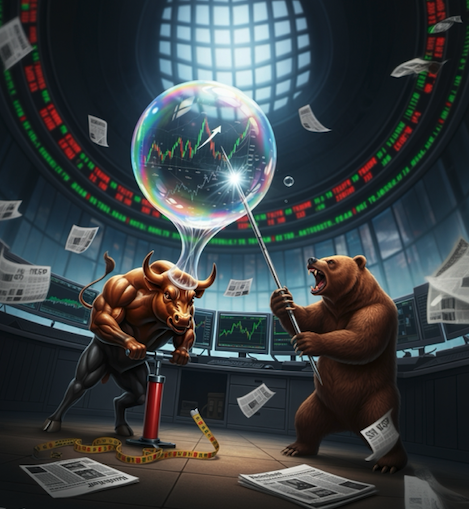
At GMO, we have always defined a bubble as a two-standard deviation divergence of the price of any asset class above its long-term real price trend. The U.S. stock market has now been in bubble territory for a prolonged period. Sooner or later, the bubble will burst and the price will return to its historic level.
U.S. stocks finished a volatile week with mixed performance, extending a second consecutive week of modest declines for major indices. Despite the pullback, markets remain close to record levels.
Private credit has grown from a small niche market to a major slice of the financial asset pie. Not many people outside of institutional finance talked about it twenty years ago.
Estate planning often sounds like something only wealthy families need to worry about. The federal estate tax exemption increased in 2026 under the One Big Beautiful Bill Act (OBBBA)—now shielding estates under $15 million for individuals and $30 million for married couples.
As was widely expected, the Federal Open Market Committee decided to pause their rate cuts at the January meeting, keeping the fed funds trading range at 3.50%–3.75%. For those keeping track, the Fed had lowered ‘the funds rate’ by 75 basis points (bps) during the final three FOMC meetings of 2025.
Passive, active, Treasuries, corporates, munis, international, and more — the whole spectrum of fixed income ETFs seemed to come off a strong year in 2025. The year was also marked by a bevy of launches.
New 25% tariffs will be placed on a small set of advanced semiconductors. The list of exemptions was long, allowing free imports of chips bound for data centers, research, startups and the public sector. The new tariff does not apply to finished products that use these chips, like laptops and smartphones.
Doug Drabik discusses fixed income market conditions and offers insight for bond investors.
As many of you know, my passion has always been helping investors understand company fundamentals so they can make sound, data-driven decisions.Today, I want to cover an essential accounting technique I frequently use with my Fundamentals Analyzer software: horizontal analysis.
Stock market volatility has a way of triggering powerful emotions. Rising prices foster confidence. But when markets fall, fear can take over, leading investors to make decisions that may undermine long-term returns.
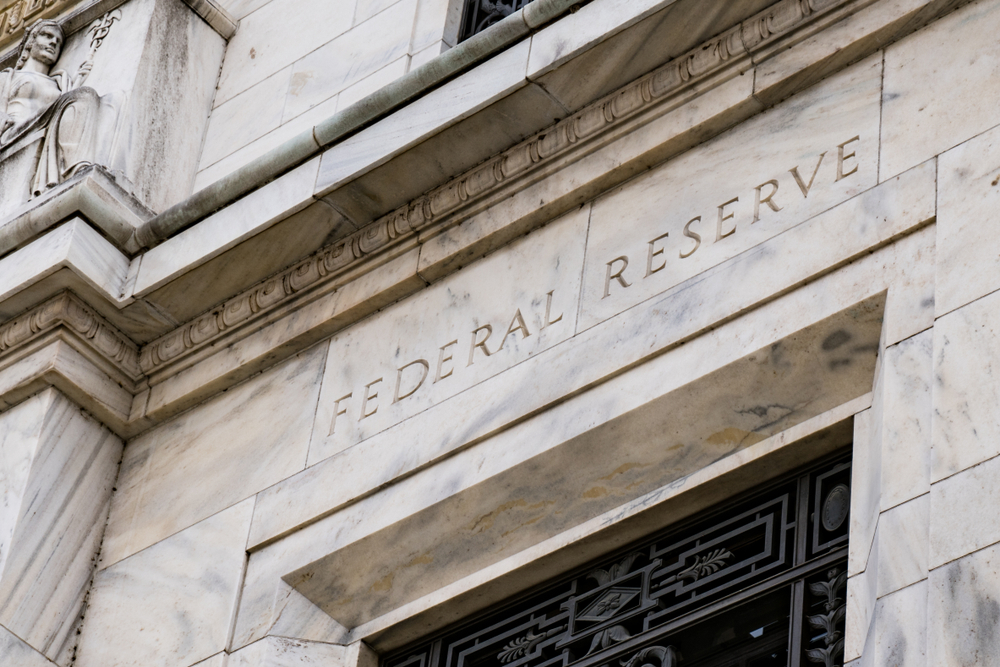
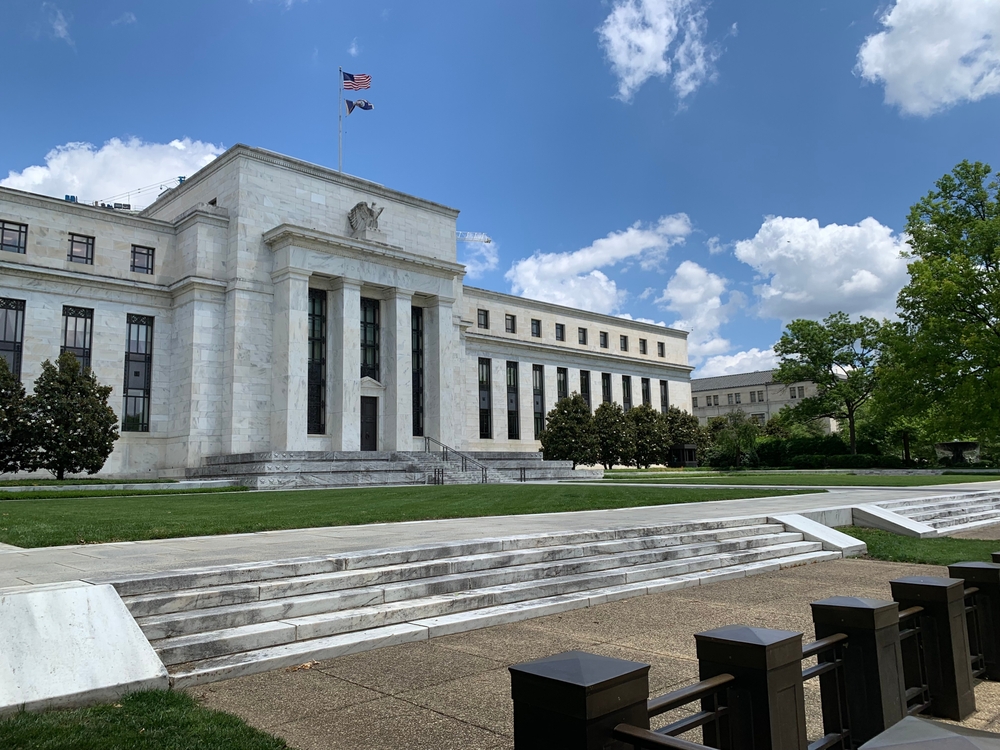
The Federal Reserve held rates unchanged at the first meeting of 2026, while it waits to see what direction inflation, employment, and other policies take in the months ahead.
Private markets were historically for institutional and ultra-high-net-worth investors. Today, that exclusivity is breaking down, as many retail investors realize the value behind private markets and advisors look for additional diversification tools.
2025 capped off a record year for orbital launches, confirming that the space industry is more than alive and well. This creates a growth opportunity set for the Procure Space ETF (UFO), which can capture ongoing developments in the industry in 2026.
In this article, we look both back and forward, first at the 2025 capital markets to analyze not just what happened but also how it fits in the historical context and what we believe it means for 2026 and beyond. We then pivot to our return expectations for major asset classes in the next decade.
Local currency rates and FX screen very cheap, while hard currency credit is rich.
The federal funds rate will remain 3.5% to 3.75%. While the market still expects two rate cuts late this year, the Fed is likely to tread cautiously given the economic backdrop.
Amid a rush of domestic and foreign policy developments that have rattled markets – including the potential for another U.S. government shutdown – the Federal Reserve held steady on U.S. monetary policy.
On Saturday, President Trump threatened 100% tariffs on “all Canadian goods and products coming into the U.S.A.,” linking the warning to Canada’s China engagement and the risk of Canada becoming a “drop-off port” for Chinese goods into the U.S.
Coming into 2026, investors face a landscape shaped by persistent inflation, evolving US monetary policy and global uncertainty. At Parametric, our systematic and customized approach is designed to help clients navigate these complexities while preserving after-tax returns.
As a wave of inclement weather sweeps across much of the U.S., investors are also navigating a seasonally important period for markets. Much like winter storms can influence travel patterns and economic activity early in the year, January’s market performance has long been viewed as a potential signal for what lies ahead.
In our 2026 Outlook, we examine three themes that we believe will shape the economy in the coming year and impact the U.S. and global markets. Theme 1: Everyday Impacts of an Uneven Recovery. Theme 2: AI From Hype to Real-World Results. Theme 3: Adding Private Income and Diversification
The near-perfect timing of gold breaking through $5,000 while silver sliced through $100 has grabbed the market’s attention.
What appeared just months ago to be a stable and predictable transatlantic trade environment now looks conditional. The ground underneath transatlantic trade relations is once again shifting…even though critical portions of it are covered by permafrost.
Classical economics suggests that information is readily available, and is assimilated quickly and accurately. Reality is not that neat: the discipline of behavioral economics has consistently demonstrated that human beings are prone to a series of biases and miscalculations.
The US is coming off a period of remarkable equity-market dominance. Over 11 of the past 15 years, US equities outpaced their non-US peers—sometimes by sizeable margins. But last year, the pattern reversed dramatically.
Theoretically, the two foundational drivers of long‑run economic growth are population growth, which expands the labor force, and productivity, which determines how efficiently that labor can transform inputs into outputs.
Investors are returning to health care stocks, but $1 trillion in government funding cuts and a looming pharma "patent cliff" are among the risks as Q4 earnings reports come due.
Raymond James Chief Economist Eugenio J. Alemán discusses current economic conditions.
Another blockbuster year for bond ETFs is in the books. After two straight years of record net inflows, taxable fixed income ETF assets have nearly doubled since 2020 – crossing the $2 trillion mark. But the big story in 2026 will be rising pressure to move out of money market funds.
In our latest "Alternative Allocations" podcast episode, we sit down with Paul Jodice, Co-Head of Morgan Stanley's GIMA team, to explore crucial shifts they’ve adopted to meet the needs of advisors and the strategies advisors are seeking today.
The AI boom has pushed technology stocks to new highs, but it has also masked headwinds in other sectors of the economy.
LPL Research examines how rising productivity, AI adoption, and structural shifts toward services are supporting U.S. economic growth in 2026.
By assessing the macro and market drivers that shape each outlook, we can lay out clear, practical tactics to prepare your portfolio for either path. Whether the bullish or bearish case prevails in 2026, your edge will come from disciplined risk management, not from guessing the future.
According to Baiocchi, advisors are reevaluating portfolios and recognizing gaps in exposure to companies driving major market themes.
As geopolitical tensions reshape global trade, capital flows and investor risk appetite, gold is once again surfacing as an important component of asset allocation. Some investors and central banks are arguably viewing gold as a risk hedge, supplanting US Treasuries as a safe-haven asset.
Former Federal Open Market Committee Chairman Alan Greenspan famously observed that forecasting foreign exchange was like flipping a coin. Last year proved him right. What happened, and what lessons can it teach us about the dollar in 2026?
Last week in our latest Cyclical Outlook, “Compounding Opportunity,” we argued that beneath the economy’s broad resilience lies a stark divergence. U.S. policy pivots combined with the surge in adoption of AI technology have created winners and losers.
Concerns over accelerating inflation persisted throughout 2025. However, these anxieties were unwarranted as wage and price increases slowed in response to eight influential factors that also suggest that last year’s disinflation will persist in 2026.
The Fed meets on Wednesday to discuss the direction of monetary policy. With the futures market pricing the odds of “no change in rates” at 97.2%, no one should expect a rate cut at this meeting…or, we think, anytime soon.
Each year on January 28, Data Privacy Day underscores the global imperative to protect personal information in an increasingly digital environment. For high-net-worth (HNW) and ultra-high-net-worth (UHNW) families, this responsibility carries exponential weight.
This process is not about predicting the future or timing the market. Instead, it is about placing today’s prices into proper perspective using sound valuation principles. That discipline forms the foundation of learning how to analyze a stock before buying and is essential for long-term investment success.
Recently, stock market numbness closes the trading day. No wholesale crash, just a little wobbling for now with positive numbers for half of January. But I have a sense it’s in need of a cane to steady its momentum.
Markets, interestingly enough, felt their own version of a “deep freeze” this week. Geopolitical flare-ups, fresh tariff threats and a mini-meltdown in Japan’s bond market briefly rattled investors and pushed volatility sharply higher.