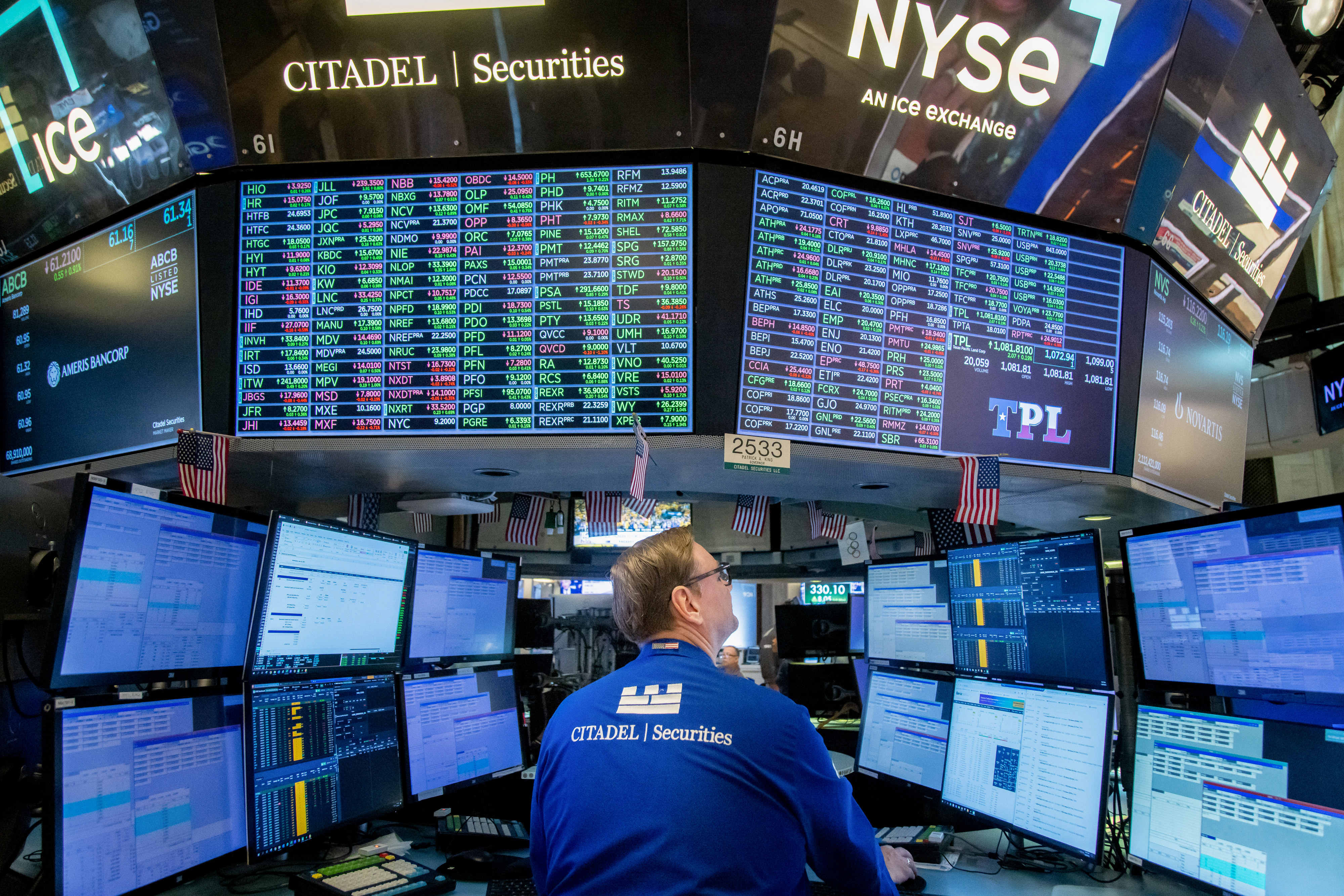
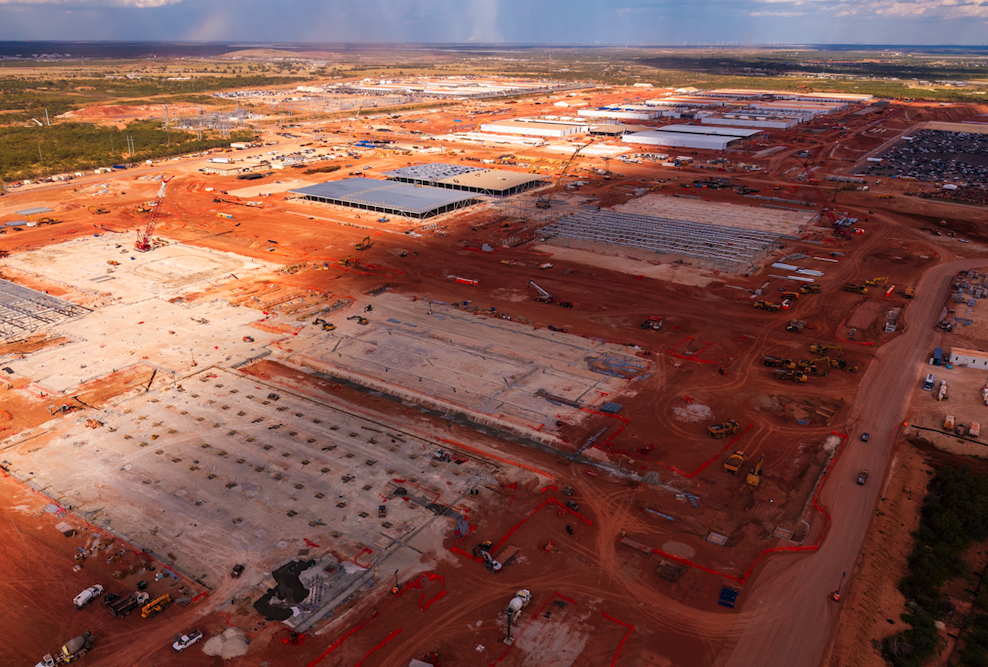
Investors are excited about OpenAI’s expansion driving big gains in technology stocks, but a rising number of Wall Street pros fear that the wild pops that add tens of billions of dollars in value in mere minutes are signaling an unhealthy market reminiscent of the dot-com era.
Rising investor appetite for digital infrastructure, energy and transportation assets boosted fundraising for Manulife Investment Management, which closed its largest-ever infrastructure fund with $5.5 billion.
Three things to watch this month from Franklin Templeton Emerging Markets Equity: China's Golden Week, tariffs on India and the likelihood of a year-end market rally.
We believe corporate America will follow up an outstanding second quarter earnings season with another good one in the third quarter.
With equity markets reaching new heights, the market’s expectation that the US Federal Reserve will cut rates to head off a labor-market slowdown is itself creating a policy challenge for the central bank.
Emerging markets investing has had an overall positive year in 2025. Entering the year, with many U.S. investors underweight foreign equities, some market watchers anticipated big opportunities abroad.
With the global economy proving more resilient than expected, we upgrade equities to overweight.
No one, that we know of, is saying Artificial Intelligence (AI) isn’t an amazing new technology that will have an important impact on life, investing, and the economy.
Markets digested a quiet jobs Friday without the official payrolls report, but the signal from the other indicators was clear enough: the labor market is slowing at the margin but not falling off a cliff.
The office real estate sector is working through a difficult cycle.
Defined contribution (DC) plans form the backbone of retirement security for millions of Americans. And while stocks often steal the spotlight for their growth potential, bonds play a crucial role in managing risk, providing diversification, and delivering reliable income—especially as participants approach retirement.
Like AI stocks, precious metals look overbought; but unlike AI stocks, they’re structurally underinvested. As such, I believe they deserve another look.
It will depend on how long the budget stalemate drags out, but from a historical perspective, the impact of government shutdowns has been relatively short-lived and contained.
Over the next decade, almost every rich country will have to face fiscal reality. All have expanded their welfare state to serve not only the needy but also the middle class, with expensive pensions, health care and worker benefits.
Join the experts at Allspring Global Investments as they cover how investors can position their bond portfolio in today’s unusual environment.
Some political commentators believe Stephen Miran is a pawn of President Trump, aiming solely to lower interest rates, regardless of whether such action is justified. But, regardless of your political views, set aside your own perspectives for a moment and consider Miran’s views on the economy and monetary policy.
Investors and asset managers are often looking to markets to see if there are any early warning signs before a market blows up. Some investors swear by metrics such as credit expansion, IPO mania, or even meme stocks as early evidence that something is about to go wrong.
In this article, I will discuss the process financial advisors can follow to help their clients determine how much they should initially set aside for LTC and how to periodically monitor whether the amount their clients have set aside (the reserve) continues to be sufficient in the future.
If speaking of “win-win solutions” is a naïve surrender to Chinese propaganda, then virtually everything that isn’t an expression of bellicosity toward China also is. But of course, those like Pottinger and Fishman who believe that bellicosity toward China is the only way to defend the U.S. against it are falling into the trap of the “security dilemma.”
Electricity demand is on the rise globally thanks to electrification, adoption of electric vehicles, wider use of air conditioning, and the rise of AI-related data centers.
Boeing Co. is guiding suppliers that 737 Max output could reach a 42-jet monthly tempo as soon as this month, according to people familiar with its plans, highlighting growing optimism at the planemaker as it works to win approval for the move from US regulators.
The stock market as we know it is on the brink of a transformation.
OpenAI may not be publicly traded, but the world’s most valuable startup is increasingly making waves in the stock market.
Advanced Micro Devices Inc. shares surged after the chipmaker signed a deal with OpenAI for AI infrastructure that could generate tens of billions of dollars in new revenue.
Over the past three years, the economic conversation has been a “promised recession.” If you read the headlines, tracked economist surveys, or even listened to Wall Street strategists, you would have assumed a downturn was imminent. And yet, here we are, late into 2025, and the U.S. economy is still standing.
Government shutdowns are not unprecedented. Although some volatility is possible, historically, there has been no clear relationship between U.S. government shutdowns and market returns.
In the absence of primary government indicators, policymakers and investors alike must turn to private sector releases to find clarity. These secondary reports paint a picture of a cooling labor market and an increasingly cautious consumer.
In this article, Russ Koesterich discusses how September, typically a month that exhibits seasonal market weakness, is showing surprising strength.
Within the emerging markets story in 2025 is a potentially even more intriguing subplot: the strong performance of Africa equities.
Vanguard announced the debut of a new low-cost, emerging markets (EM) exchange-traded fund (ETF) — the Vanguard Emerging Markets ex-China ETF (VEXC). EM assets have been garnering increased investor attention this year and could see additional interest with the prospect of more interest rate cuts to come.
From harvesting pollen for industrial use to commercially available drone delivery to osmotic power plants—Franklin Equity Group’s Matt Moberg highlights some of the most exciting innovations in the latest “Innovation Insights Quarterly.”
Powering intelligence: the molecules, metals, and markets behind AI.
With the third quarter (Q3) behind us, we decided to conduct a deep dive into the key factors that shaped Q3 performance. Below, we’ve highlighted what we believe to be 10 of the key takeaways.
The U.S. government bought shares of Intel and other companies and made a deal with Nvidia for some of its revenue. What does this mean for investors and for those firms?
Debt is a curse that can also be a blessing, depending on how the borrower uses it. Sadly, human nature seemingly ensures we often use debt unproductively—and not just as individuals. Governments have their own special way of using debt to buy benefits (and votes?) today that future generations will pay for.
The newest member of the Federal Reserve Board, Stephen Miran, recently outlined his reasons for wanting interest rates to come down by roughly 2 percentage points—far more than any other Fed member.
Physical artificial intelligence (AI), the convergence of robotics and AI, is here. With autonomous vehicles and industrial automation moving into mainstream adoption, Matt Cioppa from Franklin Equity Group explains why this could represent a generational opportunity for long-term investors.
Private credit managers have proven their prowess in fundraising, but are falling short on dealmaking. With mountains of cash waiting to be deployed, they are latching onto the artificial intelligence data center boom, hoping to stay relevant as banks reclaim their dominant position in corporate lending.
As of midnight Tuesday, the U.S. government shut down, as lawmakers couldn’t reach an agreement on a short-term bill to continue funding government expenditures. Currently, none of the 12 appropriations bills have been passed.
Should the US Federal Reserve keep cutting interest rates? Markets certainly think it will: Futures prices suggest the federal funds rate will fall to about 3% by the end of 2026, from just above 4% now.
Overfunded pension plans don't have to die—they can live on in a 401(k) plan.
Most people buy into the adage that two heads are better than one — except when it comes to the very top of corporations.
There’s good news and bad news on the housing front: The buyers’ strike of the past three years is finally working, but the path to better affordability looks painful for many of those trying to sell a home, the construction industry and, ultimately, the US economy.
How the shutdown may impact the Federal Reserve, the economy, stocks and bond yields.
Over the past six years, Occidental Petroleum Corp. has morphed from being a large oil company with a reputation for discipline to an even larger oil company well on its way to becoming a business school case study in the perils of hubris.
Listen as ETF experts review what occurred in the exciting third quarter and what's to come in the final months of 2025. Money flowed into low cost products but there were other exciting products in focus.
With bond strategies offering a compelling use case for the moment, advisors may want to consider approaches to build out their portfolios.
Join the experts at BNY Investments for an educational webcast exploring the role of infrastructure in portfolios today.
Given the current market environment, should investors include China, the top economy in emerging markets (EM), or simply avoid it?
Join Michael Mack of Victory Capital and Roxanna Islam of VettaFi for a product due diligence session on a suite of FCF ETFs. Find out how advisors are applying FCF in portfolios and why a forward-looking lens is redefining the factor in today’s market.