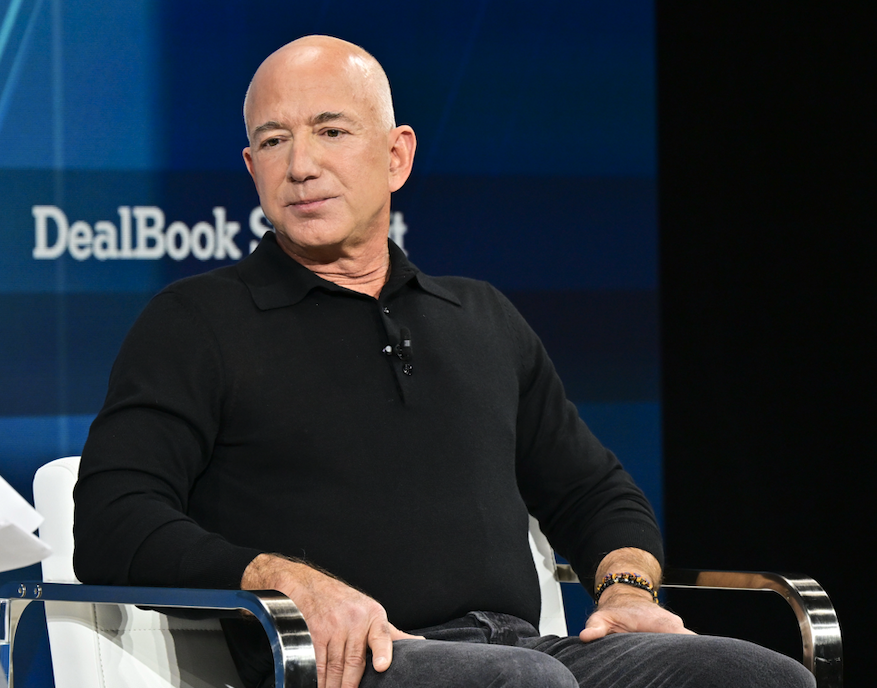
Amazon.com Inc. Chairman Jeff Bezos said that the spending on artificial intelligence resembles an “industrial bubble” that could lead to lost investment but will also make society better off.
Pharmaceutical stocks are poised to cap off their best week in 16 years as a drug-pricing and tariff deal with the US government helped ease an overhang that’s been weighing on the sector for most of the year.
DoubleLine Capital says the popular strategy of betting on a steeper Treasury yield curve has plenty of room to run with the political gridlock in Washington only lending support to the trend.
The louder the alarm bells are blaring about the stock-market rally getting excessive, the more investors appear to be tuning them out.
For more than two decades, US money managers have looked on enviously as Vanguard Group reaped the benefits of a unique structure that grafted the advantages of an ETF onto its biggest mutual funds.
Locking in attractive bond yields can support long-term returns, especially as central banks cut interest rates and tariff effects pose risk to global economic growth and inflation.
Central banks are walking a tightrope, carefully fine-tuning their next moves as they face lingering inflation and subdued growth.
The government shutdown may spark some short-term volatility, but investors aren’t likely to bear the brunt of a red October.
Despite inflation remaining a concern, the Federal Reserve (Fed) cut interest rates in response to weakening jobs numbers. This allowed small-cap equity performance to lead a month that was generally positive across sectors, cap sizes and asset classes.
September’s rate cut may be exciting for many investors’ equities holdings, but those same investors may feel less excited about the income on offer from bonds going forward. Falling rates, of course, lead to falling yields in numerous debt securities and offerings.
Fall is here, making now an ideal time to address your year-end financial goals and begin mapping out new goals for the year ahead. Sequoia’s Special Needs Financial Planning team is a comprehensive financial planning partner, ready to support you on multiple fronts.
There has been a lot of controversy around the Trump administration’s policy toward the Federal Reserve recently. What is less obvious to most investors is what they’re aiming to accomplish. Trump continues to talk about getting rates lower, and this has been echoed in other parts of the administration as well.
Social Security is a key component of a comprehensive retirement income plan. As a result, making the right decisions around claiming benefits is critical for long-term success in retirement. Married couples in particular need to think carefully about how to best access benefits based on their individual needs and circumstances.
In the coming week, several Federal Reserve officials will speak following the recent decision to resume rate cuts.
Portfolio manager Lew Sanders has quietly built a legacy as one of the most influential value investors of the past 50 years.
Despite a weaker end to the month, the equity market “melt-up” successfully navigated what has historically been a tricky month for equities, as represented by the S&P 500 in September (average returns -0.61%), closing out the month (as of September 29) with a handsome gain of over 3%.
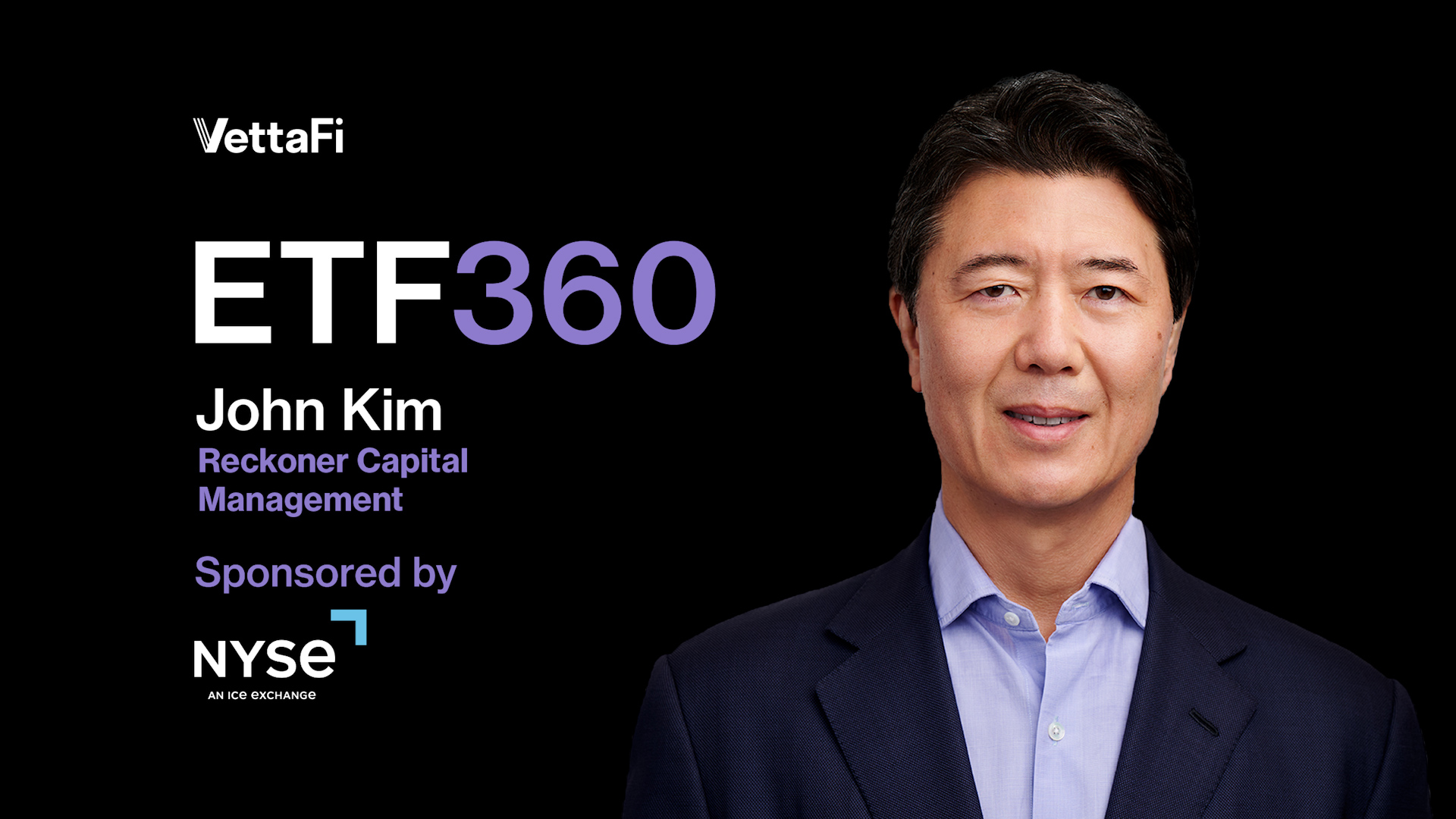
On the latest ETF 360, VettaFi’s Cinithia Murphy talked to Reckoner Capital Management’s John Kim. The two discussed CLOs and the Reckoner Leveraged AAA CLO ETF (RAAA).
There are many ways to navigate market uncertainty, and pursue both upside participation and some level of downside protection. Options-based approaches such as the Defined Outcome ETF category loom large here, fit for purpose.
At this point, it’s no longer just a crypto-friendly government propelling movement forward — it’s real regulations that have been created.
Emerging-market equities extended their winning streak for a fourth day, climbing to the highest level since 2021 as artificial intelligence optimism — fueled by a landmark OpenAI share sale — lifted global sentiment.
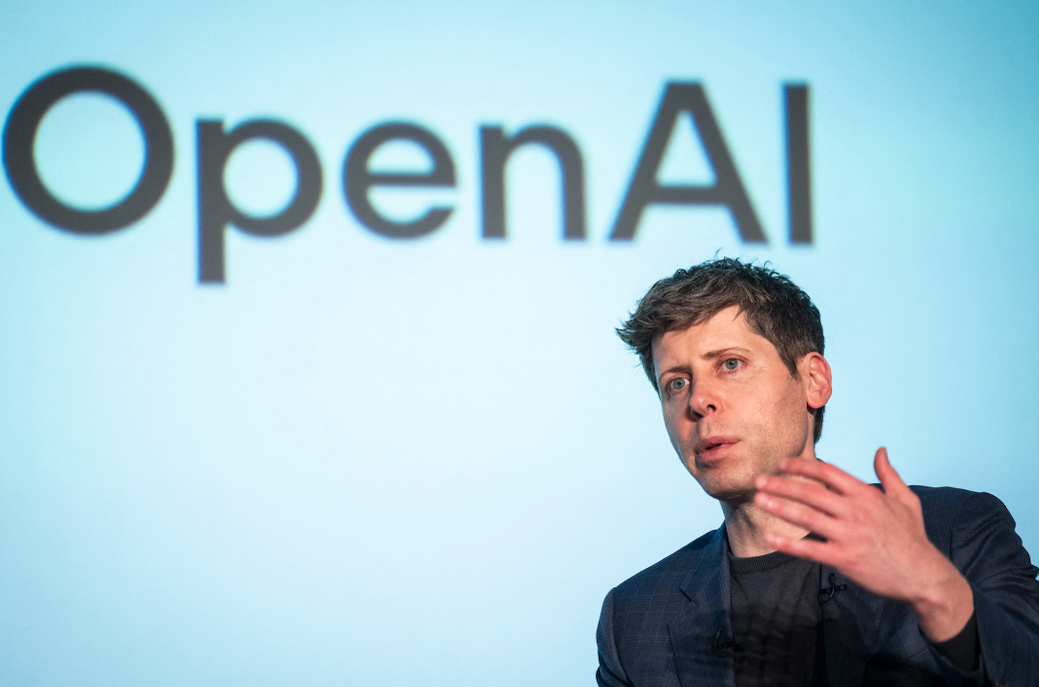
OpenAI has completed a deal to help employees sell shares in the company at a $500 billion valuation, propelling the ChatGPT owner past Elon Musk’s SpaceX to become the world’s largest startup.
Signs of caution are emerging around high-flying tech shares. But that’s just making it cheaper to use options to bet on further gains in the stocks, Bank of America’s derivatives strategists say.
Warren Buffett’s Berkshire Hathaway Inc. reached a deal to buy Occidental Petroleum Corp.’s petrochemical business for about $9.7 billion in cash.
Earlier this year, GMO’s Asset Allocation Team invested a sizeable 13% of its flagship unconstrained Benchmark-Free Allocation Strategy into the GMO Alternative Allocation Strategy (ALTA). ALTA provides daily liquidity and seeks to deliver equity-like returns with sensible and competitive fees, allowing for realistic return forecasts and prudent risk management.
AI technology has the potential to profoundly improve industries and markets, but not without some risks—like valuation and profitability—that investors should be aware of.
Last week, my colleague wrote about Anchoring Bias, a psychological phenomenon that attaches a particular price or specific yield level to a bond.
LPL Research analyzes recent market performance as Fed expectations, strong economic data, government shutdown concerns and more continue to have an impact.
Market sentiment has come a long way since the Tariff Tantrum. Earlier this year, the VIX volatility index shot up into the 60s, a fear level previously seen in such episodes as the October 1987 crash and during 2008’s rolling bank insolvencies.
Nomi Prins brings rare credibility to these conversations. She holds a PhD in international strategic studies with a specialization in political economy, and her career spans some of the most powerful financial institutions in the world.
In this video, Chuck Carnevale, co-founder of FAST Graphs, dives deep into Comcast (CMCSA) to evaluate whether today’s low stock price represents risk or opportunity.
Oil prices are notoriously difficult to forecast. Production can be volatile, and the global oil supply chain is complex.
A report that Boeing Co. is planning to build a clean-sheet design single-aisle aircraft to replace the 737, an aircraft platform first created in the 1960s, isn’t a surprise, but it does mark a milestone for the company’s recovery.
Advisors who want to grow a family office business need to make sure they have the expertise and resources to service the far-ranging needs of wealthy families. Some wealthy families are looking for a “one-stop solution.
The key is to stop trying to be everywhere and start showing up where your ideal clients already are.
Venture Global (VG), which went public earlier this year, is a rapidly expanding, low-cost producer of U.S. liquefied natural gas (LNG). Its business centers around liquefaction, which is the process of cooling natural gas into LNG, making it possible to ship overseas.
Tesla Inc. shares climbed 33% in September as investors rallied around Chief Executive Officer Elon Musk’s renewed focus on the company. That’s drawing attention to whether the key third-quarter sales figures coming later this week will be strong enough to sustain the momentum.
Partnering with a CDFA can be a practical way to strengthen financial outcomes for clients and reduce the risk of costly oversights to both you and your client.
When Amazon.com Inc. recruited longtime Microsoft Corp. product chief Panos Panay in 2023 to run its devices division, his new colleagues thought the e-commerce giant was preparing to take its consumer gadget line upscale.
Here are some key areas of focus as you think about solidifying your current team or preparing to transition and join a new team.
Inflation gave markets exactly what they wanted last week—no surprises.
When it comes to managing risk, OCIO providers can’t afford to overlook history.
Consumption spending surprised to the upside once again in August, something we had already seen from last week’s release of retail and food services sales during the same month.
In what represents a positive trend for investors engaged with ETFs such as the Invesco QQQ Trust (QQQ) and the Invesco NASDAQ 100 ETF (QQQM), the AI adoption conversation continues gaining importance and momentum.
JPMorgan Chase & Co.’s $20 billion debt commitment for the record-breaking buyout of Electronic Arts Inc. is classic leveraged financing, which might seem surprising in a world overrun with private credit.
Changing CEOs won’t change the fact that the decision to pursue a merger lies with BNSF and Berkshire. Buffett and his management team are unlikely to be impressed by threats of proxy fights nor shareholder-activist bullies.
For elite receivers, it’s not just about making the catch, it’s about what they do next. The same is true for financial advisors who switch broker-dealers. If you are considering a move, ask yourself: Am I just trying to make the catch? Or am I ready to take off down the field?
Over 60% of small cap investors use passive funds, but we strongly believe this is a missed opportunity, as small caps have consistently been one of the most reliable sources of alpha available in the public markets.
While it may seem that way at extremes, momentum tends to exhaust, and reversals or corrections become more probable. The RSI gives us a real-time gauge of when a trend may be vulnerable to a pullback or turn.
The latest read on the US labor market will be out this Friday, October 3, when the Bureau of Labor Statistics releases September nonfarm payrolls, unemployment, average hourly earnings and other metrics.
Always intense, the perennial debate over whether equities are too richly valued has become even more fervent of late.