Federal Reserve Bank of New York President John Williams said that while inflation has cooled recently toward the Fed’s 2% target, policymakers are still some distance from their goal.
The expert and you are in a car and the expert is driving. After awhile, you notice that the expert is driving the car by looking through the rearview mirror. Concerned you ask him why he’s not looking ahead as he drives.
As part of our annual tradition, we’ve reached out to Russell Investments’ associate base to come up with four recommended books for this year’s summer reading list. Below are our choices, which cover a wide variety of topics, including leadership development, diversity and inclusion and the artificial intelligence revolution.
If you told me at the beginning of the year that we were going to go from starting with six interest-rate cuts to now we’re hoping to get one, I would be shocked to say that the equity markets are up 15%.
We’re borrowing from the upcoming Paris Summer Olympics for our quarterly theme – with a twist. Instead of using the most popular events (like gymnastics, swimming, and track & field) to express our views, we’ll go beyond the spotlight.
Ongoing budget deficits linger amid the post-COVID economic recovery. While markets appear unconcerned now, the accumulation of debt may exhaust investor patience. Anxiety about the sustainability of the nation’s debt could escalate with the upcoming elections in November. In part one of our series, let’s look at fiscal policy and Treasury debt.
The mid- to long-term costs of missed opportunities by staying in cash mean investors should consider moving off the cash sidelines.
Owning only the U.S. stock market likely means being overweight Tech. But Tech stocks don't always outperform. Investors may want to look outside the U.S. to be diversified.
Don’t miss out. Prepare to take advantage of opportunities in the second half.
On the latest edition of Market Week in Review, Senior Director and Chief Investment Strategist for North America, Paul Eitelman, and Regional Director for North America Advisor & Intermediary Solutions, Lam Guluka, discussed key market themes from the second quarter.
Doug Drabik discusses fixed income market conditions and offers insight for bond investors.
Financial giants from Goldman Sachs & Co. to Morgan Stanley and Barclays Plc. are taking a fresh look at how a Donald Trump victory in November could play out in the bond market.
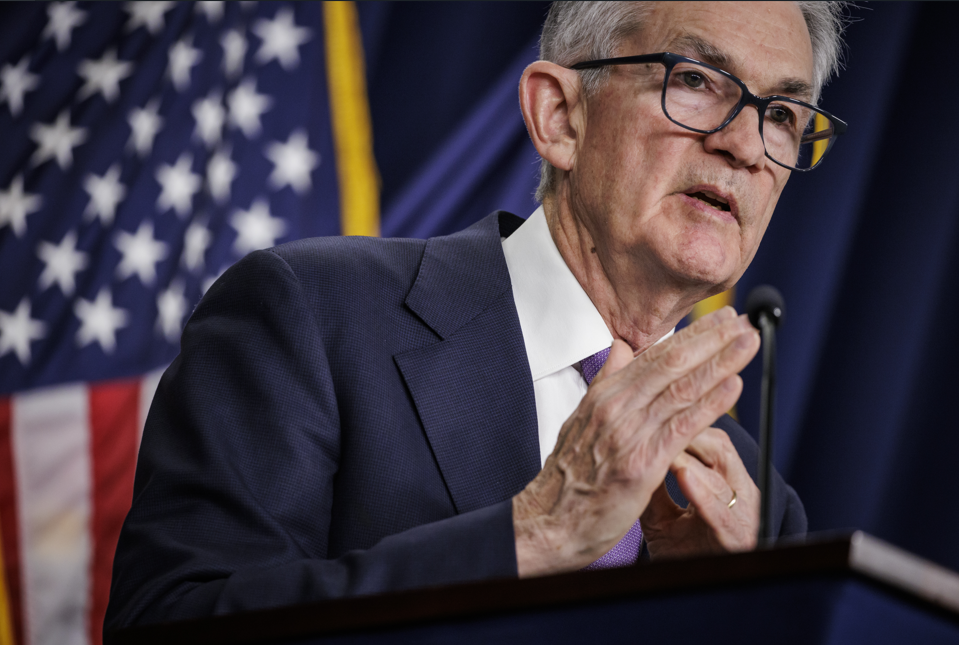
Federal Reserve Chair Jerome Powell said the latest economic data suggest inflation is getting back on a downward path, but added officials would like to see more evidence before lowering interest rates.
Economists and some Federal Reserve officials are increasingly on alert that pain could be on the horizon for American workers amid signs the labor market is losing steam.
To protect your investments and ensure they retain their value over time, you must implement proactive strategies that combat the effects of inflation. In this article, we discuss seven strategies to help shield your investments from inflation’s impact.
Economic indicators are released every week to provide insight into the overall health and performance of an economy.
Key Takeaways
Financial advisors get a bad rap. Some deserve it; most don’t. The problem for the entire investment advisory and portfolio management community stems from the “career risk” they inevitably face.
The Generation X report released by Natixis Investment Managers included a check of investment sentiment and opportunities for advisors.
The presidential debate was the big story of the week and revealed a mild market preference for former President Trump. Notably, during the 90 minutes of the debate when there was no other market news, S&P 500 Futures rose 10 points, due to Trump’s business-friendly policies despite his higher-policy unpredictability.
We review the key themes of the first half of a busy year.
Although this missive is tabbed as a 3rd quarter expository, it strikes home more as a 2025 conundrum because contained in the current data is a cause and effect that we believe is clearly being overlooked. Let’s begin with the fact that the stock market averages are trading at record highs.
Investors have been so preoccupied with Fed policy that they missed the economy sticking the soft landing.
In this piece, I demonstrate that small-cap equities become increasingly attractive for investors with longer investment horizons.
With crypto going mainstream, it’s important that advisors understand the pros and cons of including crypto in a portfolio.
The growing prospect of a Trump presidential victory is making yield curve steepeners an attractive bet as growth will likely slow and inflation quicken under such a scenario, according to Morgan Stanley.
Jerome Powell is Mr. Yen. He has been for some time, but it has taken a while for the world to catch on.
Goldman Sachs recently upped its price target to S&P 6300 for the end of this year, along with Evercore ISI upping its year-end target to 6000. Such is not surprising given the strong run in the markets this year.
The giant federal debt we’ve been talking about isn’t just borrowed money. It is also lent money. Loans are two-party transactions. One side receives temporary use of cash which it agrees to repay with interest. The other gives up the current use of that cash in exchange for receiving interest. Ideally, it works out for both… but not always.
As we approach the halfway point of the year, all eyes remain on Federal Reserve policy and the pace of inflation’s downward trend. Central banks are becoming more dovish, but when will the much-anticipated rate cuts materialize? We’ve identified six key themes we believe will influence the Fed and impact investors in the second half of 2024. Spoiler alert: Periods of volatility are likely and will provide opportunities to episodically add risk.
This week I had the privilege of participating in a YPO (Young Presidents’ Organization) event held in Victoria Falls, Zimbabwe. One of the main topics of discussion was investment opportunities in neighboring Zambia, a country that, despite its challenges, is a rising star on the African continent, due largely to its copper exports.
Rick Rieder and team argue that the economy is making further progress towards normalization and continues to offer a once-in-a-generation investing opportunity, which isn’t adequately represented by the benchmarks.
Initial rate cuts by the European Central Bank and Bank of Canada may signal a transformative trend toward monetary easing.
Retail trade sales in the U.S. are reported by distribution channel. For example, gasoline sales are reported through the gasoline stations distribution channel, although those gasoline stations’ sales also include everything else sold at gasoline station convenience stores, i.e., hot dogs, tobacco, sodas, gum, chips, coffee, etc.
How to help position your portfolio in anticipation of an economic downturn.
Looking to assess your portfolio for the current inflation outlook? Natixis Investment Managers' Cyclicality vs. Inflation outlook can help.
Oil retreated from a nearly two-month high as traders weighed a weakening physical market against escalating Mideast tensions.
US consumer sentiment declined in June by less than initially estimated on expectations inflationary pressures will moderate.
The Northern Trust Economics team shares its outlook for major markets, with a spotlight on the eurozone.
CIO Sean Taylor says the second half of the year looks positive for emerging markets but country selection as a risk control will be critical in what is proving to be a politically-charged period for equities.
Federal Reserve Bank of San Francisco President Mary Daly said inflation data out Friday indicates monetary policy is working, but said it’s too early to tell when it will be appropriate to lower borrowing costs.
Schwab Sector Views is our six- to 12-month outlook for stock sectors, which represent broad sectors of the economy. The Schwab Center for Financial Research (SCFR) combines a factor-based approach with a market and economic assessment to determine the ratings.
US Treasuries are headed for their biggest monthly rally of the year after the Federal Reserve’s favored inflation gauge decelerated, bolstering expectations for interest-rate cuts starting this year.
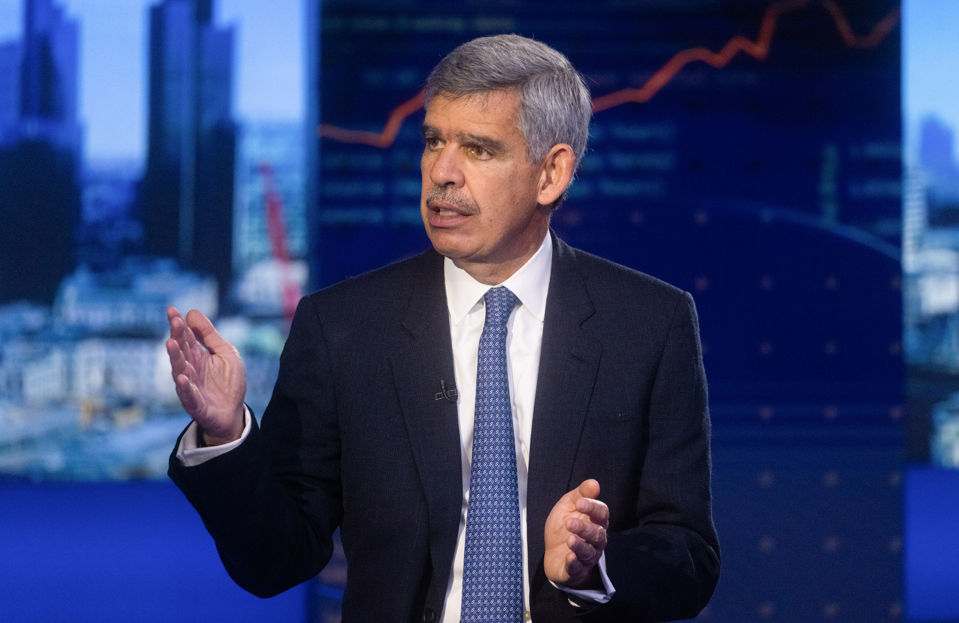
Softening in the measure of inflation favored by the Federal Reserve highlights a slowing economy that’s upping the risk of a policy error by the central bank, Mohamed El-Erian said.
The Federal Reserve’s preferred measure of underlying US inflation decelerated in May, bolstering the case for lower interest rates later this year.
The US trucking market, which has been in recession for more than a year now, is poised to recover … at some unknowable point in the future.
Chief U.S. Economist Ryan Boyle explains why measures of inflation don't match feelings about prices.
Marc Pinto, Head of Americas Equities, and Chris Benway, Director of Research, consider how the U.S. election may influence markets leading up to November, discuss policies worth monitoring as the election draws near, and remind investors to prioritize quality in times of uncertainty.
Remember when an inverted yield curve used to predict recessions? Here we are about two years removed from the Treasury yield curve moving into negative territory, and the U.S. economy has yet to move into recession territory. The economy’s resilience has certainly been a surprisingly welcome development and has left many a market participant wondering what happened.
Investors need a better grasp of risk-management tools to gauge a portfolio’s strategic resilience in a rapidly changing world.