We believe we’re entering a new era of dispersion in the performance of financial assets. Behind buoyant index averages are sharply bifurcated cohorts of winners and losers.
It may be fitting that Groundhog Day occured on a Monday this year. Punxsutawney Phil has been officially prognosticating the weather since 1887.
The US Treasury refrained from any major shift in its debt-issuance strategy, meeting dealers’ expectations in the face of speculation that officials might take steps to bring down longer-term borrowing costs.
The start of 2026 has brought no shortage of challenges for advisors, ranging from shifting rate expectations to valuation concerns in a top-heavy market. Nonetheless, ETFs gathered an impressive $165 billion of new money in January, more than the previous three Januaries combined, according to State Street Investment Management.
There’s an ongoing shift in how investors access income through ETFs. No longer is sourcing income a pursuit centered solely on fixed income assets. Today, it increasingly includes the use of derivatives to boost yield and total return, and to capitalize on equity volatility.
Last week began with a quiet Fed meeting, but markets quickly received a new catalyst with Trump announcing Kevin Warsh was Trump’s choice to be the next Federal Reserve chair. Warsh was always my first choice. I expect the Senate to confirm him.
So, President Trump has announced his pick for Federal Reserve Chairman, and the markets are not pleased. Everybody seems convinced that Kevin Warsh is a “hawkish” pick, and markets are throwing a temper tantrum because they think he might take the easy money punch bowl away.
Get ready each week with high-conviction insights that go beyond media headlines.
President Trump has announced his intention to nominate Kevin Warsh to become the next chair of the Federal Reserve Board of Governors. We believe Warsh will be confirmed by the Senate and serve as an effective, thoughtful Fed chair. He brings intriguing ideas on ways to change and ideally improve how the Fed operates.
LPL Research examines how the Fed is entering 2026 amid constrained conditions and as growth and inflation meet an unsustainable fiscal trajectory.
Todd Rosenbluth, Head of Research at VettaFi, and host Nate Geraci walk through five of the most noteworthy ETF flow stories so far this year. Chris Getter, Managing Director and Portfolio Manager at Simplify Asset Management, unpacks private credit and the Simplify VettaFi Private Credit Strategy ETF (PCR).
January reinforced our key theme for 2026 – returns must be earned. Markets moved beyond the mag 7 as solid economic growth, a more patient Federal Reserve, and widening market leadership rewarded disciplined diversification. Gold’s parabolic rally and violent reversal showed what happens when discipline breaks down.
Warren Buffett has a great line on how hard it is to pick winners when major industrial change is afoot. “What you really should have done in 1905 or so, when you saw what was going to happen with the auto, is you should have gone short horses,” the Oracle of Omaha once said.
Money managers at BlackRock Inc., Bridgewater Associates and Pacific Investment Management Co. are shoring up their portfolios against a fresh bout of inflation.
Reality has a way of catching up with theory eventually, and now it has for Japan, whose long-term bond yields are rising as the yen is depreciating. The Japanese experience, it turns out, is not an excuse to run up lots of debt. It is a cautionary tale.
Mainstream expectations, those from Wall Street, economists, and corporate strategists, have congealed around a bullish economic outlook for 2026. Most forecasts project stronger economic growth, with contained inflation, and continued investment in technology and capital expenditure.
Today we’re going to explore this “affordability” issue, looking at economic facts, survey data and simple intuition. As you’ll see, it’s not as simple as some people think. I also make a quick comment about the appointment of Kevin Warsh as Fed chair at the end.
At its January meeting, the U.S. Federal Reserve (Fed) voted to pause its rate-cutting cycle, a move that aligns with recent signs of stabilizing labor markets and easing inflation pressures.
Investing in common stocks is rarely a smooth experience. Stock prices fluctuate daily, sometimes dramatically, driven by market sentiment, economic data, and short-term news. Even company earnings, while more stable than prices, can experience cycles and periods of volatility.
The final week of January saw a stark divergence between official policy and the American consumer's outlook. While the Federal Reserve maintained a "solid" view of economic growth, the public’s mood plummeted to a decade-low as sticky amid sticky wholesale inflation.
Top strategists joined VettaFi on January 29 to provide data-backed forecasts on the trajectory of global interest rates, persistent inflationary pressures, and the resilience of corporate earnings. Advisors came away from the event with the tools needed to mitigate risks stemming from sudden regime shifts while capturing alpha in a fragmented market.
A sharp productivity jump shows firms doing more with fewer workers. But the upside surprise also highlights growing risks about how these gains affect the workforce.
For years now, advisors and investors alike have been pouring significant attention — and inflows — into the broad spectrum of fixed income ETFs.
As political pressure on the Federal Reserve intensifies and markets ponder the nomination of a new Chair, understanding this chain of risk is increasingly important for investors. Equity valuations are heavily affected by expectations for long-term cash flows, along with the interest rates and risk-premiums that drive how much investors are willing to pay for those future dollars.
Private credit has grown from a small niche market to a major slice of the financial asset pie. Not many people outside of institutional finance talked about it twenty years ago.
In this article, we look both back and forward, first at the 2025 capital markets to analyze not just what happened but also how it fits in the historical context and what we believe it means for 2026 and beyond. We then pivot to our return expectations for major asset classes in the next decade.
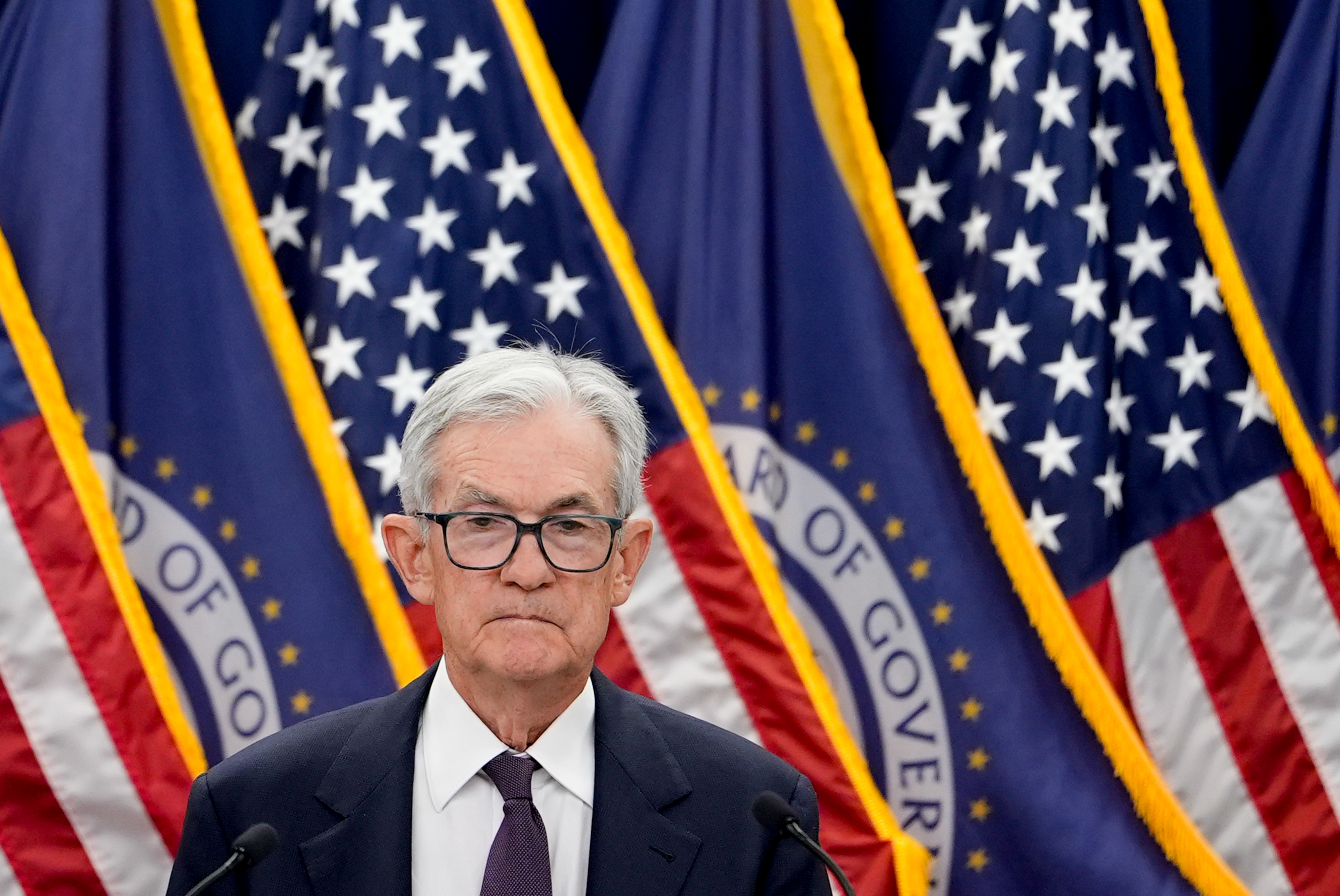
Jerome Powell has two more opportunities to adjust interest rates before his term as Federal Reserve chair ends — and he may not need them.
Theoretically, the two foundational drivers of long‑run economic growth are population growth, which expands the labor force, and productivity, which determines how efficiently that labor can transform inputs into outputs.
Another blockbuster year for bond ETFs is in the books. After two straight years of record net inflows, taxable fixed income ETF assets have nearly doubled since 2020 – crossing the $2 trillion mark. But the big story in 2026 will be rising pressure to move out of money market funds.
According to Baiocchi, advisors are reevaluating portfolios and recognizing gaps in exposure to companies driving major market themes.
Last week in our latest Cyclical Outlook, “Compounding Opportunity,” we argued that beneath the economy’s broad resilience lies a stark divergence. U.S. policy pivots combined with the surge in adoption of AI technology have created winners and losers.
Concerns over accelerating inflation persisted throughout 2025. However, these anxieties were unwarranted as wage and price increases slowed in response to eight influential factors that also suggest that last year’s disinflation will persist in 2026.
Markets, interestingly enough, felt their own version of a “deep freeze” this week. Geopolitical flare-ups, fresh tariff threats and a mini-meltdown in Japan’s bond market briefly rattled investors and pushed volatility sharply higher.
The best growth opportunities are overwhelmingly found among highly scalable technology and communications companies. Many of them get started with the help of venture-capital funding and are already behemoths when they go public.
It is critical to understand that 2026 will not deliver certainty. Instead, investors should focus and make decisions based on probabilities backed by data, earnings trends, policy shifts, and macro signals.
The Bank of Japan’s recent policy shift is sending shockwaves through global markets. Headlines this week highlight the dollar’s tumble against the yen and renewed chatter of an unwind to the massive yen carry trade, estimated at over $500 billion.
While our outlook for the municipal bond market in 2026 is positive overall, we have identified five risks that we believe should be on investors' radar.
The real hero of the late-week recovery was the Information Technology sector. Despite a jarring 16% slide from Intel (INTC) following a tepid outlook shared on their Q4 2025 earnings call, the broader semiconductor space and "Magnificent Seven" megacaps provided the necessary ballast.
Long trips rarely end at the airport. We arrive, but our internal clocks lag behind; the first day back is spent acclimating to the new landscape. The global economy enters 2026 in much the same way. Shifting rules of commerce, political stoppages and patchy data have left decision makers disoriented.
LPL Research explores the drivers behind the rally in metals, the associated risks, and the outlook for their durability.
The U.S. economy continues to display a complex mix of resilience and persistence. As markets brace for next week’s FOMC meeting, this snapshot breaks down the latest shifts in GDP, inflation, and consumer behavior.
It was a volatile week in financial markets, largely driven by geopolitical developments. Last weekend, the U.S. administration proposed new tariffs on several European countries linked to tensions around Greenland.
Financial stress often shows up in the bond market well before it becomes visible elsewhere. Equity markets can remain calm while pressure quietly builds underneath the surface.
Looking ahead to 2026, Franklin Templeton Fixed Income Municipal Bond Director Ben Barber says there are a few key factors that will likely shape the municipal bond market.
With 2025 in the books, it will be a difficult year to top for fixed income exchange-traded funds (ETFs), but Morningstar is predicting more excitement to come. That should keep fixed income investors fixated on what new developments the space brings this year.
A quiet but telling shift is unfolding in the crypto derivatives market, as one of the most reliable money-making trades shows signs of breaking down.
The key point, in our view, is that this combination of shocks is not likely to be an isolated occurrence in 2026 or beyond.
Residential mortgage loans offer insurers a combination of yield, diversification, capital efficiency and liquidity that we think is difficult to replicate elsewhere in private credit. In a market shaped by structural housing undersupply, strong borrower credit and expanding non-agency issuance, we believe residential mortgages present a timely and scalable opportunity.
It was a sea of red to kick off the holiday-shortened trading week yesterday. President Trump’s ambition to annex part or all of Greenland drew backlash from European leaders.
US equities reversed early losses during Donald Trump’s speech at the World Economic Forum in Davos when the US president said he didn’t want to use excessive force to acquire Greenland