In this new series, Chuck Carnevale, co-founder of FAST Graphs and widely known as “Mr. Valuation”, begins the process of constructing a F.I.R.E. Dividend Growth Portfolio from the ground up. F.I.R.E., which stands for Financial Independence, Retire Early, is built on the idea of creating enough growing income to eventually support early retirement.
Returns from emerging market bonds hinge on five factors, our economic research suggests. And for the first time in two decades, four of these are now favourable, heralding a new phase of outperformance for the asset class.
While financial innovations often emerge on the system’s periphery, beyond the reach of regulation, if they prove to be systemically important, they end up being integrated into the system’s regulated core. Stablecoins are likely to follow this trajectory.
Although the September employment report surprised to the upside, the overall stance of the US labor market remains weak, something that was underscored by the third consecutive increase in the rate of unemployment, from 4.1% in June to 4.4% in September.
Transitioning to an independent RIA model involves complex challenges, from navigating compliance and non-solicitation agreements to setting up scalable technology. This article highlights how specialist partners, specifically Terrana Group’s Advisor Transition Consultants, provide the strategic guidance and hands-on support needed for a seamless and profitable move.
After a gangbuster stock market rally since the early-April lows, many of the prior highfliers have taken a breather amid AI bubble and valuation concerns.
Many of you may have recently seen a chart circulating on the internet suggesting a nationwide collapse in home prices is on the way, that we are in the “biggest bubble in history,” the collapse is “inevitable and nothing can stop it.”
Markets traded with an unusual mix of strong micro data and fragile macro sentiment last week and nowhere was that clearer than the reaction to Nvidia’s excellent earnings. The fundamentals showed strong demand, a robust product cycle, and clean forward guidance—yet the stock slumped after an early surge.
Those who have defaulted into TDFs need to un-default and take back risk control over their lifetime savings. Safe assets include Treasury bills and short-to-intermediate TIPS, even though their returns are low. The price of safety is low, but reliable, returns.
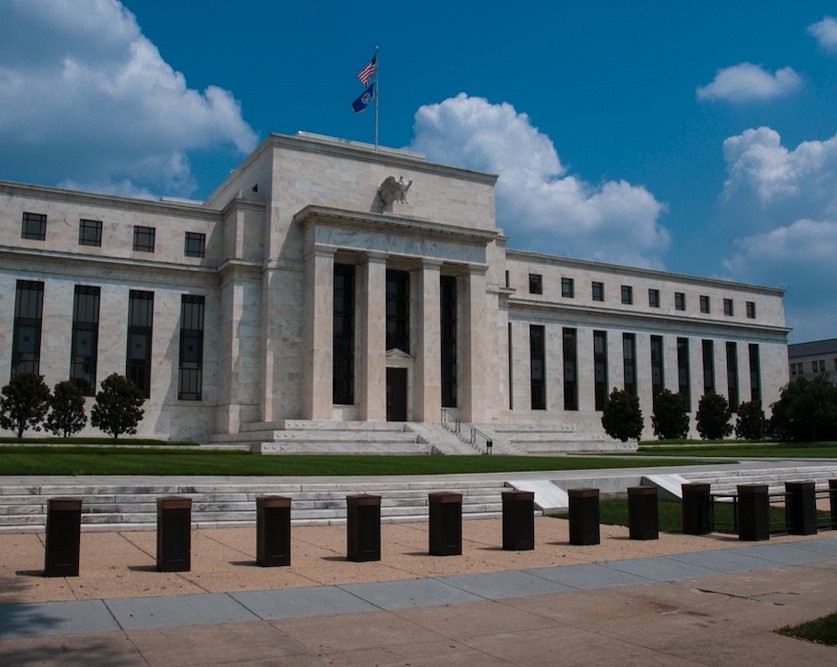
This article walks readers through the Federal Reserve’s balance sheet to explain how it now acts as the primary provider of liquidity to financial markets. It details the Fed’s reserve management tools, including the well-known QE and QT, to show exactly how it injects or withdraws reserves from the banking system.
A third straight week of market turbulence left US equity investors searching for any edge on how to position ahead of what is normally a strong seasonal stretch for stocks.
A flood of debt sales from Big Tech risks overwhelming buyers and could weaken the credit market on both sides of the Atlantic.
The U.S. economy’s recent growth has a distinctive engine: large‑scale capital expenditures (capex) tied to artificial intelligence (AI). Firms such as Microsoft, Alphabet (Google), Meta Platforms, and Amazon have announced massive investments in data centers, servers, networking equipment, and AI infrastructure.
Federal Reserve Governor Christopher Waller said he’s advocating an interest-rate cut in December, though the US central bank can probably take more of a meeting-by-meeting approach starting in January once it receives a flood of economic data.
This article explores the growing changes and challenges facing the Federal Reserve. It argues that due to political pressure and fiscal irresponsibility from Congress, the Fed is losing its policy effectiveness and its long-held tradition of consensus voting is breaking down, leading to an era of unpredictable decisions.
AI looks like a classic investment bubble to us, with very high valuations and signs of rampant speculation. But we recognize that while many investors harbor fears that AI might be a bubble, they are far from sure of that fact and tend to assume the market is appropriately priced as a fairly strong prior.
The AI investment story is maturing, with major tech firms raising a record $108 billion in debt in 2025 to finance infrastructure, a sharp departure from previous cash-funded growth. This increased use of leverage and riskier financing mechanisms is generating concern among stock traders and contributing to rising market volatility.
With Thanksgiving around the corner, there’s so much to be thankful for in 2025, especially for investors. After a challenging start to the year, the economy and markets regained their footing quickly, with nearly all asset classes on track for solid gains heading into year-end. Looking ahead, there are reasons for optimism to continue into 2026 as well.
Answers to questions investors are currently asking about Treasury bonds, tax policy, credit quality and other issues currently affecting fixed income investments.
The SEC has granted Dimensional exemptive relief to offer dual share class funds, a move that allows certain mutual funds to offer an ETF share class under the same structure. This monumental decision, following the expiration of Vanguard's patent, is expected to open the floodgates for other asset managers seeking to offer their existing mutual fund clients the tax efficiency and structural benefits of ETFs.
Sun Life Financial Inc.’s newly unified asset-management division plans to hire about 20 senior executives as it looks to turn a collection of investment managers into a more coordinated global powerhouse.
We enter 2026 after a year of robust global stock gains on AI optimism, falling interest rates and a resilient world economy. Beneath this stability, however, lies a more fragile environment.
It’s been a tough year for high-quality stocks in Europe. Yet despite vexing market conditions, the underlying business features that define quality stocks often remain intact. For investors, there are compelling reasons to maintain conviction in companies with robust profitability and resilient business models—even when short-term returns disappoint.
Last week's economic landscape was defined by conflicting signals from key indicators, suggesting a growing divergence between investor behavior and underlying consumer health.
Looking at your portfolio and feeling a distinct lack of income? Now may be the time to get more income into portfolios, with this version of covered call ETFs offering a solid option.
Vanguard continues its push into the active ETF market with the introduction of three news funds focused on equities. These are the Vanguard Wellington U.S. Value Active ETF (VUSV), Vanguard Wellington U.S. Growth Active ETF (VUSG), and Vanguard Wellington Dividend Growth Active ETF (VDIG). This bolsters the current active equity roster to now eight funds for the issuer.
This month’s Muni Monthly covers performance, supply and demand technicals, fundamentals and valuations for the month ending October 2025.
As measured by the largest ETF dedicated to the sector, real estate stocks are offering middling performances this year. That is disappointing considering the Fed has pared interest rates two times. However, that tepid sentiment arguably belies opportunity with ETFs such as the ALPS Active REIT ETF (REIT).
In times of uncertainty — whether in sport or in markets — the ability to separate fact from feeling — or ideology — is critical. This principle applies across leadership, investing and even today’s AI-driven economy.
The interview features Cynthia Murphy and John Davi, Founder, CEO, and CIO of Astoria Portfolio Advisors, discussing their firm's investment philosophy and the current market environment. Davi explains Astoria's three verticals: managing risk-based ETF portfolios, running quantitative stock selection models, and offering their own equity, fixed income, and alternative/real asset ETFs. The conversation highlights key market concerns like high inflation and the dominance of the "Mag Seven" stocks, with Davi recommending diversification into international stocks, mid-cap stocks, financials, industrials, and inflation-fighting strategies like gold and Bitcoin, especially for traditional 60/40 portfolios.
Alternative investments have already gained plenty of traction in 2025, and things may very well be the same for 2026. However, it’s crucial to evaluate which kind of alternative investments could provide a more potent use case than others.
The S&P 500 Index edged higher to start Friday, recovering some of the losses caused by recent concerns over stretched valuations and a potential AI bubble. The recovery was supported by remarks from Federal Reserve Bank of New York President John Williams, who suggested there is room to lower interest rates soon. These comments immediately boosted market expectations for a December rate cut.
The article examines the high valuations of AI-focused tech giants like Alphabet and Nvidia, contrasting the risk of an "AI bubble" with their powerful profitability. While Berkshire Hathaway's new stake in Alphabet signals confidence, both companies require substantial future growth to justify their current multiples.
The article examines how tech giants like Meta are using massive, off-balance-sheet special-purpose vehicles to finance multi-billion dollar data centers. Despite these complex structures, large investors are treating the debt as a direct obligation of the tech company, leading to a subsequent sell-off of Meta’s publicly traded corporate bonds.
The end of the government shutdown left the SEC with an avalanche of paperwork, forcing staff to prioritize new company registration statements critical for initial public offerings (IPOs). More than a dozen companies had to revise their IPO timelines due to the delays, creating market uncertainty.
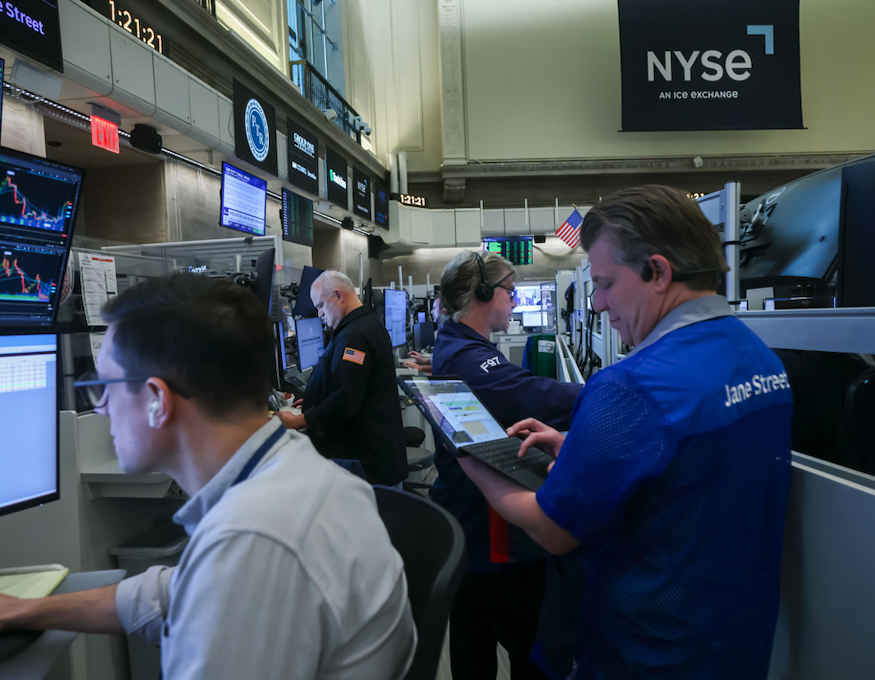
European stocks fell, tracking their deepest weekly decline since August, as a risk-off mood hit some of this year’s top-performing technology shares. The decline was driven by investor concerns over lofty tech valuations and uncertainty regarding the US Federal Reserve’s next move on interest rates. The market slightly recovered after a Fed official hinted there was room for rate cuts in the near term.
The continued slump in the housing market is now being compounded by a weakening U.S. labor market and a surge in mass layoffs. This labor uncertainty is making potential buyers reluctant to commit to purchases, even as affordability improves and mortgage rates stabilize. This dynamic is leading homebuilders to reduce construction and staffing, further worsening the job market.
While passive portfolios have excelled recently due to mega-cap dominance, the article warns that market disruption and concentration make them vulnerable to a sudden reversal in sentiment. It asserts that skilled active management is essential now to identify future winners and benefit from a potential broadening of the equity market.
The ETF industry continues to grow, with new funds arriving all the time. Each year, hundreds of ETFs arrive on the scene, from covered call ETFs to active bond ETFs and everything in between.
Macro Signposts highlights takeaways from the data analysis conducted by our team of economists and other experts.
Are you looking to combine small-cap upside with income? With markets seeing increased volatility and large-caps looking expensive, marrying the two could boost portfolios.
We examine valuations in historical context, how today’s market compare to the tech bubble of the 1990s and what’s driving stock gains now.
Okay, this is for more than just millennials. It’s for anyone who feels stuck and can’t get started with their investing strategy. If you poke around on the internet, it sounds like my generation might be in the most trouble.
October ETF launches saw a plethora of funds join the ETF ecosystem, representing important trends and intriguing ideas.
Every market needs speculation, but when it spreads into nearly every asset class, investors face a different kind of challenge. Sometimes the smartest move is the least exciting one.
Join the experts at Pictet Asset Management for an educational webcast exploring how AI is being used to evolve active investing.
Be wary of claims that indexing and passive investing have huge hidden costs. In my view, passive investing involves owning, as close as is economically feasible, every stock weighted to market capitalization. So this means total stock index funds.
BlackRock Inc.’s Tony DeSpirito, global chief investment officer of fundamental equities, is leaving the firm along with three other employees in that group as the asset manager shakes up its actively managed stock funds.
After peaking at just over $126,000 in early October, Bitcoin has dropped 30% — breaking through key thresholds, spooking ETF investors, and rattling holders big and small. One group in particular remains exposed: traders who bet on a rebound — and now find themselves underwater while paying for it.
The growing clout of private companies like OpenAI is causing Wall Street to redraw the boundaries of its equity research business.