Gold extended a two-week advance as pared back expectations for further Federal Reserve rate hikes put pressure on the dollar, making bullion cheaper for most buyers.
Investors are remaining cautious about the markets, according to our U.S. stocks and economy report this month. Our report notes that while investors have continued to pile into the market via strong ETF flows and high margin debt balances, they've done so reluctantly with more subdued attitudes.
Whether fixed income investors are focused on locking in yield, managing duration risk, or building resilient core portfolios, bond ETFs have been seeing elevated demand this year.
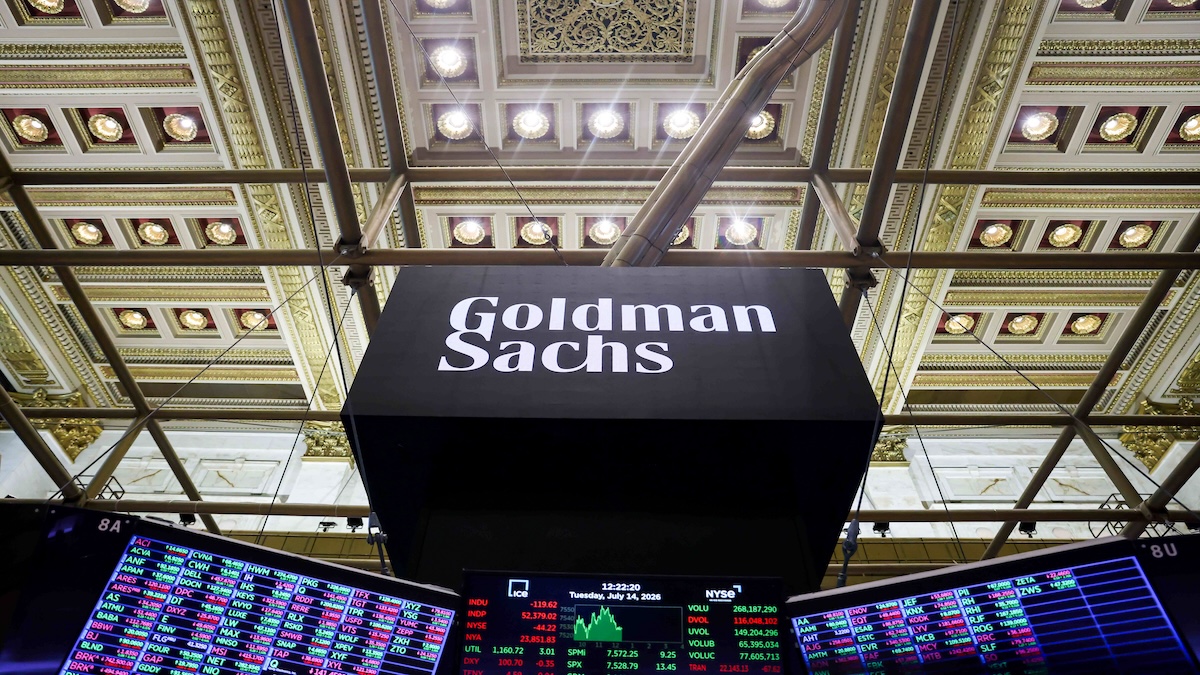
Goldman Sachs Group Inc.’s agreement to buy Neos Investments for as much as $2.25 billion marks a new front in Wall Street’s ETF battle: paying up for specialist firms that have found growth beyond the industry’s low-fee giants.
The consumer remains resilient, but spending is becoming increasingly selective. Bank of America’s August Consumer Checkpoint showed total card spending per household increased 5.0% year-over-year in July, with spending excluding gasoline up 4.3%.
Artificial intelligence data centers are hitting a power problem that has little to do with computer chips, according to a new report from Thornburg Investment Management.
SpaceX has completed a $60 billion acquisition of artificial intelligence coding startup Cursor, a key part of Elon Musk’s bid to gain ground on rivals Anthropic PBC and OpenAI.
There are routes towards adding innovation exposure in portfolios without going overboard on the biggest names. The ETF ecosystem has provided for significant innovation in investment strategies in recent years.
After years of tests with digital versions of securities, cash and trading networks, the focus has shifted to whether these technologies could work together. This time, nearly 40 firms were testing how tokenized assets could move through the institutions that keep modern markets moving.
The fixed income landscape continues to offer real opportunity this year as well as persistent, events-driven uncertainty. Still, cutting through the headlines, investors can find major opportunities inside the portfolios and in adding new funds.
Among the key benefits of the ETF wrapper is the wide range of tools it gives advisors and investors to build tailored fixed income portfolios. And given today’s complex rate and inflation environment, it certainly helps to have a wide range of options available.
There’s been no summer vacation for the bond market this year. It seems there’s a new headline every day that needs to be processed and responded to. In terms of Treasuries (UST), yields at the back-end of the curve have risen in notable fashion and have resulted in rates being at levels not seen in almost twenty years in some cases.
Discover the top ETF launches of summer 2026, including new funds from iShares, Amplify, and Defiance targeting crypto, AI, and core equity.
Goldman Sachs Asset Management is continuing its aggressive expansion into active, high-yielding options strategies with a definitive agreement to acquire NEOS Investments. Similar to Innovator Capital Management, another recent acquisition, NEOS has established a firm leadership position in the ETF space.
An in-line inflation reading spurred gains in both stocks and bonds, easing concern about imminent Federal Reserve rate increases despite elevated oil prices.
Goldman Sachs Group Inc. will pay as much as $2.25 billion to buy Neos Investments, expanding its asset manager’s reach in the actively managed exchange-traded fund market.
The outlook for Boeing Co. to earn copious cash flow is bright. It just turned free-cash-flow positive in the second quarter after years of losses, and the company already has its sights on cash earnings of $10 billion a year. This is driven almost entirely by a rebound of commercial aircraft production.
Demand continues to outpace record supply. Municipal bonds remain an attractive income opportunity in a market where the Federal Reserve (Fed) is likely to remain on hold and carry is driving returns. Despite record issuance of roughly $50 billion per month, demand has remained strong.
Tech and AI are driving a greater share of global equity market returns and earnings growth, raising concentration risks and the need for broader diversification.
The S&P 500 has closed at a new record high some 25 times this year, the most recent taking place just last week. The benchmark, which is now up about 13% — as measured by the performance of the State Street SPDR S&P 500 ETF (SPYM) in 2026 — has been boosted by momentum, solid earnings and ongoing economic growth.
The mantra carrying the markets higher for years has been to leave it to mega-cap tech titans and AI leaders to drive the bulk of market gains, leaving cap-weighted indexes historically top-heavy. But a new narrative has begun to take over.
The Securities and Exchange Commission has made it easier for data center owners to sell asset-backed securities, potentially opening the door for more debt sales as tech firms scour Wall Street for ways to pay for artificial intelligence.
Good or bad, right or wrong, estimates suggest that in the past eighteen months the net flow of immigrants (including the number of illegal immigrants who were deported) may have been negative. By contrast, in the prior four years the US took in more than eight million immigrants, on net. All these numbers could be revised or argued with over time.
Fifty-eight billion dollars. That’s what the Department of War just awarded Lockheed Martin for PAC-3 interceptors, the missiles that have been knocking Iranian ballistic missiles out of the sky for the past five months. It’s one of the largest munitions awards in U.S. history.
US equity market leadership underwent a rotation in July, with previous leaders turning into laggards and vice versa.
With earnings season entering its final peak week, investors will be focused on results from restaurant names such as CAVA Group (CAVA), Jack in the Box (JACK), Red Robin Group (RRGB) and Brinker International (EAT).
For three years, clients have asked the same question: “How do I get into SpaceX or OpenAI before the IPO?” That question just changed tense.
Given how uncertain advisors and investors are over the Federal Reserve’s plans for handling interest rates, the July jobs report was perhaps watched even more closely than normal. That being said, the latest report may not have inspired much confidence.
Join Fidelity Investments for a product due diligence session to learn all about their core active equity suite of Fundamental ETFs.
What stock fund could be safer than a total U.S. stock market index fund with thousands of securities? That was my thinking for the last three decades, but things are changing.
When data can’t give us the answer, we have to think from first principles. If your objective is to maximize the risk-adjusted return of your savings, finance theory and common sense both suggest that higher risk, all else equal, calls for cutting exposure, not adding to it.
San Juan, the economic hub of Puerto Rico, triggered a rush for its $121 million muni-bond sale this week, as investors seized a rare opportunity to get exposure to island.
The leveraged ETF boom is creating new ways to profit from sudden bursts of volatility in tech stocks.
US natural gas futures rose by the most in more than two months as an unusually large swing in weather forecasts triggered a wave of short-covering among money managers who were the most bearish on gas since 2020.
US lawmakers from both parties are seeking to boost federal funding for quantum computing as China and other countries race to transition from research to deployment of the nascent technology across defense, intelligence and cybersecurity.
“Sound money,” in its purest form, is money whose supply a government cannot expand at will. Under a gold standard, every dollar is a claim on a fixed weight of gold. You can’t print gold. So the government can’t monetize its deficits, and the money supply grows only as fast as miners pull metal out of the ground, historically around 1.5% a year.
Chris Galipeau discusses high-conviction insights that go beyond media headlines.
While long-term interest rates have been trending higher driven by a combination of persistent inflation, Fed uncertainty and geopolitical conflict, earnings growth this year has been very strong. If the trend continues, earnings could continue to help equity markets outpace rising interest rate and inflation risks.
Stronger gold prices are happening for a couple different reasons. First of all, optimism is rising that the Strait of Hormuz may finally reopen soon. The news in Iran is certainly welcome, but new jobs data from ADP is helping gold, too.
The AI trade has faced renewed volatility as investors question AI spending and current valuations. Semiconductor stocks and related areas — including memory, networking, photonics, and chip equipment—have all been caught in the pullback.
There is no one-size-fits-all individual investment strategy. We all have different needs. Once I decided I needed a portfolio that would work for today, I became convinced that a dividend growth portfolio should be the core of my long-term investment strategy. Not an addition, but the core.
Morningstar research shows ETF investors gave up 1.2 points a year to poor timing, a gap advisors can help clients close through discipline.
US Treasuries rallied after data showed employers unexpectedly cut jobs in July, suggesting labor market challenges that could impact the Federal Reserve’s willingness to raise interest rates.
Gold jumped more than 3% after an unexpected contraction in the US jobs market, extending a rebound from its slump below $4,000 an ounce.
Investors remain cautious despite bullish positioning, as rotations curb speculation while record margin debt and high equity allocations raise longer-term risks.
In this article, Russ Koesterich explains how the recent market rotation has pressured tech stocks while creating an attractive long-term buying opportunity.
A clear-eyed view of past experience shows that where wealth taxes have been tried, they have usually been abandoned—and for good reason. As policymakers in California, New York, France, and elsewhere revisit this old idea, they should heed the lessons of this history.
Investors are warming to systematic processes in bond markets. In this new approach, a dynamic multifactor process drives the investment decisions, using predictive factors with demonstrable links to outperformance.
Discover why higher Treasury yields, strong ETF demand, and active management are creating new opportunities in muni bonds for advisors.
Given the current state of inflation and interest rates, it’s probable that many advisors and investors are considering alternative ways of fostering income within their portfolios.