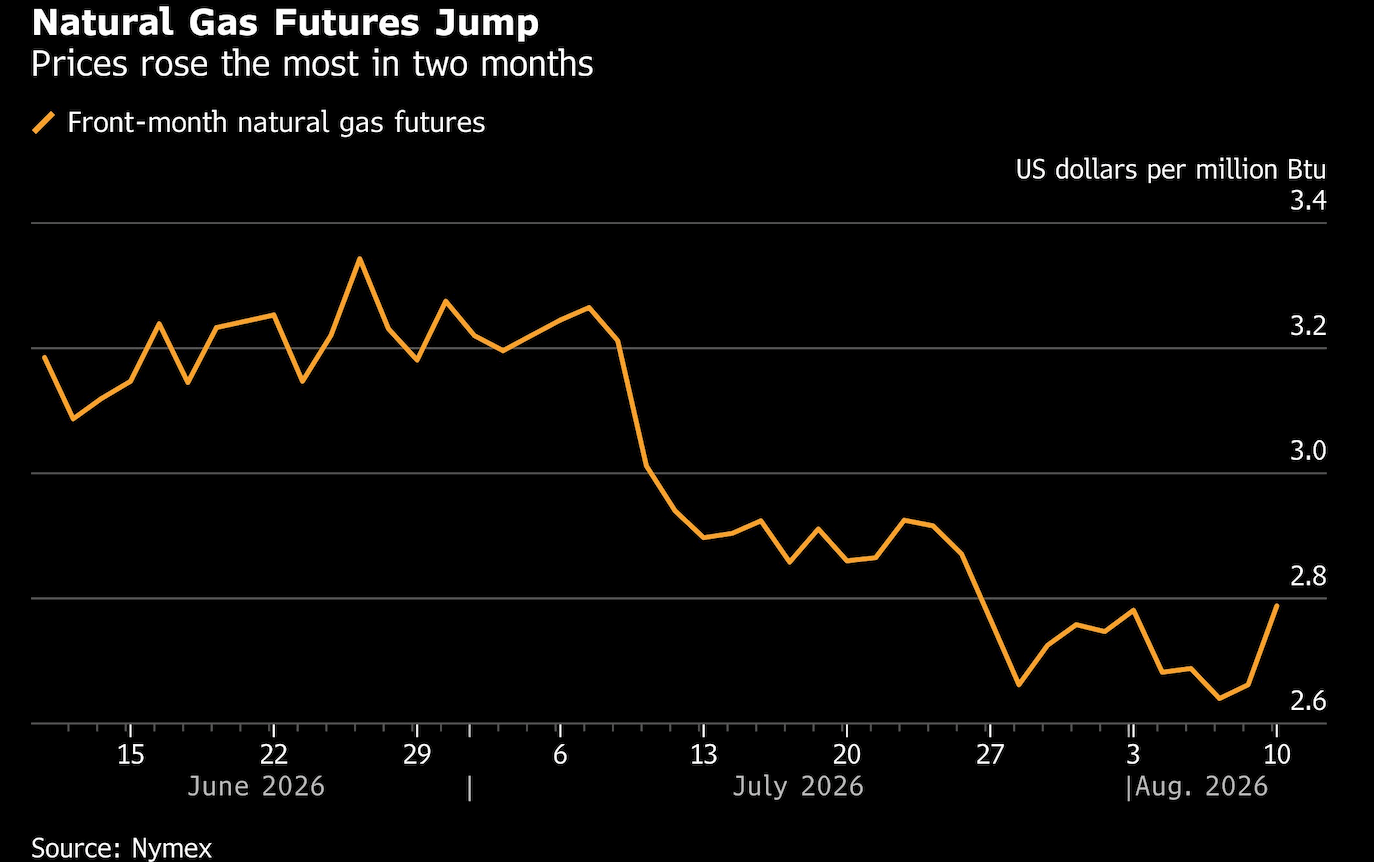
US natural gas futures rose by the most in more than two months as an unusually large swing in weather forecasts triggered a wave of short-covering among money managers who were the most bearish on gas since 2020.
Forecasts shifted to show much hotter weather in the coming weeks, particularly in the central and southern US, according to the private forecaster Commodity Weather Group. Hotter weather boosts demand for electricity as consumers crank up their air-conditioners, increasing the call on power plants that burn natural gas for fuel and raising prices.
At the same time, flows to liquefied natural gas export terminals on the US Gulf Coast jumped to the highest in more than a month as some facilities appear to be concluding seasonal maintenance. Increased flows to LNG terminals leave less supply within the domestic market, adding further upward pressure to prices.
See more: Trump Is Aiding a Golden Age for Renewable Energy

The bullish factors precipitated aggressive purchasing of gas futures by hedge funds, which last week held the largest net-short position on US benchmark Henry Hub contracts since 2020, according to Commodity Futures Trading Commission data. Money managers’ short-only positions, or bets on prices falling further, last week rose to the highest since at least 2013, when Bloomberg began collecting the data. Those firms were forced to close back short positions as prices rose early Monday.
Excessive short positions in US gas can create the conditions for a price surge, should market conditions change. When the US gas market was historically oversupplied in spring 2024, and speculators took on heavy short positions, a 288,000-contract short-covering event raised futures by nearly $1 per million British thermal units, Eli Rubin, senior energy analyst at EBW Analytics Group, said in a note to clients Monday. Short-covering was also a factor behind the historic gas price run-up in January, when a historic winter storm interrupted production, boosted demand and caused futures to rise 75% in just three days.
Natural gas futures for September delivery rose as much as 5.2%, the largest intraday price increase since May 28, to $2.801 per million Btu. That’s still well below prices seen in recent weeks, as domestic stockpiles remain high above average levels and a wave of fresh supply is expected out of West Texas as new pipelines enter service this year.
A message from Advisor Perspectives and VettaFi: Discover something new! Click here to register for our upcoming webcasts.
Bloomberg News provided this article. For more articles like this please visit
bloomberg.com.
Read more articles by Julian Hast