This week the news is about the Israel-Iran conflict. It’s terrifyingly real for those in the crossfire, while we who are safe naturally wonder what it means for us. As investors, we think about the economic and market effects. But are we seeing signal or noise?
The Fed held the federal funds rate steady but noted that the risks of inflation and potentially higher unemployment remained high.
While stocks experienced a roller-coaster ride powered by policy uncertainty, fixed income generally held up well despite the broader market turbulence. Will it be the same story in the second half? Let’s take a closer look.
New strategies, shifting flows, and innovative technologies are driving a more dynamic and diversified marketplace in fixed income ETFs.
After a long dry spell, there are signs of life in the initial public offerings space. An increase in offerings can sometimes suggest an improvement in overall market sentiment.
President Donald Trump’s announcement on Wednesday of a new trade agreement with China is the kind of headline that gives markets a sense of relief. As I overheard this week at Wealth Management’s EDGE conference, which I attended in Boca Raton, Florida, we may have dodged a recession.
Tariff policy has clouded expectations for the second half of the year, but there are ways to navigate through the fog.
Supporters of tax cuts argue that they eventually "pay for themselves" and lower deficits through economic growth and increased revenue, even without significant spending cuts.
With the world order in flux, investors can look to fortify portfolios by diversifying across global markets and capitalizing on attractive, high quality yields.
While the immediate path for tariffs may drift lower, the U.S. legislative branch is hammering out a tax and spending bill that seems to favor tax cuts over lower spending, reviving worries over the U.S. budget deficit and a growing debt burden that cannot be ignored.
The U.S. economy and stock market face a confluence of challenges in the second half of the year, keeping the bar relatively (but not restrictively) high for outperformance.
Investors may revisit international exposure in their portfolios amidst reduced market reactions to tariff announcements, uncertain U.S. policy and lagging U.S. stock performance.
Stablecoins and the concept of digital money represent a significant shift from the current system. While there are many risks with digital money, there is also promise.
Yale University’s $41 billion endowment, led for decades by the late investing giant David Swensen, has been the envy – and the blueprint — for many US universities eager to secure their financial future.
Rebounding demand from ETF investors and resilient buying from central banks and Asia retail have propelled gold prices to fresh records north of US$3,000/oz. Find out why we believe there is more room to run.
The bill contains several tax-code changes that could affect municipal bonds, although we don't think it reduces the appeal of munis for high-income earners.
The Buffett Indicator, made popular by Warren Buffett, assesses the overall value of the stock market relative to the economy. This video provides the May 2025 update on Buffett Valuation Indicator.
The ETF market saw a noticeable slowdown of new products launched in May; however, innovation continued to be a driving force.
Bouts of volatility may continue in the second half of 2025 as bond market investors navigate evolving tariff policy, U.S. government debt, and economic uncertainty.
We remain underweight most developed market stocks as US tariff policy is still unclear but are more enthusiastic about emerging market assets.
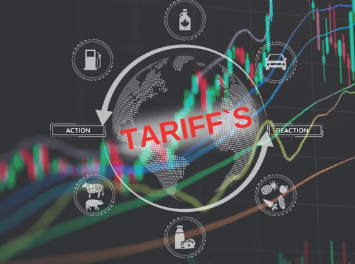
In the last three months tariff news has whipped financial markets around remarkably in response to President Trump’s ever changing tariff policies. The most pronounced reactions were concentrated in the US stock market.
On the trade front, investor uncertainty eased for a short time as President Donald Trump’s “Liberation Day” tariffs seemed to lose traction. Several key developments contributed, including a 90-day tariff pause with China, the signing of a US-UK trade agreement and progress on negotiations with other partners, including Europe.
U.S.-Europe negotiations involve more than just tariffs.
Signs are emerging that the Trump administration may be less willing to give up control of mortgage giants Fannie Mae and Freddie Mac than investors have bargained for, as policymakers scrounge for ways to close US budget gaps.
Treasury floating rate notes and ETFs like the WisdomTree Floating Rate Treasury Fund (USFR) are often seen as beneficial tools to fixed income investors when yields on U.S. government debt are rising.
Most clients are relatively conservative when it comes to determining how much they can afford to spend in retirement. All things being equal, clients would generally rather die with too much money than too little.
Emerging markets debt held its ground in the first quarter, but staying ahead means staying selective. We’re reassessing positioning across high-, low-, and frontier-beta currencies and rates as trade tensions and U.S. policy inject fresh uncertainty.
The "One Big Beautiful Bill" tax-and-spending plan was passed by the House of Representatives and now moves on to the Senate. Here's what's in it.
SS&C ALPS Advisors’ Paul Baiocchi dives into key ETF trends, from active and alternatively-weighted strategies to international and thematic ETFs. VettaFi’s Cinthia Murphy goes inside the world of S&P 500 ETFs, exploring several unique angles to the industry’s flagship products.
There’s a lot to like about the travel industry right now from an investment standpoint. You just have to know where to look.
In 2025, AI crossed a subtle but monumental threshold: it stopped just answering questions and started executing goals.
As AI capabilities continue to advance, we can expect even more sophisticated financial planning tools to become accessible to the average person, potentially improving retirement outcomes for many.
In a year dominated by multimodal marvels and reasoning breakthroughs, perhaps the most economically significant shift in AI went largely underplayed: cost collapse.
As investors, we need to step back and examine the history of previous debt downgrades and their outcomes for the stock and bond markets. Let’s start with what Moody’s rating agency stated about its rating change.
Bitcoin was launched in 2008. It was the following year when it was initially used as an actual currency.
Given the recent market volatility and the possibility of an adverse wealth effect, it's worth quantifying the relationship between stock returns and economic activity.
Long-dated Treasuries fell on Monday as investor attention turned to the US’ ballooning debt after Moody’s Ratings stripped the nation of its last top credit rating.
The recent rally began when Treasury Secretary Scott Bessent struck a more conciliatory tone with China, saying he expected a de-escalation shortly.
Stocks have rebounded since the White House delayed steep tariffs that were announced in early April, but trade policy remains a potential driver of volatility.
Our overarching theme for U.S. fixed income has been, and will continue to be, based on the premise that interest rates will stay at more historically “normal” levels, but that, within this backdrop, investors will face heightened volatility.
With Wall Street kicking off another rally, American stocks are now trading like Donald Trump’s “Liberation Day” shock never happened.
Warren Buffett opened his 60th—and final as CEO—Berkshire Hathaway annual meeting with the same understated clarity that has defined his career: "This is my 60th annual meeting... I think it'll be the best yet."
As the effects of US import tariffs begin to emerge, we shift our stance on equities to underweight.
Last week featured a light economic calendar, with the Fed holding its benchmark interest rate steady for the third consecutive meeting.
The Fed held the federal funds rate steady but noted that the risks of slowing economic growth and higher inflation have risen.
“Compounding” is a word often used among investors to describe what they hope to achieve for their capital. Compounding is invoked so frequently that one would think it was the standard aim and practice among investors.
In light of the announcement that Warren Buffett is stepping down, we thought it very useful to share some of the keynote talk I did at the University of Nebraska-Omaha Business School last Friday night (thanks to its wonderful director, Robert Miles).
Despite negative GDP growth in Q1 and global trade tensions, markets are showing surprising resilience. Investors are betting tariffs will not bite as hard as feared earlier in April and that deals will emerge to soften the blow.
A look back at the impacts of tariff announcements last quarter, and what we might expect from tariff negotiations during the 90-day implementation delay in Q2.