Starting in the aftermath of the 2008 financial crisis, a profound change to the Fed’s liquidity-providing role in the capital markets was underway.
Market focus is shifting to the Fed's 2026 outlook, as stubbornly elevated inflation and recent hawkish signals suggest the central bank may signal an "extended pause" after this cut. Consequently, traders have recently scaled back expectations for the total number of cuts next year, expecting the easing cycle to stop closer to 3.5% rather than the previously forecast 3%.
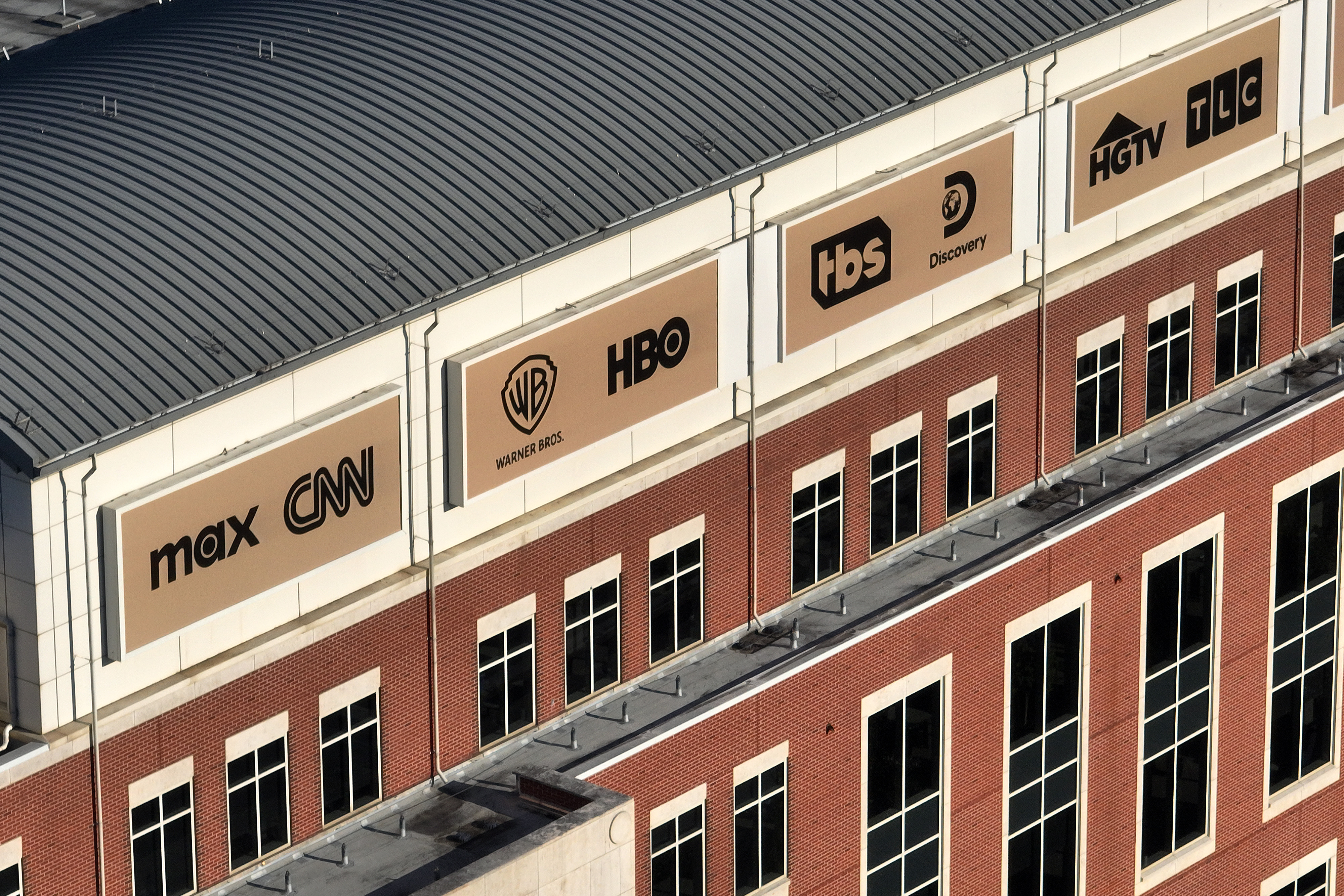
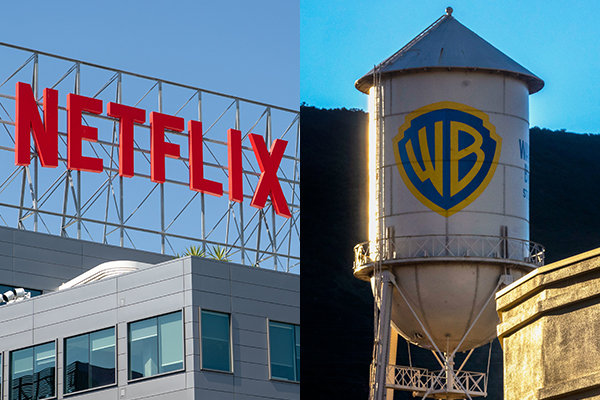
While Netflix Inc. and Paramount Skydance Corp. vie for President Donald Trump’s blessings in their competing bids for Warner Bros. Discovery Inc., investors have an irony to consider.
Regulators are finally starting to appreciate how much major government debt markets are being dominated by a handful of hedge funds. There’s a head of steam building around the issue.
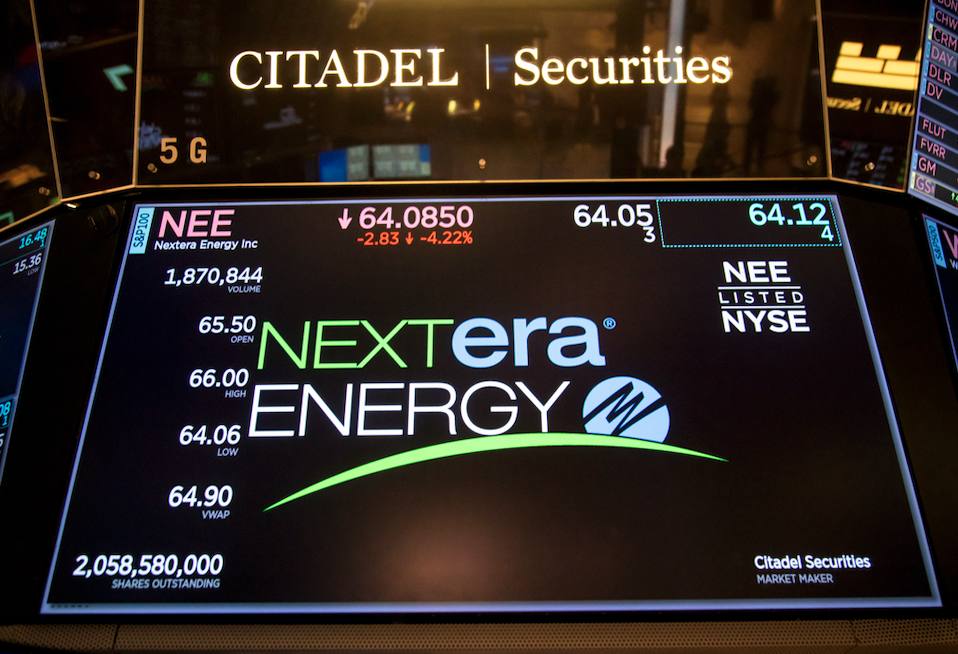
NextEra Energy, once the "tech darling" of the utility sector due to its vast renewables business, is pivoting its strategy to navigate political uncertainty and the booming power demands of Artificial Intelligence (AI).
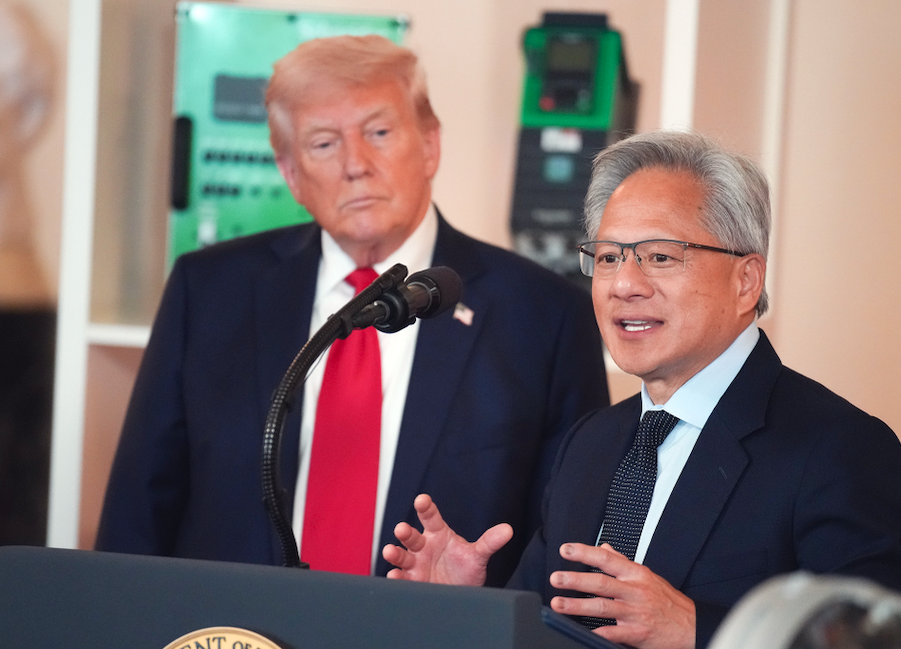
President Donald Trump has authorized Nvidia to export its H200 AI chip to China in exchange for a 25% tariff payment to the U.S. government, a decision that could potentially allow the company to regain billions in lost revenue from the Chinese market.
Shares of Apple Inc. were battered earlier this year as the iPhone maker faced repeated complaints about its lack of an artificial intelligence strategy. But as the AI trade faces increasing scrutiny, that hesitance has gone from a weakness to a strength — and it’s showing up in the stock market.
For affluent families in Pittsburgh and around the US, wealth rarely grows in a straight line. Businesses evolve, real estate accumulates, trusts are created, and investment portfolios expand across public and private markets.
The first full week of the holiday shopping season confirmed what I was looking for: consumers are still spending, and they are not being spooked by tariffs or headlines. Black Friday sales were solid, and the weekend into Cyber Monday largely matched expectations.
This week’s data presented a mixed picture of the U.S. economy as investors look ahead to the Federal Reserve (Fed) meeting next week.
lthough AI is often blamed for labor weakness, the data suggests other dynamics are at play, as job creation is slowing most in industries with low AI adoption. Given the strong outlook for corporate earnings and policy support, the authors maintain a positive view, advising investors to "buy the dip."
The rapid expansion of Artificial Intelligence (AI), while promising increased productivity, is creating a significant and often overlooked strain on the global power grid.
Recessions are less common today than they were before the 1980s. Some argue that the reason is that we have become better at conducting fiscal and monetary policy to reduce the ebbs and flows of economic cycles.
A conventional data center uses between 5,000 and 15,000 tons of copper. A hyperscale data center, on the other hand—the kind being built to run artificial intelligence (AI)—can require up to 50,000 tons of copper per facility, according to the Copper Development Association.
Private credit is expanding beyond its traditional niche to finance major infrastructure projects for investment-grade corporate borrowers, a trend particularly notable among hyperscalers building AI infrastructure.
This week features two crucial monetary policy events: the widely anticipated Federal Reserve meeting on Wednesday, where a rate cut is expected along with new economic projections; and the Senate hearing on Thursday focused on "The Fed's Big Bank Welfare Program" (IORB regime).
To understand where we're headed, let's look back at the late 1990s — the height of the dot-com bubble. The internet was going to change the world, and it did. That's a fact. During the bubble, internet stocks soared. Then they crashed.
This focus on payout growth and a relatively higher tech allocation suggests OUSA may be well-positioned for performance in 2026, even as corporations globally favor share buybacks over dividend payments.
The field of quantum computing has shifted its focus from the short-lived concept of "quantum supremacy" to a more measurable goal: quantum advantage, which emphasizes reproducible, domain-specific results that verifiably outperform classical systems.
Reading Yudkowsky’s and Soares’s book won’t convince you that AI will kill us all, unless you are a whale of a lot more credulous than I am. The book is supremely silly, reading like a badly written science fiction novel for adolescents. To explain how AI could kill us all the authors cook up scenarios written as absurdly implausible fantasy stories.
Advisors should avoid centering long-term investment strategies on predicting the Federal Reserve's next interest rate move, as tactical bets based on the Fed's near-term calls often cause investors to miss out on returns.
Due to the federal government shutdown, official jobs data remains incomplete, forcing the Federal Reserve to rely on alternative private-sector reports to gauge the labor market. These alternative data sources, such as the ADP report and Revelio Labs estimates, indicate a widespread and concerning slowdown in employment, with job creation stalling, openings shrinking, and layoffs rising across many sectors.
I’ve been reading a lot lately that the stock market is priced just right because earnings growth is expected to be high, growing at double digits. But earnings growth is not the sole determinant of stock price.
Alphabet Inc.'s Google Cloud and NextEra Energy Inc. have deepened their partnership by agreeing to develop new data centers specifically paired with electric power plants.
I’ve been a retirement economist for my entire adult life, and yet I am continually amazed at how America continues to get retirement saving so wrong. Now, finally, the world’s largest issuer of mutual funds is showing signs that it recognizes a major flaw in the system.
Bitcoin options traders are currently betting that the largest cryptocurrency will remain range-bound in the near term, a sentiment reflected by higher open interest in short-dated contracts due to the selling of volatility.
Apple, long viewed as a model of stability, is currently undergoing one of the most tumultuous personnel shake-ups of CEO Tim Cook's tenure, with a sudden wave of exits from senior executives and key engineers reporting directly to him.
While some corners of energy markets have looked pretty frothy of late, one segment has Wall Street betting it won’t get trapped in a bubble: grid tech stocks
In this article, Russ Koesterich discusses gold’s recent positive correlation with stocks, particularly those names showing strong price momentum.
Global equities closed November mixed, as investors began favoring proven earnings power over speculative growth. The MSCI World Index ended roughly flat for the month, with value, small-cap, and dividend-paying stocks outperforming large-cap growth names. Healthcare significantly outpaced information technology by over 12%.
For over eighteen years, we have maintained the same investment discipline and the same eight criteria for stock selection. We have deliberately sought opportunity in the sectors and structures the market has decided are too complicated, too cyclical, or simply no longer fashionable.
The Social Security Administration and the Centers for Medicare & Medicaid Services recently announced key figures for 2026. After several years of above-average cost-of-living adjustments for Social Security, beneficiaries will receive a slight increase in the cost-of-living allowance (COLA) in 2026 based on the current inflation environment.
Marc Seidner, CIO of Non-traditional Strategies, explores opportunities across equities, bonds, credit, and commodities that have the potential to offer investors resilience and diversification.
Amidst geopolitical tensions, global defense has become one of the most persistent and outperforming investment themes in 2025, even in the absence of a major crisis. Investors are increasingly diversifying into international defense markets through new and existing ETFs, recognizing the exposure to rising non-U.S. military budgets and the resilience of long-term contracts.
We continue to suggest an up-in-quality fixed income bias for the short run, but investors can still consider some of the riskier parts of the fixed income market in moderation.
I suspect almost 100% of my readers live well above the “poverty line.” I also suspect that probably 99% of you don’t know exactly where that line is. I didn’t really know the number either until I read the article we’ll discuss today.
The economic narrative last week was dominated by a mix of cooling inflation and a softening labor market.
Wall Street is gearing up to lend massive amounts of money to the biggest players in artificial intelligence — and simultaneously trying to figure out how to protect itself from any bubble that its financing may be helping to inflate.
When developing research strategies to achieve positive alpha, there are typically two methodologies: quantitative and fundamental. Discerning investors who have a predilection for one or the other no longer have to choose with the MFS Blended Research Core Equity ETF (BRCE) and the MFS Blended Research International Equity ETF (BRIE).
While AI adoption is becoming ubiquitous across all segments of society, a significant bottleneck is emerging that could slow its expansion: a critical power problem. AI data centers consume massive amounts of electricity—up to the equivalent of 100,000 households—with projections showing they will account for nearly half of US electricity demand growth through 2030.
Federal Reserve officials will vote to cut interest rates again next week to safeguard against rising risks of a sharp deterioration in the labor market, according to economists surveyed by Bloomberg.
The US is in talks to provide more than $1 billion for two critical minerals and railway projects in central Africa as it seeks to secure supplies deemed crucial for national security.
State Street Corp. is deepening its expansion in Saudi Arabia as it looks to cash in on booming demand for exchange-traded funds and growing appetite for alternative investments from clients including family offices.
For fixed-income investors seeking diversification, Mortgage-Backed Securities (MBS), specifically the VMBS ETF, are presented as a high-quality alternative to potentially overvalued corporate bonds, particularly those fueling the AI boom.
Join Cynthia Murphy, Investment Strategist at VettaFi as she speaks with David Harden, CEO and CIO of Summit Global Investments (SGI), about the firm's history, its proprietary managed risk philosophy, and how its ETF strategies are built for today's dynamic market environment.
The Invesco QQQ ETF (QQQ) is now close to modernization as it seeks proxy votes from shareholders to approve a reclassification.
Federal Reserve officials are poised to cut interest rates again next week, but any benefit to the economy is likely to take much longer to show up than normal and may be blunted by factors that monetary policy can’t control.
Gold holdings in exchange-traded funds climbed to a month-end peak, a sign that investor inflows are continuing to add fuel to bullion’s scorching rally.
Netflix Inc. agreed to buy Warner Bros. Discovery Inc. in a historic combination, joining the world’s dominant paid streaming service with one of Hollywood’s oldest and most revered studios.
Polymarket has been recruiting new staff members for an internal market making team that could face off against customers on the company’s exchange, even though a similar feature has exposed its chief rival to criticism.