International stocks could be poised for another strong year in 2026 due to accelerating global growth, attractive valuations and the potential for dollar weakness.
Signed into law in 2022, SECURE 2.0 legislation pursued many of the key themes of the original SECURE Act from 2019, including expanding access to retirement accounts and promoting plan participation.
After a "mini swoon" in November driven by AI bubble concerns, market tranquility has returned this December as investors await the Fed's widely anticipated 25 basis point rate cut and Chair Powell's subsequent remarks.
U.S. equities edged higher last week, approaching all-time highs, fueled by steady consumer spending reflected in strong Black Friday retail sales, though data indicated consumers are increasingly prioritizing value.
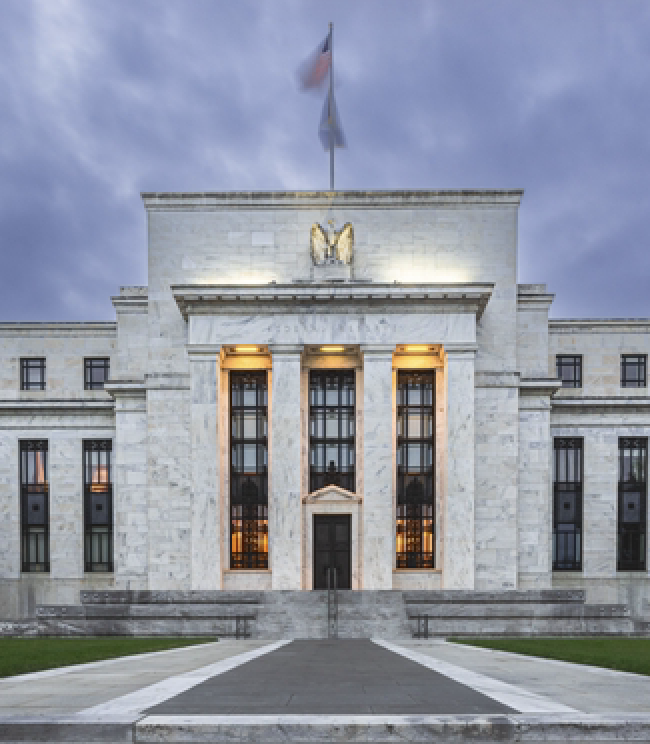
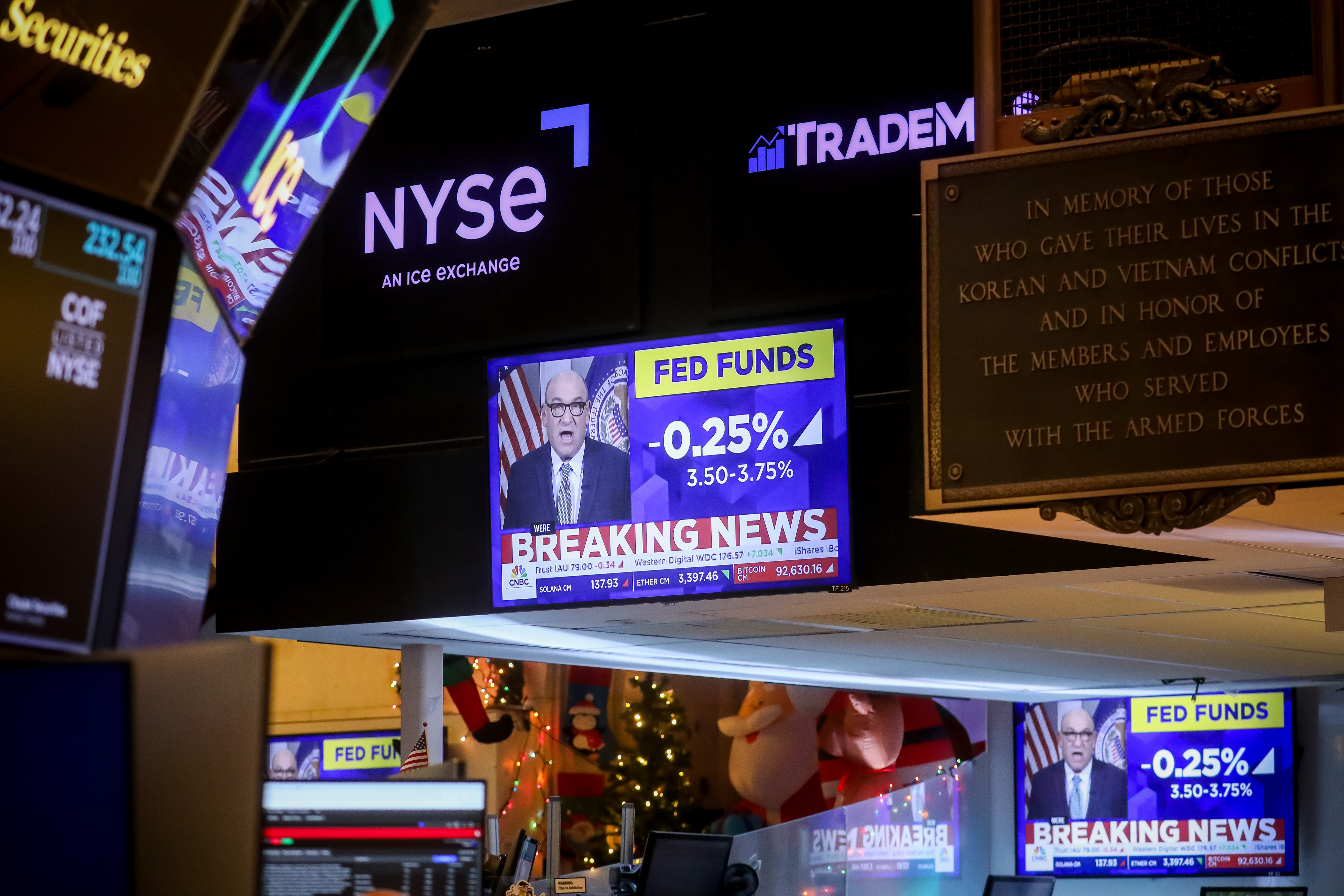
The Federal Reserve concluded its last meeting of 2025 with another quarter-point rate cut, while maintaining its outlook for only one cut in 2026.
Despite the concern post-2024 election about rising U.S. deficits and a potential return of "bond vigilantes," the supply side of the Treasury market has remained stable, with deficits settling near the $1.8 trillion baseline.
The U.S. economy depends on consumers buying stuff. Persistent price inflation forced Americans to blow through their savings and then turn to credit cards to make ends meet.
Walt Disney Co. agreed to invest $1 billion in OpenAI and license iconic characters like Mickey Mouse and Cinderella for use on the startup’s short-form, artificial intelligence video platform.
Gold wavered as traders mulled the Federal Reserve’s outlook for interest rates. Bullion gained as much as 0.5% in US trading before paring some gains, while Treasury yields and the dollar declined.
With a third consecutive rate cut bringing the Fed Funds range to 3.50%–3.75%, the Fed may pause for now as it reassesses the effectiveness of its “risk management” approach amid mixed economic signals.
US Treasuries rose after the Federal Reserve lowered interest rates by a quarter-point for a third straight meeting and left the door open to additional policy easing in 2026.
The launch of multi-token crypto products (i.e., crypto index ETFs) signals that many issuers believe the next growth phase in crypto ETFs will be driven by investors who want a rules-based basket approach rather than single asset calls.
Oracle Corp. shares fell the most in more than 24 years after the company reported a jump in spending on AI data centers and other equipment, rising outlays that are taking longer to translate into cloud revenue than investors want.
The rotation from technology stocks has investors, at long last, scouring one of the least loved corners of the market: energy producers.
It appears the holiday shopping season is being sucked into the massive Debt Black Hole floating through the global economy.
Many U.S. companies now find their defined benefit (DB) plan in surplus and are exploring practical ways to use that excess funding. While emerging legislation may one day allow transfer from DB to defined contribution (DC) plans, some sponsors are already taking creative action.
The dot-com bubble burst in 2000. Now, 25 years later, anxiety abounds about the potential for a similar AI bubble burst and resultant crash.
The year 2025 exemplifies the prevailing regime — markets driven less by fundamentals and traditional business-cycle dynamics and more by fiscal and monetary policy influence. Today, policy decisions have emerged as one of the most impactful forces driving market direction.
After a turbulent start to 2025 defined by US policy shocks, attention shifted to AI optimism and corporate fundamentals, with earnings and capex intentions often eclipsing traditional data releases. Despite these twists, returns were solid across asset classes.
U.S. consumers are seeing a tangible rise in their monthly utility bills, with the average residential cost increasing to $142 in 2024, double the general inflation rate.
Growth, growth, and more growth — that’s been the common refrain in the current market environment. However, peeking from behind the curtains is the quality factor. While it has yet to receive the full spotlight in 2025 relative to growth, it’s due for a breakout performance (potentially in 2026).
ClearBridge Investments believes emerging market equities have turned a corner, showing strong performance after years of lagging returns.
We believe the macro environment will continue to be unstable given policy crosscurrents and a wobbly labor market, but stocks can likely churn higher given a firmer earnings backdrop.
The Federal Funds Rate (FFR) is the interest rate banks charge each other to borrow money overnight. It's set by the FOMC and is one of the Federal Reserve's primary tools to implement monetary policy and is a key driver of economic activity. This video examines the Federal Funds Rate and reviews the Fed's interest rate meeting on December 9-10th, 2025.
Amid ongoing economic and geopolitical uncertainty, investors are increasingly turning to commodities for their diversification potential. But what’s next? Join the experts from Aberdeen Investments and Bloomberg for an interactive webinar.
Two perspectives emerge when analyzing the state of US consumers. Sentiment surveys paint a picture of economic weakness, yet behavioral data tells a different story — spending remains in line with historical expansion trends.
JPMorgan Asset Management is seeking to convert two municipal-bond mutual funds with over $840 million of assets into ETFs in 2026, underscoring the growing popularity of the products.
The crypto downturn has pushed a slew of Bitcoin miners to the brink of unprofitability, prompting operators to scale back the energy-hungry machines that keep the blockchain running.
Following the disappointment of its open-source Llama 4 model, Meta's AI strategy is undergoing a major shift, with CEO Mark Zuckerberg now personally directing efforts toward monetizable models.
Despite controversial leadership and little to no profits, experts believe public stock investors will be highly eager to embrace these massive listings, potentially breaking the multi-year IPO rut. If SpaceX lists at its massive rumored valuation, it would catalyze a "massive trend of IPO activity," forcing similar giants like Stripe and ByteDance to follow suit.
Discover the power of niche marketing for financial advisors to attract high-value, ideal clients and achieve scalable growth. Stop generalizing and start specializing to build a more profitable practice.
Gen Z and younger millennials are the high-asset clients of the future, and advisors need to work on connecting with them now. From my perspective, there’s one clear success strategy for advisors: expanding your financial planning services.
As 2025 comes to a close, I am using this column to offer high-impact strategies for you and your team to implement before the year ends. While you are likely focused on tax planning, Required Minimum Distributions (RMDs), and the other client necessities, it is equally important to address the operational and strategic health of your practice.
Gold ETFs globally reported net inflows of gold for the sixth straight month, driven by a strong surge in Asian investment.
Global fund managers expect the surge in nuclear stocks to continue, driven by energy demands that extend beyond the needs of artificial intelligence and an improving regulatory outlook worldwide.
With great power comes great responsibility. But in the age of artificial intelligence (AI), power means megawatts, not metaphors.
Energy commodities enter 2026 at an interesting crossroads. On one hand, oil and gas markets have abundant supply and somewhat softer pricing. On the other hand, the ongoing energy transition is accelerating investment in new energy sources.
With macro drivers continuing to reshape markets, Ali Dibadj explores key investment themes for 2026 to help actively position portfolios for resilience and growth. He also explains how asset managers need to evolve to best work together with clients.
Rising margin debt levels signal increasing speculation and leverage in the market, with the cost of carrying this debt nearing historical peaks that have typically preceded significant stock market corrections.
Three years with five reliable recession signals, five recession scares, and no recession. Why? And what comes next. A useful framing of the economy for the last three years and why a recession isn’t imminent now.
Active fixed income ETFs took center stage at VettaFi's recent 2026 Market Outlook Symposium, with two industry leaders sharing thoughts.
I’ve lived through several bubbles and read about others, and they’ve all hewed to this description. One might think the losses experienced when past bubbles popped would discourage the next one from forming. But that hasn’t happened yet, and I’m sure it never will.
With the Fed's final 2025 meeting approaching, markets anticipate a third rate cut amid labor weakness, though the FOMC remains publicly divided on balancing a cooling job market against sticky inflation.
On this episode of the “ETF of the Week” podcast, VettaFi’s Head of Research, Todd Rosenbluth, discussed the Goldman Sachs Corporate Bond ETF (GIGL) with Chuck Jaffe of Money Life. The pair discussed several topics related to the fund to give investors a deeper understanding of the ETF.
Roxanna Islam, Head of Sector & Industry Research at VettaFi, shares her perspective on several recent ETF developments, including Vanguard opening brokerage access to spot crypto ETFs, Goldman Sachs’ acquisition of Innovator ETFs, and the SEC’s pushback on filings for 5x leveraged products. Petra Bakosova, CEO of Hull Tactical and Portfolio Manager of the Hull Tactical U.S. ETF (HTUS), explains the firm’s approach to delivering tactical, risk-managed S&P 500 exposure.
Recent frauds in the subprime auto and private credit markets have led observers to wonder if these are the "cockroaches" signaling a turn in the broader credit cycle. This transition is characterized by increasing volatility and dispersion in the debt markets, where bonds no longer trade in unison and earnings misses trigger sharp price drops.
Join us for our 2026 Market Outlook Symposium, where our panelists will tackle all of these topics and shed light on top strategies aimed at helping your clients reach their financial goals
Our latest research investigates how U.S. corporations have managed to consistently increase profits, despite a secular trend of declining net domestic investment.
In most cases, construction loan pricing isn’t a sign of greediness. It reflects the fact that a construction loan is both riskier and far more labor-intensive than a conventional mortgage.