Imagine an institutional investor that allocates a big chunk of its portfolio to illiquid private assets but then needs to sell some of those investments to raise cash. Or a fund company that makes a fortune on actively managed mutual funds for decades, but its investors move their money to low-cost index trackers.
Macroeconomic and structural trends are finally moving in favor of emerging local currency bonds, after recent setbacks.
Head of U.S. Fixed Income Greg Wilensky and John Lloyd, Lead, Multi-Sector Credit Strategies, discuss Moody’s rating downgrade of the U.S. and what the implications may be for the Treasury market, the Federal Reserve (Fed), and fixed income investors.
Recent revisions to the IMF’s World Economic Outlook reflect a sobering message: the world economy is entering a more volatile and fragmented era.
Over the past ten years, we’ve discussed this question with about 50 of our friends and clients, resulting in many animated and productive conversations.
On this episode of the “ETF of the Week” podcast, VettaFi’s Head of Research, Todd Rosenbluth, discussed the Thornburg International Equity ETF (TXUE) with Chuck Jaffe of Money Life. The pair discussed several topics related to the fund to give investors a deeper understanding of the ETF overall.
Given the recent market volatility and the possibility of an adverse wealth effect, it's worth quantifying the relationship between stock returns and economic activity.
Don’t allow your middle-aged clients depending on their 401(k) plan to fool themselves. Markets can’t rescue a failure to save until it hurts. And don’t let them kid themselves that a smoother ride with bonds won’t come at the cost of increased shortfall risk.
As markets rebound from a brief but sharp correction, Journey’s investment team reflects on the impact of tariffs, global diversification, and the evolving role of alternatives in investor portfolios. With caution as the theme, this month’s commentary urges investors to revisit risk tolerance and stay grounded in disciplined, long-term strategies amidst ongoing economic uncertainty.
Chief Economist Eugenio J. Alemán discusses current economic conditions.
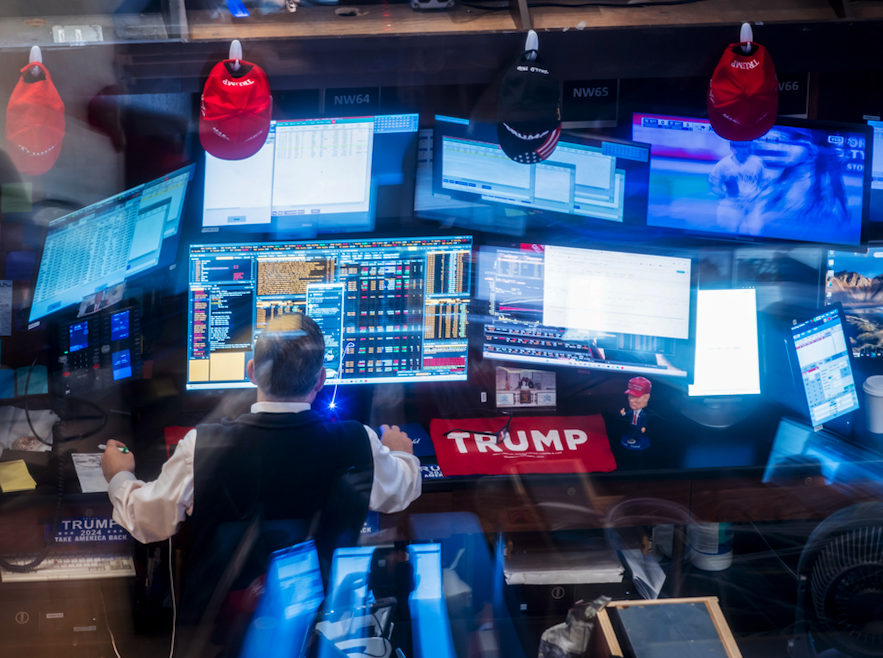
Stocks have rebounded since the White House delayed steep tariffs that were announced in early April, but trade policy remains a potential driver of volatility.
The House Ways & Means Committee advanced a comprehensive tax bill this week. Our Bill Cass discusses the key provisions and how they may impact taxpayers.
Retirement. It’s a phase of life that brings with it unique challenges, particularly when it comes to healthcare. In the U.S., the average lifespan is 79 years (compared to the global average of 73 years).
A recent Gallup poll shows gold just passed stocks as Americans’ favorite long-term investment. We explore why it might deserve the top spot.
Major gauges of investment-grade corporate bonds were stung by the April bout of volatility that permeated the bond market.
A rushed exit from conservatorship could increase mortgage rates and worsen home affordability.
If only Europe could offer property investors the kind of buffet the US provides. For now, its listed real estate sector is fragmented and dysfunctional, the raison d’etre seemingly to create cheap takeover targets for buyout firms.
The 90-day reduction on tariffs between the US and China is a positive development, but some questions remain.
529 plans provide tax benefits, estate planning advantages, and flexible education savings. Our Bill Cass explains how 529 plans can be part of an estate planning strategy.
We maintain a focus on resiliency as elevated yields within high quality fixed income continue to offer attractive opportunities.
After a brief reprieve from all the recession talk while the Fed was raising rates to decades-old high watermarks, the ‘R’ word has come back into vogue once again post-Liberation day.
The selloff in Japan’s long-dated bonds is drawing international investors, who expect the securities to rebound as global trade turmoil abates.
Saudi Arabia is ramping up efforts to lure high frequency trading firms — a campaign that’s already brought in major players from Citadel Securities to Hudson River Trading — as it looks to bolster activity on the Middle East’s largest stock market.
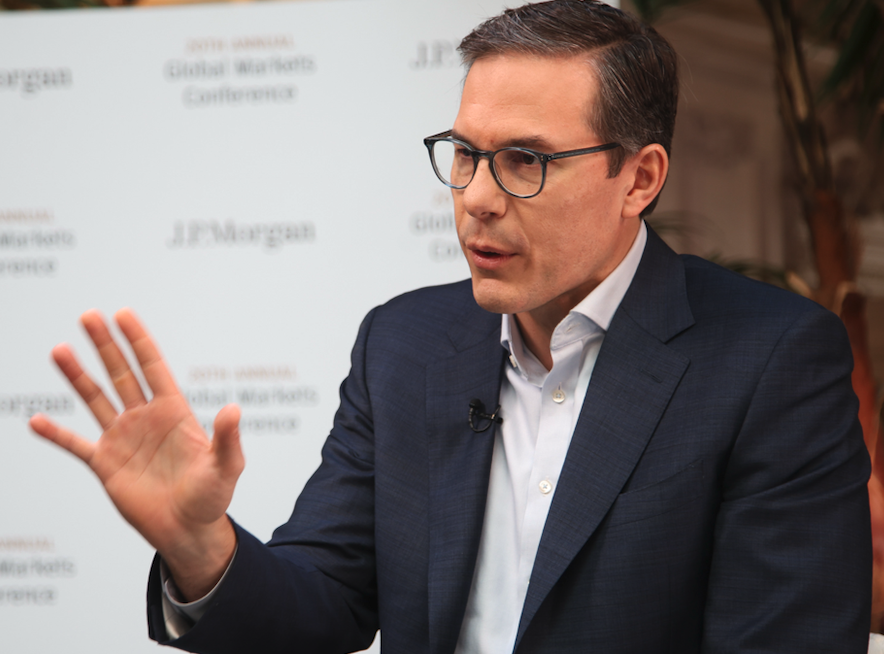
JPMorgan Chase & Co.’s chief of global markets strategy said the US could dodge a recession as the probability of that scenario has decreased following better clarity over global trade.
Our overarching theme for U.S. fixed income has been, and will continue to be, based on the premise that interest rates will stay at more historically “normal” levels, but that, within this backdrop, investors will face heightened volatility.
By the end of April, the S&P 500 rallied its way back, recovering nearly all the declines notched in the opening days of the month when President Trump's "Liberation Day" tariff plans tipped markets towards bear territory.
When volatility ripped through markets last month, many investors scrambled to respond. Some wanted to quickly adjust specific security exposures. Others wanted to flee to cash or build in protection against additional downside moves. And some rushed to buy the dip.
Certificates of deposit (CDs) and Treasuries both can offer steady, predictable investment income—but how to decide between them? Here are five factors to help you choose.
It can be tempting to react when someone at work criticizes you at work, but take some time to consider the issue before you do.
Equity investors pushed back into the market by a relentless rally are about to find out that the real challenge is just beginning.
The chain-smoking protagonist of Landman, the American television drama series about the Texas oil industry, puts it better than anyone else: “You want oil to live above 60, but below 90,” says the fictional Tommy Norris. “Seventy-eight dollars a barrel, that’s about perfect.”
The more duration risk taken, the more reward or yield demanded by investors. This is why, historically, the yield curve provides incrementally more yield for longer-maturity bonds.
In the report, Portfolio Managers John Kerschner, Nick Childs, and Thomas Polus highlight three reasons why agency mortgage-backed securities (MBS) look attractive in the present environment.
The U.S. may not walk back all of the new tariffs.
Alexandra Levis, Founder & CEO of Arro Financial Communications, provides an in-depth look at how ETF issuers should think about approaching marketing. VettaFi’s Roxanna Islam breaks down some of the year’s top-performing ETFs, from international plays to precious metals.
While the U.S. and U.K. have different economic and regulatory landscapes, there are clear opportunities for the U.S. to improve retirement readiness by adopting some best practices from across the pond.
In 2025, liquidity is not a background variable — it's a front-line risk factor, one that’s being tested repeatedly as global markets navigate a web of geopolitical uncertainty and macroeconomic signals.
There is much serious discussion about the “rule of law” today. This discussion is good and should be applied to the affective meaning of fiduciary today. Pressures from the brokerage and insurance industries over the past 20 years have effectively nullified the clear purpose of the IAA and the Supreme Court decision in 1963.
The price of Wegovy, Novo Nordisk’s blockbuster weight-loss drug, is $1,349 a month in the US; in Germany, it’s $328. The US price for Keytruda, a cancer treatment, is $191,000 a year; in Japan, it’s $44,000.
Companies are launching a number of debt deals designed to pay out a dividend to their private equity owners, at a time when buyout firms are under pressure to return money to clients.
Global AI, a US tech firm, plans to collaborate with a Saudi Arabian artificial intelligence venture, Humain, in an agreement expected to be worth billions of dollars, according to a person familiar with the mattter.
A wave of municipal-bond sales scheduled for this week will test a recent rebound in buyer demand after investors sold their holdings during April’s market rout.
The early-April announcement of a broad new round of tariffs against virtually all U.S. trading partners—followed by a pause for many of them—has triggered a tidal shift in the global economy. Uncertainty created by tariff negotiations, as well as burgeoning federal debt levels and other ongoing concerns, has far-reaching economic implications, leading us to reassess our 2025 outlook.
The roller coaster continues! A stronger than expected first quarter earnings season and encouraging signs on the trade front—highlighted by the US-UK trade deal—helped lift the S&P 500 from its April 8 near-bear market lows, reversing nearly all post-Liberation Day (April 2) losses.
It may seem risky to lend against recurring revenues, not earnings. With proper underwriting, it doesn’t have to be.
In the latest edition of Design Matters, titled “What’s the Frequency… Russell?” Greg Behar of Westwood’s Managed Investment Solutions (MIS) team examines how the Russell U.S. Indexes’ decision to return to a semi-annual reconstitution schedule is transforming risk management practices, market participation and the future of custom indexing.
The April plunge in stocks ushered in a huge washout in investor sentiment, but more so on the attitudinal side as opposed to the behavioral side.
The Q1 2025 earnings season heads into its final peak week with mostly positive results from S&P 500 companies thus far. With 90% of companies from the index now reporting, 78% have beaten Wall Street’s expectations, slightly better than what we’ve seen historically.
For my entire decades-long career in capital markets, I’ve made the case that gold is not just a shiny relic of the past, but a serious, strategic asset for modern investors. After years of pounding the table, it feels pretty good to say that the world’s central banks—and now the U.S. banking system—are finally catching up.